
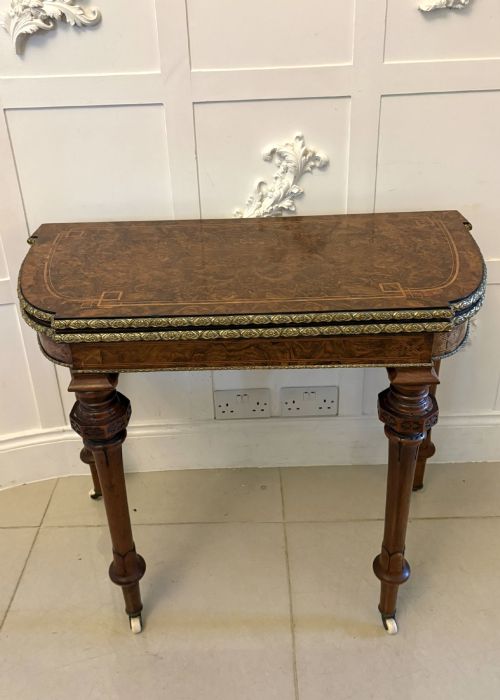
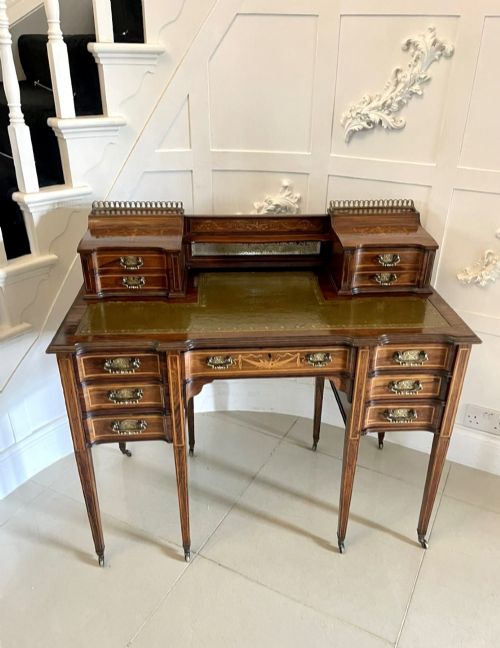
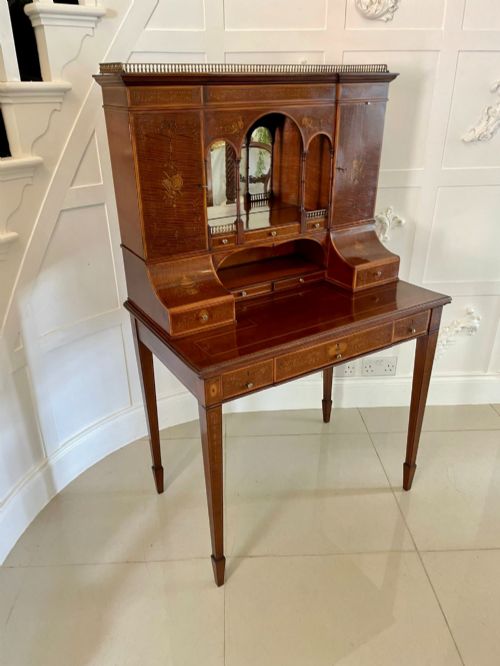
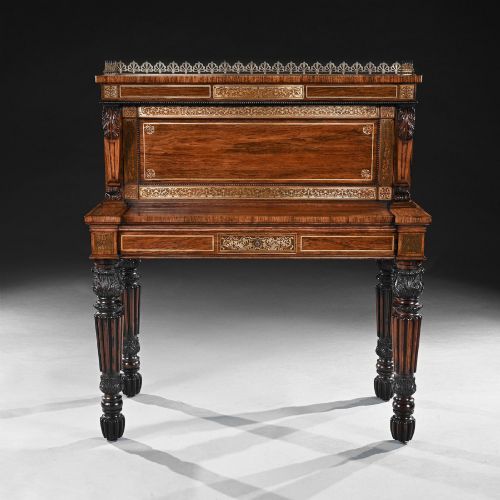

Brass Marquetry Desk
A brass marquetry desk brings together gleaming metal inlay and rich timber, offering a dedicated writing surface defined by nineteenth-century craft.
Brass Marquetry Desk
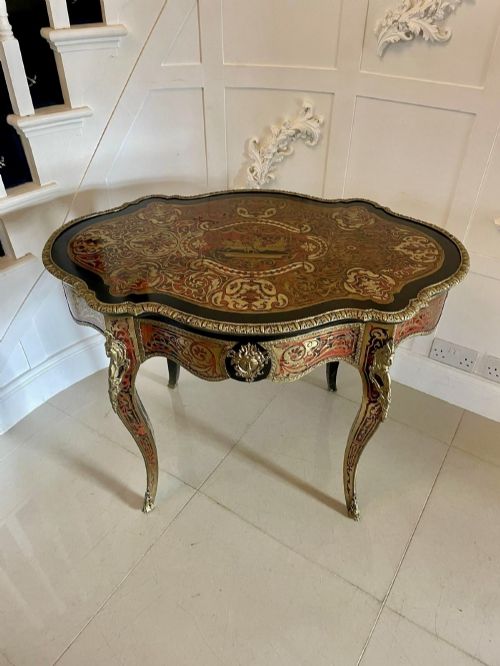
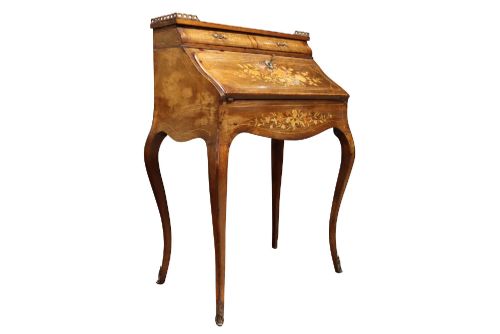
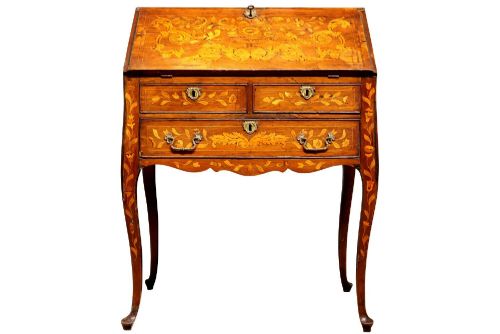
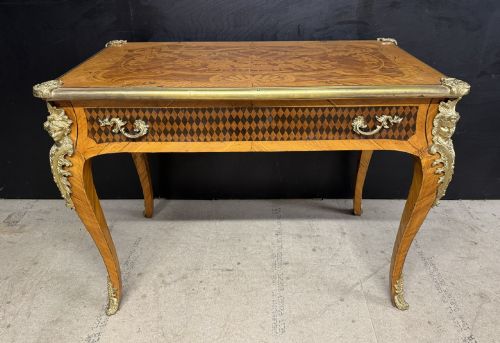
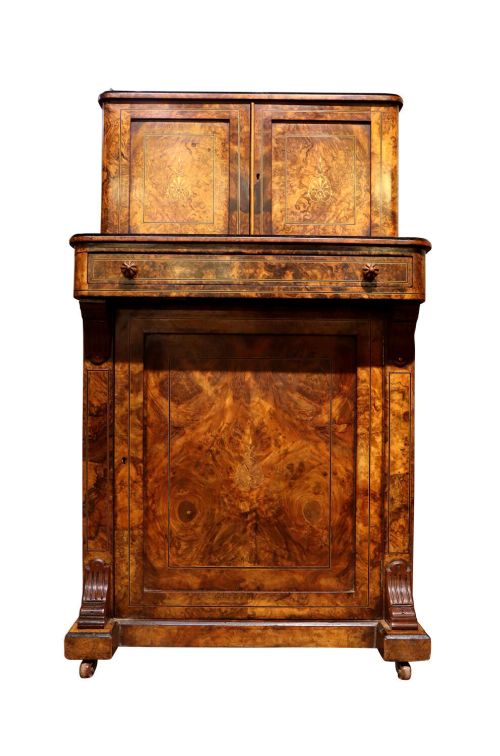
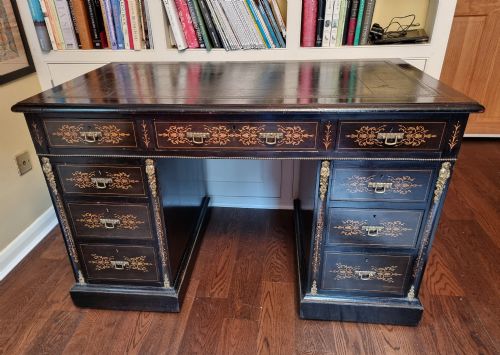
When you search for a brass marquetry desk, you encounter nineteenth-century pieces spanning the Victorian, Regency, and Edwardian periods alongside French Napoleon III and Louis XV revival styles. These examples include writing tables, bureau de dame forms, and freestanding library desks.
The materials recorded in these listings show a foundation of rosewood, mahogany, walnut, and ebonised timber, embellished with brass inlay, ormolu mounts, and tortoiseshell details.
Most items stem from English workshops or French ateliers, showcasing various interpretations of floral marquetry, bureau plat designs, and Boulle work.
Materials and construction methods
Cabinetmakers constructed these pieces using dense hardwoods such as mahogany, rosewood, and walnut as a stable carcass for decorative surfaces.
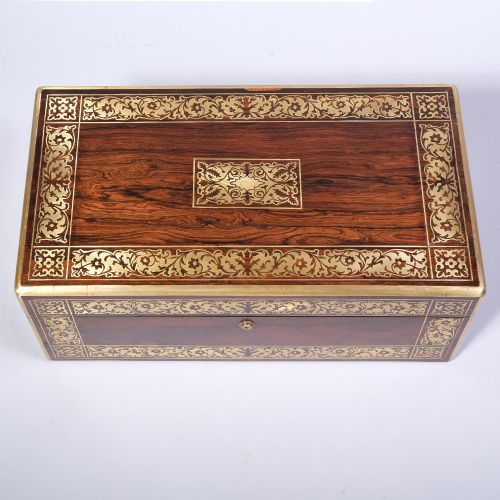
Artisans applied brass inlay and ormolu mounts by hand, often combining the metal with tortoiseshell or mother of pearl to build intricate floral and geometric patterns.
French and English workshops utilised traditional joinery alongside specialised veneer sawing to secure the brass and tortoiseshell into the wooden ground.
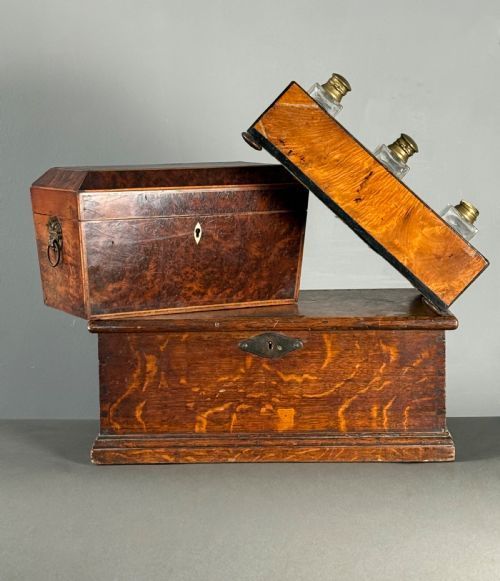
Several writing boxes include hidden compartments alongside their brass inlay, designed to keep secret correspondence safely tucked away from prying eyes.
Evaluating craftsmanship and execution
The distinction between standard production and top tier pieces lies in the precision of the brass inlay and the depth of the timber ground.
Finer examples display tight, seamless integration where the brass sits flush with the surrounding wood and tortoiseshell, whereas lesser items show gaps or coarser hand-sawing.
The quality of the cast ormolu mounts and the selection of figured veneers further separate ordinary items from those bearing attribution to known makers.
Maple and Co·Gillows Oxford Street Workshop·Edwards and Roberts·Maison Millet
The Brass Marquetry Desk Glossary
- Boulle work
- A method of marquetry using brass and tortoiseshell inlay developed in France, creating contrasting metallic and dark patterns.
- Bureau Plat
- A freestanding writing table fitted with drawers, originating in France during the eighteenth century and revived later.
- Ormolu
- Gilded bronze used for decorative mounts and feet on nineteenth-century furniture.
- Marquetry
- The art of applying pieces of veneer to a structure to form decorative patterns and pictorial designs.
- Bonheur-du-Jour
- A small, light ladies writing desk featuring a tiered superstructure with shelves or small drawers above the main surface.
Brass Marquetry Desk: Frequently Asked Questions
How do I identify a French Boulle desk?
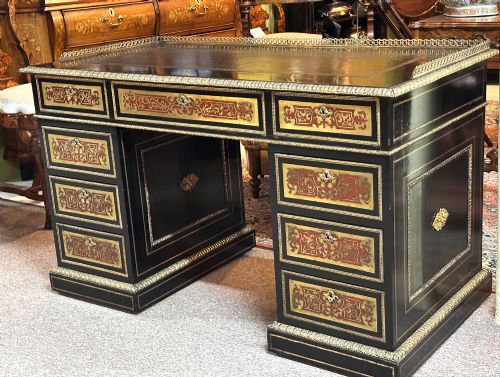
French Boulle desks are distinguished by their use of tortoiseshell and brass inlay, often following Napoleon III or Louis XV revival styles with cast ormolu mounts.
These pieces typically originate from nineteenth-century Parisian workshops and present a high level of decorative brass work across the top and sides.
What is the difference between a writing table and a bureau plat?
A writing table generally refers to English freestanding forms from the Victorian or Regency periods, whilst a bureau plat denotes a specific French table format with a finished back and leather inset top.
Both serve the same primary function but derive from different cabinetmaking traditions regarding their decorative mounts and framing.
Can I use a vintage writing desk daily?
These nineteenth-century writing surfaces accommodate everyday tasks such as laptop use or correspondence, provided they are treated with care regarding their delicate veneers.
Protecting the leather insert and avoiding excessive moisture preserves the antique brass inlay and polished wood finishes during regular use.
How do I date a Victorian brass inlaid desk?
Dating relies on examining the secondary timbers, the style of the brass inlay, and any structural hardware or maker stamps associated with the piece.
Victorian examples often combine mahogany, rosewood, or walnut with revival aesthetics popular between eighteen-fifty and eighteen-ninety.