


Boulle Marquetry Desk
A boulle marquetry desk brings tortoiseshell, brass and ormolu into your room, offering an unmistakably ornate surface for serious correspondence.
Boulle Marquetry Desk
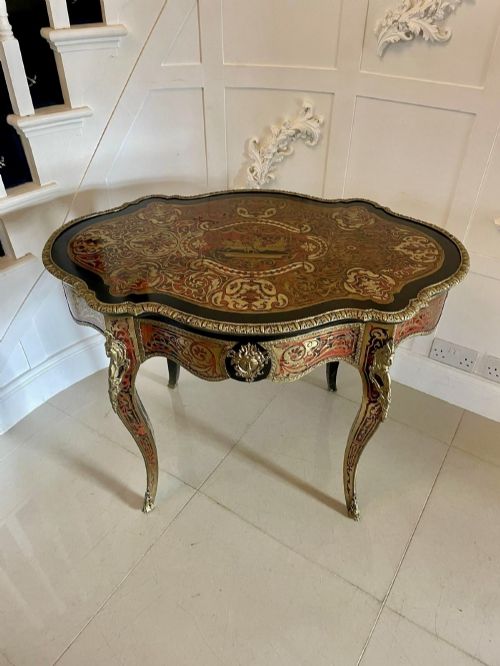
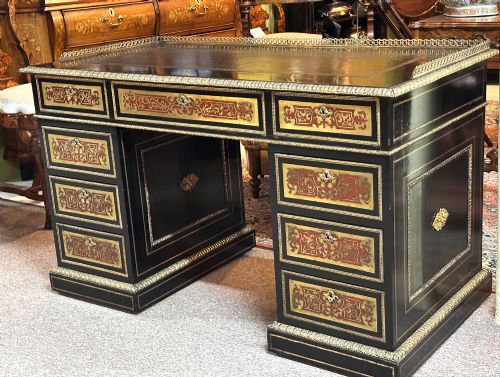
A boulle marquetry desk is an ornate writing surface decorated with contrasting metallic and organic inlay, appearing in forms such as the bureau plat and the smaller writing cabinet. These pieces trace their lineage back through French revival movements, with the 19th century producing notable examples influenced by Louis XV and Napoleon III styles.
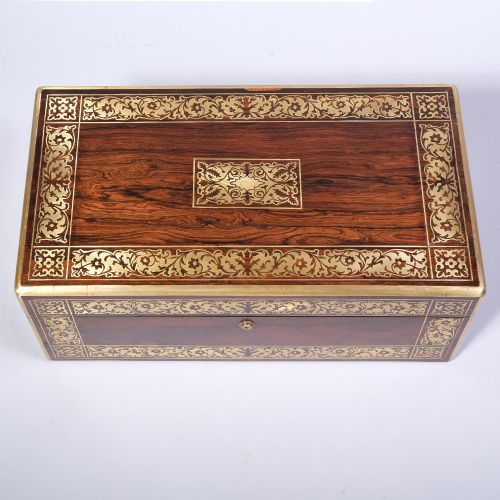
The version you are most likely to meet on this page is a French nineteenth-century bureau plat or ebonised writing table, often featuring elaborate brass and tortoiseshell work alongside ormolu mounts. English interpretations from the Regency period also appear, substituting rosewood and brass inlay while maintaining a formal writing format.
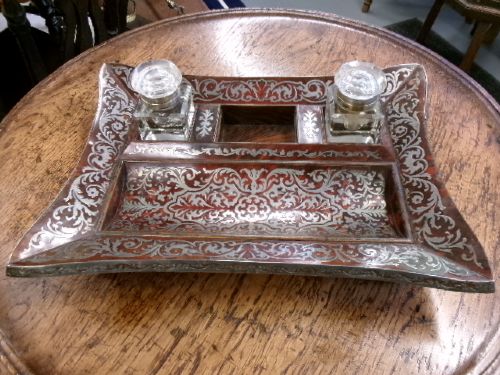
Beyond standard writing tables, the wider category includes freestanding centre tables, compact writing boxes, and desk stands fitted with inkwells. These share the characteristic decorative technique even when the underlying furniture form shifts from a dedicated desk to a portable box or display table.
How they were made
The distinct visual depth of a boulle marquetry desk relies on the precise cutting of tortoiseshell and brass adhered together in sheets. Craftsmen sawn through sandwiched layers to create interlocking positive and negative motifs, known traditionally as first-part and counter-part work.
Ebonised wood and rosewood serve as the primary structural foundations, providing a dark contrast that accentuates the polished metal and amber tones of the inlay. Ormolu mounts cast in bronze and fire-gilded are then applied to the corners, feet, and edges to frame the intricate surface decoration.
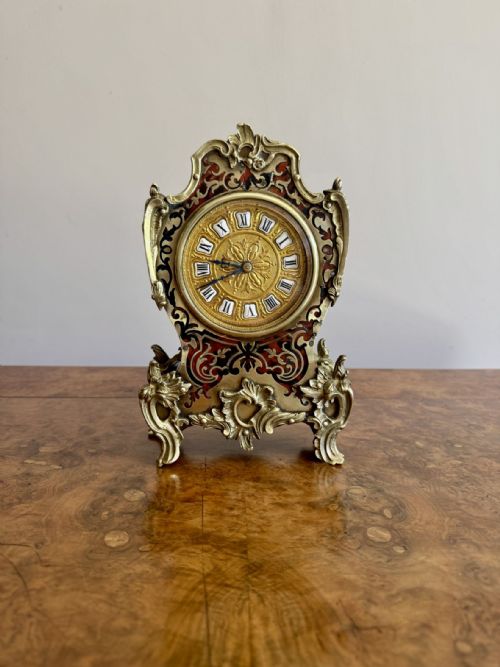
Glass and leather frequently complement these materials, forming writing inserts on the desk tops or protective covers for internal components. Enamel dials and brass movements complete related items like mantel clocks and desk accessories found alongside the writing furniture.
Listings feature pieces from the Victorian and Regency periods, spanning the eighteenth to twentieth centuries.
What varies in quality
The standard of a boulle marquetry desk rests heavily on the crispness of the brass and tortoiseshell cutting, where finer examples display unbroken, tight junctions between the inlaid elements. Poor execution reveals wider adhesive gaps and simpler, coarser scrollwork that lacks the dynamic movement of better workshops.
The quality of the cast ormolu mounts determines the sculptural depth of the piece, with superior items exhibiting sharp chisel work and deep, rich gilding rather than flat, dull metal surfaces. The choice of underlying timber, whether deeply ebonised wood or figured rosewood, further distinguishes standard production from exceptional cabinet work.
Maison Millet
The Boulle Marquetry Desk Glossary
- Boulle
- A method of marquetry using brass and tortoiseshell, named after André-Charles Boulle, cabinetmaker to Louis XIV. This technique defines the distinct metallic and amber aesthetic seen across French decorative arts.
- Bureau plat
- A freestanding writing table with drawers in the frieze, typically finished on all sides for placement in the centre of a room. These desks provide a broad writing surface bordered by ornamental mounts.
- Ormolu
- Gilded bronze used for decorative mounts, feet, and edging on furniture and clocks. The term derives from the French for milled or ground gold.
- Bonheur du jour
- A small, light ladies' writing desk featuring a set of small drawers and pigeonholes on top of the writing surface. These cabinets often incorporate elaborate marquetry panels on the fall-front or doors.
- Ebonised
- Wood treated to imitate ebony, giving a dense, uniform black finish that heightens the reflective contrast of brass inlay. This treatment is common on nineteenth-century pieces designed in revival styles.
Boulle Marquetry Desk: Frequently Asked Questions
How do I identify a true boulle marquetry desk?
Look for the characteristic combination of tortoiseshell and brass inlay set into an ebonised or dark wood substrate. Genuine pieces often display intricate scrolling patterns and cast ormolu mounts consistent with nineteenth-century revival periods.
Examine the precision of the inlay work where the metal meets the organic shell. Superior craftsmanship shows seamless joints without excessive filler material.
Are these desks suitable for daily writing use?
Many examples function well as writing surfaces, particularly larger bureau plat models or freestanding tables with flat tops. However, the delicate nature of tortoiseshell and brass requires careful handling to prevent surface scratching.
Consider adding a protective leather or felt blotter to preserve the antique inlay during regular daily tasks. Smaller desk boxes and cabinet forms serve better for occasional correspondence or display.
What is the difference between Louis XIV and Napoleon III styles?
Louis XIV style pieces emphasise symmetrical grandeur, heavy architectural forms, and bold classical motifs derived from seventeenth-century court furniture. They tend to project a formal, monumental presence in a room.
Napoleon III pieces, produced during the nineteenth-century revival, often blend elements of Louis XIV and Rococo designs with a lighter, more eclectic touch. They frequently utilise richer ebonised finishes and highly detailed brass and tortoiseshell marquetry.