

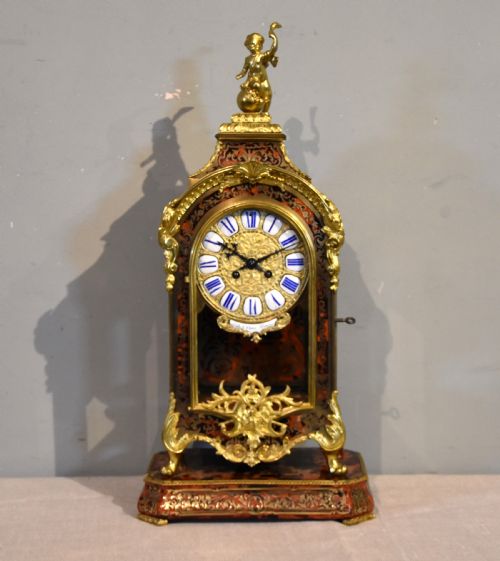


19th Century Boulle Table
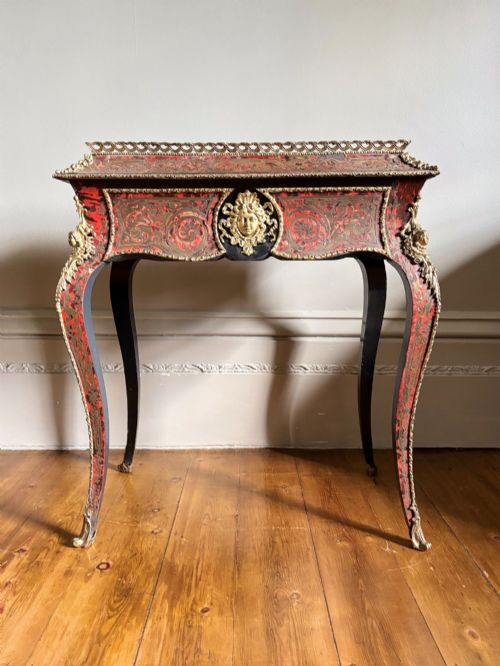
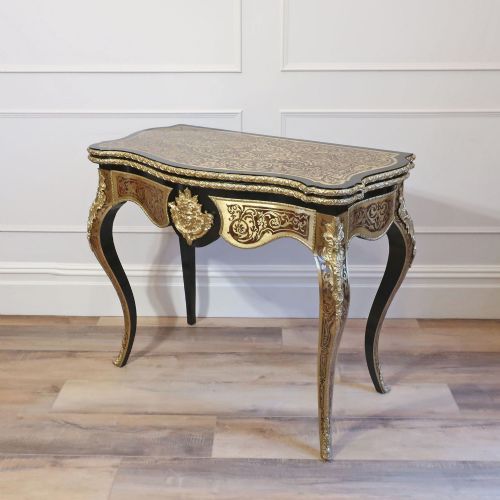
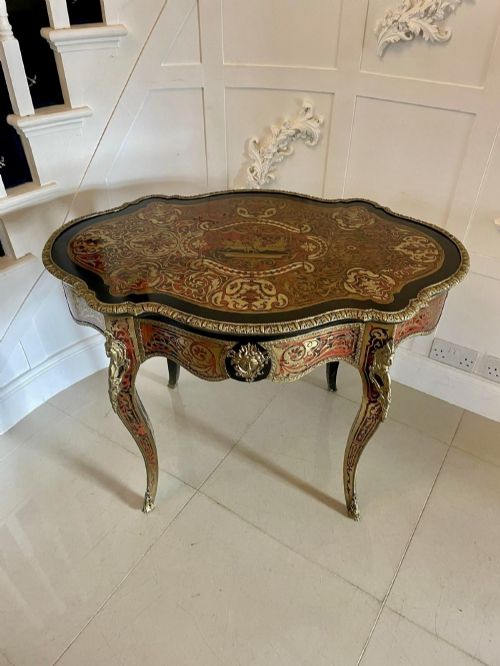
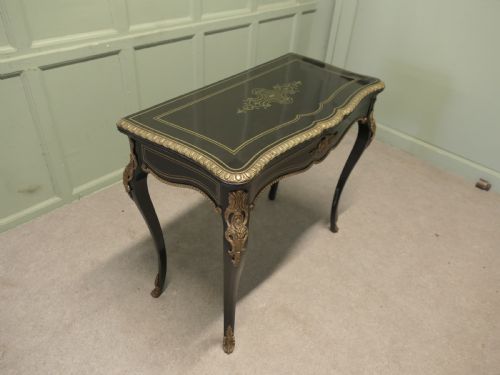
These pieces of a 19th century boulle table combine tortoiseshell and brass inlay with ebonized wood to bring high French decorative splendour to a room.
19th Century Boulle Table
A 19th century boulle table brings nineteenth-century French decorative taste into a room through elaborate marquetry surfaces. These pieces include centre tables, card tables, games tables, writing desks, and jardiniere stands, alongside related forms like dressing tables and nest of tables.
Most examples originate from France during the nineteenth century, often associated with Napoleon III, Louis XV, Louis XVI, and Louis XIV styles, alongside French Rococo Revival designs. Makers such as Edwards and Roberts also produced these works in the French style.
The surface patterns display intricate brass and tortoiseshell inlay set into ebonized wood or red tortoiseshell. Certain items appear in small proportions, while others take the form of freestanding centre tables designed for central placement in a room.
Materials and construction
Craftsmen built these tables using ebonized wood or timber carcasses overlaid with contrasting tortoiseshell and brass inlay, often incorporating scarlet red tortoiseshell and gilt bronze or ormolu mounts. The marquetry technique involves cutting thin sheets of metal and shell simultaneously to create interlocking patterns.
Makers shaped the wooden frames to follow Louis XV, Louis XVI, and Rococo Revival curves, supporting the ornate inlay with cast ormolu details. Finishing touches included brass stringing and detailed marquetry work across the tops and sides of each piece.
19th Century Boulle Table Retail Price Guide 2026
Typical asking prices for 19th century boulle table among the pieces listed under this phrase on Sellingantiques today, from the lower quarter to the upper quarter. They describe what is for sale here now, not the wider market.
Materials recorded across pieces include brass, ormolu, tortoiseshell, ebonised wood, enamel, glass, gilt bronze, and red tortoiseshell.
Distinctions in quality
The standard of a 19th century boulle table rests on the precision of the brass and tortoiseshell marquetry and the crispness of the cast ormolu mounts. Finer examples display tight joints in the inlay work and sophisticated engraving on the metal surfaces.
The choice of materials also divides the range, with select pieces utilising red tortoiseshell and richer gilt bronze rather than simpler brass inlay on ebonized wood. Signed pieces by makers such as Edwards and Roberts hold distinct status.
Maison Millet·Edwards and Roberts·Samuel Marti
The 19th Century Boulle Table Glossary
- Boulle
- A marquetry technique using brass and tortoiseshell inlay, named after André-Charles Boulle, the cabinetmaker to Louis XIV. This method defines the primary decorative surface of these tables.
- Ormolu
- Gilt bronze mounts applied to furniture and clocks for architectural accent and ornamentation. The term derives from the French for milled gold.
- Marquetry
- Decorative patterns formed from inlaid veneer materials applied to a wooden structure. Craftsmen use wood, brass, and tortoiseshell to create intricate pictorial designs.
- Ebonized wood
- Timber treated to resemble ebony through a staining and finishing process. This dark background provides contrast for the bright brass and tortoiseshell inlay.
- Napoleon III style
- A nineteenth-century French revival aesthetic incorporating diverse historical references, particularly Louis XIV and Louis XV designs. This style dominates many mid-nineteenth-century decorative works.
19th Century Boulle Table: Frequently Asked Questions
Where should a boulle table go?
These tables suit placement in drawing rooms or reception spaces where their inlaid surfaces catch the light. Freestanding centre tables look best positioned away from walls to show the marquetry from all sides.
Smaller forms like card tables or writing desks function effectively as occasional surfaces or decorative focal points in traditional interiors.
How do I clean tortoiseshell and brass?
Dust the surfaces gently with a soft, dry cloth to protect the delicate brass and tortoiseshell inlay from damage. Avoid liquid cleaners and harsh polishes, which can seep into the marquetry joints and loosen the materials.
Consult a professional restorer if the inlay requires stabilization or deep cleaning. Modern chemical agents often cause irreversible harm to nineteenth-century adhesives.
Are these tables sturdy enough for daily use?
While structurally sound, nineteenth-century tables with intricate marquetry require gentle handling compared to plain solid wood furniture. Card tables and writing desks were built for light social use rather than heavy writing or dining.
Place the furniture away from direct sunlight and radiators to prevent the tortoiseshell and wood from drying and warping.
What is red boulle?
Red boulle utilises scarlet red tortoiseshell beneath the brass inlay instead of the more common dark brown or amber shell. This variation creates a vibrant coloured ground that stands out against the ebonized wood structure.
Such examples often date from the mid to late nineteenth century during revivals of earlier French court styles.