
Ebonised French Table
When choosing an ebonised French table, you select a piece defined by dark-stained timbers, continental styling, and nineteenth-century craftsmanship.
Ebonised French Table
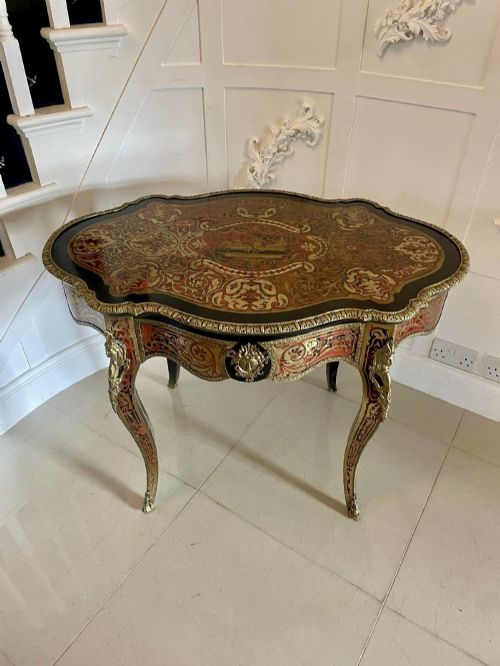
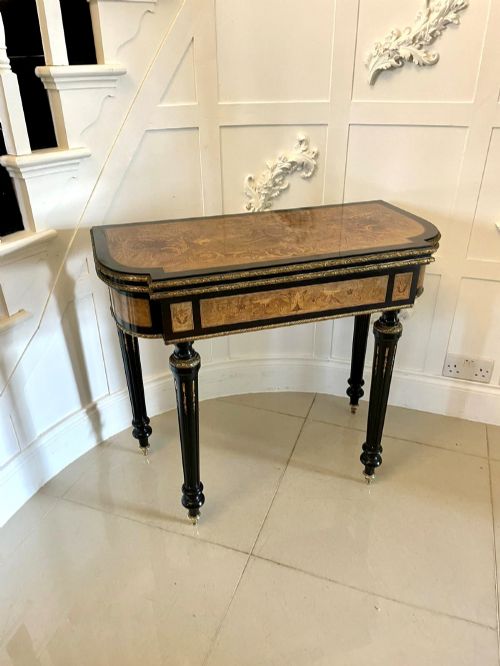
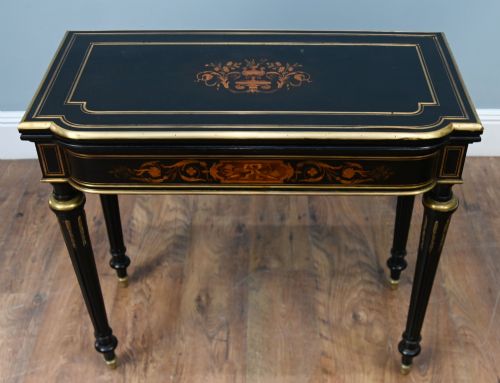
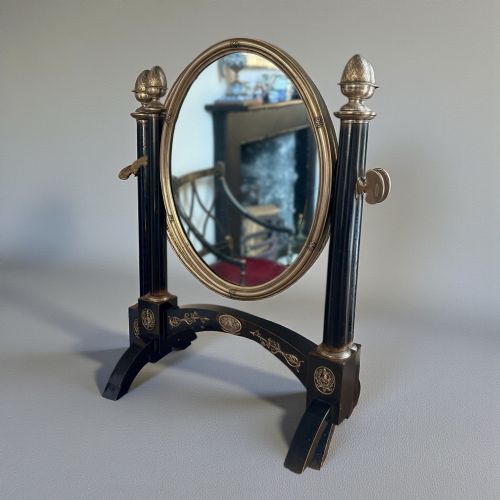
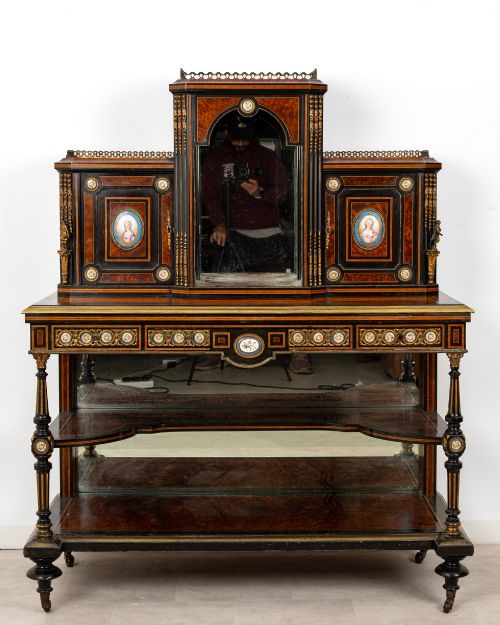
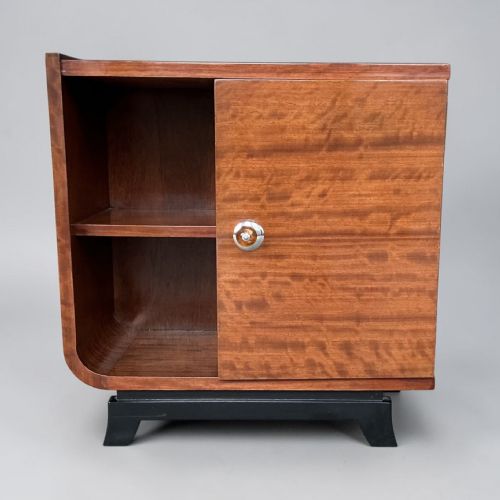
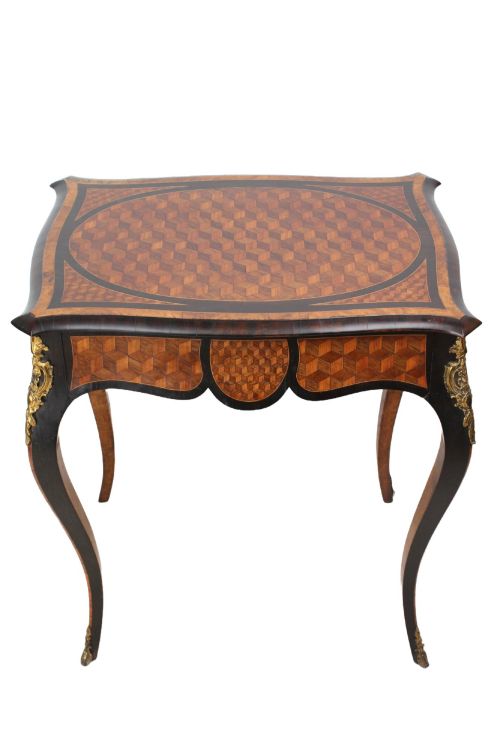
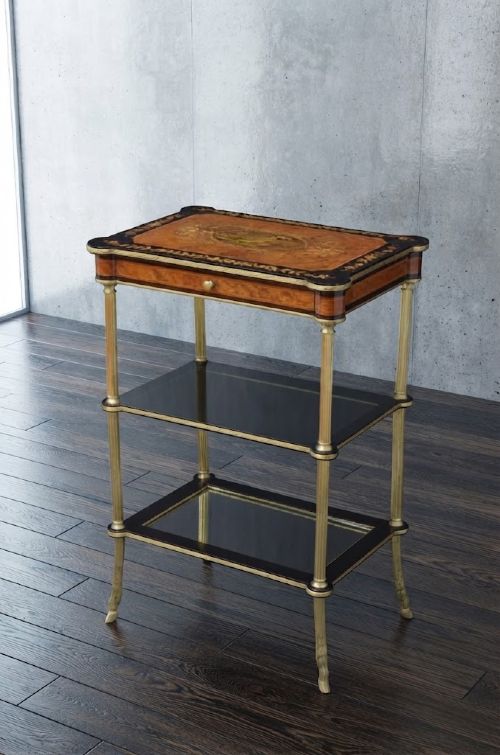
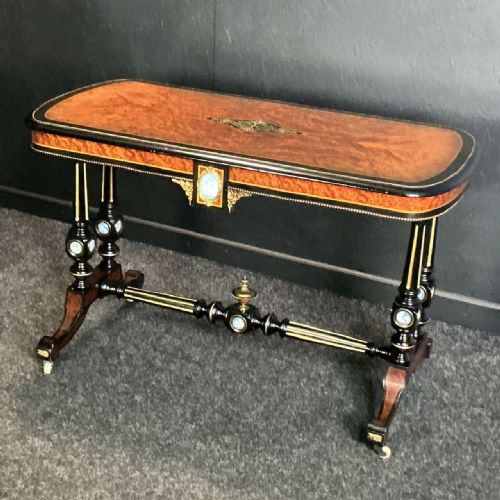
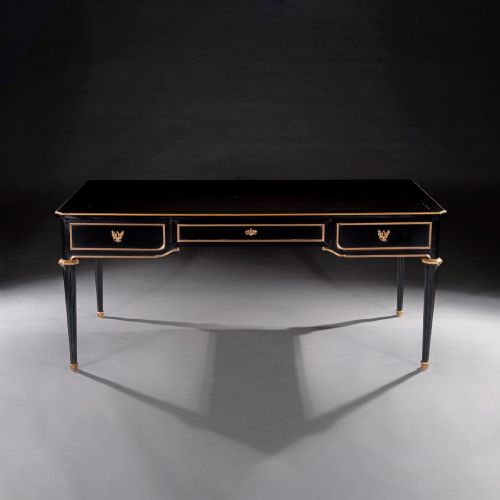
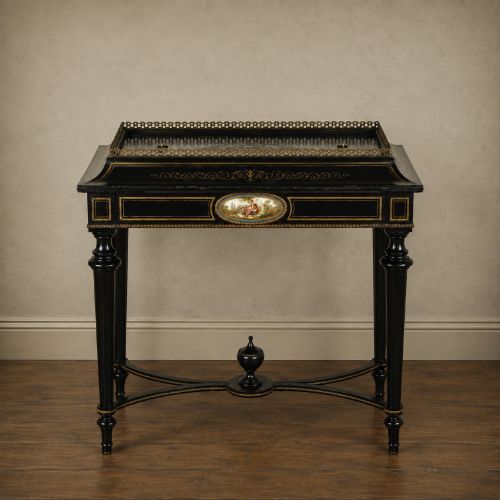
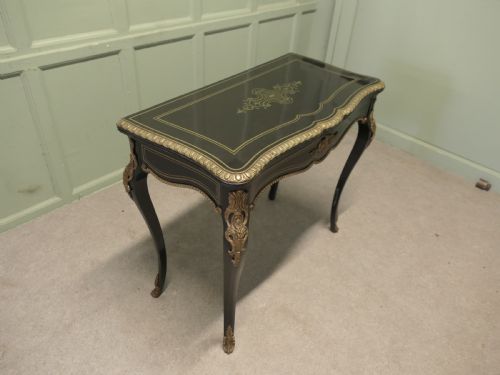
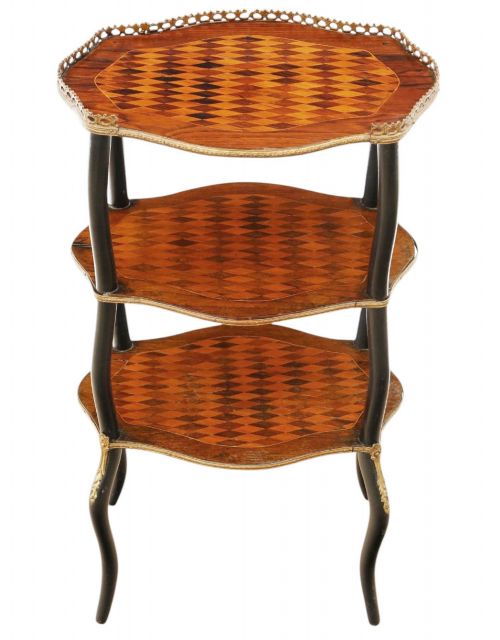
An ebonised French table encompasses a variety of forms designed for nineteenth-century reception rooms, salons, and boudoirs. Buyers encountering this phrase will find centre tables, writing desks, console tables, and tiered etageres reflecting continental revival styles.
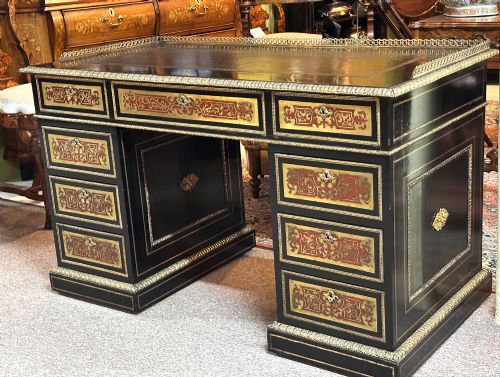
The selection ranges from elaborate Napoleon III bureau-plats with gilt mounts to simpler side tables and gueridons featuring marble tops. These pieces merge functional utility with ornamental displays of marquetry, brass inlay, and porcelain plaques.
How they were made
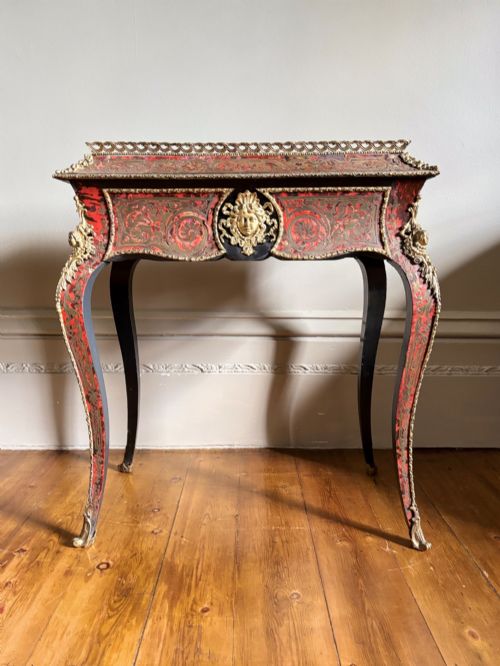
Cabinetmakers utilised dense hardwoods such as mahogany or walnut, staining or polishing the timber to imitate costly ebony. This dark ground provided high contrast for decorative elements like tortoiseshell, amboyna wood, and intricate brass stringing.
Gilt bronze, or ormolu mounts, were cast and chased to embellish corners, legs, and aprons, while ceramic plaques and painted porcelain were inset into surfaces. Marquetry panels incorporated contrasting veneers to create geometric patterns and floral motifs across tabletops and drawers.
Listings feature nineteen-century periods including Victorian, Napoleon III, and Edwardian eras, utilising brass, ormolu, porcelain, and tortoiseshell materials.
What varies in quality
The standard of a piece depends on the precision of its marquetry and the crispness of its metal mounts. Hand-chased ormolu with sharp definition distinguishes superior examples from mass-produced castings.
Cabinetmaking integrity dictates value, seen in the seamless fit of drawers, the stability of tiered etageres, and the quality of the underlying timber beneath the ebonised finish.
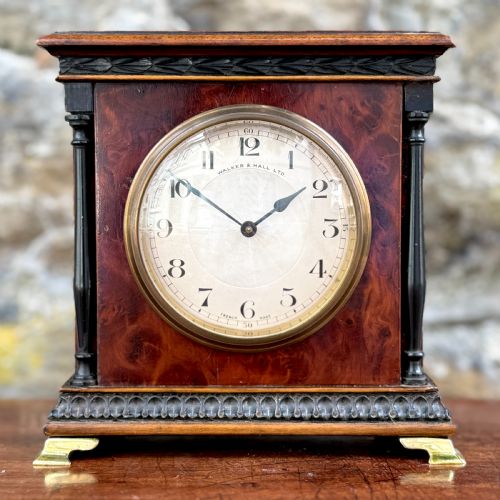
JAS Shoolbred·Walker and Hall·Le Roy Paris·Maison Millet·Thomas A Paris·J Forest·M Vivien
The Ebonised French Table Glossary
- Ebonised
- Wood treated with stain or polish to resemble genuine ebony. This technique gained immense popularity during the nineteenth century for furniture and decorative objects.
- Ormolu
- Gilt bronze mounts applied to furniture edges and feet. The process involves coating bronze in liquid gold amalgam before heating.
- Boulle
- Marquetry technique utilising tortoiseshell and brass inlaid in counter-changed patterns. It takes its name from André-Charles Boulle, cabinetmaker to Louis XIV.
- Gueridon
- A small round table supported by one or more central columns. Originating in the seventeenth century, these tables frequently feature marble tops.
- Bonheur-du-jour
- A light ladies writing desk featuring a small cabinet or set of shelves superstructure upon the main writing surface.
Ebonised French Table: Frequently Asked Questions
How do I identify Napoleon III style?
The Napoleon III style combines historical revivals with lavish ornamentation, drawing inspiration from Louis XV and Louis XVI aesthetics. You will notice heavy reliance on ebonised finishes paired with intricate brass marquetry and ormolu mounts.
These pieces reflect the eclectic tastes of the Second French Empire, prioritising decorative richness over strict historical accuracy.
Where should I place a gueridon?
A gueridon with a marble top suits smaller reception spaces, hallways, or corners as a lamp table. Their compact circular format allows them to function independently without dominating a room.
Keep them away from direct heat sources to protect the wooden structure and the ebonised finish from splitting.
How do I care for ebonised wood?
Dust surfaces regularly with a soft, dry cloth to prevent particulate accumulation. Avoid silicone-based polishes, which can degrade the historic finish over time.
Maintain stable room humidity to protect delicate veneer work and prevent the timber beneath from warping or cracking.