






Antique French Whatnot
These antique french whatnot pieces are tiered open shelves built for display, offering a practical yet decorative stage for small treasures in a room.
Antique French Whatnot
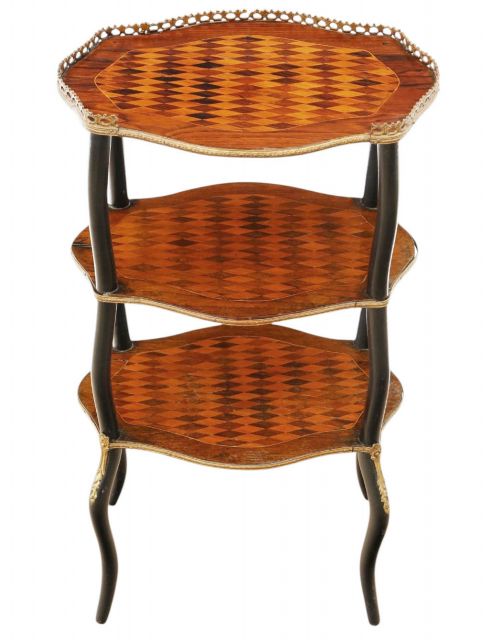
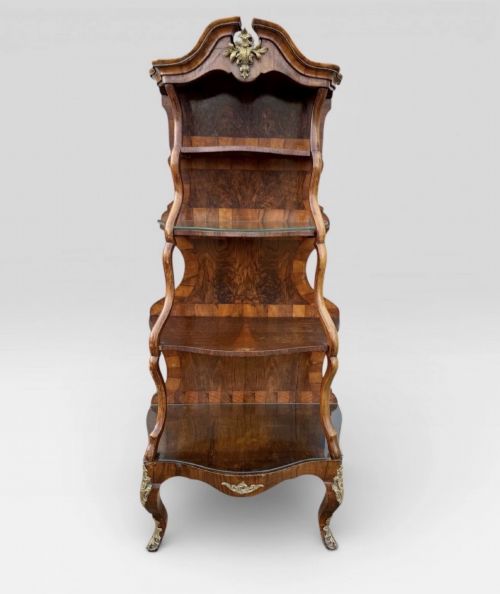
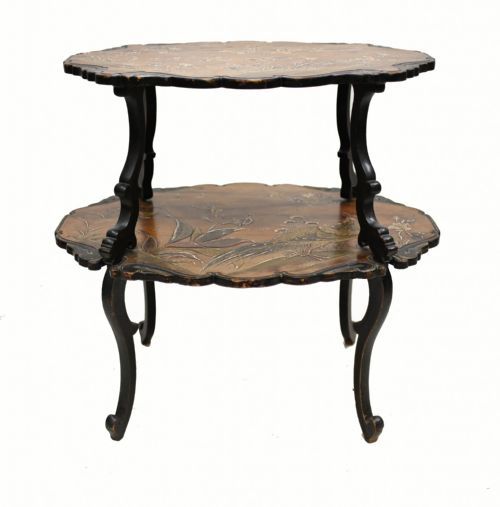
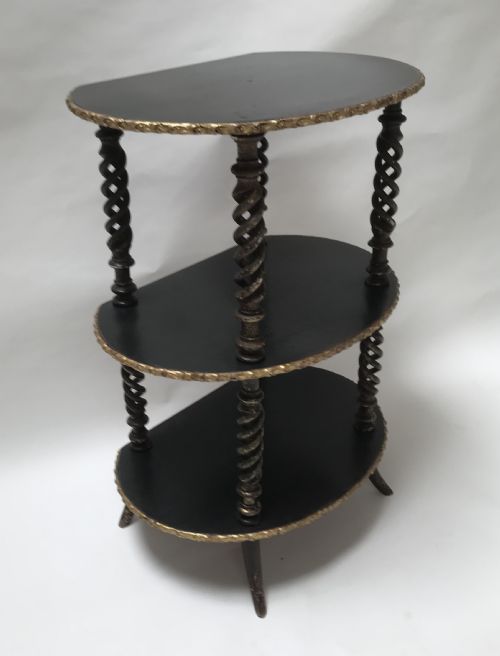
When you search for an antique french whatnot, you are looking at tiered stands and etageres designed to hold ornaments, books, and small display items. The pieces seen here span from the mid nineteenth century through to the early twentieth century, taking the form of multi-tiered open shelves and side tables.
The most common versions on this page are three-tier and four-tier etageres utilising walnut, ebonised wood, and mixed timber parquetry. Styles range from Louis XV and Rococo Revival to Japonisme and Belle Epoque, reflecting the diverse decorative tastes of the nineteenth and early twentieth centuries.
Materials and construction
Cabinetmakers constructed these tiers primarily from walnut, mahogany, and ebonised wood, often enhanced with mixed timber parquetry and intricate marquetry. These foundational timbers provided the structural strength required to support multiple open levels without sagging.
Decorative metal mounts in ormolu and gilt brass frequently accent the corners, legs, and galleries of the better pieces. Japanning, lacquer, and painted finishes also appear, showing the influence of Asian decorative arts on European furniture production during this era.
Antique French Whatnot Retail Price Guide 2026
Typical asking prices for french whatnot among the pieces listed under this phrase on Sellingantiques today, from the lower quarter to the upper quarter. They describe what is for sale here now, not the wider market.
Listings on this site include pieces from the Victorian and Edwardian eras, utilising walnut, amboyna, and ebonised wood alongside gilt metal mounts.
Assessing quality and craftsmanship
Quality in these tiered stands rests upon the crispness of the timber inlay and the precision of the parquetry work. Finer examples display meticulous hand-cut veneers and tight joints where the upright supports meet the shelves.
The sophistication of the metal mounts and the depth of the polish further distinguish standard pieces from exceptional ones. Heavier cast ormolu and sophisticated japanning indicate a higher grade of workshop production.
The Antique French Whatnot Glossary
- Etagere
- A piece of furniture consisting of a set of open shelves for displaying small objects or ornaments. It originated in France and often stands on slender legs.
- Marquetry
- Decorative veneer work where pieces of wood, ivory, or shell are fitted together to form geometric or pictorial patterns. It covers the flat surfaces of shelves and tabletops.
- Ormolu
- Gilded bronze used for mounts, feet, and decorative accents on furniture. It adds metallic highlights to the timber framework.
- Japanning
- A type of European finish that emulates Japanese and Chinese lacquerwork. It involves layered varnishes, often decorated with painted or gilt motifs.
- Parquetry
- Geometric mosaic woodwork used for floors or furniture surfaces. It utilises contrasting timbers to create repeating patterns.
Antique French Whatnot: Frequently Asked Questions
What is an antique french whatnot used for?
These tiered stands were originally designed to hold small decorative objects, porcelain, and books in reception rooms. Today, they serve a similar purpose, providing vertical display space in smaller rooms.
They also function effectively as plant stands or bedside tables depending on the height and tier configuration.
How do I date an etagere?
Dating relies on identifying the prevailing stylistic influences, such as Louis XV Revival or Japonisme, alongside the timber choices. Ebonised woods and heavy marquetry often point towards the later nineteenth century.
Construction methods, such as the type of veneer and the casting quality of any brass or ormolu mounts, provide additional chronological clues.
Are these pieces structurally stable?
Most tiered stands are surprisingly sturdy, but their multi-level construction means they should be placed on level flooring to prevent wobbling. Heavy items belong on the lowest shelf to maintain a low centre of gravity.
Checking the joints where the upright supports meet the shelves ensures the structure remains sound for daily use.
What is the difference between a whatnot and an etagere?
While both terms describe multi-tiered shelving units, whatnot is traditionally an English term for a stand with multiple shelves, while etagere is the French equivalent.
In practice, pieces described with the French term often feature more decorative mounts, marquetry, and serpentine outlines.