

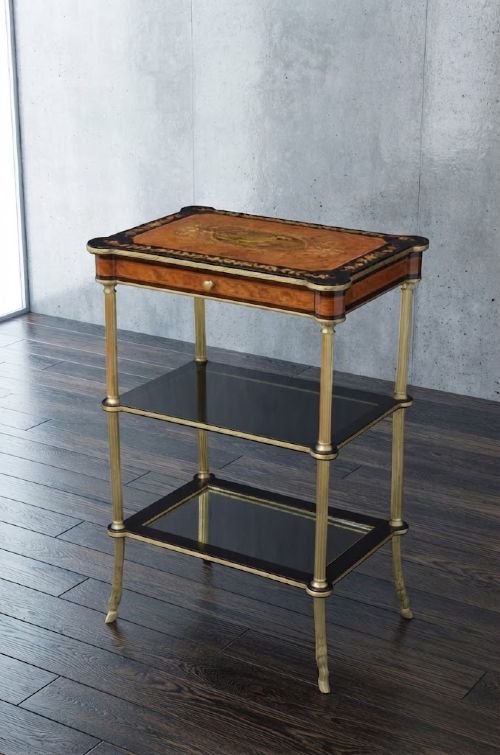
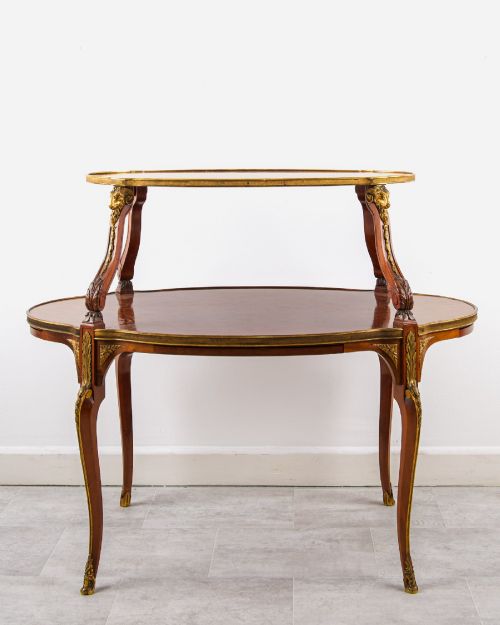


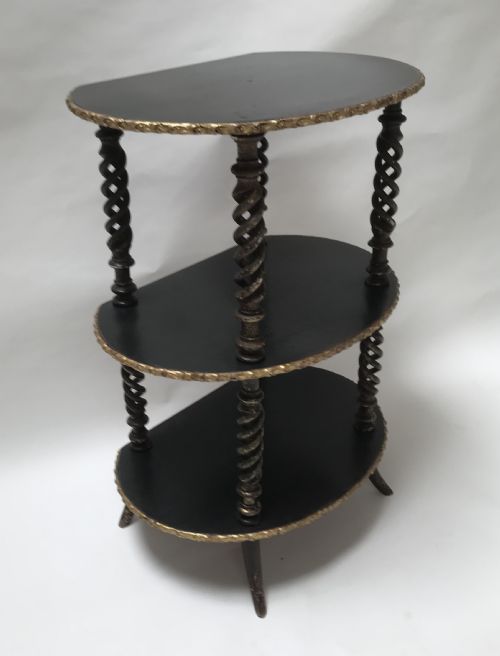

Napoleon III Etagere
A Napoleon III etagere brings layered French display and refined storage into a room, prized for intricate veneers and gilded metal mounts.
Napoleon III Etagere
When you search for a Napoleon III etagere, you are looking at multi-tiered French display furniture dating principally from the nineteenth century, including the 1860 period. These pieces combine open shelving for ornaments with compact footprints suited to varied interior settings.
The versions you are most likely to meet on this page span tabletop etageres, freestanding whatnots, and side tables configured with multiple tiers. They originate from French workshops adhering to the Second Empire style, incorporating decorative wood structures.
Makers utilised rich timbers and distinctive brass ornamentation to define the form. Surviving examples demonstrate the decorative priorities of French chateau and salon interiors from the Victorian era.
How they were made
Cabinetmakers constructed the foundational carcase from solid woods such as walnut and fruitwood, applying sophisticated veneers like amboyna, rosewood, and burr walnut across the visible surfaces. Inlay work frequently defines the tops and shelves of these tiered structures.
Mounts and accents in ormolu and brass are integrated throughout the design, framing shelves and edging table surfaces. Painted finishes also appear on select variants, demonstrating the varied decorative techniques employed in period workshops.
Napoleon III Etagere Retail Price Guide 2026
Typical asking prices for napoleon iii etagere among the pieces listed under this phrase on Sellingantiques today, from the lower quarter to the upper quarter. They describe what is for sale here now, not the wider market.
What varies in quality
The distinction between ordinary and exceptional pieces rests on the choice of timber and the precision of the veneer work. Finer examples display carefully selected amboyna or rosewood grains paired with crisp, well-chased ormolu mounts rather than plain brass strips.
Structural harmony also separates standard items from the best survivals, where tiered platforms maintain rigorous alignment and delicate supports remain entirely rigid. The integration of fine fruitwood inlay elevates a piece beyond basic utilitarian storage into high decorative art.
The Napoleon III Etagere Glossary
- Ormolu
- Gilded bronze used for decorative mounts and ornamentation on furniture. It adds bright metallic contrast to dark woods.
- Amboyna veneer
- A highly prized wood veneer derived from the burl of the narra tree, known for its dense, swirling grain pattern. It appears on high-status nineteenth-century French tables.
- Whatnot
- A nineteenth-century term for an open set of shelves used for displaying ornaments or books. These pieces function as versatile side tables.
- Second Empire
- The architectural and decorative style prevalent in France during the reign of Napoleon III. It is characterised by eclectic revivals and lavish ornamentation.
Napoleon III Etagere: Frequently Asked Questions
How were these tables used?
Original owners used these tiered pieces in salons and drawing rooms to display porcelain, silver, and small decorative objects. Their open shelving kept prized possessions visible and accessible.
Some variants served dual purposes as side tables or sewing tables with specialised compartments. Today, they function similarly as decorative display surfaces in domestic interiors.
Where were they made?
These etageres were produced in France during the nineteenth century, reflecting the tastes of the Napoleon III and Victorian periods. French workshops supplied chateaux and urban residences with these decorative stands.
Cabinetmakers working in the Second Empire style combined native and exotic timbers with cast metal mounts. The resulting pieces spread widely across European and international markets.
How do I identify the period?
Identifying the period involves examining the combination of woods, veneer types, and metal mounts characteristic of nineteenth-century French production. Materials like amboyna veneer, rosewood, and ormolu point directly to this era.
Construction methods and the presence of brass inlay further anchor these pieces in the 1860 to 1900 timeframe. Stylistic cues align closely with French chateau and salon aesthetics.
How do I care for wood and ormolu?
Caring for these pieces requires keeping them away from direct sunlight and heat sources to protect sensitive veneers like amboyna and rosewood. Gentle dusting with a dry cloth maintains the polished wood surface.
Ormolu mounts should be cleaned with care using non-abrasive methods to preserve the metallic finish. Avoid harsh chemical polishes that can damage both the timber and the gilded bronze.