



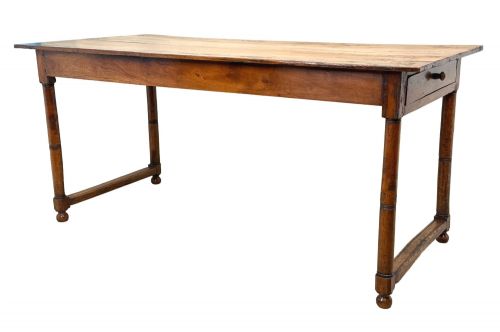
Small French Desk
A small french desk brings compact elegance and refined writing space into a room, combining practical utility with decorative character.
Small French Desk
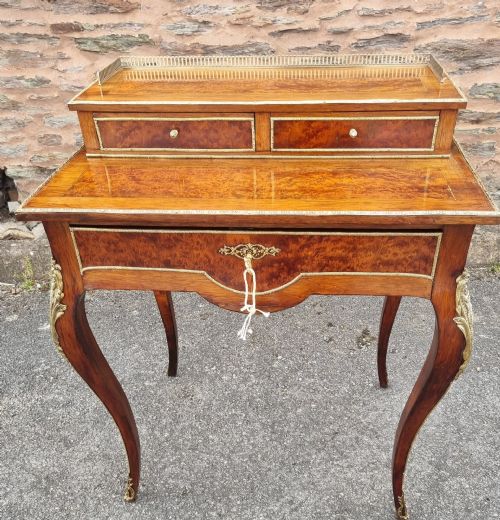
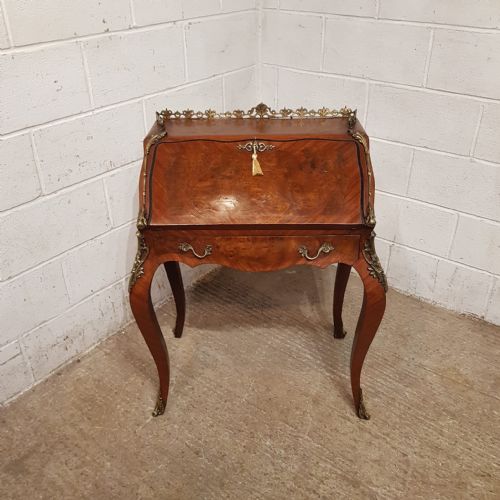
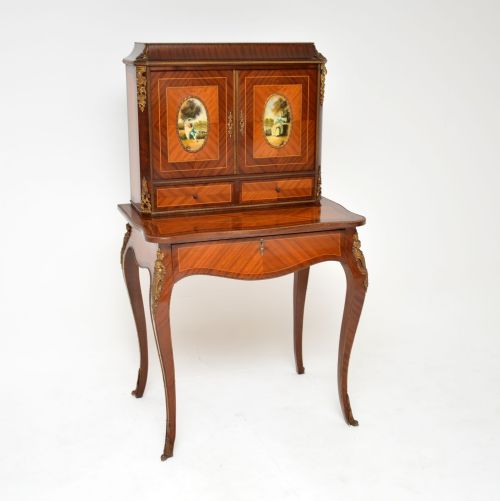
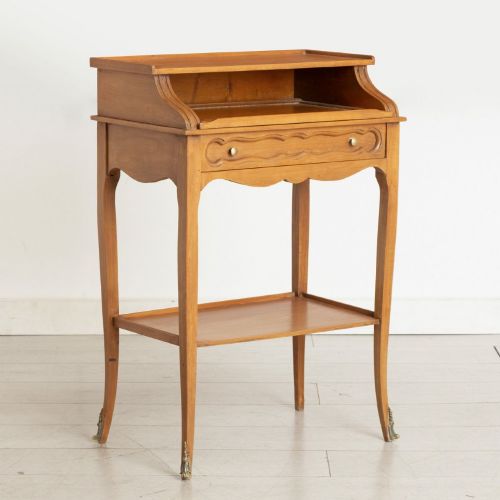
A small french desk encompasses various compact writing forms including bonheur du jour tables, ladies bureaus, writing tables, and side tables designed for domestic chambers. These pieces emerge across the eighteenth century, nineteenth century, and up to nineteen hundred, reflecting evolving writing habits and interior fashions.
The most frequent variations encountered on this page include walnut and oak writing desks alongside kingwood and cherry wood pieces, often displaying revival styles such as Louis XV, French Rococo, or provincial sensibilities. Their compact proportions make them suitable for modern interiors requiring functional writing surfaces with historical presence.
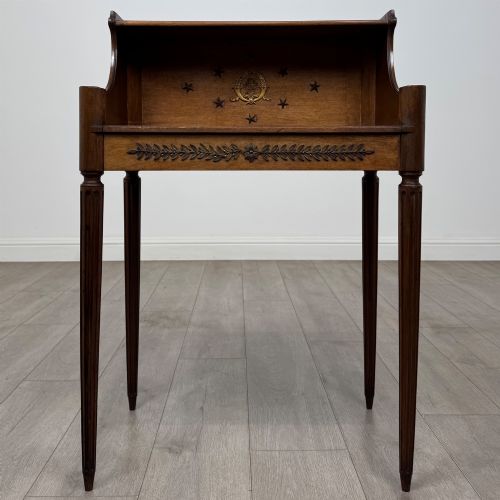
Makers and craftsmen of these periods utilised distinctive regional vocabularies, ranging from the ornate mounts of nineteenth century salons to the simpler turned or panelled construction of provincial workshops. Each format offers a specific approach to storage and writing surface, from fitted superstructures with small drawers and mirrors to plain writing ledges.
Materials and Construction
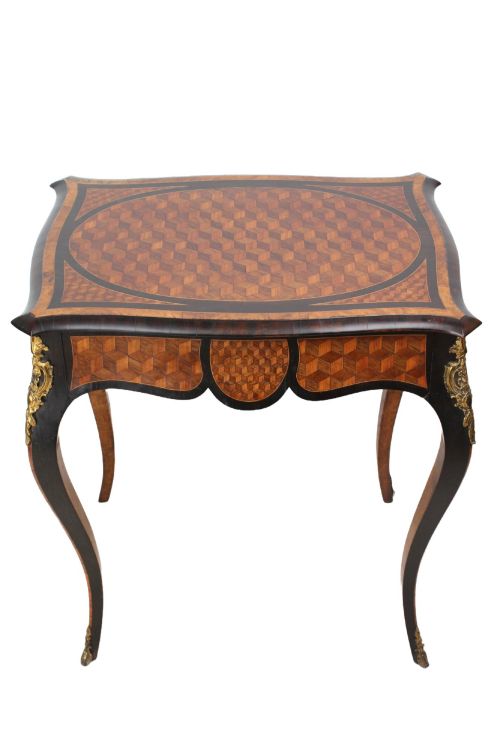
Makers constructed these writing surfaces using a variety of native and exotic timbers including walnut, kingwood, oak, cherry wood, and ebonised woods. Carcasses often employed solid oak or walnut, sometimes overlaid with decorative veneers or intricate parquetry patterns.
Metal enrichment played a significant role in nineteenth century examples, with cast and chased ormolu and brass mounts highlighting structural lines and protecting corners. Glass panels, iron fittings, and inset leather or wooden writing surfaces completed the functional assembly of these compact desks.
Retail Price Guide 2026
Typical UK retail prices for small french desk, calculated from the Sellingantiques database of over a million retail prices indexed since 2003. This retail price guide relies exclusively on Sellingantiques data; no external sources or auction records are used, so the figures do not describe the wider market.
One tiny nineteenth century cherry wood box served dual purposes as a jewellery chest and a secret writing desk.
Assessing Quality
The distinction between tiers of production lies in the precision of veneer selection, the crispness of scroll leaf carving, and the integration of metal mounts. Superior pieces display continuous grain matching across drawer fronts and harmonious proportions where secondary timbers are selected with equal care.
Workmanship in the joinery dictates longevity, with hand-cut dovetails on drawer boxes and secure seating of brass or ormolu mounts indicating higher atelier standards. Lesser examples rely on heavier, unrefined timber framing with simplified surface decoration and minimal hand-shaping.
The Small French Desk Glossary
- Bonheur du jour
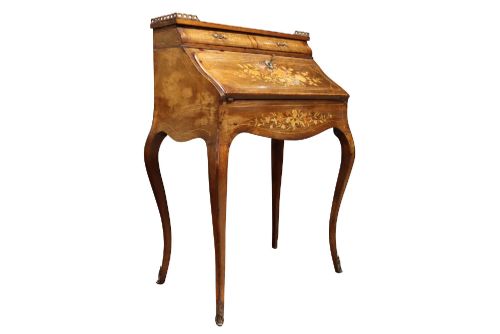
- A small light ladies desk featuring a raised superstructure with small drawers, shelves, or a cabinet above the main writing surface. This form gained popularity during the eighteenth century and remained favoured through the Victorian era.
- Ormolu
- Gilded bronze mounts applied to furniture for decorative enrichment and edge protection. The technique involves applying a gold amalgam to bronze before firing.
- Kingwood
- A dense, richly figured exotic timber featuring dark violet and brown striping, frequently utilised for veneers on nineteenth century pieces. It provided a luxurious contrasting surface for fine salon furniture.
- Parquetry
- Geometric wood mosaic work assembled from small veneer tiles to create repeating patterns on tabletops and drawer fronts. This technique demonstrates the precision of the cabinetmaker.
- Boulle
- A marquetry technique employing cut brass and tortoiseshell inlaid into an ebonised wood ground, associated with luxurious nineteenth century French revival furniture. The resulting surface catches light across contrasting metallic and dark tones.
Frequently Asked Questions
What is a bonheur du jour?
A bonheur du jour is a small ladies writing desk featuring a raised upper section equipped with miniature drawers, pigeonholes, or a cabinet. These upper tiers allowed users to store writing paper, correspondence, and small valuables directly on the desk surface.
First appearing in mid-eighteenth century France, the form returned to popularity during the nineteenth century revival periods. They served primarily in private chambers and boudoirs for personal letter writing.
How do I care for kingwood surfaces?
Kingwood and other polished timber surfaces require protection from direct sunlight and extreme humidity fluctuations to prevent veneer cracking or fading. Regular dusting with a soft, dry cloth maintains the finish without needing heavy chemical polishes.
Applying a traditional beeswax sparingly helps nourish the timber and preserve the chatoyancy of the grain. Avoid placing damp items or hot cups directly on antique writing surfaces.
Where were these desks placed?
Historically, these compact desks found their place in private withdrawing rooms, bedrooms, and ladies boudoirs rather than formal libraries. Their modest dimensions allowed them to sit against walls or near windows where natural light favoured letter writing.
In contemporary interiors, their smaller footprints enable placement in hallways, sitting rooms, or home offices as functional writing ledges. They bring period character without dominating spatial layouts.
How do I identify Louis XV revival style?
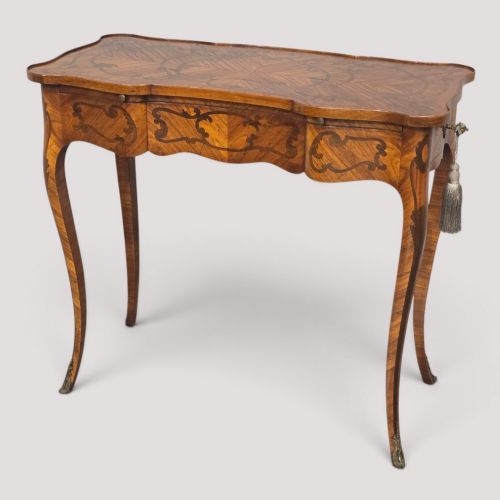
Louis XV revival pieces are characterised by flowing asymmetrical curves, cabriole legs, and naturalistic scroll leaf carving. Furniture makers working in the nineteenth century drew inspiration from mid-eighteenth century forms to create lighter, decorative pieces.
Look for serpentine outlines on tabletops and restrained use of ormolu mounts highlighting the sweeping lines of the frame. This style avoids rigid symmetry in favour of graceful, organic contours.