


Boulle Writing Desk
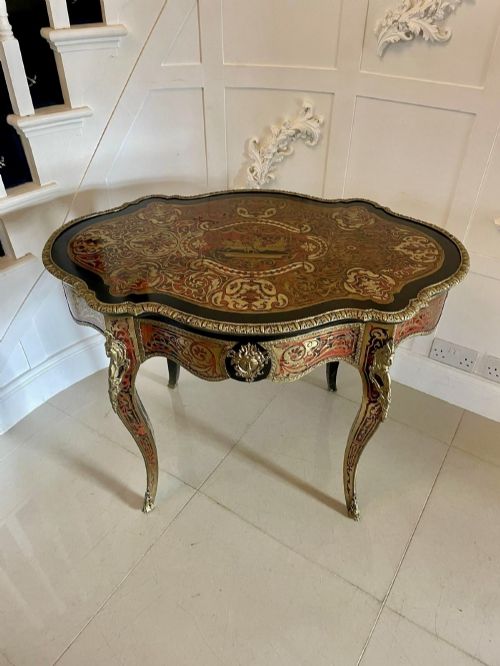
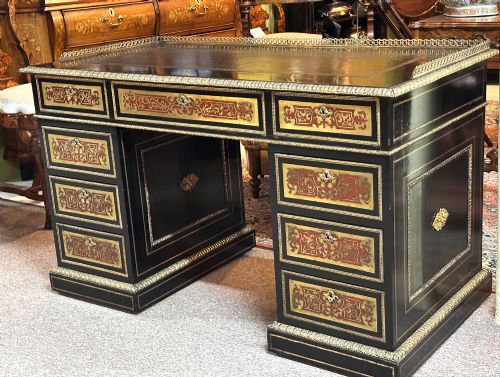
A boulle writing desk is a striking piece of tortoiseshell and brass marquetry furniture that brings French opulence to a study.
Boulle Writing Desk
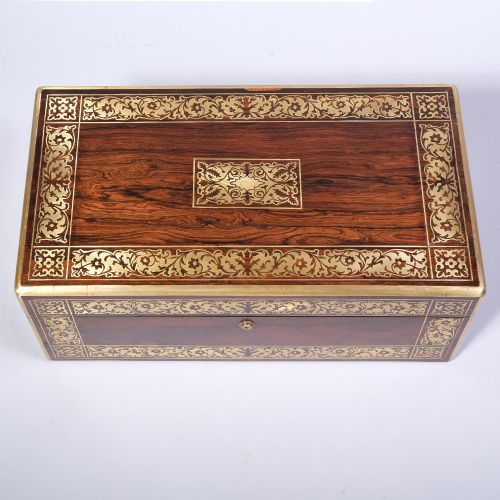
A boulle writing desk unites historic French craftsmanship with practical workspace, primarily appearing in nineteenth century iterations alongside Victorian interpretations. The market offers various formats ranging from grand centre tables and bureau plat designs to compact writing boxes and slope forms.
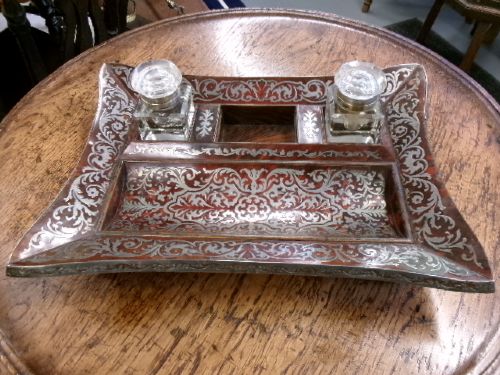
Buyers encounter French Napoleon III styles and Louis XV revivals alongside Regency rosewood examples. Smaller pieces like desk stands and inkstands complement the larger freestanding tables and bonheur du jour cabinets seen across the inventory.
How they were made
Craftsmen built these pieces using ebonised wood or rosewood as a dark foundation for intricate metal and organic decoration. Sheets of brass and tortoiseshell were cut together in contrasting marquetry patterns known as premiere partie and contre-partie.
Gilded ormolu mounts accentuate the structural edges, whilst glass inkwells and leather writing surfaces complete the functional portions of the desks and boxes.
What varies in quality
The precision of the brass and tortoiseshell marquetry dictates the tier of the piece, separating standard production from exceptional artistry. Crispness in the cast ormolu mounts and the depth of the ebonised wood finish further distinguish finer workshops.
Proportion and scale play significant roles, with smaller bonheur du jour cabinets and diminutive centre tables demonstrating remarkable delicacy in their intricate brass scrollwork.
Maison Millet
The Boulle Writing Desk Glossary
- Boulle
- A marquetry technique using cut brass and tortoiseshell invented by André-Charles Boulle. It defines the rich aesthetic of these nineteenth century desks.
- Ormolu
- Gilded bronze used for decorative mounts and edgings on furniture. It provides a bright metallic contrast to the dark ebonised wood.
- Bonheur du jour
- A light lady's writing desk featuring a small cabinet or tiered shelving on top. This form appears frequently in nineteenth century pieces.
- Marquetry
- Decorative patterns formed by fitting together thin slices of materials like brass and tortoiseshell onto a wood carcase. It covers the surfaces of these desks.
Boulle Writing Desk: Frequently Asked Questions
What is a boulle writing desk?
A boulle writing desk is a historic piece of furniture decorated with tortoiseshell and brass marquetry in distinct French styles. These tables and cabinets showcase elaborate metal scrollwork against dark ebonised wood.
Most examples date from the nineteenth century, reflecting revival periods such as Napoleon III and Louis XV. They range from large freestanding centre tables to compact desk boxes.
How do I date a boulle desk?
Dating relies on examining the underlying wood construction, the style of the ormolu mounts, and the character of the brass inlay. Nineteenth century Victorian and Napoleon III pieces often emulate earlier Louis XV motifs.
Consulting the specific form, such as a bonheur du jour or a bureau plat, helps align the piece with documented periods like the Regency or mid nineteenth century.
Where should I place a centre table?
A centre table is finished on all sides, making it suitable for placement in the middle of a room rather than against a wall. This allows the brass and tortoiseshell marquetry to be viewed from every angle.
Ensure the surface is kept away from direct sunlight to protect the delicate tortoiseshell and leather writing inserts from fading over time.
What is the difference between bureau plat and bonheur du jour?
A bureau plat is a flat-topped freestanding writing table with drawers, designed to sit prominently in a room. It offers an open work surface framed by ormolu mounts.
A bonheur du jour is a smaller writing cabinet featuring a superstructure with small drawers and compartments above the main desk surface. Both styles incorporate intricate boulle marquetry.