

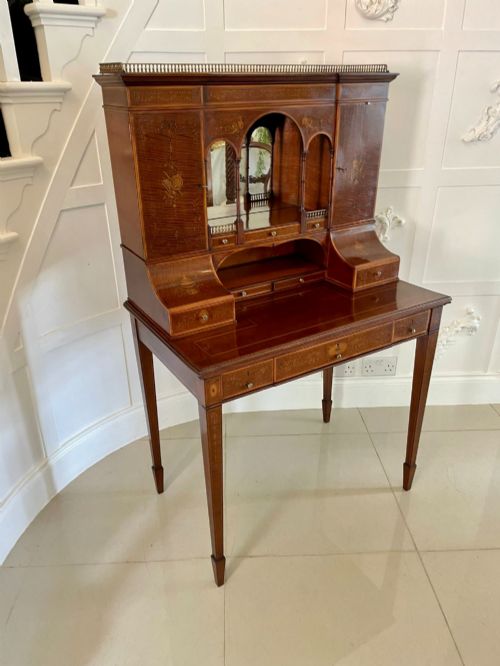
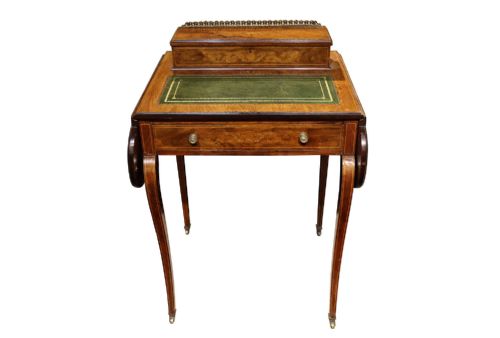
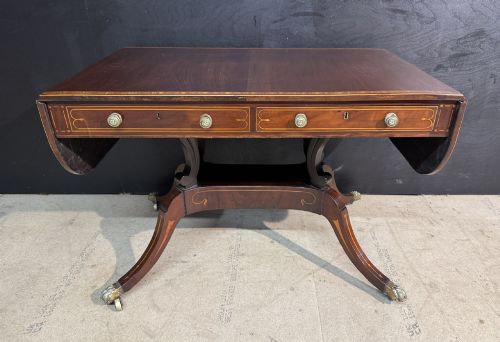
Brass Inlay Writing Table
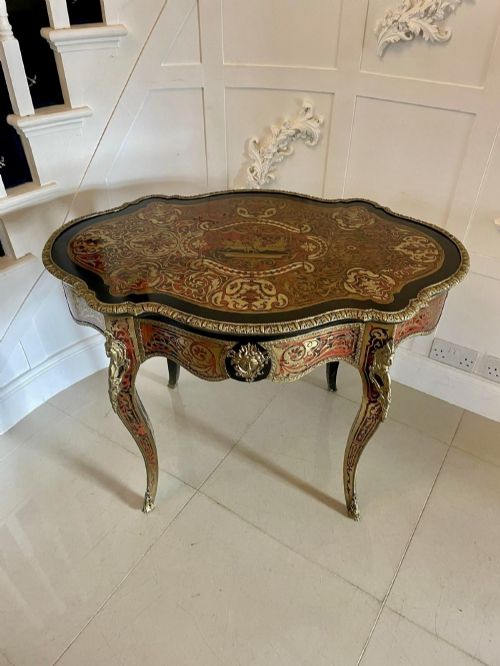
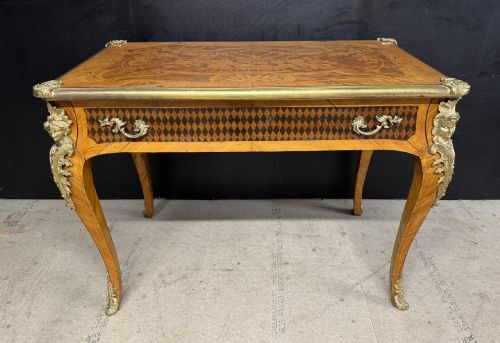
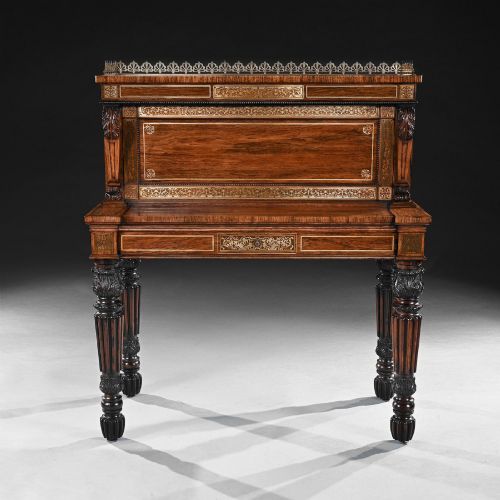
A brass inlay writing table brings tactile warmth and refined detail to a room, uniting functional workspace with decorative cabinetmaking.
Brass Inlay Writing Table
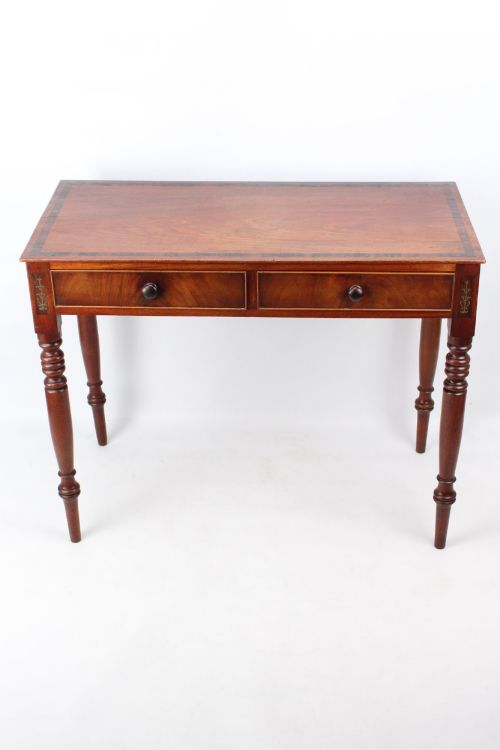
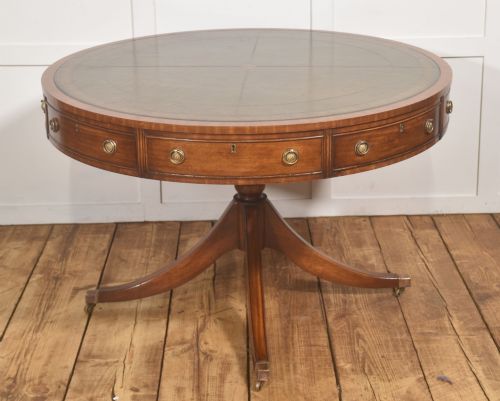
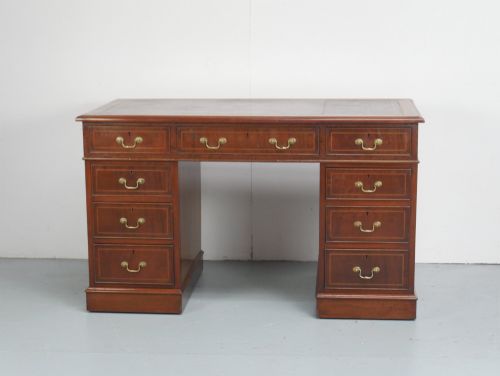
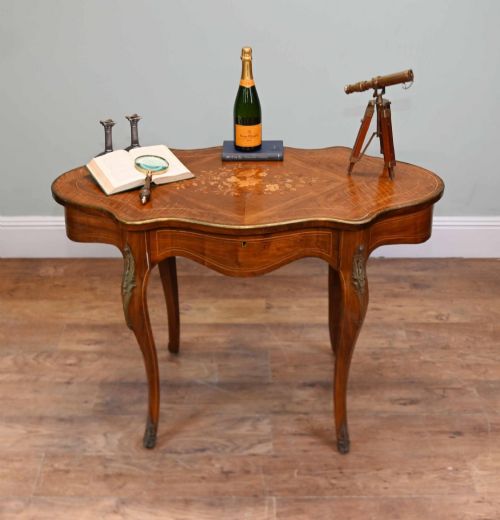
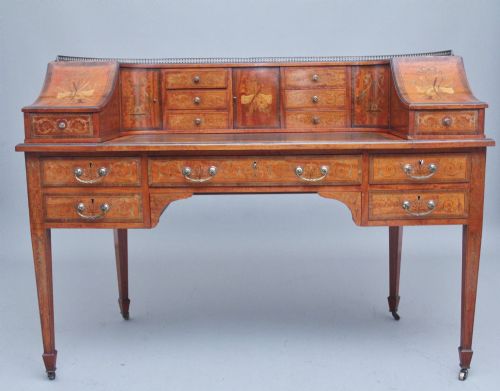
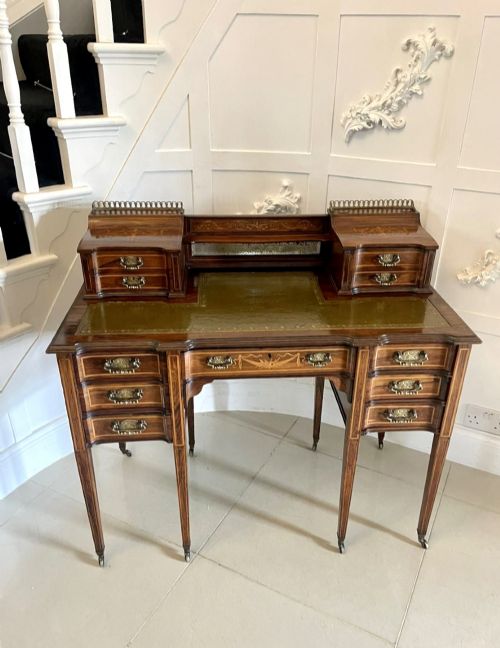
Buyers will encounter various formats on this page, including freestanding partner desks, kidney-shaped writing surfaces, and elaborate Carlton house desks fitted with multiple small drawers. Many pieces integrate leather inserts alongside their brass work, serving as functional desks or decorative centre tables.
Origins span British cabinetmaking traditions and French workshop styles, drawing on George III, Regency, and Sheraton Revival design vocabularies. These desks reflect the changing domestic requirements of the nineteenth and early twentieth centuries, moving from formal Georgian proportions to lighter Edwardian home office furniture.
Materials and construction
Cabinetmakers constructed these tables using dense hardwoods like mahogany, rosewood, and satinwood, frequently applying walnut and ebonised wood for contrast. Timber selection provided a stable foundation for the delicate brass stringing, marquetry, and ormolu mounts applied across the surface.
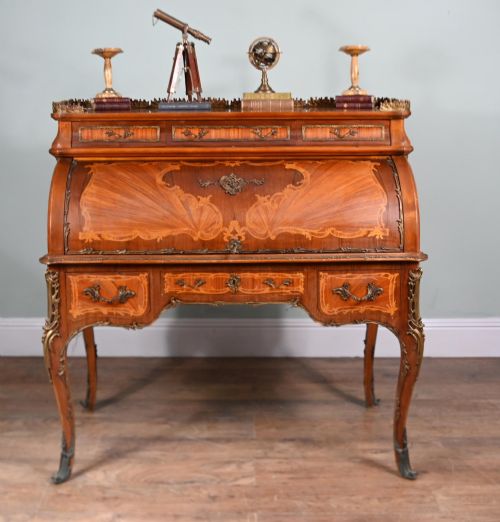
Brass inlay required meticulous hand-cutting into wood channels, securing delicate metal lines and intricate foliage motifs flush with the timber top. Ormolu mounts and gilt bronze details were then cast and chased before being fixed to corners, edges, and drawers to frame the wood grain.
Brass Inlay Writing Table Retail Price Guide 2026
Typical asking prices for brass inlay writing table among the pieces listed under this phrase on Sellingantiques today, from the lower quarter to the upper quarter. They describe what is for sale here now, not the wider market.
Listings feature brass inlay writing tables spanning the nineteenth and early twentieth centuries, incorporating mahogany, rosewood, and satinwood.
Judging quality and execution
Quality rests primarily in the precision of the brass inlay work and the structural integrity of the underlying timber carcase. Superior pieces demonstrate seamless flush-fitting brass lines that follow the contours of curved kidney-shaped desks without lifting or gapping.
Finer examples distinguish themselves through thoughtful secondary woods, meticulously dovetailed drawer linings, and original fitted interiors complete with compartments and leather writing inserts. The crispness of cast ormolu mounts and the depth of polish on rosewood and satinwood further separate standard production from workshop masterworks.
Maple & Co.·Gillows Oxford Street Workshop·Edwards & Roberts
The Brass Inlay Writing Table Glossary
- Brass inlay
- The technique of embedding thin strips or shaped pieces of brass flush into the wooden surface of a desk top or frieze. It creates sharp geometric patterns or delicate floral scrolls.
- Carlton house desk
- A sophisticated desk type featuring a curved superstructure of small drawers and compartments wrapping around the rear and sides of the main writing surface. It typically incorporates leather inserts and multiple pigeonholes.
- Ormolu
- Gilded bronze used for decorative mounts, feet, and handles on French and English furniture. It provides a bright metallic contrast against dark rosewood and ebonised timbers.
- Sofa table
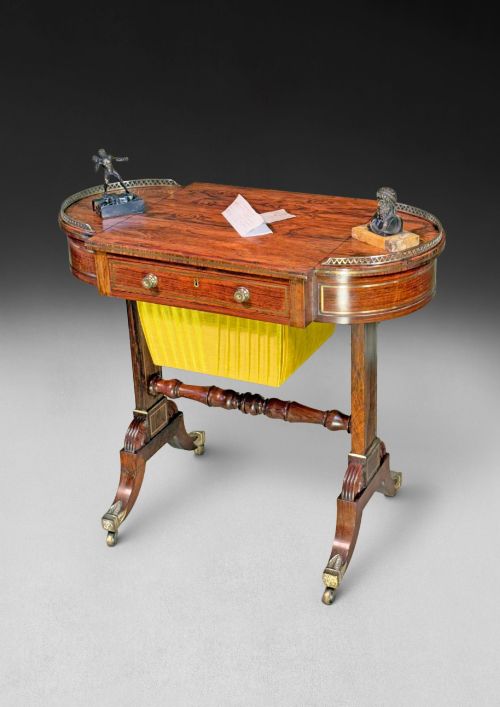
- A rectangular occasional table originally designed to stand before a sofa, featuring drop leaves at either end and usually twin pedestal supports. These tables often incorporate brass stringing and frieze drawers.
- Marquetry
- Decorative woodwork where pieces of different coloured veneers are assembled to form pictorial or abstract patterns. It frequently appears alongside brass inlay on French bureau plat designs.
Brass Inlay Writing Table: Frequently Asked Questions
What is a Carlton house desk?
A Carlton house desk is a form of writing table featuring a curved superstructure of small drawers and compartments set around the back and sides of the leather-lined writing surface.
First appearing in the late eighteenth century, this design provides extensive pigeonholes and storage while maintaining a compact footprint suitable for a principal room.
How do I care for leather writing surfaces?
Leather inserts require gentle cleaning with a dry or barely damp cloth, avoiding harsh chemical cleaners that can strip the original tooling and colour. Regular conditioning helps preserve the suppleness of nineteenth-century hide.
Protecting the surface from direct sunlight prevents the leather from fading and cracking over decades of daily use.
Where should I place a freestanding desk?
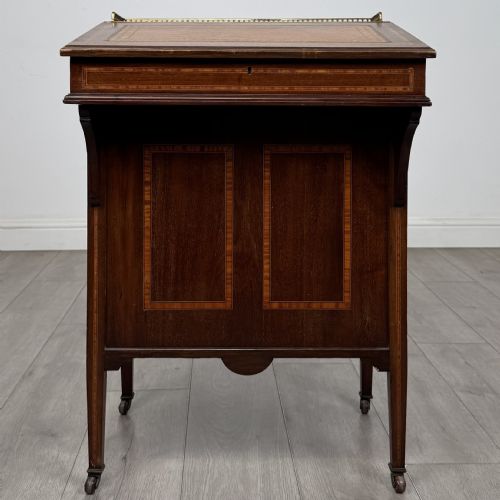
A freestanding desk is designed to be viewed from all sides, making it ideal for the middle of a room rather than pushed against a wall. The back of the piece receives the same decorative mahogany or rosewood treatment and brass inlay as the front.
Ensure adequate natural light falls across the writing surface without exposing the timber veneers to direct, harsh solar rays.
How do I distinguish Regency from Edwardian pieces?
Regency pieces date from the early nineteenth century, featuring dense rosewood, bold brass mountings, and classical architectural proportions. They often display deep, rich patination acquired over two centuries.
Edwardian interpretations, built around 1900, typically utilise lighter satinwood and mahogany with delicate stringing, reflecting a revival of eighteenth-century Sheraton aesthetics tailored for smaller Edwardian homes.