
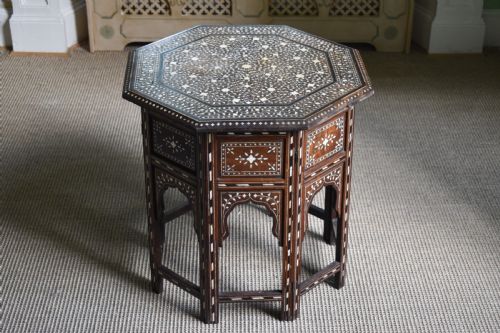


Hoshiarpur Occasional Table
A hoshiarpur occasional table brings intricate craftsmanship into a room through dense bone inlay and carved woodwork.
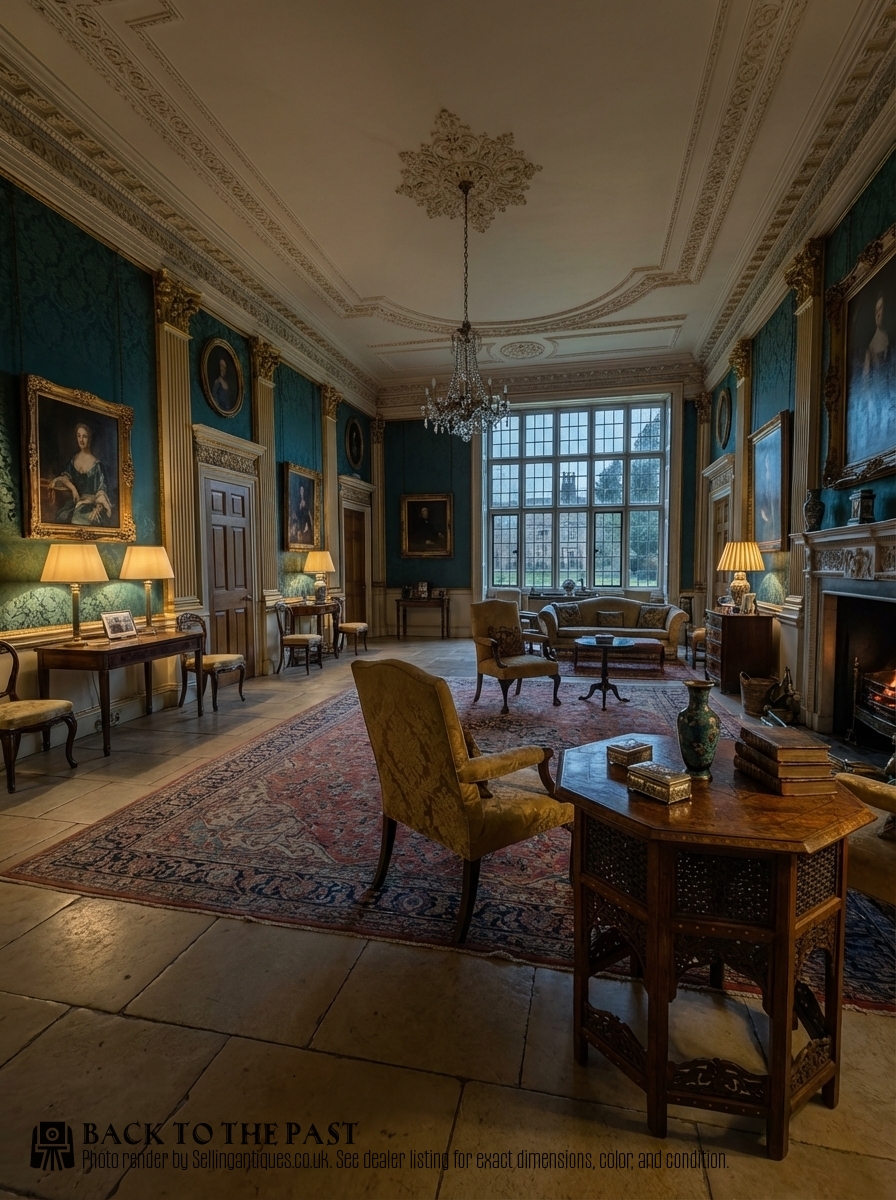
Hoshiarpur Occasional Table
A hoshiarpur occasional table originates from the Punjab region of India and dates primarily from the nineteenth and early twentieth centuries. These pieces represent a distinct Anglo-Indian aesthetic that proved immensely popular during the Victorian period.
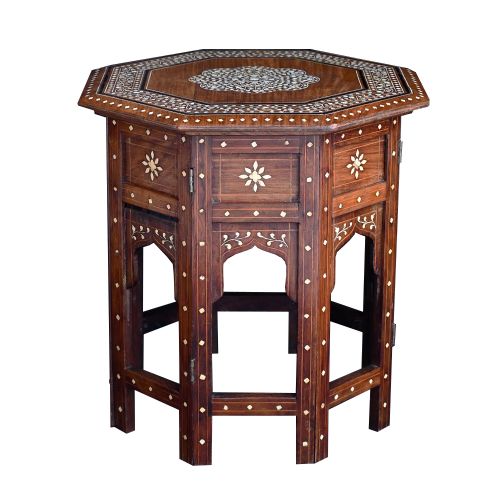
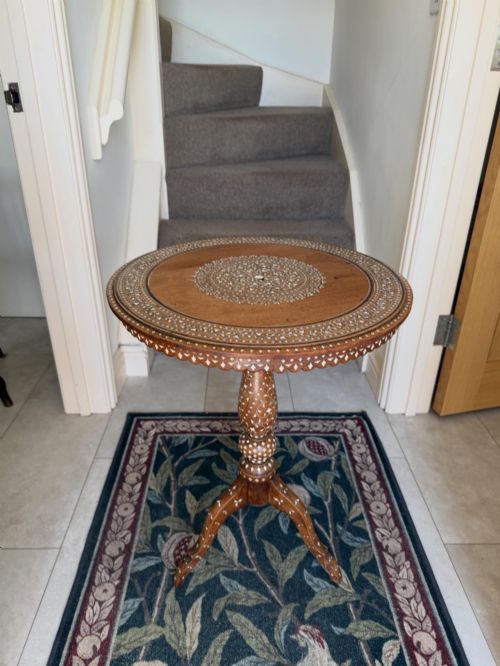
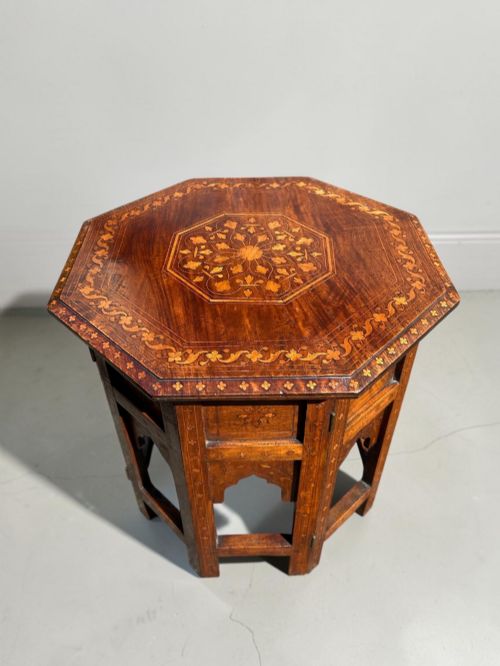
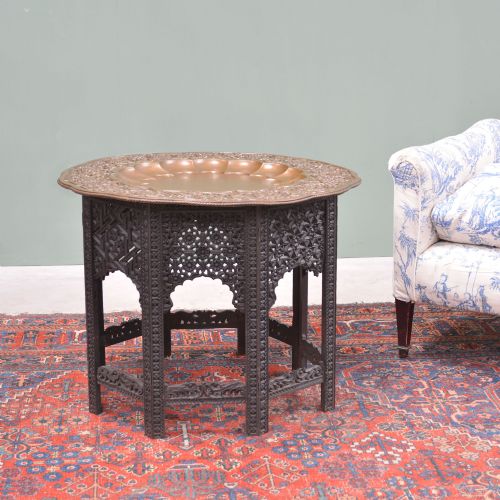
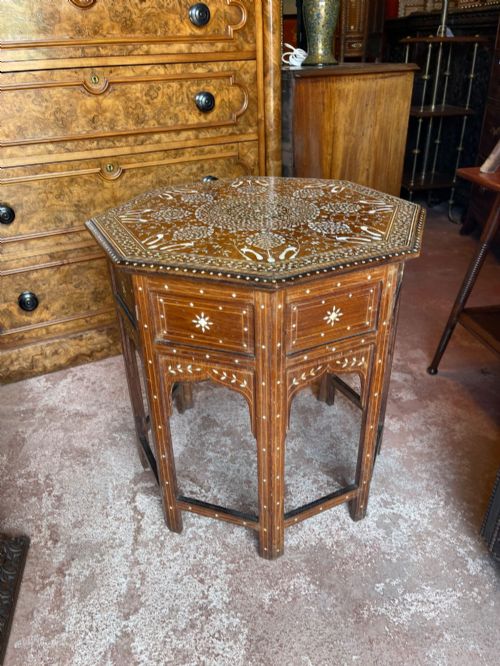
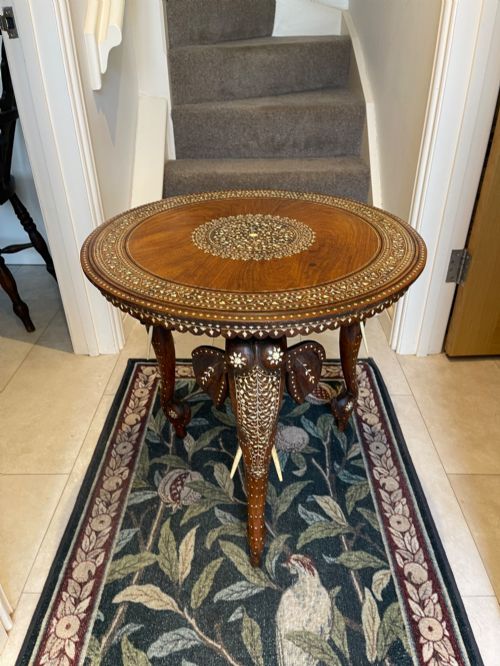
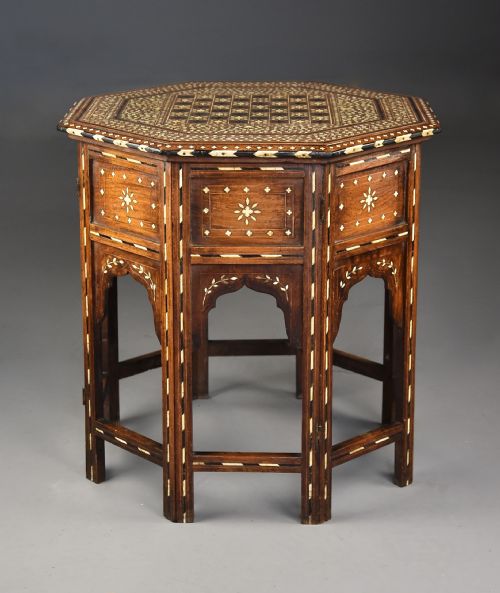
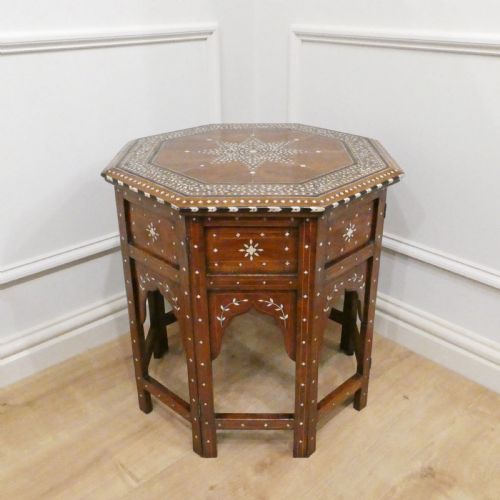
The most common form on this page is the octagonal table, frequently designed with folding legs to serve as a versatile side or tray table. Buyers also encounter circular pedestal tables, square formats, and imaginative figural designs such as elephant tables.
Makers adapted traditional Indian woodworking techniques to suit Western domestic tastes, producing portable furniture that functioned both as practical surfaces and decorative talking points.
Materials and Construction
Artisans constructed these tables using dense timbers such as shisham wood, teak, sandalwood, and rosewood. The structural wood provides a dark, heavy base that contrasts sharply with the pale decorations applied to the surface.
Intricate geometric patterns and figural motifs are formed through precise bone inlay or wood inlay. Many examples incorporate delicate brass wirework alongside the bone to create shimmering surface details across the top and sides.
Listings span the nineteenth and early twentieth centuries, featuring woods like teak, padauk, and sandalwood combined with bone inlay.
Quality and Execution
Quality depends upon the density and precision of the inlay work rather than the mere presence of decoration. Superior examples display tightly fitted bone sections with minimal filler, whereas simpler pieces show wider gaps between the individual inlay pieces.
The sophistication of the carved foliage and structural stability distinguish finer tables from standard production. Tables featuring figural elements like elephants or architectural references such as Taj Mahal motifs demand greater carving skill from the maker.
The Hoshiarpur Occasional Table Glossary
- Bone inlay
- A technique where small pieces of animal bone are carved and pressed into recesses within a wooden surface to form intricate patterns. This method creates the characteristic pale motifs seen across the dark wood.
- Octagonal
- Having eight sides. This geometric shape is particularly common in the top surfaces of folding tables from this region.
- Tray top
- A tabletop designed with a raised rim, allowing the top section to be lifted off the folding base. Such tables were originally intended for serving refreshments.
- Anglo-Indian
- A descriptive term for art and furniture made in India during the British colonial period, combining local craftsmanship with European forms. These items catered directly to British export markets.
- Shisham
- A durable Indian rosewood frequently utilised for traditional furniture making. Its deep natural grain provides an ideal dark backdrop for inlaid bone decoration.
Hoshiarpur Occasional Table: Frequently Asked Questions
What is a hoshiarpur table?
A hoshiarpur table is an intricately inlaid piece of furniture originating from the Punjab region of India. These tables combine dense hardwoods with elaborate bone and brass inlay work.
They emerged strongly during the nineteenth century to satisfy British demand for exotic, decorative furnishings. The craftsmanship reflects traditional Indian carving techniques adapted into portable Western furniture forms.
How were these tables used?
These tables functioned primarily as movable accent furniture in Victorian and Edwardian drawing rooms. Their portable nature allowed them to be repositioned easily for holding tea or displaying ornaments.
Many examples feature collapsible bases designed for convenient storage or transport. This practical folding mechanism made them popular for both permanent display and flexible living spaces.
How do I date a hoshiarpur table?
Dating relies on examining the construction methods, materials, and stylistic motifs present in the piece. Most examples date from the late nineteenth century through to the early twentieth century.
Earlier nineteenth-century versions frequently employ denser timbers like sandalwood and shisham, paired with meticulous bone inlay. Later pieces from the twentieth century often utilise simplified construction and broader inlay patterns.
Where should I place an octagonal table?
An octagonal hoshiarpur table works well as a compact side table beside a chair or sofa. Its distinct shape provides a useful surface without dominating the floor space.
The detailed inlay looks best where adequate light can catch the contrast between the pale bone and dark wood. Keeping heavy objects off the delicate top helps preserve the historic surface.