


Indian Folding Table Brass
These indian folding table brass pieces offer portable surfaces rich in metalwork and carved timber, ideal for adding historic character to a room.
Indian Folding Table Brass
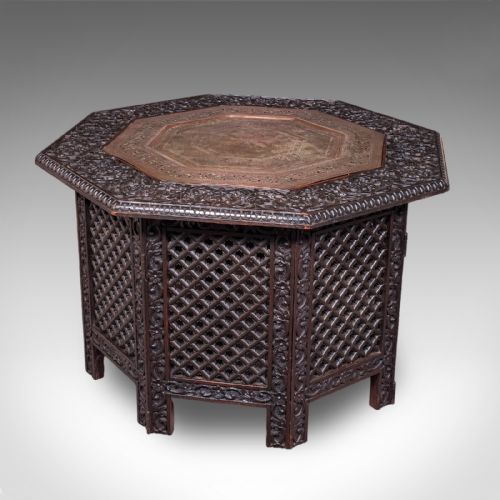
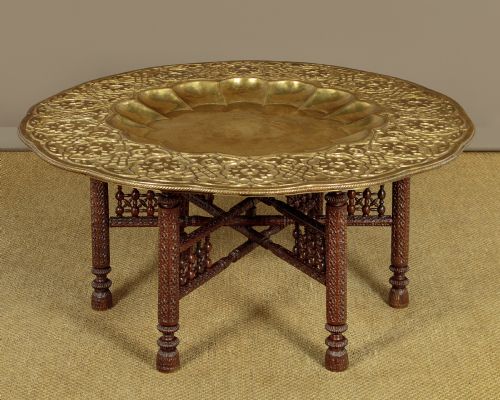
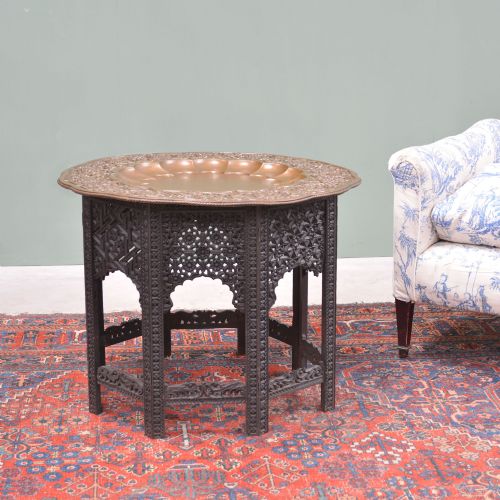
An indian folding table brass piece functions as a versatile surface, appearing in forms such as tray tables, side tables, coffee tables, and occasional tables. These items combine a collapsible wooden base with a metal top, often designed for easy storage and relocation.
The selections span various periods from the nineteenth century into the early decades of the twentieth century. Common stylistic influences include Anglo-Indian and Persian designs, reflecting diverse regional craftsmanship.
Buyers encounter circular, octagonal, and oval shapes, alongside rectangular tray formats. Such variations allow these furnishings to fit neatly into modern living spaces while retaining their original portability.
How they were made
The construction relies heavily on native timbers such as teak, rosewood, and hardwood for the foldable bases. Artisans shape these supports through carving and piercing techniques to create intricate, collapsible structures.
Surfaces utilise sheet brass and copper, often decorated with engraving or detailed inlay work. In some examples, bone or additional wood elements are embedded directly into the timber surrounds to create contrasting geometric and floral patterns.
Listings feature teak, rosewood, and hardwood combined with brass and copper across nineteenth and early twentieth-century periods.
What varies in quality
Quality differences stem from the depth and precision of the hand-engraving on the metal tops. Finer examples display crisp, densely detailed motifs that cover the entire surface, whereas simpler versions rely on sparse or superficial line work.
The complexity of the base construction also dictates overall standard. Heavily pierced and deeply carved folding stands demand greater carpentry skill than plain turned legs, separating standard utilitarian items from more ambitious decorative works.
The Indian Folding Table Brass Glossary
- Anglo-Indian
- A stylistic term describing objects made in India during the British period, combining local craftsmanship with European forms. These pieces often merge traditional oriental motifs with domestic furniture types common in Britain.
- Hoshiarpur
- A North Indian city renowned for intricate woodwork and inlay traditions. Items from this region typically feature dense patterns of brass, copper, or bone set into dark hardwoods.
- Tray top
- A removable metal tray that sits upon a separate folding stand. This design allowed the surface to be lifted off for serving or storage.
- Inlay
- A decorative technique where small pieces of contrasting material, such as brass or bone, are embedded into recesses cut into the wood base. This method creates a smooth, flush surface adorned with complex patterns.
- Occasional table
- A light, easily movable table designed for periodic use rather than a fixed room layout. These pieces suit flexible interiors where furniture is rearranged frequently.
Indian Folding Table Brass: Frequently Asked Questions
How do I fold the base safely?
Most folding bases rely on interlocking wooden cross-pieces that pivot on a central hinge or pin. Lift the tray top clear before attempting to collapse the frame to prevent straining the joints.
Guide the wooden limbs gently inward along their natural pivot lines until the stand lies flat. Avoid forcing any stuck sections, as aged timber can split if twisted unevenly.
Can I use these as regular coffee tables?
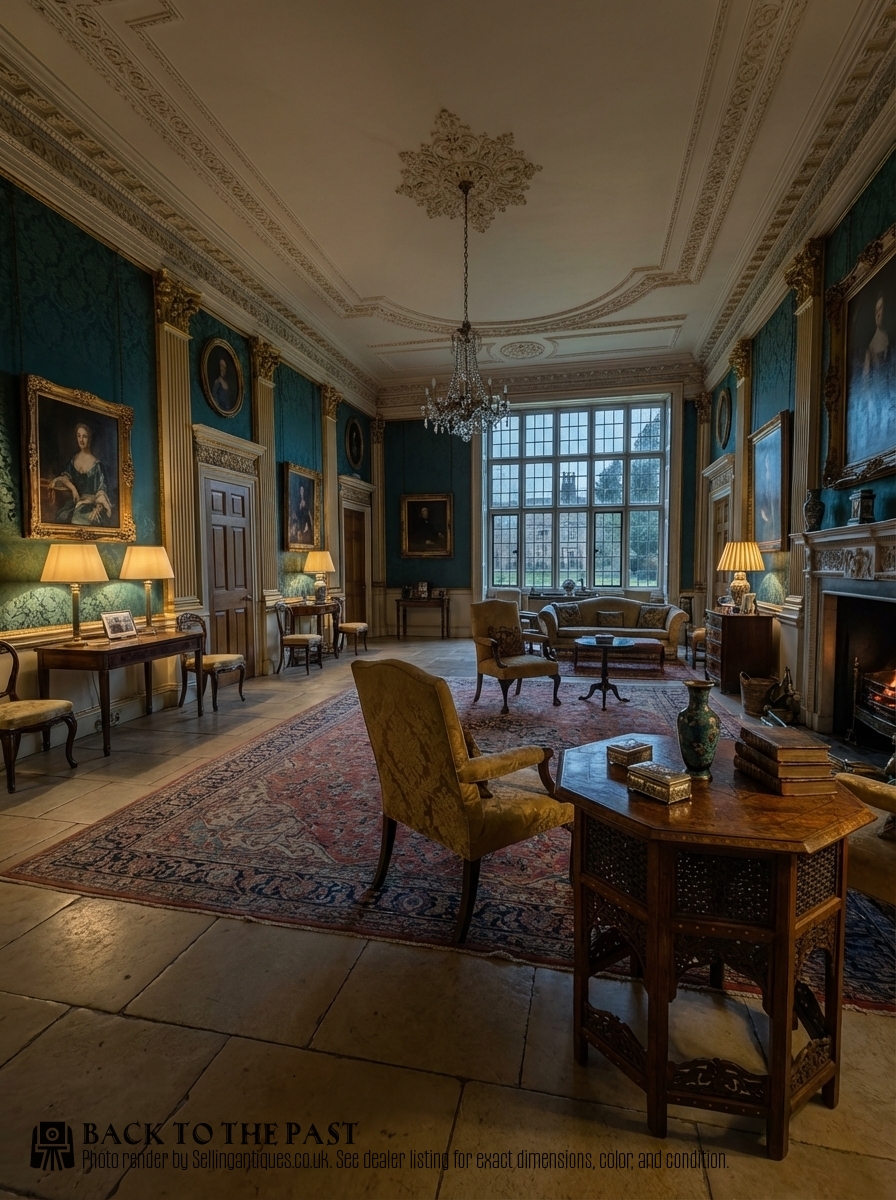
These tables adapt well to daily placement in living areas, providing convenient surfaces for books and small items. Their original portability means the structures are lighter than standard static furniture.
Take care not to overload the removable tray tops with heavy objects. Distributing weight evenly helps protect the folding wooden frame beneath.
How do I clean the brass top?
Dust the metal surface regularly with a soft, dry cloth to prevent grime accumulation in the engraved grooves. Avoid harsh chemical polishes that can strip the natural aged patina.
If cleaning is necessary, use a mild soapy solution on a damp cloth, drying the metal immediately afterwards. Ensure moisture does not seep into the wooden inlay crevices.
How do I date an older piece?
Examine the construction methods of the wooden base and the style of the metal engraving. Nineteenth-century examples often feature hand-beaten brass with heavier teak or rosewood supports.
Twentieth-century pieces tend toward standardised brass sheets and lighter hardwoods. Check for hand-tool marks and variations in the inlay work, which indicate older artisan production.