
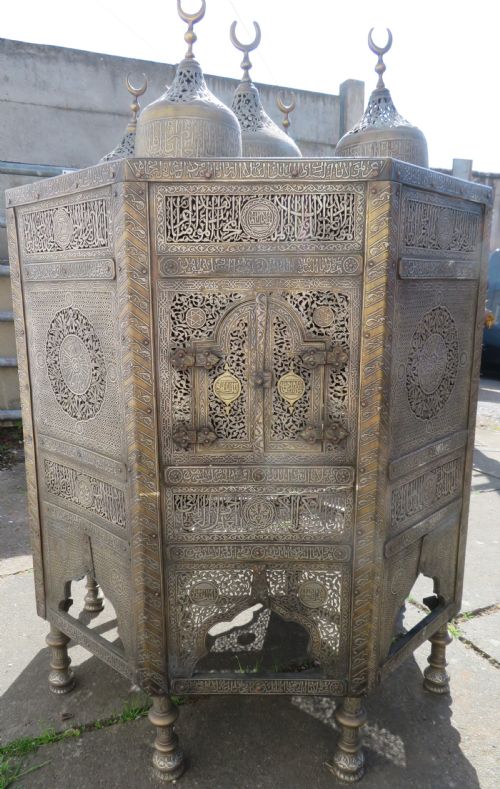


Octagonal Brass Inlay Table
An octagonal brass inlay table brings intricate eastern craftsmanship and rich rosewood or teak into a room, offering a striking centrepiece for display or daily use.
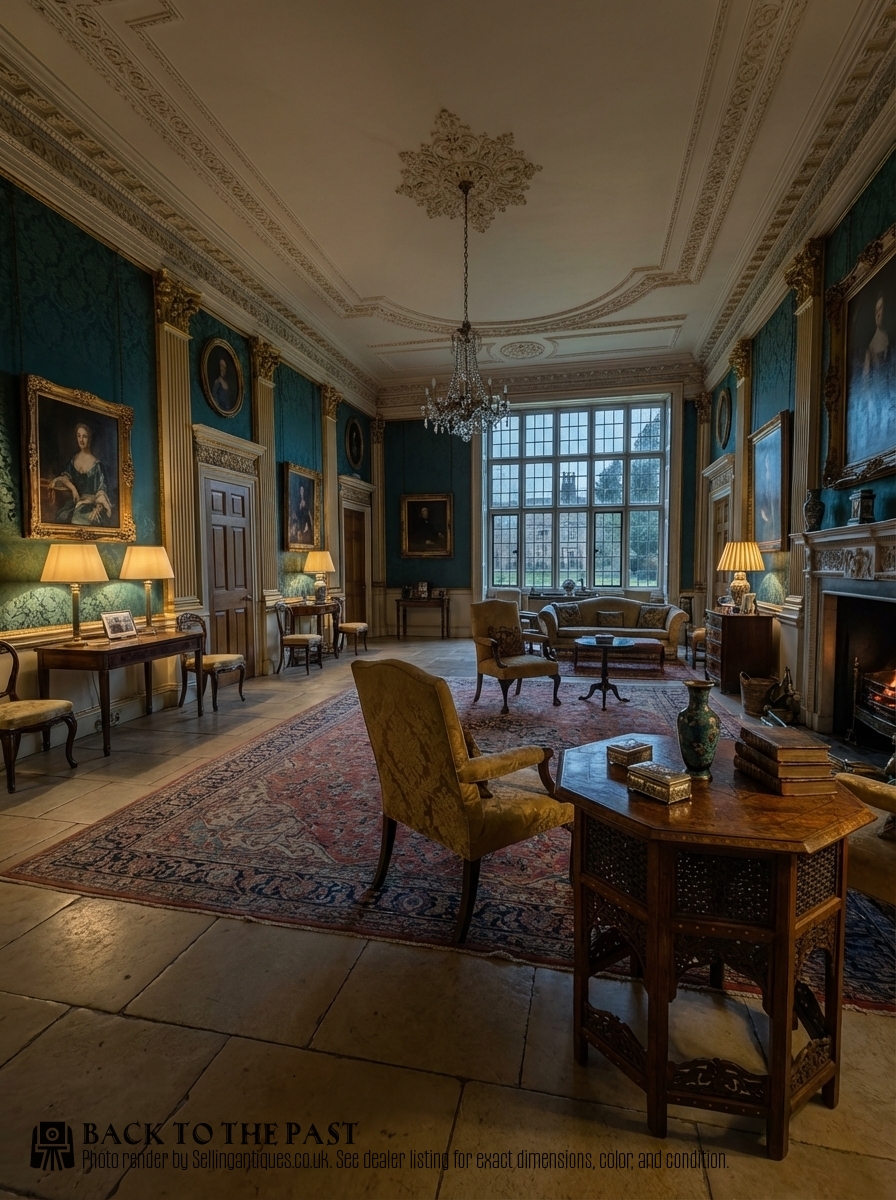
Octagonal Brass Inlay Table
When you search for an octagonal brass inlay table, you are looking at items that bridge British Regency design and traditional Indian woodworking traditions. These pieces often feature geometric or foliate patterns meticulously embedded into dense timbers.
The version you are most likely to meet on this page is the Anglo-Indian or North Indian occasional table originating from the late nineteenth or early twentieth century. These tables frequently combine carved hardwood bases with contrasting metalwork.
Alongside tables, the listings include occasional forms like Quran stands and mantel clocks, reflecting the broader application of brass inlay techniques during the nineteenth and twentieth centuries.
Materials and construction methods
Artisans built these tables using durable timbers such as rosewood, teak, and various hardwoods, providing a dark and stable foundation for metalwork. Brass wire and sheet metal were then fitted by hand into precisely chiselled channels across the surface.
Some examples incorporate additional decorative elements like silver inlay, copper, glass, marble, or bone alongside the brass. This combination of materials created complex tonal variations across the tabletop and support structures.
Listings span the Regency period through to 1930, utilising rosewood, teak, brass, and bone across occasional tables and mantel clocks.
Assessing quality in inlaid tables
Quality rests primarily on the precision of the metal inlay and the condition of the timber substrate. Tighter joints between the brass and the wood indicate superior craftsmanship by the maker.
The complexity and depth of the surface pattern also distinguish standard production from finer examples. Tables featuring denser geometric arrangements or supplementary materials like bone and silver demonstrate higher levels of skill.
Walker and Hall
The Octagonal Brass Inlay Table Glossary
- Anglo-Indian
- Describing furniture made in India during the British colonial period, often combining European furniture forms with local carving and inlay traditions.
- Hoshiarpur
- A North Indian city renowned for its skilled woodworkers who specialised in intricate brass and bone inlay work on teak and shisham.
- Cairo Ware
- Metalwork produced in Egypt, typically of brass inlaid with silver and copper, reflecting Islamic design motifs popular during the nineteenth century.
- Tripod table
- A small freestanding table supported by a central pillar resting on three feet, common in Regency and later interior schemes.
- Specimen marble
- A tabletop composed of various coloured marbles arranged in geometric or mosaic patterns, frequently seen on nineteenth-century tables.
Octagonal Brass Inlay Table: Frequently Asked Questions
What periods do these tables come from?
The pieces seen here span from the Regency era through to the early twentieth century, encompassing both British workshops and North Indian production.
Dates range from the nineteenth century up to the 1930s, reflecting changing aesthetic preferences for exotic inlaid furniture over several decades.
How do I care for brass inlay?
Keep the timber nourished with appropriate wax while gently cleaning the metal components without abrasive polishes.
Avoid placing these items in direct sunlight or near heat sources to prevent the wood from shrinking and loosening the inlay.
Are all these tables octagonal?
While the search focuses on octagonal shapes, the listings also include circular and tripod formats alongside related items like Quran stands.
Makers frequently adapted the inlay techniques to various occasional table forms while maintaining similar decorative vocabulary.
What woods were commonly used?
Dark hardwoods form the primary structure of these pieces, with rosewood and teak appearing frequently across the inventory.
These dense timbers provided the necessary contrast against bright brass wire and sheet metal.