


Carved Teak Octagonal Table
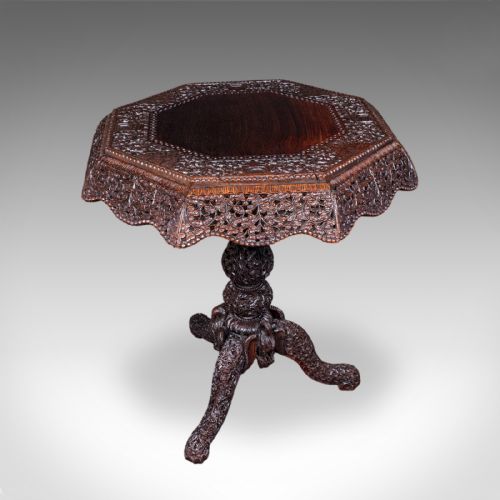
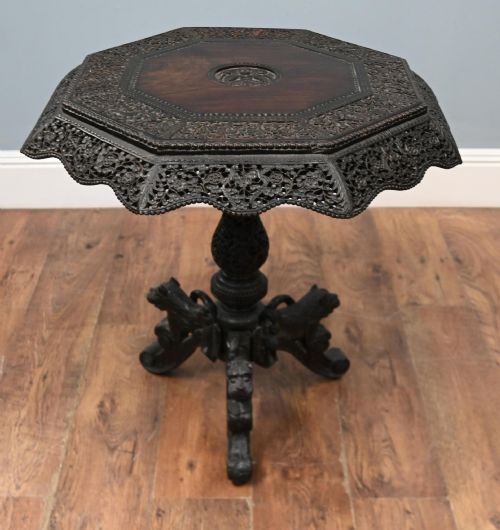
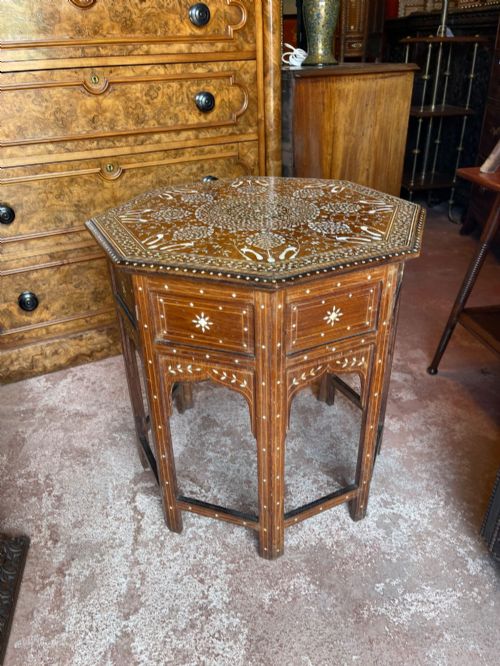
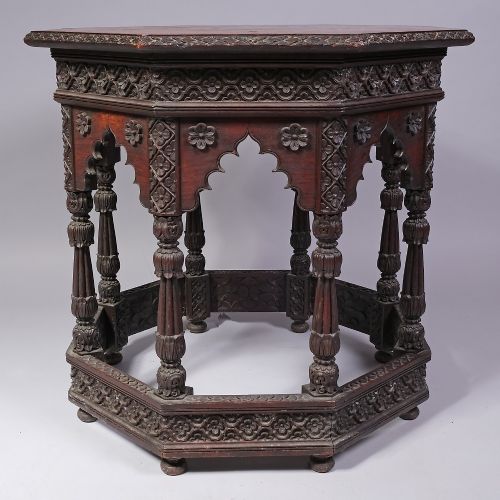
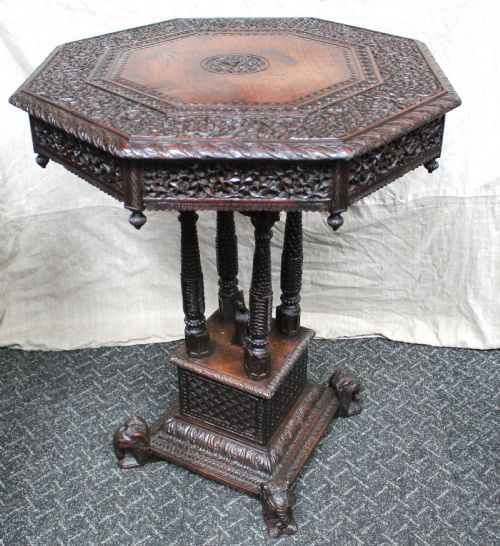
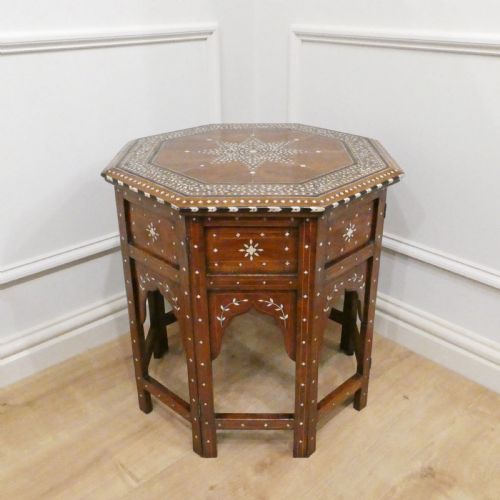
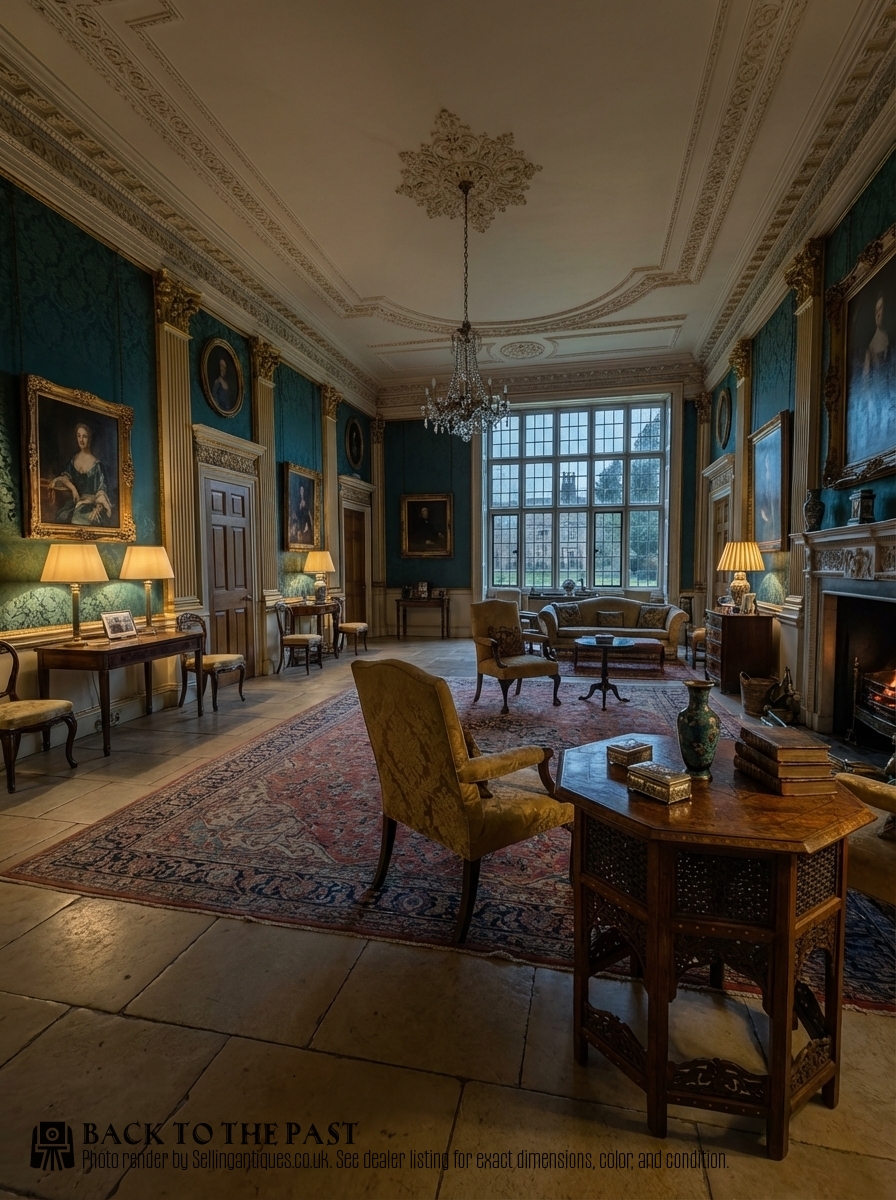
A carved teak octagonal table brings intricate colonial craftsmanship into a room, offering a geometric surface framed by deep, foliate relief work.
Carved Teak Octagonal Table
A carved teak octagonal table is a distinctive form originating from nineteenth and early twentieth century colonial workshops, specifically within Anglo-Indian and Burmese traditions. These pieces function primarily as occasional, side, or coffee tables, utilising an eight-sided top that allows for flexible placement beside seating.
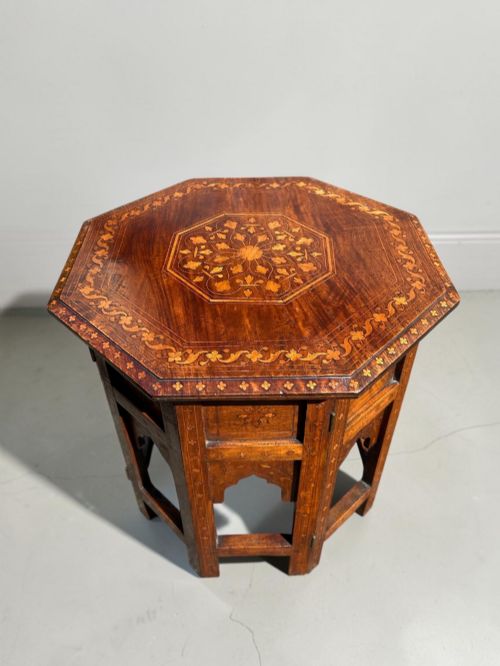
The versions most commonly met on this page span from the mid-nineteenth century through the 1930s, encompassing regional styles such as Hoshiarpur and Bombay Presidency work. They frequently feature folding or hinged bases, designed for practical portability alongside decorative utility.
What varies in quality
Quality in a carved teak octagonal table depends on the depth and crispness of the carving, where sharper, more deeply undercut relief denotes superior artisan skill. The complexity of the geometric layout and the precision of any metal or bone inlay further separate standard production from finer examples.
The structural integrity of the folding mechanism and the grain selection in the teak timber dictate the overall durability and visual weight of the piece. Tables featuring complete, undisturbed inlay work and intact pierced folding bases command greater appreciation from collectors.
Listings feature teak, rosewood, and hardwood surfaces combined with brass, copper, and bone inlay across periods spanning the mid-nineteenth century to 1930.
The Carved Teak Octagonal Table Glossary
- Anglo-Indian
- A stylistic term describing furniture made in India during the British colonial period, combining traditional local carving methods with European furniture forms.
- Hoshiarpur
- A specific region in Punjab renowned for its dense wood carving and intricate brass, copper, or bone inlay work on teak and hardwood bases.
- Tray top
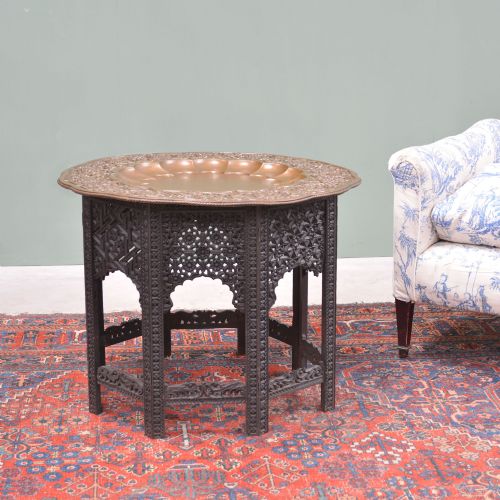
- A tabletop design featuring a raised rim, often constructed so the surface can lift off its folding support to function as a serving tray.
- Elephant table
- A figurative occasional table supported by carved elephant figures or legs shaped to evoke the animal, commonly found in nineteenth-century Indian production.
- Hardwood
- A dense, durable timber classification that includes teak and rosewood, chosen for its ability to hold fine, detailed hand-carved motifs.
Carved Teak Octagonal Table: Frequently Asked Questions
How do I fold these tables?
The folding mechanism relies on a hinged, interlocking wooden base that collapses flat once the octagonal top is lifted off its support.
Carefully disengage the top from the slotted or resting braces beneath, then gently fold the pierced lattice legs inward on their hinges.
Where were these tables made?
These pieces were produced across various regions during the colonial period, most notably in specific Indian craft centres like Hoshiarpur and the Bombay Presidency, as well as in Burma.
Local workshops adapted traditional indigenous carving techniques to satisfy the demand for portable, exotic furnishings exported during the nineteenth and early twentieth centuries.
How do I clean the carved surface?
Dust accumulation in the deep crevices of the relief carving requires gentle removal using a soft-bristled brush or a dry cloth.
Avoid liquid polishes that can build up within the carved recesses and dull the natural grain of the teak or the metallic inlay.
What periods do these pieces date from?
The listings span from the mid-nineteenth century through the 1930s, encompassing Victorian examples and early twentieth-century production.
Earlier pieces often exhibit denser hand-carving and distinct regional inlay combinations, while later examples maintain the traditional folding forms into the interwar decades.