


Indian Brass Table
An indian brass table brings intricate metalwork and rich timber into a room, offering a functional surface with history.
Indian Brass Table
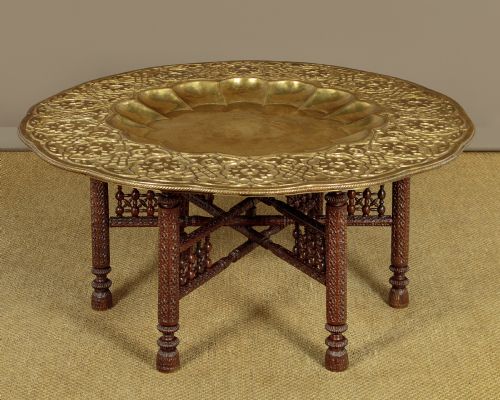
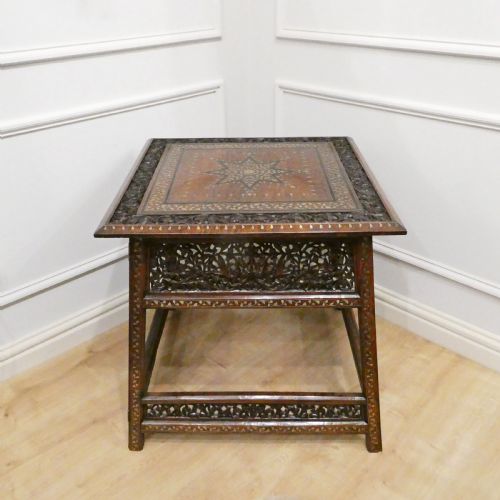
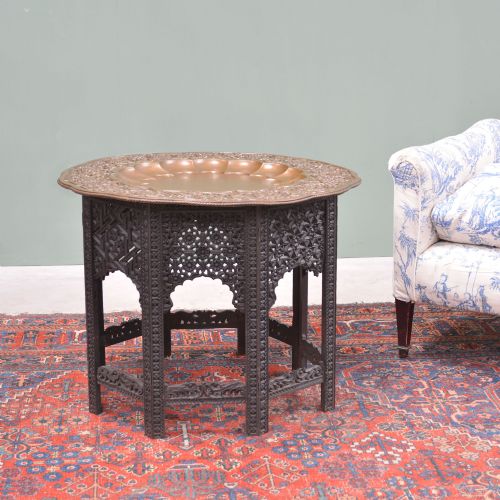
An indian brass table encompasses folding tray tables, octagonal side pieces, and low coffee variants originating from the nineteenth and early twentieth centuries. These items frequently display regional styles such as Hoshiarpur or Anglo-Indian designs, combining local woodworking traditions with elaborate metal ornamentation.
Buyers commonly encounter circular or octagonal tray tops paired with collapsible carved wooden bases, alongside larger static furniture pieces. The inventory includes variants from the Victorian era up to the nineteen-thirties, reflecting diverse influences from Persian, Kashmiri, and colonial workshops.
Materials and Technique
Maker artisans employed dense timbers including teak, padauk, rosewood, and ebony, providing a sturdy foundation for intricate surface decoration. Brass, copper, and occasionally bone were hammered, engraved, and inlaid into the timber substrate to create dense floral and geometric patterns.
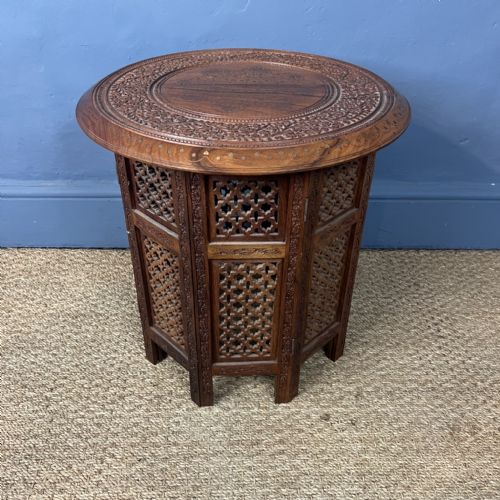
Folding stands utilised complex pierced and carved woodwork with arched arcade designs, allowing the base to collapse beneath the detachable metal tray top. Construction often involved precise joinery without modern fixings, paired with meticulous hand-punching and chasing across the brass surface.
Listings feature items dated from eighteen-fifty through nineteen-thirty, incorporating teak, rosewood, ebony, and brass.
Craftsmanship and Detail
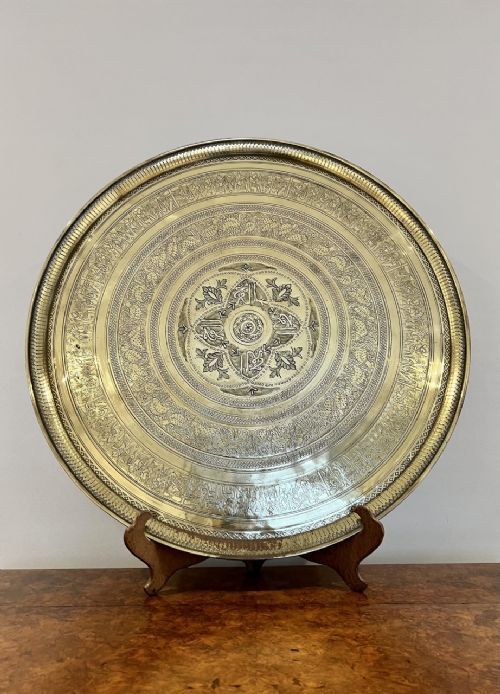
Quality rests upon the density and precision of the metal inlay work, where finer examples feature seamless integration of brass and copper wires into the hardwood. The complexity of the carved wooden base, particularly deep piercing and crisp floral motifs, distinguishes superior output from simpler production.
Proportion and the weight of the timber play a significant role, as denser hardwoods like teak and padauk offer better structural stability for heavy brass tops. The depth of hand-engraving on the metal surface dictates visual richness, separating standard export pieces from highly accomplished workshop creations.
The Indian Brass Table Glossary
- Hoshiarpur
- A district in Punjab renowned for intricate wood carving and brass or copper wire inlay. Pieces from this tradition typically feature dense geometric and floral patterns covering the entire wooden surface.
- Anglo-Indian
- A designation for furniture made in India during the British colonial period, combining traditional local forms with European furniture requirements. These objects often utilise native timbers like teak and padauk.
- Tray Top
- A removable metal top with raised edges, designed to sit upon a folding or rigid wooden base. This form allowed for easy storage and transportation during the nineteenth century.
- Campaign
- Furniture designed to be easily dismantled and packed into trunks for military or civil travel. Such pieces usually incorporate folding stands and robust timbers to withstand frequent transit.
- Arcade
- A series of arches supported by piers or columns, frequently carved into the folding wooden bases of occasional tables. This architectural detail provides structural support while adding visual lightness.
Indian Brass Table: Frequently Asked Questions
What is an indian brass table?
An indian brass table is a piece of furniture featuring a decorated metal top paired with a carved wooden base, often designed to fold flat.
These surfaces display engraved or inlaid patterns created by regional artisans during the nineteenth and early twentieth centuries.
How do I date my table?
Dating relies on examining the timber species, the style of the brass inlay work, and the construction methods used in the base. Nineteenth-century examples often feature dense hand-engraving and heavier native hardwoods like teak or padauk.
Later pieces from the twentieth century may show simplified carving techniques and different proportions influenced by changing export markets.
Are the tray tops removable?
Most tray top examples feature a metal top that lifts entirely off the supporting wooden stand. This design originated to facilitate easy storage and transport.
Users should lift the top carefully from the base rather than attempting to move the entire item by the tray edges.
How should I clean the brass?
Maintenance requires gentle dusting with a soft cloth to preserve the aged patina accumulated over decades. Aggressive metal polishes can remove the historical darkening within the engraved recesses, diminishing the contrast of the design.