
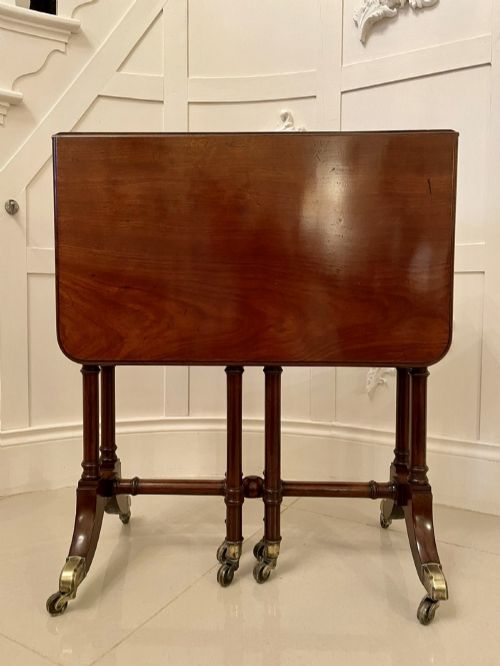


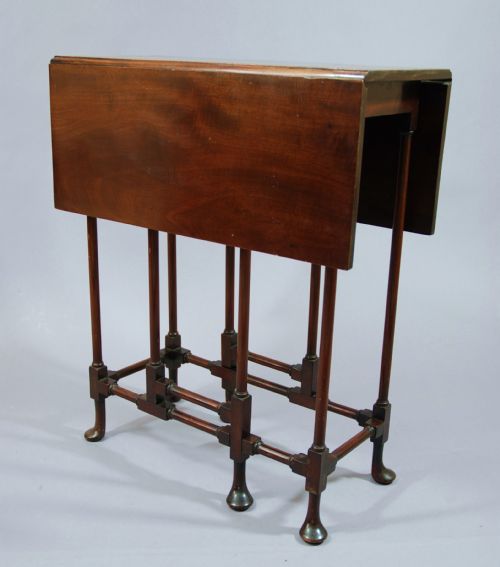
Folding Spider Leg Table
A folding spider leg table offers slender grace and compact convenience, combining slender supports with a practical surface that folds away when not in use.
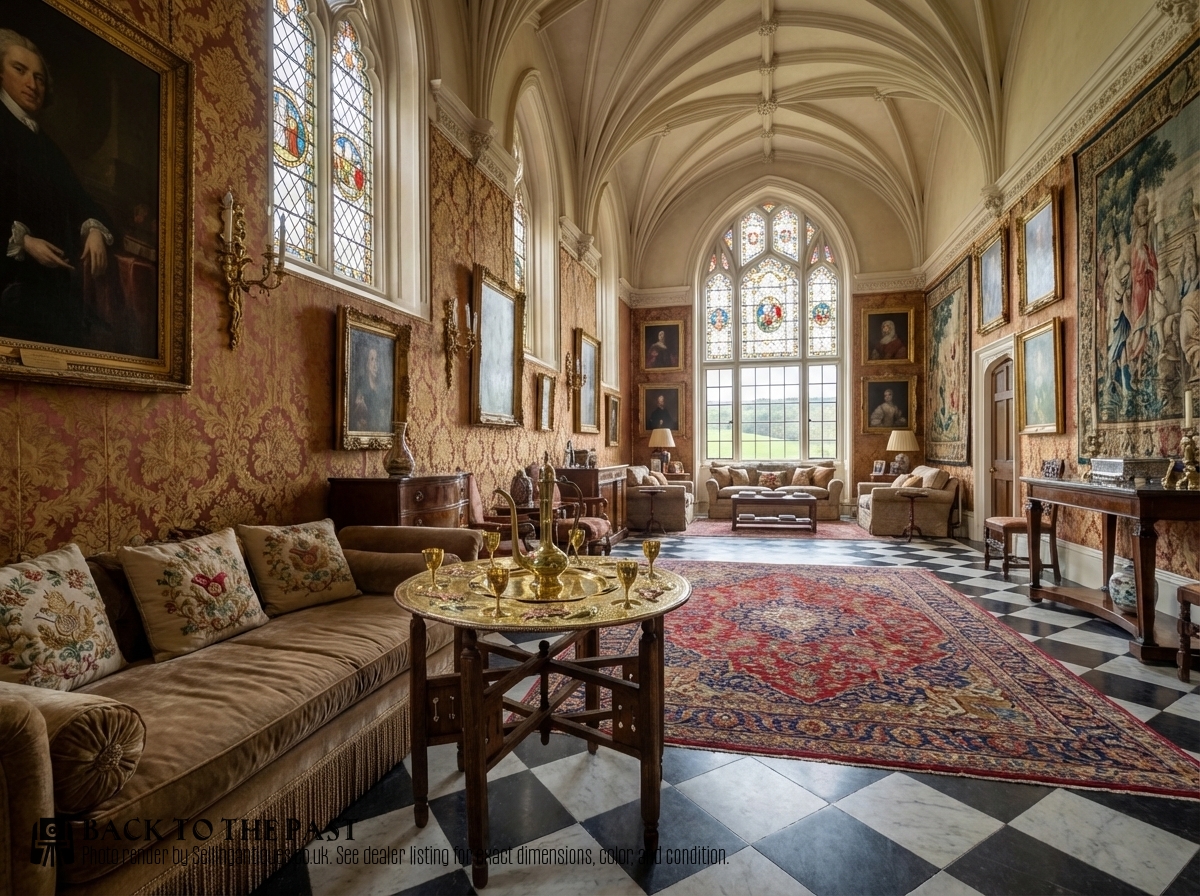
Folding Spider Leg Table
When you search for a folding spider leg table, you encounter a selection of occasional and drop leaf tables characterised by exceptionally thin turned supports. The pieces on this page span the Georgian, Victorian, Edwardian and early twentieth century periods, showing both British domestic forms and imported or influenced styles.
Mahogany is the primary wood found among these listings, alongside general hardwood and timber. The forms range from classic English drop leaf and Pembroke tables to Persian, Anglo-Indian, Moorish Revival and Moroccan tray tables incorporating brass and stone elements.
The most common versions met here are drop leaf and occasional tables from the Georgian and Edwardian eras. These domestic pieces rely on numerous slender legs that fold outwards to support the leaves, providing a stable surface despite their delicate appearance.
Materials and construction
Makers utilised mahogany and various hardwoods to achieve the necessary strength in such thin uprights. Wood turning techniques produced the characteristic slender legs that define the form.
Metalwork complements the woodwork in specific imported examples, utilising brass for complete tea services and removable trays. Some pieces incorporate painted finishes or stone elements to create decorative surfaces.
The furniture forms include occasional, drop leaf, coffee, Pembroke, and tray tables with Anglo-Indian and Moorish influences.
Distinctions in quality
The refinement of the leg turnings and the precision of the gate action separate standard examples from finer ones. Superior pieces display crisp detailing in the timber and seamless operation of the folding leaves.
Origin and stylistic elaboration also influence the character of each piece, ranging from restrained Georgian mahogany to intricately decorated Anglo-Indian, Persian and Moroccan designs with brass and paintwork.
The Folding Spider Leg Table Glossary
- Spider leg table
- A small table with exceptionally slender turned legs, typically associated with drop leaf mechanisms. This design allows for a lightweight structure that easily folds into a compact footprint.
- Drop leaf table
- A table with a fixed centre section and hinged flaps that fold down. When raised, the flaps are supported by hinged legs or brackets.
- Pembroke table
- A form of rectangular table featuring two hinged drop leaves on opposing sides. They frequently include a single drawer and delicate proportions.
- Gateleg table
- A table with legs attached to a swinging gate frame that pulls out to support a drop leaf. This construction provides robust support when extended.
- Tray table
- A piece comprising a removable serving tray resting upon a folding or fixed stand. They frequently feature metalwork such as brass in the tray construction.
Folding Spider Leg Table: Frequently Asked Questions
What is a spider leg table?
A spider leg table is an occasional or drop leaf table distinguished by exceptionally thin, turned wooden legs. These slender supports give the furniture a delicate and light appearance while maintaining stability.
Most examples utilise a folding mechanism, such as a drop leaf or gateleg action, allowing the surface area to be reduced when space is required.
How do you date these tables?
Dating relies on observing the timber species, construction methods, and stylistic details associated with periods like the Georgian, Victorian, and Edwardian eras. Finer joinery and specific wood choices often point towards eighteenth or nineteenth-century origins.
Cross-referencing the turning styles with known furniture eras helps narrow down the decade of production, from early George III pieces to later Edwardian interpretations.
Where were these tables used?
These tables served primarily as versatile occasional furniture in principal rooms, functioning as tea tables or small surfaces for books and writing. Their compact nature made them simple to move around the home.
Imported variants from Persian, Anglo-Indian, and Moroccan traditions served similar decorative and functional purposes, often incorporating brass trays for serving tea.
Are all spider leg tables made of mahogany?
While mahogany is a common material found in British examples, makers also utilised general hardwoods and timber. Some styles incorporate entirely different materials, such as brass and stone.
Foreign and revival pieces from the early twentieth century often combine timber frames with decorative metal trays and painted surfaces.