
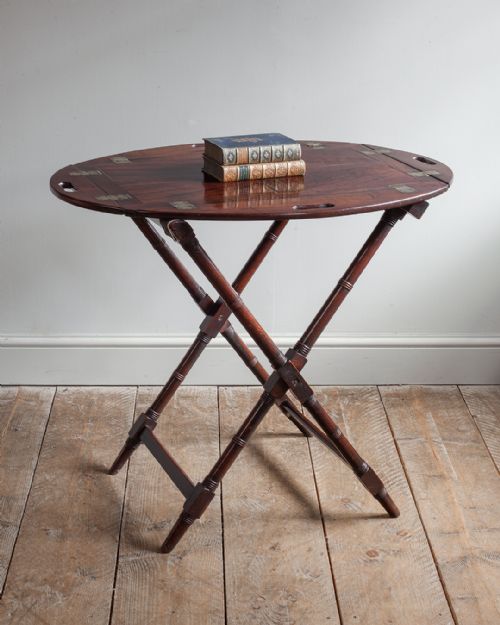


Edwardian Brass Tray Table
These edwardian brass tray table pieces combine portable metal serving surfaces with timber stands, offering versatile occasional surfaces for contemporary rooms.
Edwardian Brass Tray Table
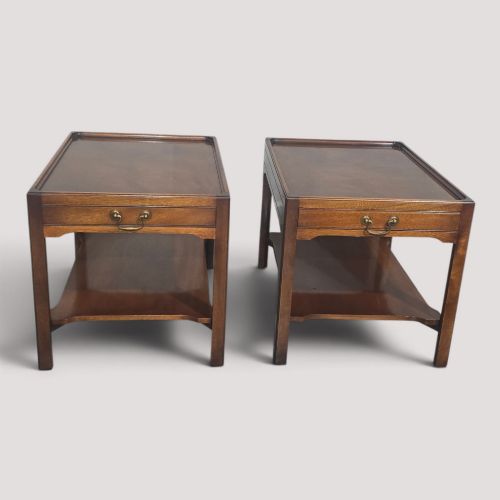
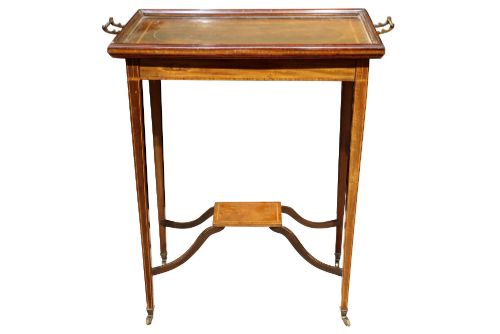
An edwardian brass tray table brings together removable metal tops and folding or fixed wooden stands, designed originally for serving refreshments and now utilised as flexible living room surfaces. The examples found here span from the late nineteenth century through to the interwar period, capturing both standard domestic forms and more decorative variations.
Most pieces combine timber frames in mahogany, satinwood, or walnut with raised metal trays, alongside related items such as butler's tray tables and occasional stands. While Edwardian pieces predominate, the selection also includes nineteenth-century designs and later adaptations suited to coffee table use.
How They Were Made
Cabinetmakers constructed the stands using traditional hardwoods including mahogany, satinwood, and walnut, frequently incorporating boxwood stringing, marquetry, and intricate inlay techniques. These frames often feature folding mechanisms or fixed legs designed to support portable top sections securely.
Metal components utilise brass, sometimes paired with onyx or lacquer finishes, creating durable surfaces intended for everyday hospitality. Surface decoration on the trays ranges from plain polished metal to engraved or applied ornamentation.
Listings feature woods such as mahogany, satinwood, walnut, and boxwood alongside brass and lacquer.
What Varies in Quality
The distinction between standard domestic pieces and superior examples rests upon the selection of timber and the precision of the inlay work. Finer items display carefully figured mahogany or satinwood veneers alongside crisp boxwood stringing and well-joined frame structures.
Hardware integrity and the fit between the removable tray and its supporting stand dictate the overall execution. Superior metalwork and stable, balanced folding mechanisms separate better workshop production from basic utility items.
The Edwardian Brass Tray Table Glossary
- Tray top
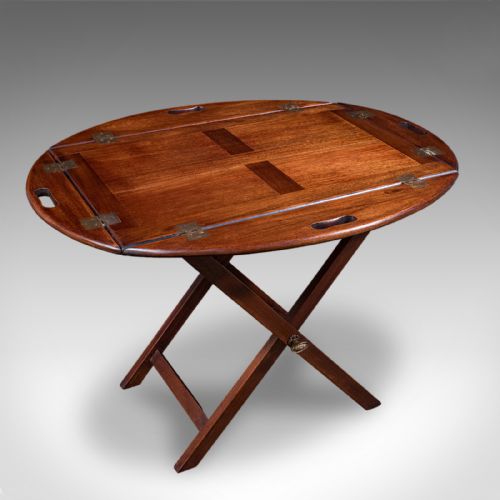
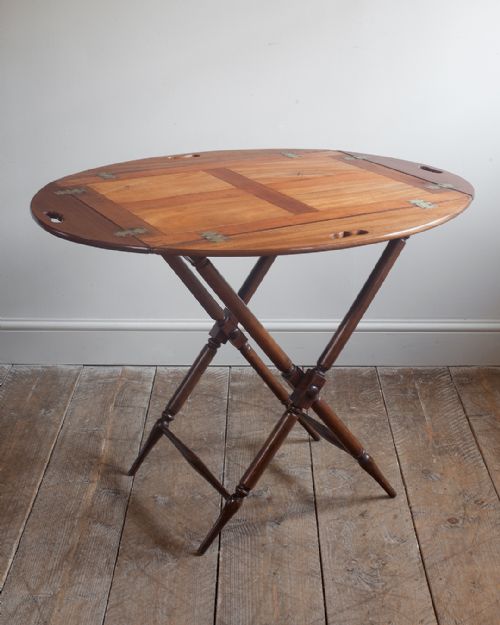
- A furniture surface featuring a raised moulded edge or gallery designed to prevent items from sliding off during transport or use. This form originates from practical serving vessels adapted to sit upon folding wooden stands.
- Butler's tray
- A removable wooden or metal tray with hinged flaps that fold down, originally used by domestic staff for carrying and serving food and drink. When placed on a separate folding stand, it serves as an adaptable occasional table.
- Étagère
- A piece of furniture consisting of a set of open shelves or tiers used for displaying small objects, ornaments, or books. These multi-tiered stands often incorporate marquetry and inlaid wood decoration.
- Marquetry
- The art and craft of applying pieces of veneer to a structure to form decorative patterns and pictures. Craftsmen utilise various coloured woods to create pictorial or geometric designs on tabletops and tray borders.
Edwardian Brass Tray Table: Frequently Asked Questions
What is an edwardian brass tray table?
An edwardian brass tray table is a portable serving surface paired with a wooden stand, produced around the early twentieth century. These pieces function as adaptable occasional tables in modern living spaces.
They combine metallic trays with timber frames, offering both decorative presence and practical utility for everyday use.
How were tray tables used originally?
Originally, these items served domestic households for carrying and presenting tea, coffee, or alcoholic beverages from kitchens to reception rooms. The removable top allowed servants to clear refreshments efficiently.
Today, they find new purpose as coffee tables, side tables, or lamp stands in domestic interiors.
How do I distinguish Edwardian pieces from nineteenth-century ones?
Distinguishing periods relies on observing timber choices, inlay styles, and construction methods. Edwardian examples often display lighter satinwood highlights and Sheraton Revival influences.
Earlier nineteenth-century versions typically feature heavier proportions, darker mahogany tones, and different joinery techniques characteristic of Victorian workshops.
Can the tray be removed from the stand?
Most designs feature a completely detachable tray resting on a folding or rigid support frame. This portability reflects their original function as serving trays.
Certain variations secure the tray more firmly to the base, so checking the specific mounting method helps determine how the piece operates.
How do I care for brass and mahogany surfaces?
Maintaining these materials requires gentle cleaning with soft cloths and appropriate wood waxes or metal polishes used sparingly. Avoiding excessive moisture protects both the timber finish and any inlaid details.
Regular dusting preserves the patina built up over decades of domestic use.