




Gold Brass Occasional Table
A gold brass occasional table brings metallic warmth and compact utility to a room, spanning styles from French Empire to Hollywood Regency.
Gold Brass Occasional Table
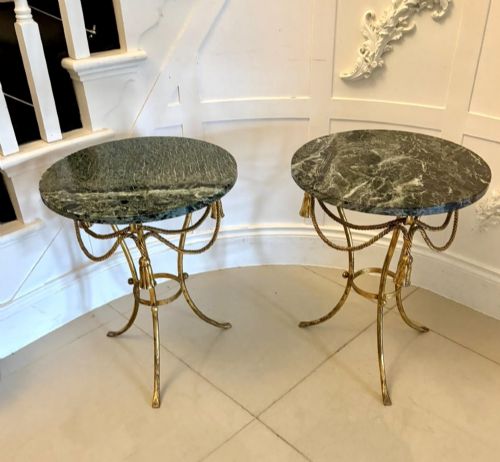
A gold brass occasional table combines structural metalwork with functional surfaces, appearing in forms such as side tables, etageres, gueridons, and magazine racks. These pieces serve as flexible accents in a room, offering a convenient surface next to seating or within a hallway.
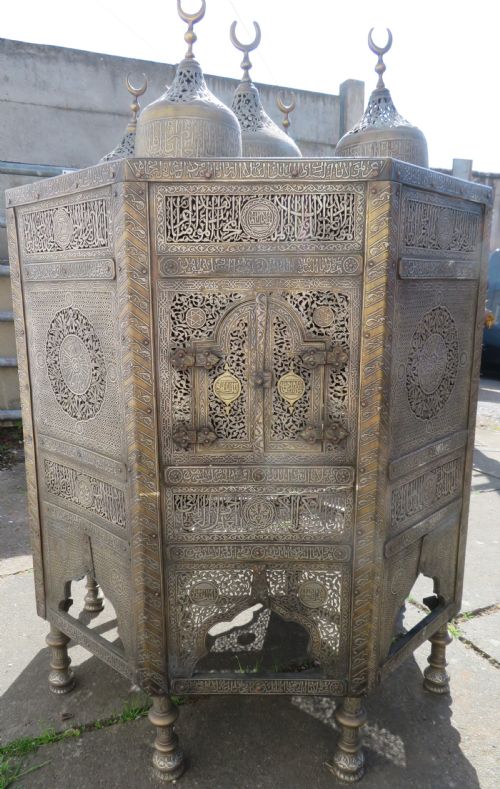
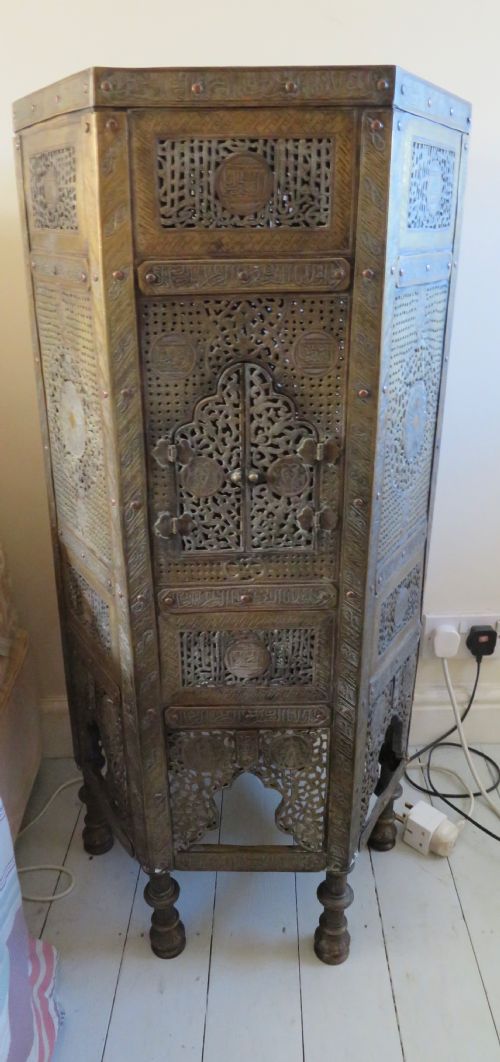
The selection ranges from nineteenth-century European designs to twentieth-century revivals, taking inspiration from periods including Regency, Victorian, and Louis XV. Buyers encounter French and Italian workmanship alongside Orientalist pieces like inlaid hexagonal kursi tables.
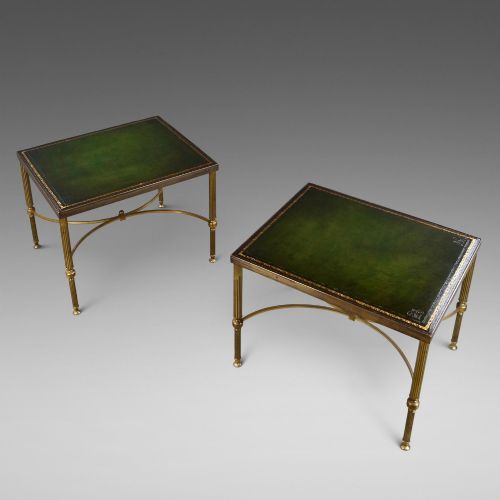
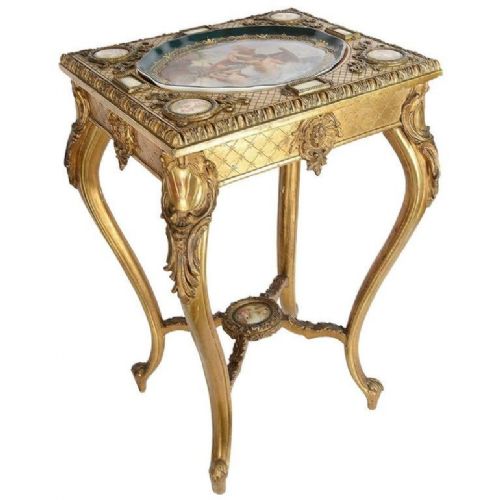
Materials extend beyond pure brass to include gilt metal, ormolu, and copper inlay, often paired with contrasting tops made of marble, glass, onyx, or leather. This variety ensures that each table meets specific decorative requirements while maintaining a metallic finish.
How they were made
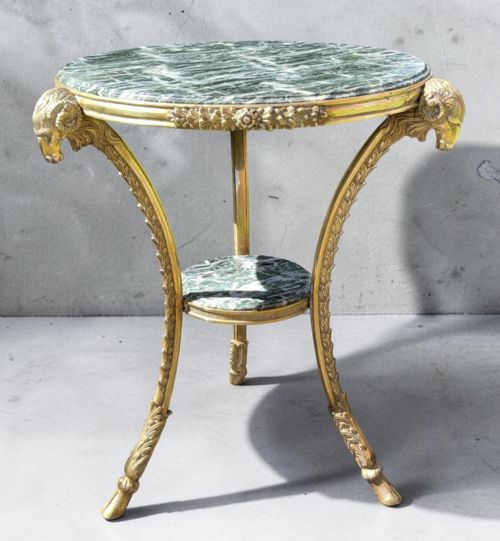
Metals such as brass, copper, and gilt ormolu form the primary structural and decorative elements, shaped through casting, openwork, and fine metal inlay. Workshops utilised these malleable materials to create intricate details like rams heads, tassels, and bamboo-style frames.
Table surfaces frequently incorporate stone and glass, utilising marble, verde marble, and onyx alongside mounted porcelain panels and glass inserts. These heavy top materials require sturdy metal frames and precise joinery to ensure stability.
Secondary supports and embellishments sometimes include wood components like walnut or amboyna, alongside leather inserts and papier-mache elements. Artisans combined these diverse media to achieve ornate finishes characteristic of French and Orientalist workshops.
Design influences range from French Neoclassical and Louis XV styles to Mamluk Revival and Hollywood Regency.
What varies in quality
The refinement of the metal casting and chasing determines the crispness of decorative details like rams heads or floral motifs. High-grade pieces display deep relief and clean edges, whereas simpler examples rely on smoother, less articulated surfaces.
The choice and execution of top surfaces distinguish different tiers of manufacture. Solid marble, onyx, and inlaid metalwork represent more ambitious production than standard glass or basic wood panels.
Cohesion of style and material integrity dictate the overall success of a piece. Tables that integrate structural brass with complementary elements such as gilt metal mounts or porcelain inserts show a higher level of design ambition.
The Gold Brass Occasional Table Glossary
- Guéridon
- A small round table on a central pillar or multiple legs, originating in seventeenth-century France. These pieces often feature decorative brass or ormolu mounts and stone tops.
- Etagere
- A set of open shelves for displaying small objects, sometimes adapted as a side table. This form provides multiple tiers of surface area supported by metal framing.
- Ormolu
- Gilt bronze or brass applied to furniture and decorative objects. The technique involves creating a gold-coloured finish on a base metal to imitate solid gold.
- Cairoware
- Metalwork from Cairo featuring intricate silver and gold inlay on brass or copper surfaces. These hexagonal tables and stands often display geometric or calligraphic patterns.
- Verde marble
- A dark green marble with pale veining, frequently used for decorative table tops. This stone provides a heavy, contrasting surface against polished brass frames.
Gold Brass Occasional Table: Frequently Asked Questions
Where should I place a brass side table?
These tables fit easily beside armchairs, sofas, or beds where a small surface is useful for lamps or drinks. Their reflective metallic finishes help brighten darker corners or narrow hallways without overwhelming the floor space.
Because they come in various heights and shapes, such as kidney-shaped or hexagonal designs, they adapt well to both formal reception rooms and casual studies.
How do I clean a brass table top?
Dust the metal regularly with a soft, dry cloth to prevent the buildup of grime in textured or openwork areas. Avoid harsh chemical cleaners that can strip away original patination or damage integrated marble and glass surfaces.
For pieces with intricate inlay or gilt finishes, gentle maintenance preserves the surface texture and colour built up over decades or centuries.
What is the difference between brass and ormolu?
Brass is a solid alloy of copper and zinc used widely for the structure and cast components of furniture. Ormolu refers specifically to gilded bronze or brass mounts applied as decorative highlights on high-status European pieces.
While brass forms the core material of many tables, ormolu appears as a refined surface treatment intended to catch the light and add visual richness.
Can these tables hold heavy lamps?
Sturdily constructed examples with marble, onyx, or thick glass tops provide a stable base for substantial lighting fixtures and decorative objects. Tables with lighter frames or folding mechanisms suit delicate display purposes rather than heavy loads.
Inspecting the joinery and the connection between the legs and the top helps determine the weight capacity of each individual piece.