




Louis XV Style Gueridon
A louis xv style gueridon brings fluent rococo curves and polished stone tops to a room, offering a small surface with exceptional presence.
Louis XV Style Gueridon
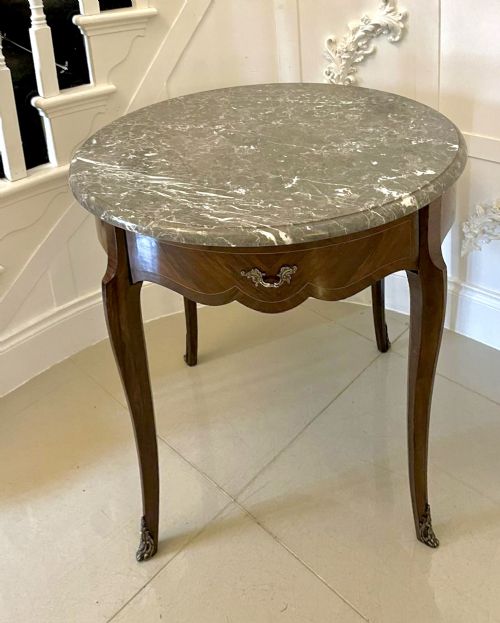
A louis xv style gueridon is a small occasional table shaped by the graceful asymmetry and fluid lines of the eighteenth-century French court. These pieces function as wine tables, lamp tables, or central stands, designed to occupy corners or sit beside seating without dominating a floor plan.
The versions met most frequently on this page date from the nineteenth and early twentieth centuries, spanning the Victorian era through the interwar decades. They emerge from French revival movements, carrying names like French Chateau and Napoleon III alongside direct Louis XV style designations.
Makers and workshops across France and Britain produced them in diverse forms, from kidney-shaped occasional tables to tall jardiniere stands and pedestal tables. Each piece balances decorative metal mounts with warm timber veneers or stone surfaces.
How they were made
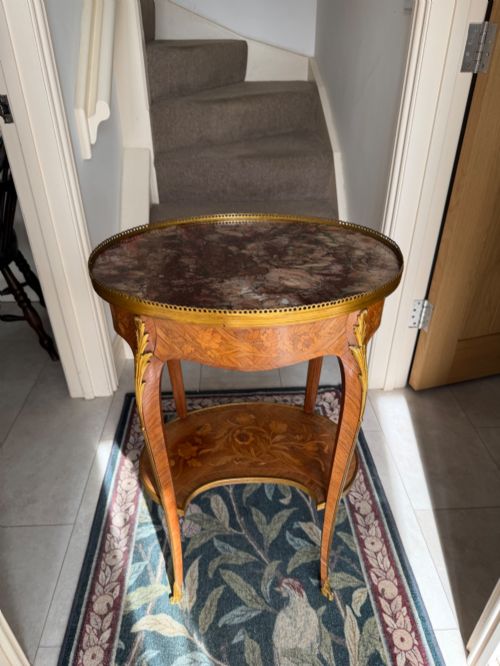
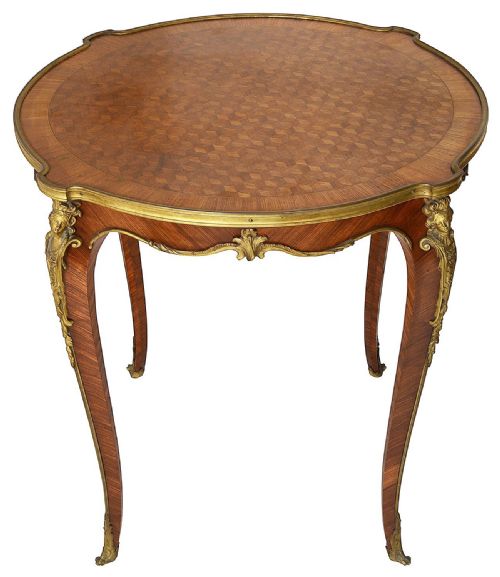
Cabinetmakers constructed these tables using a foundation of solid walnut, mahogany, or oak, then applied intricate veneers of kingwood using parquetry or marquetry techniques. Selected pieces feature galleries in brass or gilt bronze raised around the edges of the top.
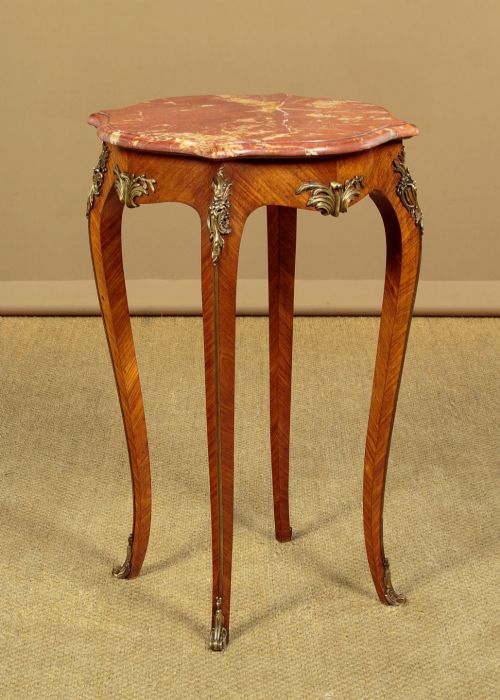
Tops of polished marble or onyx provide a cool, heavy contrast to the timber frames, resting securely within the woodwork. Cast mounts in ormolu, gilt bronze, and chiseled brass are pinned or screwed to the legs and aprons, following the organic scrolls characteristic of the style.
The selection includes occasional tables, side tables, wine tables, pedestal tables, and jardiniere stands dating from the nineteenth and early twentieth centuries.
What varies in quality
Quality rests in the crispness of the cast mounts and the fidelity of the bronze or brass chasing, where sharp details distinguish high workshops from mass production. The depth and selection of the kingwood veneer further separate standard items from superior productions.
Structural integrity reveals itself in the alignment of the legs and the secure fit of stone tops within their wooden or metal galleries. Signed pieces by recorded Parisian makers carry an authority that elevates them above anonymous workshop stock.
L.Martin·Zwiener Jansen Sucesseur
The Louis XV Style Gueridon Glossary
- Guéridon
- A small decorative French table, typically round or kidney-shaped, supported by a central pillar or slender legs. These tables served various domestic uses including holding lamps, wine, or decorative objects.
- Ormolu
- Gilt bronze applied to furniture mounts and decorative hardware. The technique involves a mercury amalgam process to bond gold to a bronze base, producing a warm and lasting metallic lustre.
- Parquetry
- Geometric patterns formed by small pieces of wood veneer fitted together on a surface. It appears frequently on the tops and shelves of French occasional tables.
- Galleried
- Having a low raised border, usually of pierced brass or wood, running around the edge of a table top. This prevented items from sliding off the polished surface.
- Jardiniere stand
- A tall pedestal table designed specifically to support a plant holder or flower bowl. These stands often share the slender curved legs and gilt mounts of standard occasional tables.
Louis XV Style Gueridon: Frequently Asked Questions
What is a louis xv style gueridon used for?
These tables provide a compact surface for lamps, drinks, or small decorative objects in sitting rooms and hallways. Their modest footprint allows them to fit easily beside armchairs or into empty corners.
Historically, similar small tables served mobile functions around grand interiors, moving to wherever a surface was required for tea or light refreshments.
How do I care for a marble top?
Wipe marble and onyx surfaces regularly with a soft, damp cloth and avoid acidic liquids that can etch the polished stone. Use coasters under glasses to protect the finish from rings and moisture.
Keep the timber frame dusted and treat the veneer occasionally with appropriate wax to maintain the rich grain of the wood without buildup.
How do I date a nineteenth century table?
Examine the construction methods, the wood types used for the secondary framing, and the wear patterns on the underside and legs. Machine-cut screws or modern adhesives point to later dates, while hand-cut joinery and aged patination suggest nineteenth-century work.
Maker signatures or stamps, when present on the bronze mounts or wooden carcasses, offer the most direct evidence of a workshop and period.
Are these tables sturdy enough for daily use?
Slender cabriole legs and delicate proportions mean these pieces suit lighter domestic duties rather than heavy weight-bearing tasks. Placing them out of high-traffic walkways helps protect projecting mounts and delicate veneers.
Regularly check the stability of the joints where the legs meet the apron, ensuring the structure remains firm under normal everyday conditions.