





Brass and Marble Stand
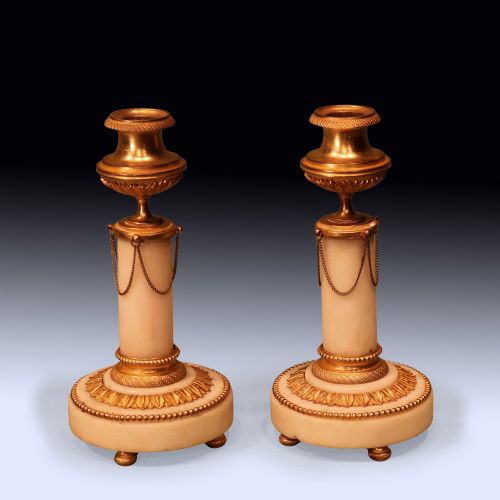
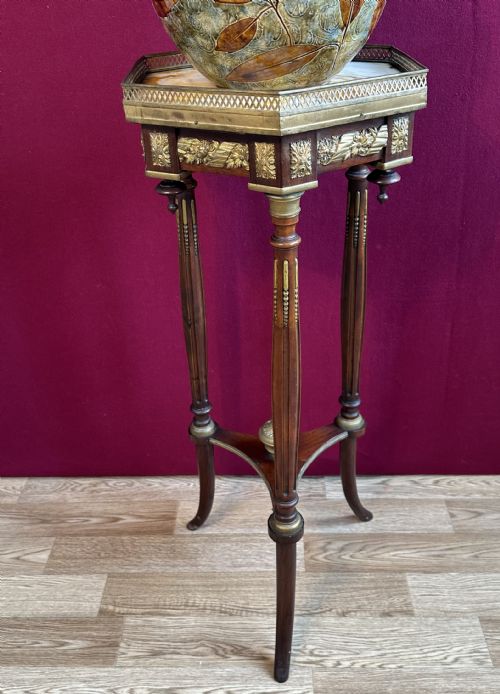
When you want a brass and marble stand, you are looking at substantial tables, plant supports, lamps and inkstands combining stone and metal.
Brass and Marble Stand
A brass and marble stand encompasses a diverse group of furnishings designed for display, utility, and illumination across domestic spaces. These pieces range from compact desk inkstands and watch stands to towering floor lamps, plant pedestals, and occasional side tables.
The material combination bridges structural metalwork with smooth stone surfaces, frequently drawing on French design idioms like Empire, Rococo Revival, and Louis style variants. You will encounter Victorian and Edwardian iterations alongside twentieth-century interpretations, each utilising stone tops paired with metal frames.
How They Were Made
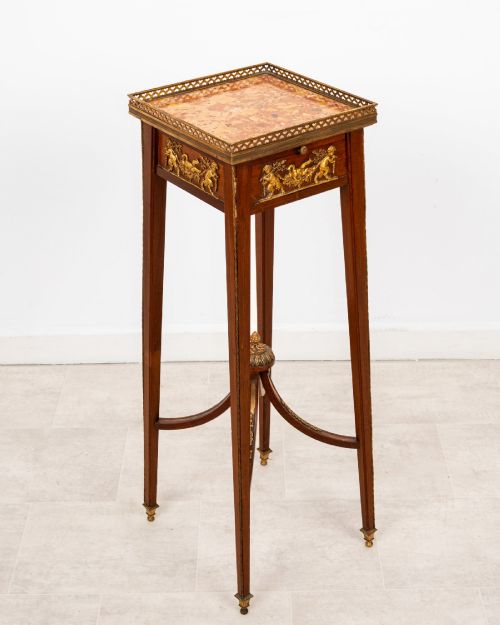
Construction relies heavily on the pairing of cast brass, ormolu, or gilt bronze with polished slabs of marble or onyx. Artisans secured stone tops within metal galleries or onto wooden carcases lined with brass mounts, utilising joinery suited to both heavy minerals and ductile metals.
Casting, chiselling, and gilding defined the metal elements, while turnery and cabinetmaking shaped secondary woods such as mahogany, walnut, and occasional canework or fabric accents. Stone surfaces were selected for their veining, ranging from white marble to green onyx and arabescato viola.
Listings feature nineteenth and twentieth-century examples, spanning Victorian, Edwardian, and Art Nouveau periods alongside French Empire styles.
What Varies in Quality
Quality rests in the crispness of the metal chasing and the depth of the gilding applied to bronze or brass mounts. Finer examples display hand-finished detailing on acanthus leaves, scrollwork, and mounts rather than flat, mass-produced casts.
The selection and thickness of the marble or onyx top further distinguish the tier of the piece. Dense, finely veined stone properly fitted to its frame indicates superior workshop standards compared to thin or poorly seated slabs.
Collinson and Lock·Negretti and Zambra
The Brass and Marble Stand Glossary
- Ormolu
- Gilded bronze applied as a decorative mount on furniture and decorative objects. This technique was widely utilised in French workshop traditions.
- Gueridon
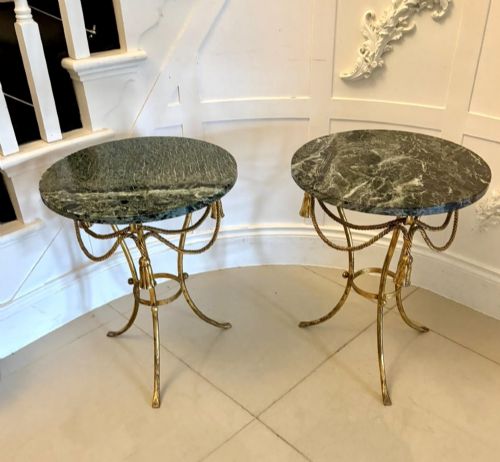
- A small round occasional table supported by one or more columns. These tables frequently feature marble tops and brass mounts.
- Jardiniere
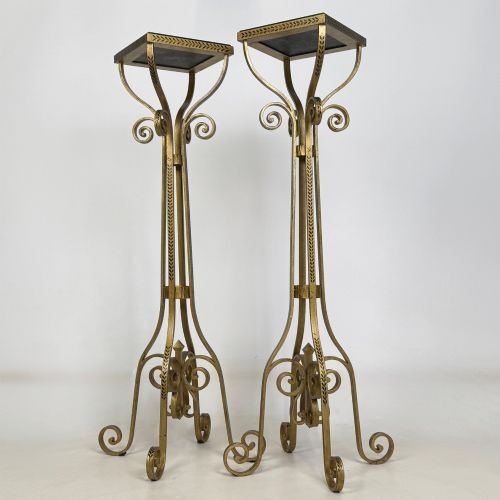
- A decorative stand or receptacle designed to hold plants or flowers. They often incorporate brass galleries and waterproof liners.
- Bouillotte
- A small French card table adapted for lighting, typically featuring a raised brass gallery and an integral candle standard. The design translates well to modern lamp conversions.
- Chasing
- The art of manually refining and detailing cast metal surfaces with hammers and punches. High-grade pieces show sharp, defined relief work.
Brass and Marble Stand: Frequently Asked Questions
What rooms suit a marble and brass stand?
These pieces fit living rooms, hallways, and studies as plant holders, lamp tables, or desk accessories. Their reflective metal and cool stone surfaces add texture to both traditional and eclectic interiors.
Larger standard lamps and plant pedestals anchor corners effectively, while smaller inkstands and watch stands suit desks and sideboards.
How do I clean the marble top?
Use a soft, damp cloth with mild, pH-neutral soap to wipe down the stone surface gently. Avoid acidic cleaners or vinegar, which etch marble and ruin the polish.
Dry the surface thoroughly with a clean microfibre cloth to prevent water spots and maintain the natural lustre of the stone.
Are the lamp stands wired for modern use?
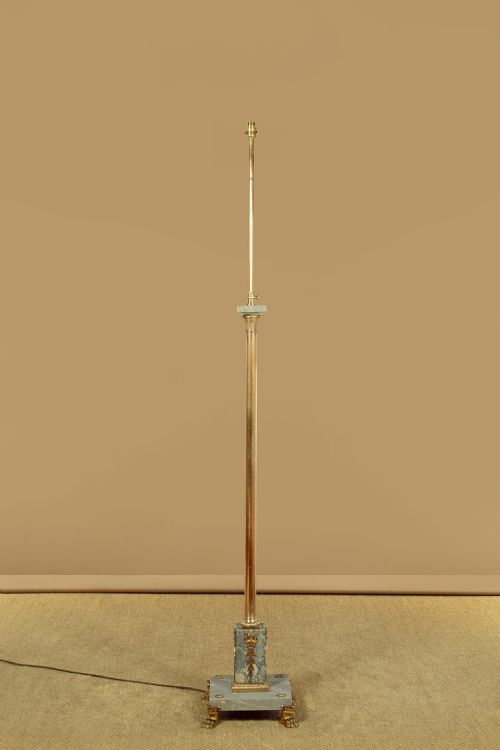
Many surviving floor lamps and table standards have been re-wired for contemporary electrical safety while retaining their original brass or bronze fittings. It remains sensible to have any antique lighting checked by a qualified electrician before daily use.
Original wiring is rarely suitable for modern mains supply without inspection or replacement.
How do I date a brass and marble piece?
Dating relies on stylistic clues, such as the exuberant curves of Victorian Rococo Revival work or the clean geometry of later Edwardian and twentieth-century designs. Construction marks, screw types, and the composition of the underlying wood or metal also help place pieces within the nineteenth or twentieth century.
Comparing the casting sharpness with known period examples provides a reliable window of origin.