
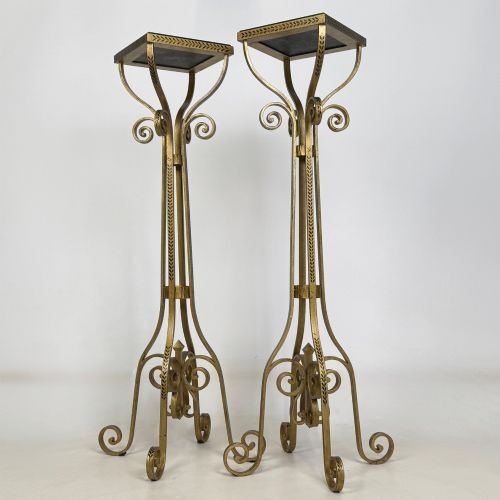


Gold Metal Pedestal Stand
These gold metal pedestal stand pieces bring height and presence to a room, offering elevated display surfaces for plants and decorative objects.
Gold Metal Pedestal Stand
A gold metal pedestal stand takes many forms across the Victorian, Edwardian and early twentieth century periods, appearing as plant stands, jardiniere stands, tazzas and occasional pedestal tables. These tall display pieces lift plants, urns or decorative items to eye level, creating focal points in a room.
The most common versions on this page combine brass, ormolu or gilt bronze with contrasting materials such as marble or onyx. They span stylistic revivals from French Empire and Rococo to Art Nouveau, Art Deco and the Amsterdam School, reflecting diverse aesthetic choices from the nineteenth and twentieth centuries.
How they were made
Makers utilised cast, chased and pressed brass alongside ormolu and gilt bronze to build the metallic structures of these stands. These metalworking techniques allowed for intricate surface decoration, floral motifs and architectural detailing.
Insets of polished marble and onyx provide heavy, stable tops and bases that contrast with the reflective metal frames. Mahogany and glass also appear in select designs, pairing wood and transparent panes with the primary brass structures.
Brass plant stands doubled as indoor winter greenhouses for ferns that refused to brave the British frost.
What varies in quality
Quality rests in the crispness of the chasing and the weight of the cast metal. Finer examples show deep, deliberate definition in the metalwork rather than soft, shallow pressing.
The selection of inset stone also distinguishes standard pieces from superior ones. Solid slabs of veined marble or rich onyx with clean edges indicate better craftsmanship than simpler substitutes.
The Gold Metal Pedestal Stand Glossary
- Ormolu
- Gilded bronze applied to ornamental objects, particularly popular in French decorative arts. It provides a bright golden finish that does not tarnish easily.
- Tazza
- A shallow bowl or cup mounted on a stem and foot, often used for display. These pieces sit elevated on a pedestal base.
- Jardiniere
- An ornamental pot or stand designed to hold plants or flowers. They frequently incorporate metal liners to protect the surrounding structure.
- Chasing
- The art of finishing and detailing metal surfaces by hammering from the front with punches. This technique adds texture and relief to cast brass or bronze.
Gold Metal Pedestal Stand: Frequently Asked Questions
What were pedestal stands used for?
These tall stands served primarily to display potted plants, trailing foliage and decorative urns within Victorian and Edwardian interiors. By raising greenery off the floor, they added vertical interest to room corners and empty wall spaces.
Over time, collectors adapted them to hold table lamps, clocks or small sculptures. Their sturdy bases and elevated platforms made them versatile surfaces for items that required visual prominence.
How do I date a brass stand?
Dating relies on observing the stylistic details and manufacturing methods visible in the metal and stone. Pieces from the nineteenth century often show heavier casting and classical revival motifs, whereas early twentieth century examples lean towards Art Nouveau, Art Deco or Amsterdam School geometries.
Examining the fixings, screw types and the wear on the brass can also provide clues to age. Stylistic markers like French Empire or Louis XV revival details point to specific decorative periods.
How do I care for brass and marble?
Brass surfaces benefit from gentle dusting with a soft cloth to prevent the accumulation of grime. Avoid harsh chemical cleaners that can strip away original patination and finishes.
Marble and onyx tops require simple wiping with a damp cloth and mild soap. Protect the stone from acidic liquids and moisture rings by using coasters or protective pads under pots and vases.
Are these stands sturdy enough for heavy plants?
Most of these stands are engineered with heavy metal frames and solid stone bases to support substantial weight. The combination of cast brass and marble provides natural stability for large potted plants.
It remains wise to check the balance of individual pieces, particularly taller designs with slender stems. Placing heavier pots centrally ensures the stand remains secure during daily use.