



Antique Onyx Accent Table
An antique onyx accent table brings striking geological pattern and polished warmth into a room, serving as a versatile surface or display pedestal.
Antique Onyx Accent Table
An antique onyx accent table encompasses compact occasional furniture, plant stands, and decorative pedestals defined by polished stone surfaces. These pieces emerge across nineteenth-century and early twentieth-century periods, spanning Victorian, Edwardian, and Art Deco aesthetics.
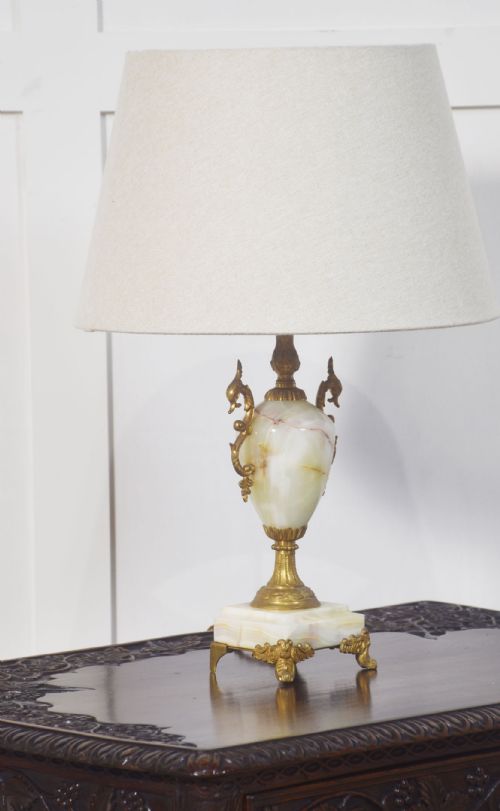
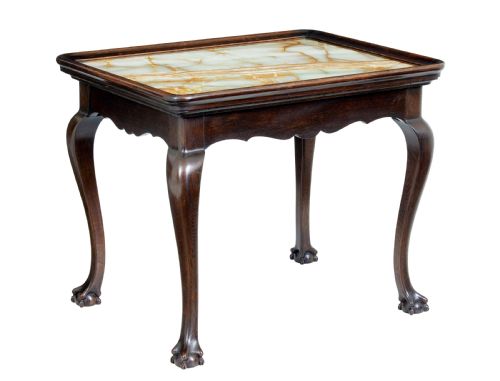
The most common formats on this page pair smooth stone tops with brass, gilt bronze, or patinated metal mounts. Alongside side tables and plant stands, the selection includes tiered structures and occasional tables featuring circular or galleried tops.
Origins lean towards French design influences, notably Louis XV revival styles, alongside English interpretations utilising oak or walnut framing. Each piece balances functional surface utility with the decorative presence of banded mineral strata.
How they were made
Construction relies upon combining dense mineral slabs with structural frames of brass, gilded bronze, oak, or walnut. Stonework is meticulously cut and polished to reveal natural banding, then secured to metallic or wooden chassis.
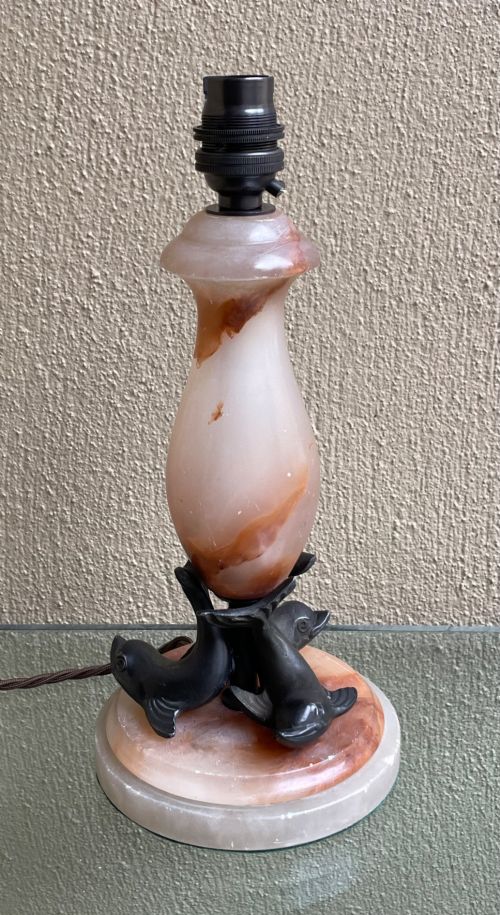
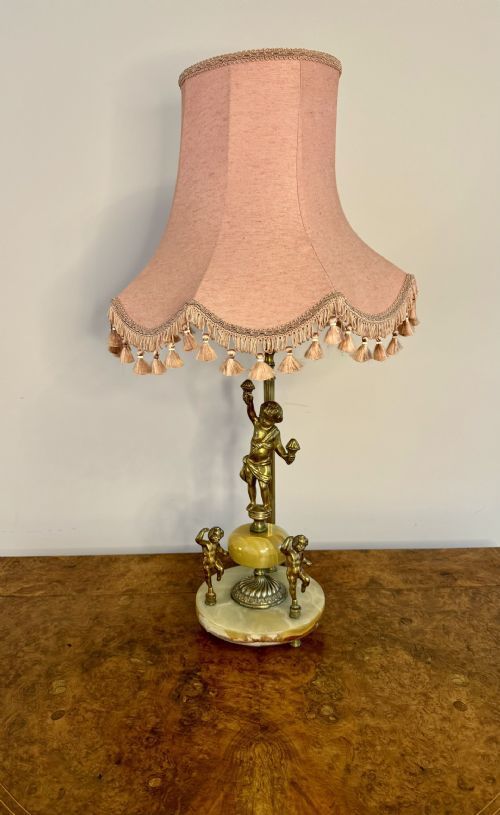
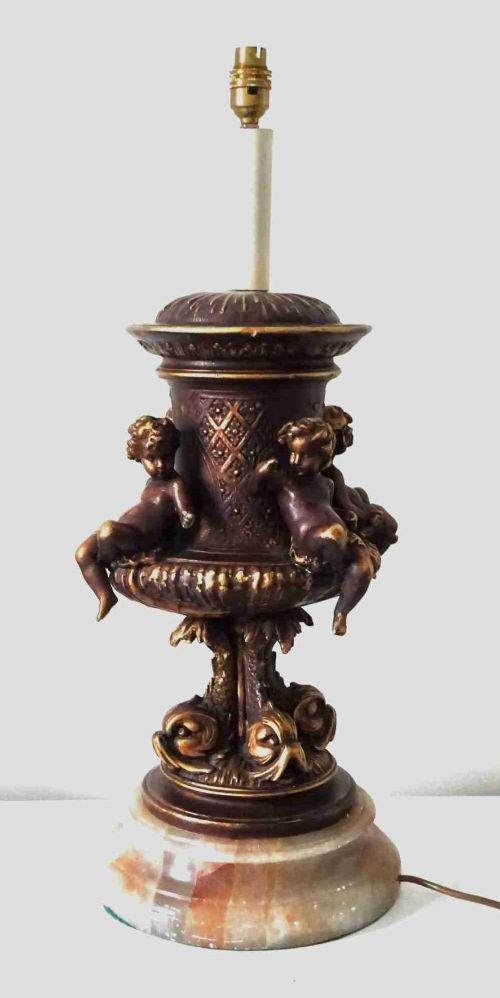
Metal components often feature cast decorative elements, including floral mouldings, figural supports like dolphins or cherubs, and gallery rails. Wood variants incorporate turned columns or classical revival detailing to support the heavy stone tops.
Marine life makes a surprise appearance beneath the stone, with carved brass dolphins acting as structural table supports.
What varies in quality
Quality rests in the depth of the stone's natural colour variation and the precision of the supporting metal or woodwork. Superior examples display flawless polishing across the onyx surface alongside finely cast bronze or brass mounts.
The integration of structural elements defines the grade of a piece, where robust joinery and detailed mouldings elevate standard functional items into decorative works of art.
The Antique Onyx Accent Table Glossary
- Onyx
- A variety of chalcedony quartz featuring parallel curved bands of contrasting colours. It provides the smooth, polished surface characteristic of these tables.
- Gilt bronze
- Bronze that has been coated with a thin layer of gold or gold-coloured alloy. This technique adds decorative metallic sheen to structural mounts.
- Galleried
- A raised decorative edge or railing fitted around the perimeter of a tabletop. It prevents items from sliding off the polished stone surface.
- Plant stand
- A tall, slender piece of furniture designed to elevate flora. Examples in this category utilise tiered onyx shelving and brass supports.
- Occasional table
- A small, movable table used for light duty in a reception room. These often feature decorative stone tops and classical revival framing.
Antique Onyx Accent Table: Frequently Asked Questions
How do I clean an onyx tabletop?
Use a soft, damp cloth with mild soap to wipe the surface gently, avoiding acidic or abrasive cleaners that etch stone.
Dry the polished stone thoroughly with a soft cloth to maintain its natural lustre and prevent water marks.
Can these tables hold heavy objects?
Most occasional tables and plant stands suit lamps, small sculptures, or plants, provided weight distributes evenly across the frame.
Heavier loads require checking the stability of the central column or the metal and wood joints beneath the stone.
Are onyx tables prone to damage?
Onyx is a softer mineral than granite or marble, making it susceptible to scratching or chipping from sharp impacts.
Treating the surface with care preserves the integrity of the polished stone and its natural banded patterns.
How do I identify the period of a table?
Examine the mounting hardware, wood types, and stylistic motifs such as Edwardian brasswork or French revival mouldings.
Construction techniques and material combinations help anchor pieces within nineteenth or early twentieth-century eras.