


Moorish Folding Table
These moorish folding table pieces bring intricate geometric design and clever collapsible stands into modern rooms with effortless style.
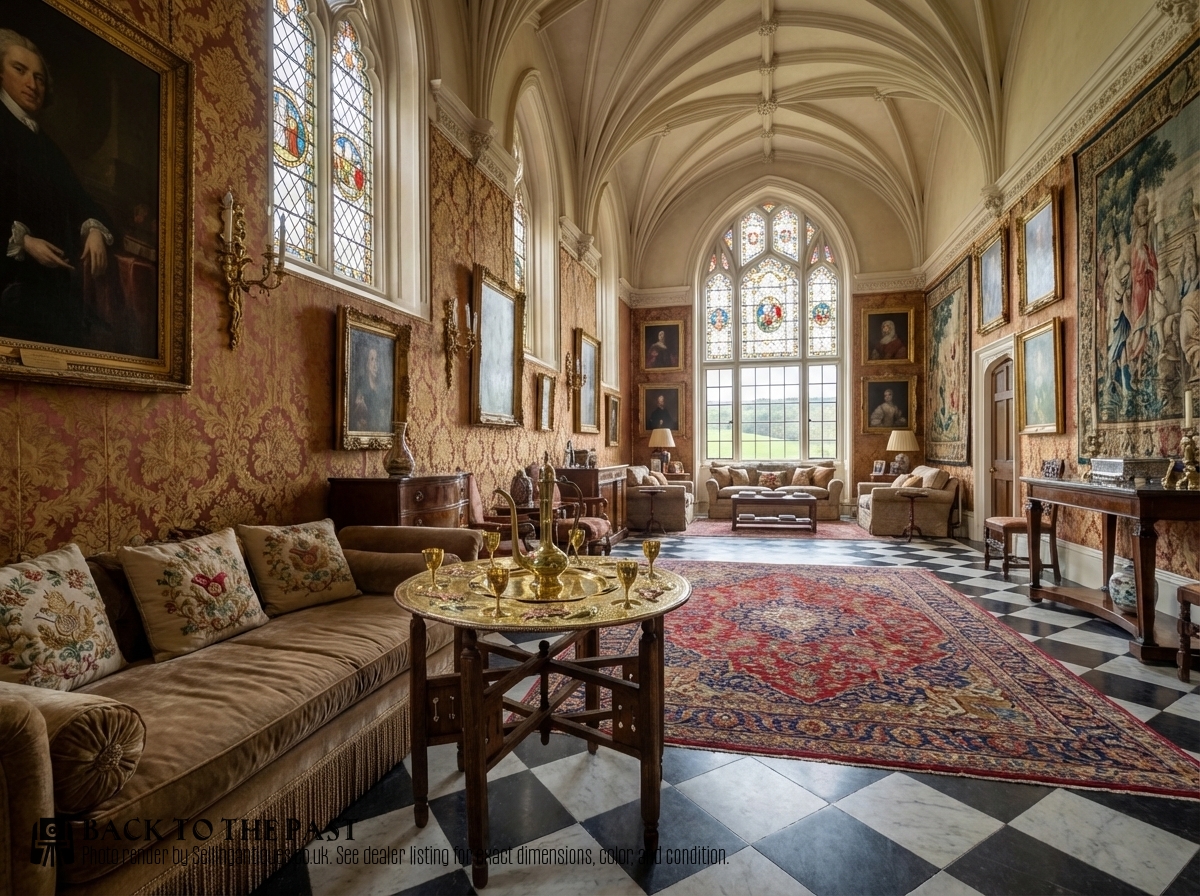
Moorish Folding Table
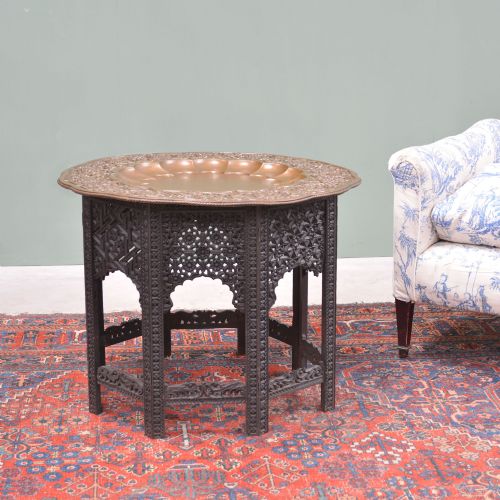
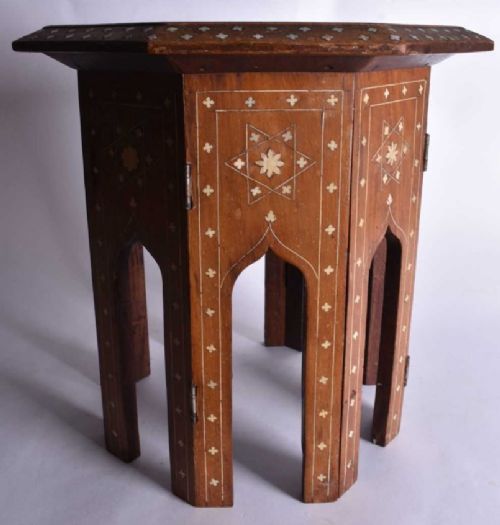
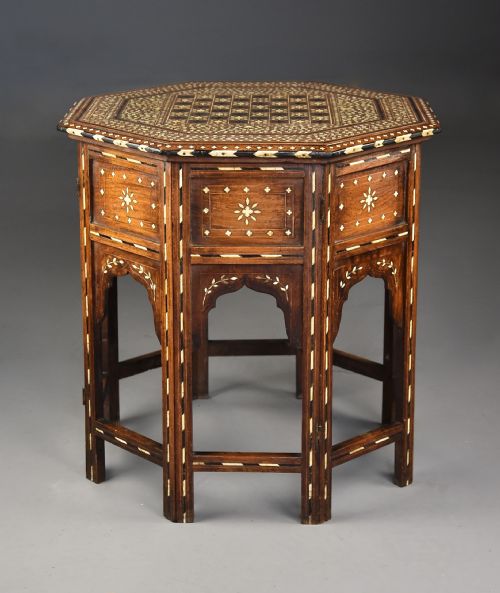
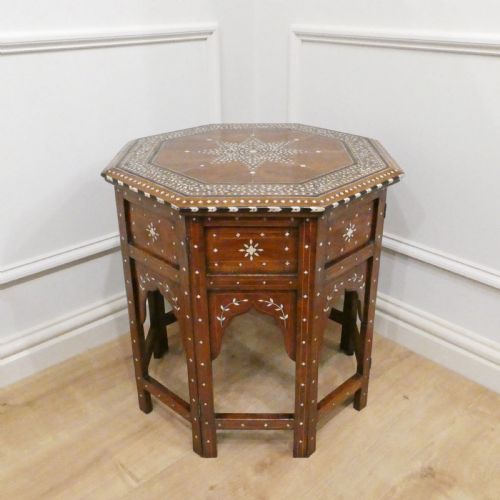
When you search for a moorish folding table, you encounter versatile occasional, coffee, and side furniture originating from the late nineteenth century into the twentieth century. The selection leans heavily towards octagonal top forms and intricate tray tables, often blending Anglo-Indian, Persian, and Syrian design influences. These pieces provide practical surface space while retaining a portable, collapsible structure that suits varied interior layouts.
You are most likely to meet inlaid wooden surfaces featuring geometric patterns, alongside gleaming brass or copper tops paired with folding wooden stands. Makers and workshops from periods such as the nineteen-hundreds and eighteen-nineties produced these tables to serve as games surfaces, lamp stands, or coffee tables. The fusion of Moorish Revival and Anglo-Moresque styles ensures each piece functions as a striking focal point.
How they were made
Artisans constructed the wooden frames from hardwoods, rosewood, teak, mahogany, and sandalwood, incorporating complex folding mechanisms that collapse flat for storage. Surfaces frequently display meticulous bone or mother-of-pearl inlay arranged in dense geometric stars and foliage. Carved detailing defines the borders and support stands, demonstrating traditional woodworking techniques.
Metal tops fashioned from brass and copper introduce reflective surfaces, occasionally decorated with engraved or inlaid ornamentation. Lacquered finishes and contrasting dark woods accentuate the intricate patterns carved into the structure. These varied materials combine to create durable yet lightweight furniture suited to practical daily use.
Listings feature woods including rosewood, teak, sandalwood, and mahogany, paired with copper and brass.
What varies in quality
The degree of intricacy in the bone, mother-of-pearl, or metal inlay distinguishes finer examples from simpler production. Precision in the joinery of the folding base determines stability and longevity, separating superior craftsmanship from standard utilitarian pieces. Dense, deeply carved woodwork across the entire frame indicates a higher tier of manufacture.
Condition of the delicate inlay work and the integrity of the hinges or folding scissor stands dictate overall desirability. Uniformity in the geometric patterns and the selection of rich, dense hardwoods or unblemished brass tops elevate certain pieces within the range.
Liberty & Co.
The Moorish Folding Table Glossary
- Anglo-Indian
- A designation for items produced in India during the British colonial period, often combining British furniture forms with traditional local craftsmanship. These pieces frequently utilise local timbers like sandalwood and teak.
- Octagonal top
- A geometric surface shape featuring eight sides, which is the predominant configuration for folding occasional and coffee tables in this category. This shape accommodates complex radiating inlay patterns.
- Hoshiarpur
- A North Indian centre known for intricate wood carving and inlay work using bone or resin. Tables from this region typically display dense floral and geometric motifs across the entire surface.
- Moorish Revival
- An architectural and decorative style popular in the nineteenth century that incorporates elements of traditional Islamic design. It influences the horseshoe arches and intricate lattice patterns found on these tables.
- Tray table
- A piece comprising a removable surface resting upon a separate folding stand. This design allowed the top to serve drinks or food independently of the base.
Moorish Folding Table: Frequently Asked Questions
How do I fold the table safely?
Most folding stands rely on an interlocking scissor mechanism that lifts slightly to release the tension before folding flat. Take care to support the metal or wooden top separately while collapsing the base to avoid straining the hinges.
Ensure that any removable tray top is lifted off completely before attempting to fold or move the supporting wooden frame. Storing the components properly prevents accidental warping of the interlocking wooden legs.
What rooms suit these tables best?
The compact footprint and portable nature of these tables make them ideal as bedside surfaces, lamp stands, or beside a living room sofa. Their decorative surfaces add warmth and textural contrast to neutral modern interiors.
Because the stands fold away easily, they can also serve as flexible auxiliary surfaces for entertaining guests. Placing them where direct sunlight is managed helps preserve the delicate bone and mother-of-pearl inlay.
How do I clean inlaid wood?
Dust the intricate carved areas regularly with a soft, dry brush to prevent dirt accumulation within the bone or mother-of-pearl recesses. Avoid using wet cloths or harsh chemical polishes that can discolour the timber or loosen the adhesive holding the inlay.
A light application of appropriate natural wax, applied sparingly with a soft cloth, maintains the lustre of the hardwood without harming the delicate contrasting materials.
How do I identify the period?
Examine the timber species, the style of the inlay work, and the construction methods used on the folding mechanism. Pieces originating from the late nineteenth century frequently display denser hand-carved details and denser sandalwood or rosewood use.
Twentieth-century examples sometimes incorporate alternative lacquered finishes or simplified geometric layouts. Comparing the specific motif style against known regional traditions helps narrow down the decade of production.