

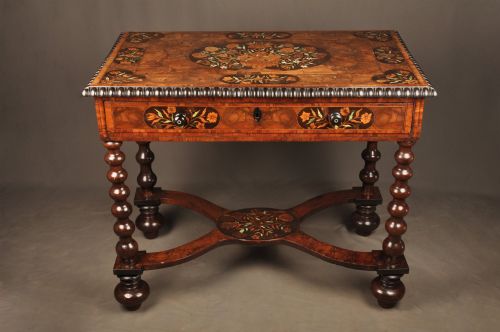
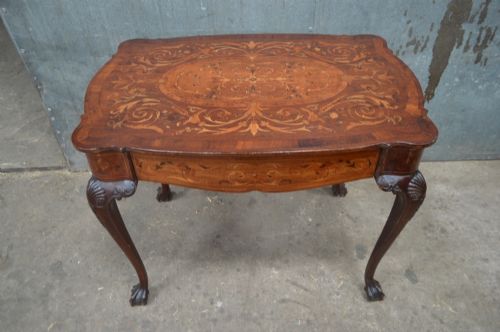

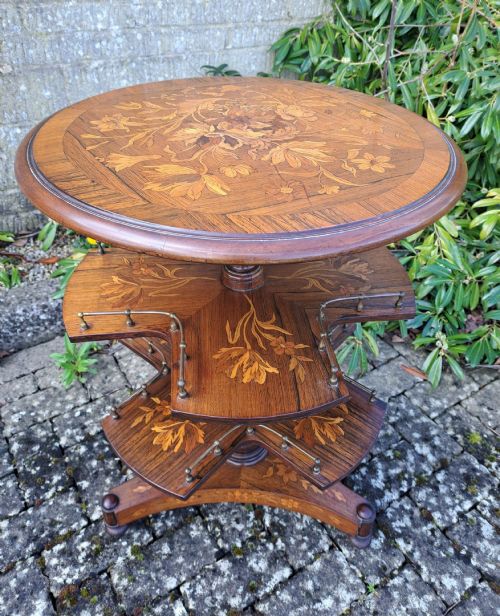
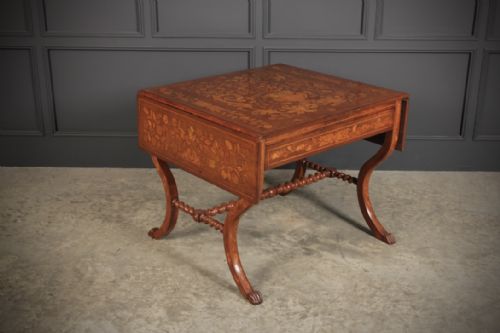
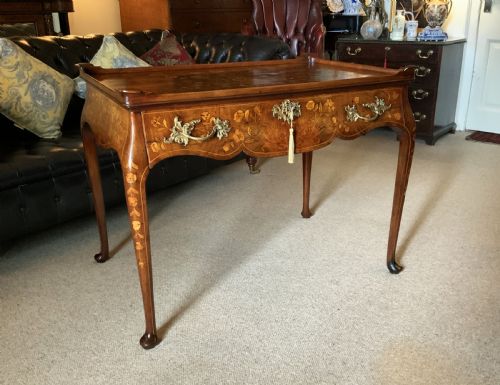


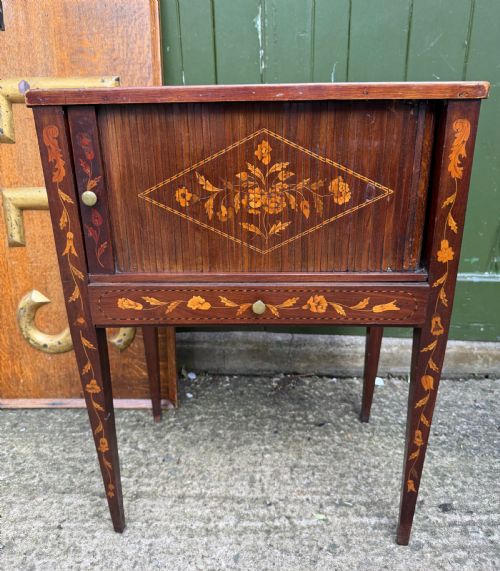


Dutch Floral Marquetry Table
A dutch floral marquetry table brings extraordinary pictorial depth to a room through meticulously cut fruitwood and boxwood veneers.
Dutch Floral Marquetry Table
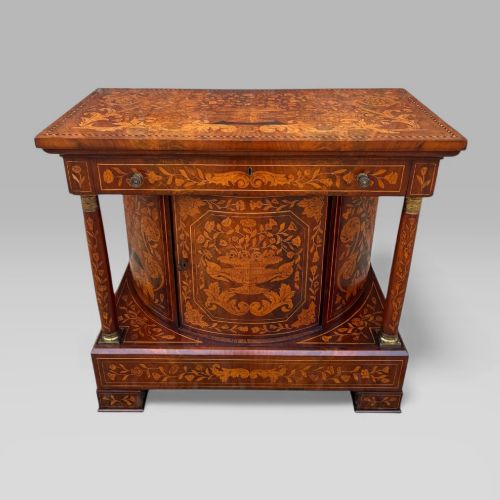
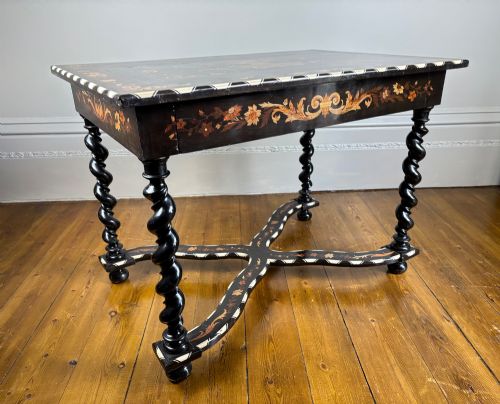
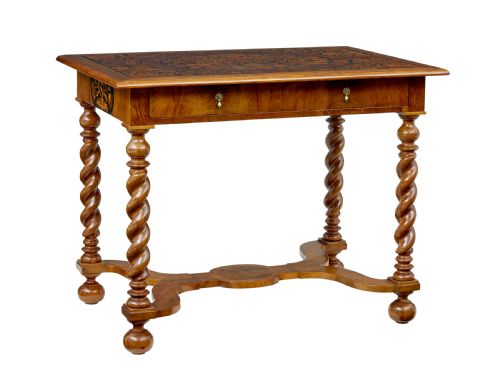
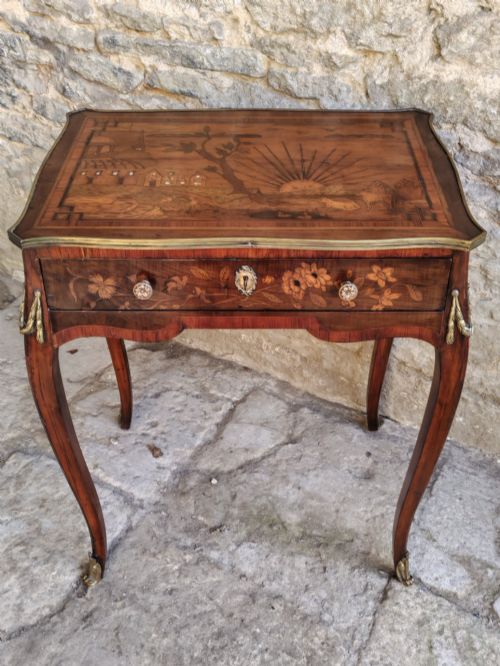
A dutch floral marquetry table displays intricate floral and bird motifs meticulously inlaid across surfaces of walnut and mahogany. When you search for a dutch floral marquetry table, you encounter forms ranging from card tables and side tables to console tables and library tables.
The pieces appearing on this page span the seventeenth, eighteenth, and nineteenth centuries, with walnut and mahogany serving as the primary foundational timbers. Side tables and card tables dominate the selection, often featuring serpentine fronts and elaborate marquetry panels.
Construction and veneer work
Cabinetmakers constructed these tables using walnut and mahogany frames, upon which they applied elaborate fruitwood and boxwood marquetry. Individual pieces of veneer were meticulously shaped and fitted together to form complex floral displays, occasionally enhanced with bone inlay and brass fittings.
The application of floral and bird motifs required immense precision, with contrasting lighter woods set into darker walnut or mahogany grounds. This pictorial technique defined the Dutch Baroque, Rococo, and Neoclassical styles seen across the centuries.
Dutch Floral Marquetry Table Retail Price Guide 2026
Typical asking prices for dutch floral marquetry table among the pieces listed under this phrase on Sellingantiques today, from the lower quarter to the upper quarter. They describe what is for sale here now, not the wider market.
Several tables manage to incorporate entire feathered avians into their floral spreads without dropping a single wing.
Assessing quality in marquetry
Quality rests primarily in the crispness of the veneer cutting and the complexity of the floral design. Superior examples exhibit tightly fitted joints between contrasting fruitwoods and boxwood, with minimal use of filler.
The depth of the colour in the walnut or mahogany timber and the natural ageing of the fruitwood veneers dictate the visual impact. Tables retaining sharp floral outlines and balanced proportions represent the finest cabinet work.
The Dutch Floral Marquetry Table Glossary
- Marquetry
- A decorative technique where pieces of veneer are applied to a structured base to form pictorial patterns. This method allowed makers to create intricate floral designs using various coloured woods.
- Veneer
- A thin slice of fine timber applied over a secondary wood foundation. Cabinetmakers utilised fruitwood and boxwood veneers for contrasting floral details.
- Serpentine
- A furniture front shape characterised by a curving contour featuring a convex centre flanked by concave sides. This undulating form appears frequently on eighteenth-century side tables.
- Console table
- A wall-mounted or freestanding table designed to stand against a vertical surface. Many surviving examples incorporate elaborate marquetry tops.
- Fruitwood
- Dense timber derived from fruit-bearing trees, commonly used in marquetry for lighter contrasting tones. It accepts staining and polishing well.
Dutch Floral Marquetry Table: Frequently Asked Questions
How do I date a marquetry table?
Dating relies on examining the secondary timbers, construction methods, and the prevailing style of the marquetry motifs. Seventeenth and eighteenth-century pieces often display heavier walnut frames, while nineteenth-century interpretations utilise mahogany and distinct revival aesthetics.
Changes in stretcher arrangements and leg designs also help establish the chronological origin of each individual piece.
Where should I place this table?
These tables suit reception rooms, hallways, or libraries where their detailed floral tops remain visible. Console tables sit naturally against walls, whereas centre tables and card tables function effectively as freestanding focal points.
Keep them away from direct sunlight and strong heat sources to protect the delicate fruitwood and boxwood veneers.
How do I care for the surface?
Maintain the finish by dusting gently with a dry, soft cloth and applying a high-quality beeswax periodically. Avoid modern spray polishes containing silicone, which can penetrate hairline cracks in the timber and degrade the veneer.
Maintain consistent room humidity to prevent the fruitwood and mahogany from expanding or contracting.
What is the difference between inlay and marquetry?
Inlay involves setting pieces of wood into a recessed cavity carved directly into the solid timber base. Marquetry, by contrast, assembles an entire pictorial veneer sheet on a backing before applying it to the furniture carcass.
Both techniques appear across these pieces, frequently working together to create floral and bird designs.