

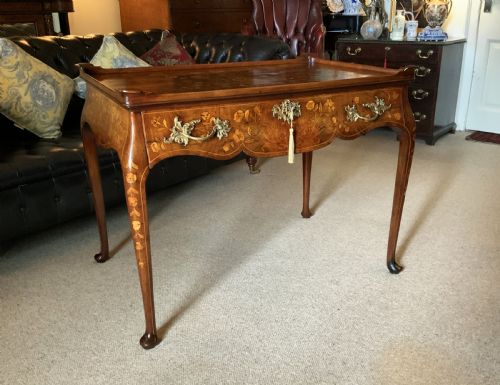


Marquetry Dressing Table
These marquetry dressing table examples combine intricate wood inlay with practical mirror surfaces for the boudoir.
Marquetry Dressing Table Forms
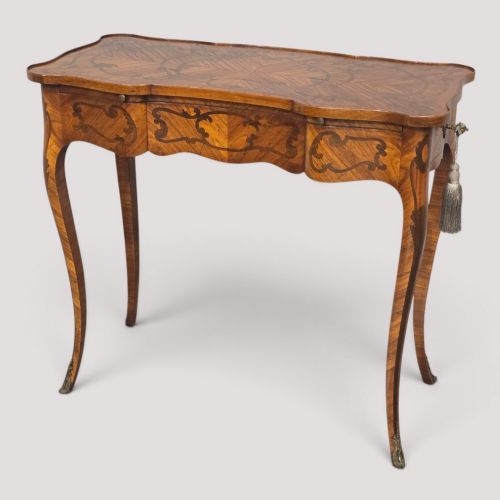
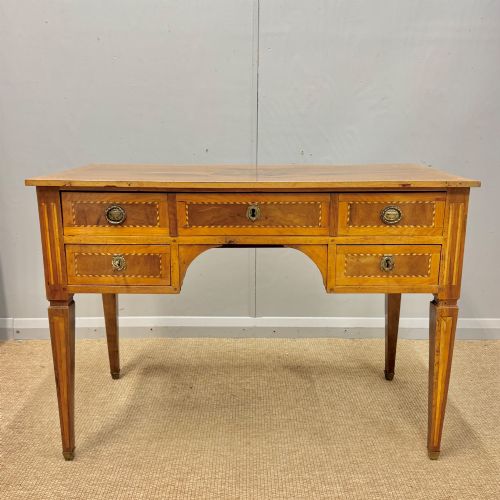
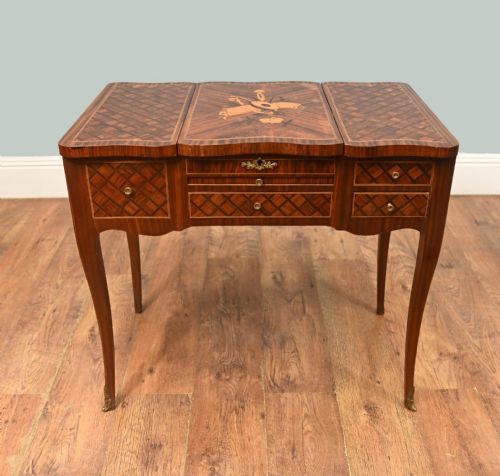
A marquetry dressing table brings together decorative wood veneers and functional surfaces designed for the bedroom or dressing room. The pieces seen here span periods from the eighteenth century through to the Edwardian era, including Georgian and Victorian examples.
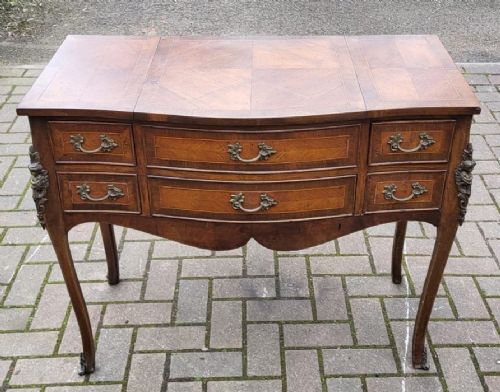
French and Dutch influences dominate the selection, often appearing in styles such as Louis XV, Dutch Rococo, and Queen Anne. Many examples feature lift-top compartments or integrated mirrors.
The form frequently overlaps with related furniture types, including poudreuses, lowboys, and work tables. Walnut, mahogany, and satinwood form the core of the corpus, embellished with floral and pictorial marquetry.
Materials and Construction
Cabinetmakers constructed these tables using a carcase of solid timber such as mahogany, walnut, or oak, overlaid with carefully selected veneers. Marquetry cutters then pieced together contrasting woods like fruitwood, satinwood, and various exotic timbers to form intricate pictorial designs.
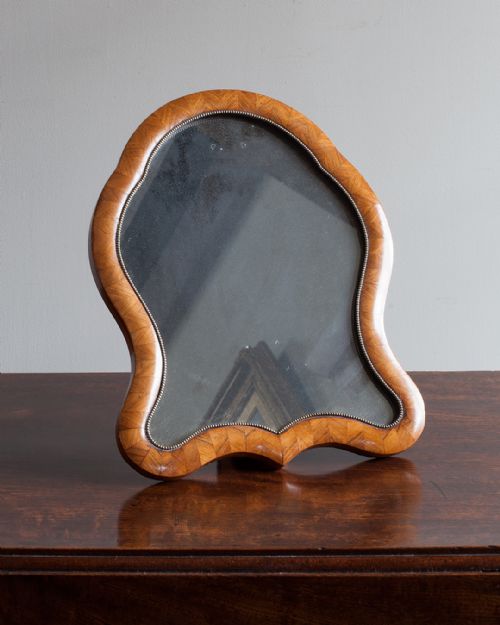
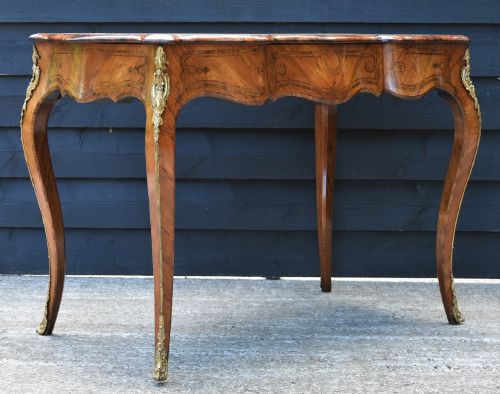
Metal mounts in brass and ormolu frequently accent the corners, handles, and legs of continental pieces. Glass appears in the adjustable mirrors and protective top surfaces associated with the dressing table form.
Retail Price Guide 2026
Typical UK retail prices for marquetry dressing table, calculated from the Sellingantiques database of over a million retail prices indexed since 2003. This retail price guide relies exclusively on Sellingantiques data; no external sources or auction records are used, so the figures do not describe the wider market.
French stylistic influences, particularly Louis XV revival forms, appear frequently alongside traditional eighteenth-century Dutch marquetry pieces.
Assessing the Workmanship
The finesse of the veneer work defines the upper tier of these pieces, where floral and avian motifs show precise shading through the scorching technique. The integration of secondary timbers and the crispness of any ormolu mounts signal high-end workshop production.
Structural complexity also separates standard items from exceptional ones, particularly where makers incorporated multiple secret compartments, rising mechanisms, or complex kidney shapes. The harmony between the carcase timber and the inlaid surface determines the visual success of the piece.
Waring & Gillow·Gillows
The Marquetry Dressing Table Glossary
- Marquetry
- Decorative veneer work forming pictures or patterns by fitting together small pieces of various woods. This technique contrasts with simpler inlay by covering the entire surface of the carcase.
- Poudreuse
- A French dressing table featuring a hinged top that opens to reveal a mirror and compartments for cosmetics. The form gained popularity during the eighteenth century.
- Ormolu
- Gilded bronze mounts applied to furniture for decorative effect. It appears frequently on French tables from the nineteenth and twentieth centuries.
- Lowboy
- A small British table with drawers, standing on relatively tall legs, often used for grooming or writing. Eighteenth-century examples frequently feature walnut or mahogany with subtle inlay.
Frequently Asked Questions
How do I use a lift-top dressing table?
The central section of the top surface is hinged to lift upwards, revealing a concealed mirror on its underside. Storage compartments for bottles and brushes sit directly beneath.
Lower the lid carefully after use to protect the mirror glass and the surrounding veneer from dust and damage.
What is the difference between French and Dutch styles?
French examples lean towards serpentine outlines, delicate ormolu mounts, and kingwood or walnut veneers. They often emphasise fluid curves associated with Louis XV designs.
Dutch pieces typically feature dense floral and bird marquetry in contrasting fruitwoods on a walnut or mahogany ground, often following Queen Anne or Rococo proportions.
How should I care for marquetry surfaces?
Keep these tables away from direct sunlight and heat sources to prevent the delicate veneer from drying and lifting. Dust gently with a dry, soft cloth.
Apply a microcrystalline wax occasionally to nourish the timber and protect the polished finish without building up heavy residue.
Are secret compartments common in these tables?
Many period examples incorporate hidden drawers or rising mechanisms designed for valuables and cosmetics. These are operated by concealed releases within the larger framework.
Testing these mechanisms requires patience and gentle handling to avoid damaging the historical woodwork.
How do I date an antique dressing table?
Examine the secondary timbers used inside the drawers and carcase, along with the style of the hardware and leg construction. Georgian pieces display different dovetailing techniques compared to Edwardian revivals.
Marquetry motifs and veneer thicknesses also shift across periods, helping to distinguish eighteenth-century work from nineteenth-century interpretations.