




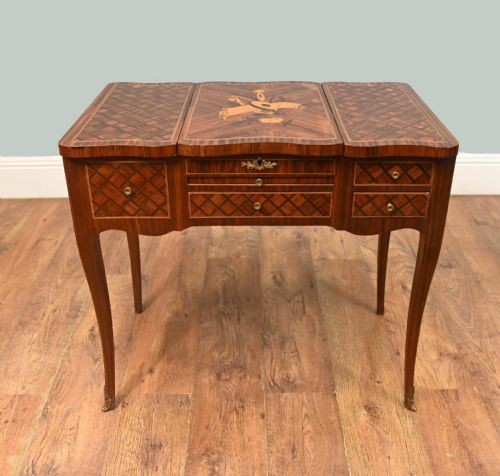


Louis XV Dressing Table
When you search for a louis xv dressing table, you enter a world of serpentine curves, delicate veneers, and refined French provincial charm.
Louis XV Dressing Table
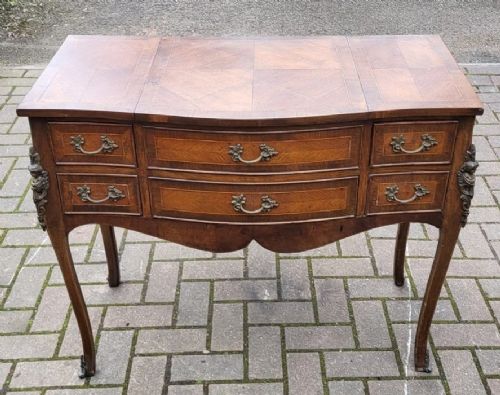
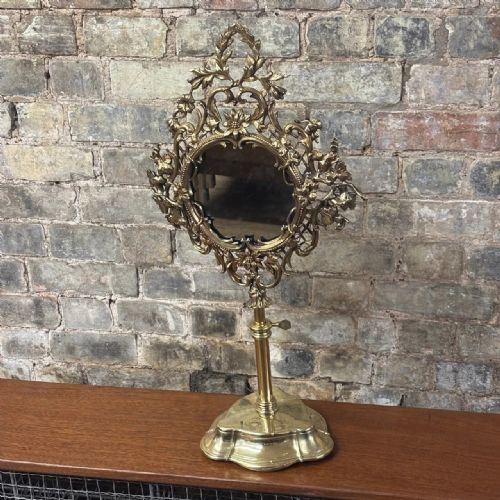
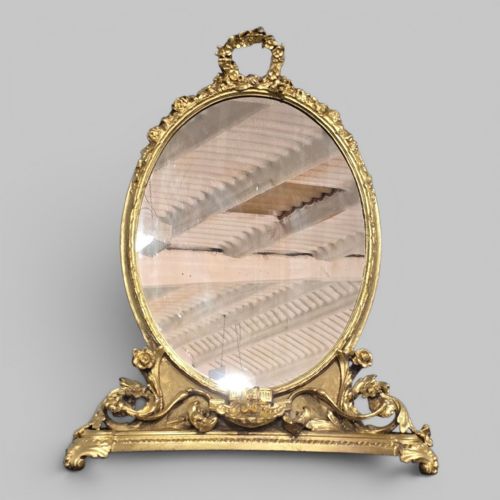
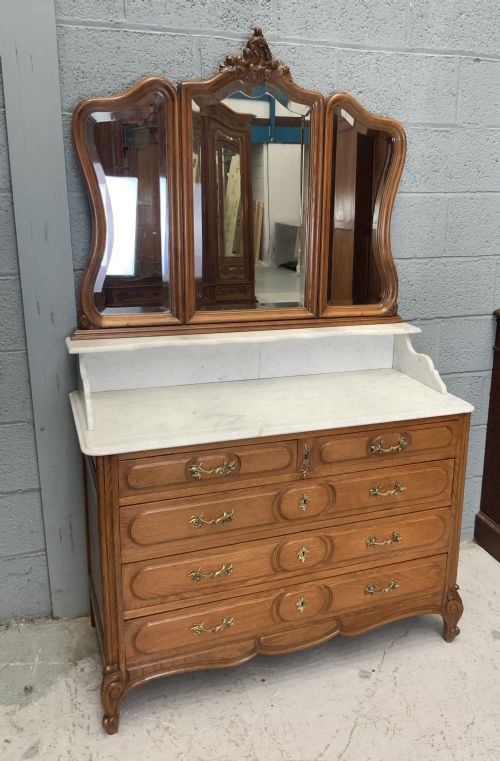
A louis xv dressing table typically manifests as an antique vanity or poudreuse rooted in French revival styles and the broader 19th and early 20th century movements. These pieces often incorporate hinged compartments, integrated mirrors, and graceful cabriole legs designed for domestic boudoirs.
Most examples encountered here span the Victorian era through the 1920s, reflecting revivals of French rococo aesthetics. Alongside dedicated dressing tables, the selection includes related forms such as work tables, side tables, and occasional writing desks sharing the same curved lineage.
The fundamental architecture relies on organic asymmetry and flowing lines rather than rigid geometry. Whether executed in walnut, kingwood, or painted finishes, each item maintains the theatrical yet intimate scale expected of period dressing furniture.
Materials and Construction
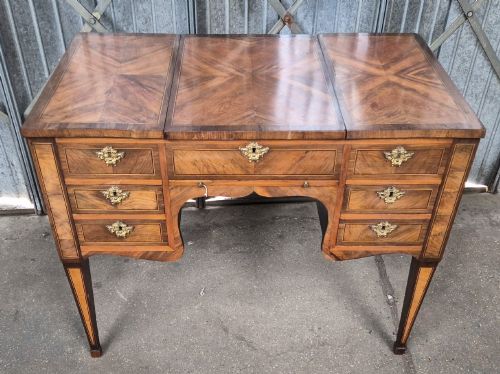
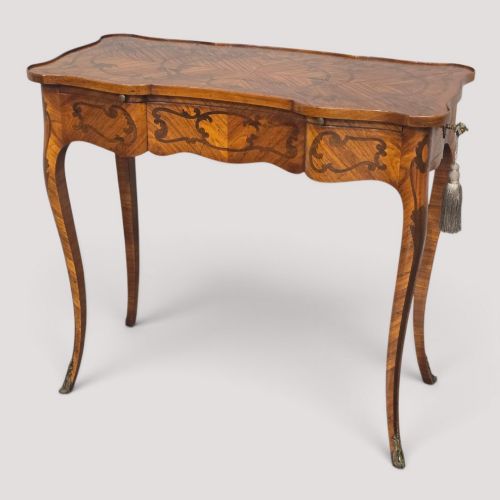
Cabinetmakers utilised dense timbers like walnut, oak, and mahogany as foundational carcasses, frequently applying decorative veneers of kingwood and tulipwood over the surface. Marquetry and parquetry inlay introduce intricate geometric or floral patterns across tabletops and drawer fronts.
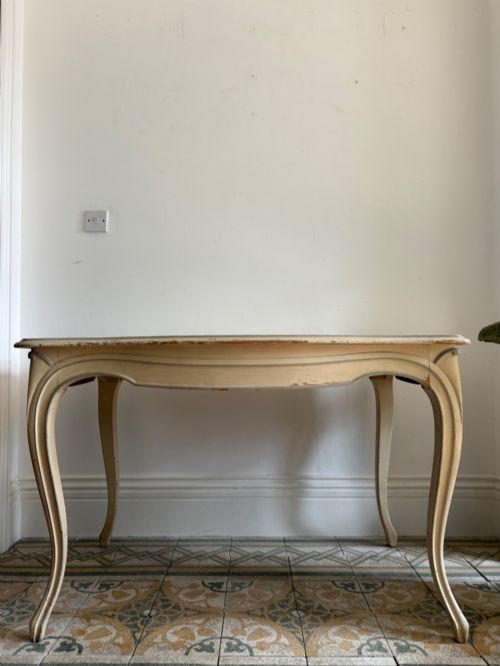
Cast bronze or brass mounts, often gilded as ormolu, edge the key points of stress and ornament the knees of cabriole legs. Painted and cream finishes also appear, particularly on pieces originating from provincial French workshops during the early 20th century.
Louis XV Dressing Table Retail Price Guide 2026
Typical asking prices for louis xv dressing table among the pieces listed under this phrase on Sellingantiques today, from the lower quarter to the upper quarter. They describe what is for sale here now, not the wider market.
The listings span from the 1850s Victorian era through the Edwardian period and into the 1930s, showcasing walnut, oak, and kingwood veneers.
Markers of Distinction
The refinement of the carving and the crispness of the gilt bronze mounts set finer examples apart from mass-produced revival pieces. Hand-cut marquetry displaying varied timber tones indicates superior craftsmanship compared to simpler printed or stamped veneer work.
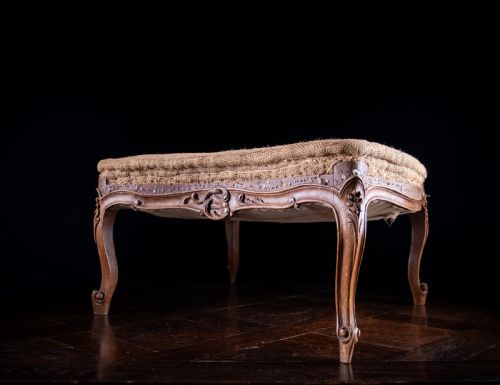
Structural integrity of the complex hinged compartments and the matching quality of secondary timbers inside drawers reveal the maker's dedication. Pieces that retain their original beveled mirrors and matching stools represent a higher tier of preservation.
Alphonse Tahan·E and R
The Louis XV Dressing Table Glossary
- Cabriole leg
- A furniture leg that curves outward at the knee and tapers inward toward the foot, mimicking animal limbs. This form defines much of the louis xv style.
- Poudreuse
- A French dressing table featuring a hinged top that opens to reveal a mirror and compartments for cosmetics. It served as both a functional vanity and a small writing desk.
- Ormolu
- Gilded bronze mounts applied to furniture for decorative effect. The best examples exhibit chased details finished by hand after casting.
- Marquetry
- Decorative veneer applied to a furniture structure to form pictures or patterns using various woods. Craftsmen select contrasting tones of grain to create depth.
- Boulle
- A style of marquetry utilising brass and tortoiseshell inlaid into furniture. Named after French cabinetmaker Andre-Charles Boulle, it adds dramatic contrast.
Louis XV Dressing Table: Frequently Asked Questions
How do I use a poudreuse?
A poudreuse functions by lifting the central hinged lid to expose an integrated mirror and storage wells for toiletries. Side leaves often fold outward to provide extra surface space during morning routines.
These pieces easily double as compact writing desks or occasional hallway tables when closed. Their clever internal compartments make them practical for modern jewellery storage.
Are these tables solid wood?
Most pieces combine a solid timber frame, such as oak or walnut, with decorative veneers applied across the flat surfaces. This technique prevented warping while allowing cabinetmakers to display expensive woods like kingwood.
Secondary timbers inside the drawers often consist of softer woods like pine or oak. Solid construction remains typical for structural elements like cabriole legs and frames.
How do I identify a revival piece?
Revival furniture from the 19th and early 20th centuries imitates 18th-century forms using contemporary industrial sawing and assembly methods. Machine-cut dovetails and modern screw types often betray a later date despite authentic styling.
Examining the wear patterns on the feet and handles helps determine age. Many Victorian and Edwardian copies display exceptional skill that rivals the originals.
Where should I place a dressing table?
These tables suit bedrooms or dressing rooms where natural light can reach the mirror surfaces. Their finished backs also allow them to float freestanding in larger reception spaces.
Pairing the table with a matching low stool ensures proper ergonomic height for seating. Avoid placing antique veneered pieces in direct sunlight to protect the coloured timbers.