
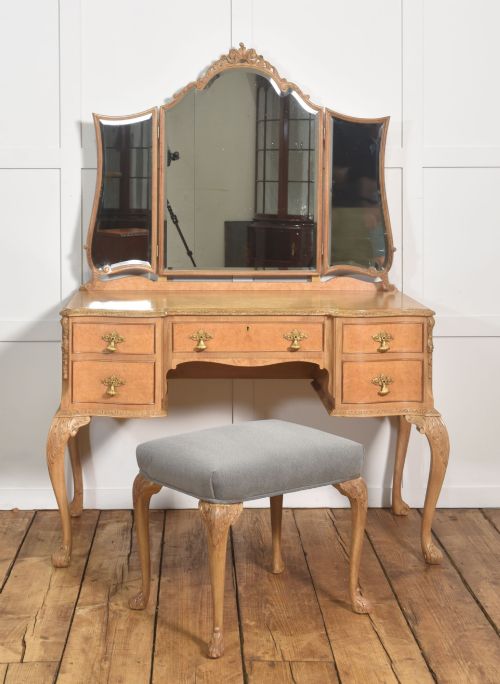
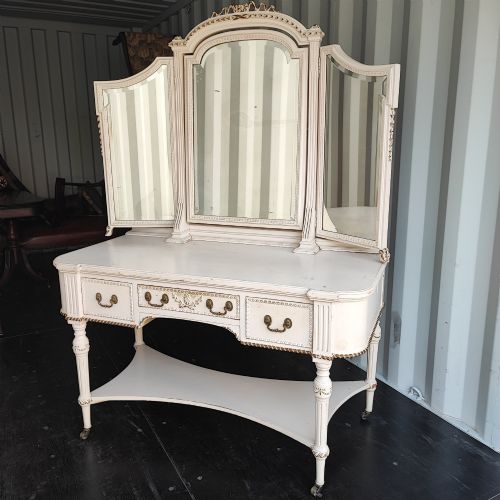
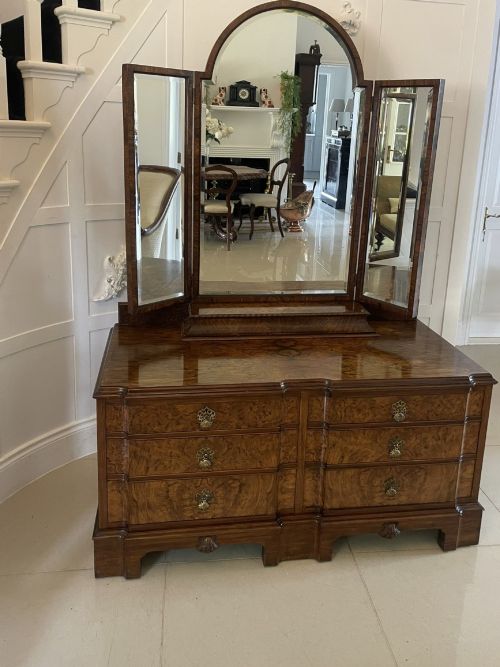
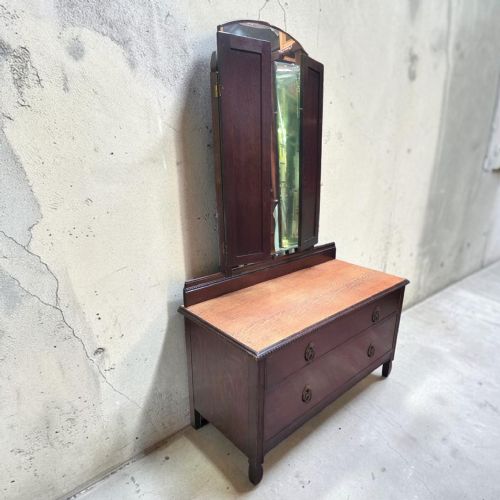
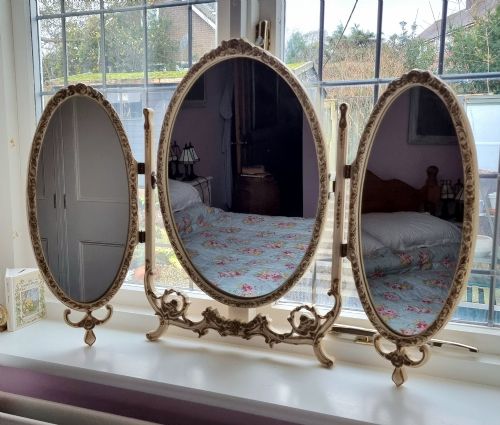


Triptych Mirror Dressing Table
A triptych mirror dressing table brings practical three-sided reflection and period character to a bedroom through hinged side panels and fitted drawers.
Triptych Mirror Dressing Table
A triptych mirror dressing table provides adjustable multi-angled reflection alongside a surface for morning routines, appearing frequently in Edwardian, Art Deco, and 19th Century forms. These pieces range from substantial bedroom suites and dressing chests down to tabletop folding swing mirrors mounted on bracket feet or small drawers.
The layout typically combines a central plate with hinged flanking wings, allowing the user to angle the glass for complete visibility. Walnut, oak, mahogany, and painted wood provide the structural carcass for these dressing furniture designs.
Materials and construction
Cabinet makers utilised dense hardwoods like walnut, oak, and mahogany, often enhanced by burr walnut veneers or satinwood inlay to create striking grain patterns on the drawer fronts and surrounds. Painted wood finishes and gilt or brass mouldings added decorative flourish, particularly on French revival and chinoiserie examples.
The hinged glass plates rely on brass fixtures, swan neck handles, and occasionally finials or bracket feet to support the weight of the folding panels. Bevelled mirror glass provides the reflective surface, secured within carved wooden frames or brass mounts.
Edwardian dressing mirrors occasionally feature whimsical brass lion finials guarding the swing frame.
Factors of quality
Quality depends upon the choice of timber and veneer work, where figured burr walnut or carefully matched mahogany displays superior cabinet making compared to plain secondary woods. The crispness of carved details, decorative inlay, and original painted finishes separates standard production from finer workshop output.
Hardware integrity also distinguishes the pieces, with solid brass fittings, sturdy hinges that hold the side mirrors at the desired angle, and clean bevelled glass indicating better original manufacture.
Maples of London and Paris·Heals·Maurice Adams·Rowley Gallery
The Triptych Mirror Dressing Table Glossary
- Triptych mirror
- A three-panel mirror with hinged side wings that fold inward to adjust the angle of reflection.
- Burr walnut
- A prized wood veneer showing knotted growth patterns that create swirling decorative figures on furniture surfaces.
- Swing mirror
- A glass plate hung on pivots between upright supports, allowing it to tilt forward or backward.
- Bracket foot
- A simple architectural foot supporting the corners of a chest or dressing table base.
- Chinoiserie
- A European decorative style employing imitated Chinese motifs and painted lacquer techniques.
Triptych Mirror Dressing Table: Frequently Asked Questions
How do I clean the mirror glass?
Use a soft microfibre cloth and a mild glass cleaner sprayed onto the cloth rather than directly onto the mirror plate. This prevents liquid from seeping behind the silvering along the edges.
Take care around old wooden frames and brass hinges, keeping moisture away from the joints and backing boards.
Can the side mirrors be adjusted?
Yes, the side panels are connected to the central mirror by small brass hinges that allow them to swing inward or outward. This lets you catch light and angles from multiple directions.
If the joints feel loose or stiff, check the hinge screws carefully without forcing the metal.
What is burr walnut?
Burr walnut is a decorative wood veneer harvested from growth excrescences on walnut trees. It yields complex, swirling grain patterns highly favoured by cabinet makers.
This material often appears on the main drawer fronts or central frames of finer Edwardian and Art Deco pieces.
How do I date a dressing table?
Examine the secondary timbers, hardware style, and construction methods used inside the drawers and carcass backs. Edwardian and Art Deco examples often feature cleaner geometric lines or specific revival motifs.
Maker stamps, labels, or distinctive painted decoration can also help narrow down the period of manufacture.