
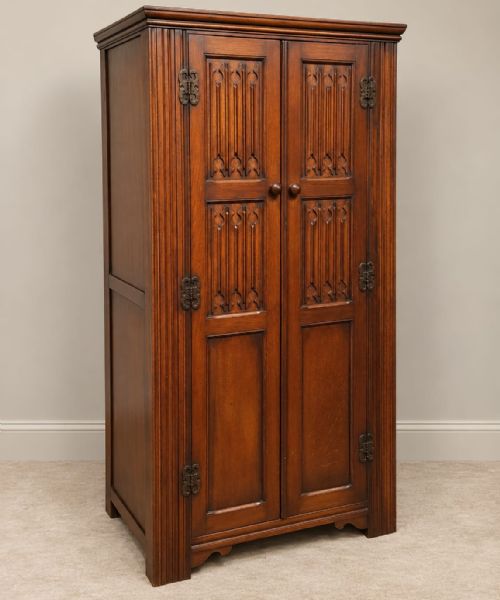
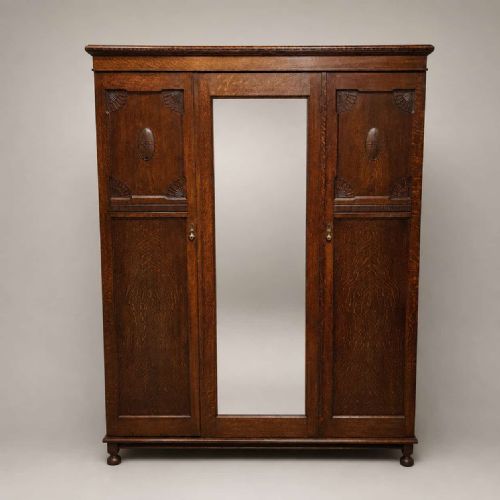
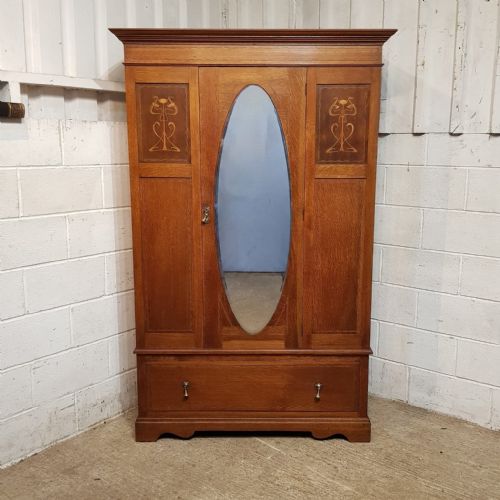
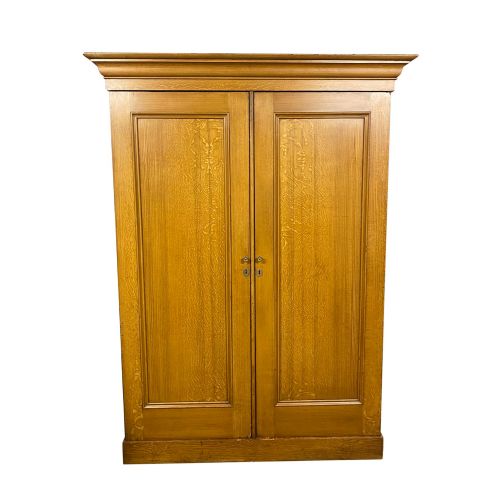
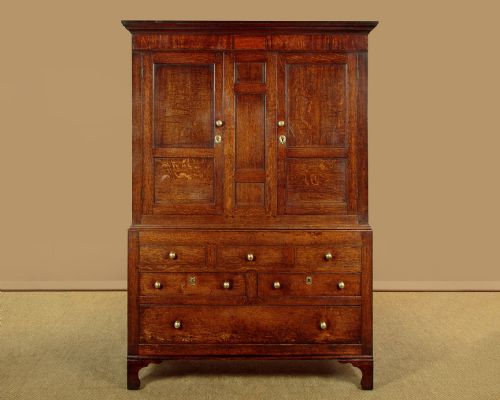
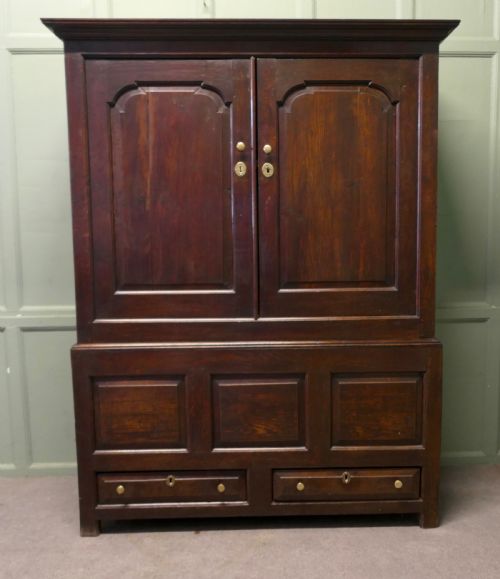
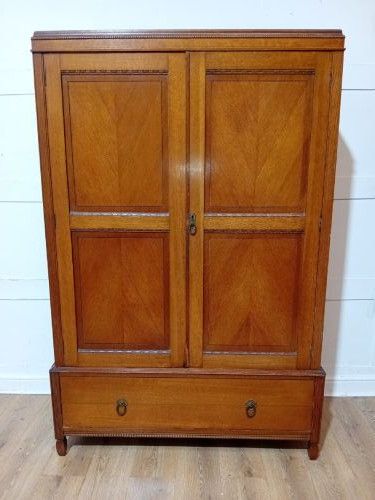

Oak Clothes Cupboard
An oak clothes cupboard is a sturdy storage piece built from timber to hold garments, and collectors prize these for their solid construction and regional character.
What these pieces are
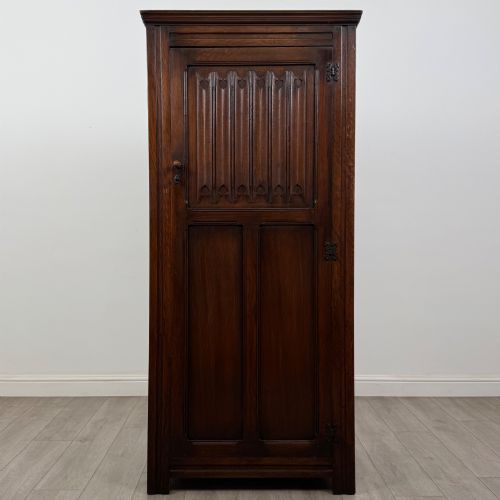
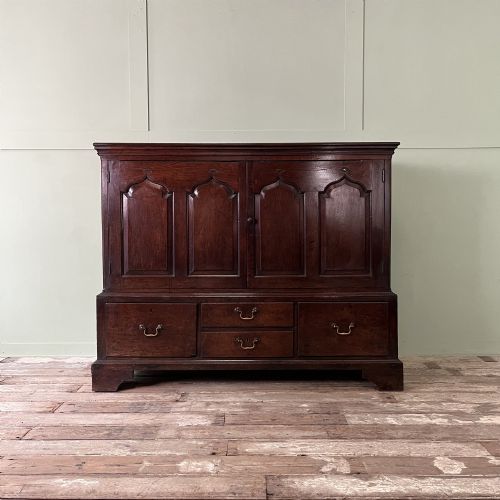
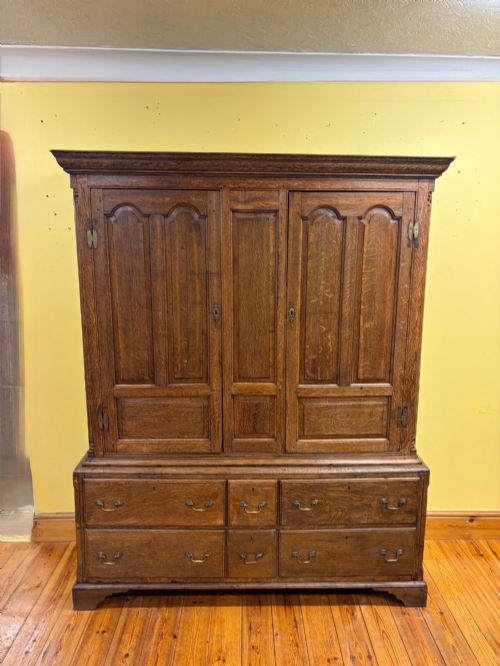
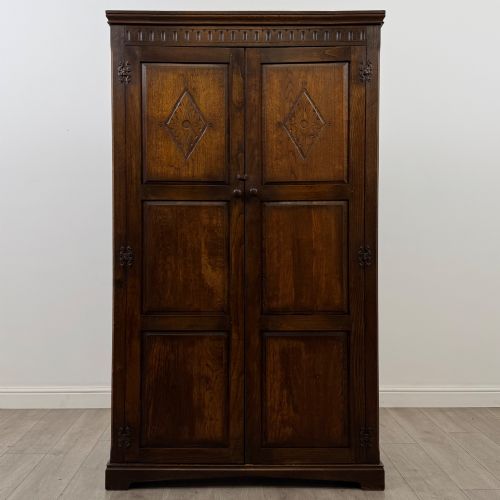
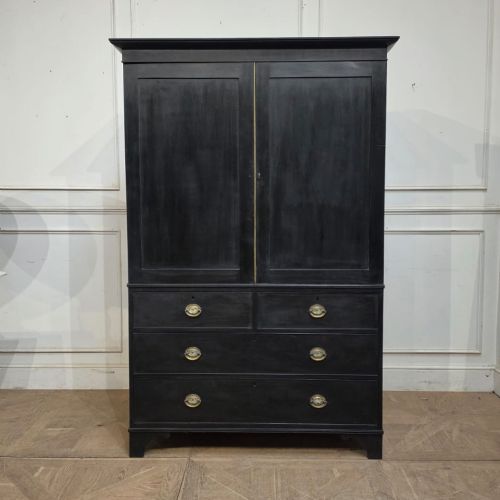
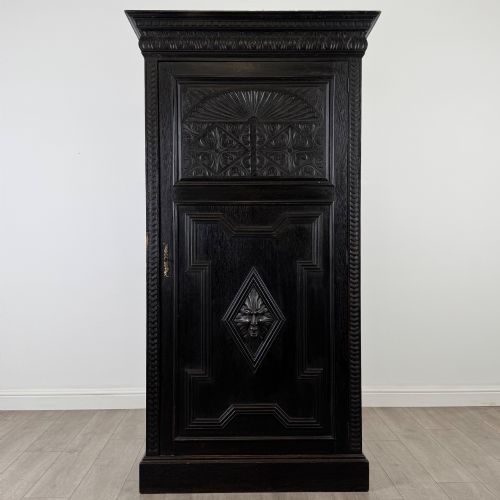
An oak clothes cupboard brings together centuries of vernacular joinery and formal design. When a buyer searches for an oak clothes cupboard, they encounter heavy timber furniture spanning from the early seventeenth century through the Arts and Crafts and Art Deco periods.
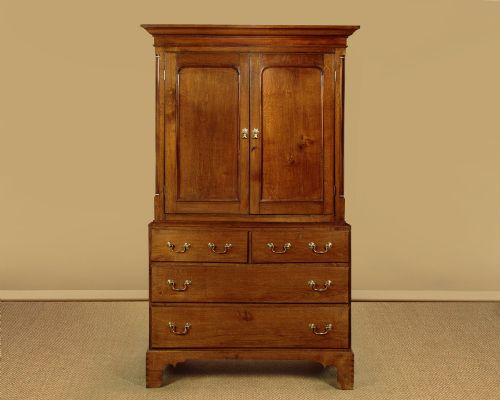
The selection ranges from early Georgian press cupboards and Welsh livery cupboards to twentieth-century limed oak wardrobes and compactums. Regional English and Welsh workshops dominate the older examples, while later decades introduce named makers such as Harris Lebus and Heals.
How they were made
Makers built these pieces primarily from solid oak, sometimes utilising limed finishes or incorporating brass, glass, metal, and iron hardware. Panel construction and traditional framing allowed the heavy timber to expand and contract with seasonal changes in humidity.
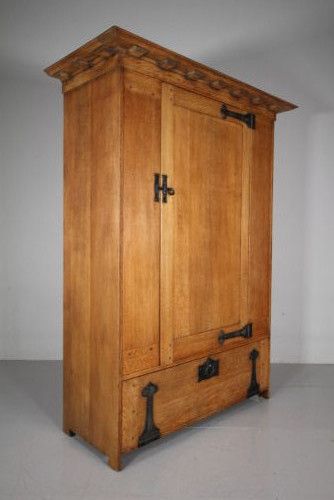
Surface treatments vary from the deep patination of eighteenth-century polish to the lighter, cleaned surfaces seen on 1920s and 1930s limed oak pieces. Iron hinges, brass drop handles, and glass panels appear where utility and display intersect.
Retail Price Guide 2026
Typical UK retail prices for oak clothes cupboard, calculated from the Sellingantiques database of over a million retail prices indexed since 2003. This retail price guide relies exclusively on Sellingantiques data; no external sources or auction records are used, so the figures do not describe the wider market.
Several pieces preserve centuries of housekeepers' secrets within their deep linen presses, smelling faintly of old beeswax and Welsh hearths.
What varies in quality
The distinction between standard utility items and exceptional pieces rests in the handling of the oak timber and the sophistication of the regional joinery. Early Welsh presses display deeply carved panels and well-proportioned cornices that separate them from plain utilitarian boxes.
Later twentieth-century examples rely on the clarity of the limed oak finish and the integrity of modernist lines, particularly in pieces associated with major makers. The weight of the brass and iron fittings and the survival of original interior hanging space further define the hierarchy.
Harris Lebus·Heals
The Oak Clothes Cupboard Glossary
- Compactum
- A multi-functional wardrobe combining hanging space, drawers, and shelving within a single footprint. This form became popular in the early twentieth century for efficient bedroom storage.
- Livery cupboard
- An older form of storage furniture historically used for provisions or garments. In Welsh examples, these often feature panelled doors and substantial timber framing.
- Limed oak
- A finish created by applying a white pigment or lime to oak to highlight the open grain. This technique gained prominence during the Arts and Crafts and Art Deco movements.
- Press cupboard
- A piece featuring upper cupboard doors above a base of drawers or a lower section. These tall units were traditionally used for household linen and clothes.
Frequently Asked Questions
How do I date an oak cupboard?
Dating relies on construction methods, timber patination, and stylistic cues such as Georgian fielded panels or Art Deco geometric lines. Tool marks and fastener types also provide clues to the era of manufacture.
Earlier pieces from the seventeenth and eighteenth centuries show hand-riven timber and peg joinery, whereas twentieth-century items incorporate machine-sawn boards and standardised metal hardware.
What is a Welsh oak press?
A Welsh oak press is a regional variation of the clothes cupboard, often characterised by robust proportions and distinct local joinery traditions. These cupboards frequently served rural households for storing folded linens and hanging garments.
They are distinguished by deep patination on native timber and often feature panelled doors with traditional pegged frames.
How do I care for limed oak?
Limed oak surfaces require gentle dusting with a dry or slightly damp cloth to protect the pigmented grain finish. Avoid harsh chemical cleaners and excessive moisture that can strip the lime solution from the wood pores.
Keeping the piece away from direct heat sources prevents the solid oak from splitting or warping over time.
Where were compactums used?
Compactums were designed for bedrooms where floor space was at a premium, offering multiple storage functions in one unified cabinet. They became common in early twentieth-century homes as urban room sizes shifted.
These pieces brought together wardrobe hanging space and tallboy drawer storage behind matching doors.