





Gothic Revival Wardrobe
A gothic revival wardrobe brings architectural presence and robust storage to a bedroom through pointed arches and substantial timber.
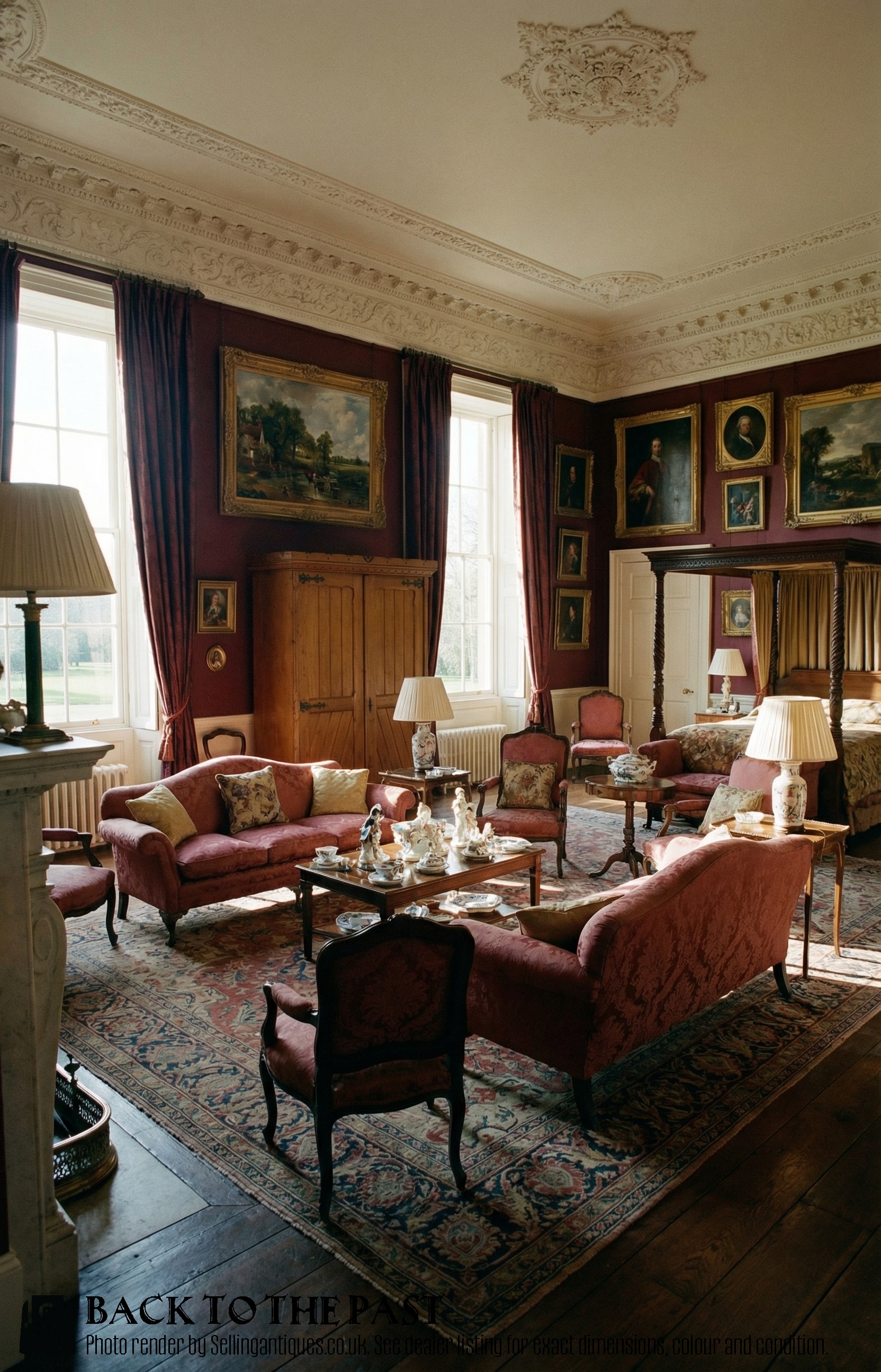
Gothic Revival Wardrobe
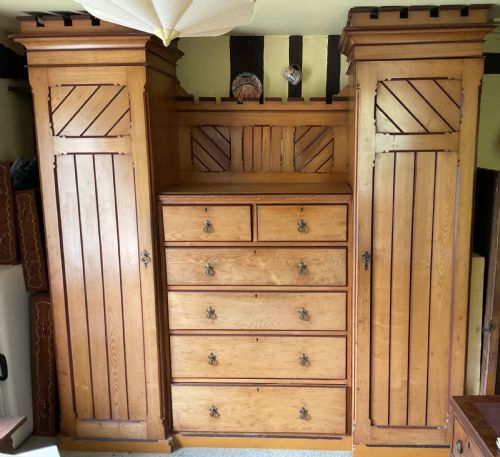
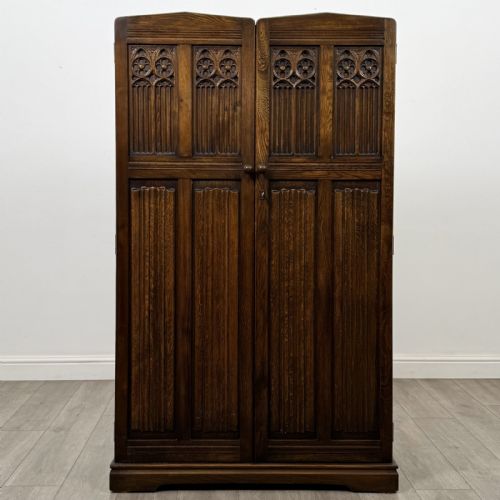
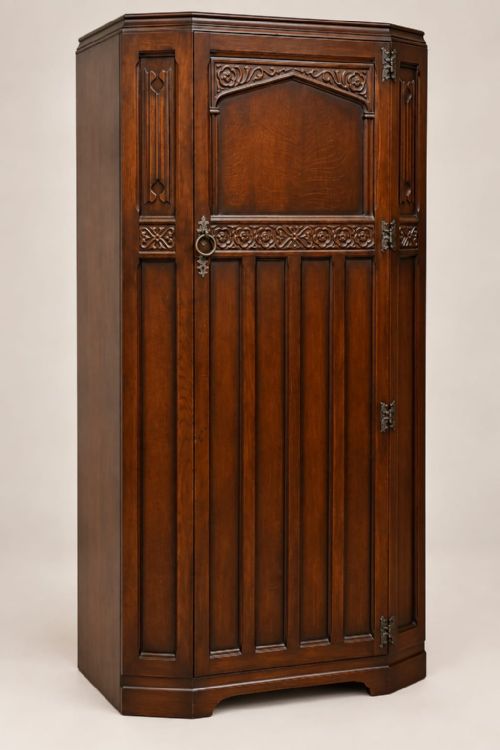
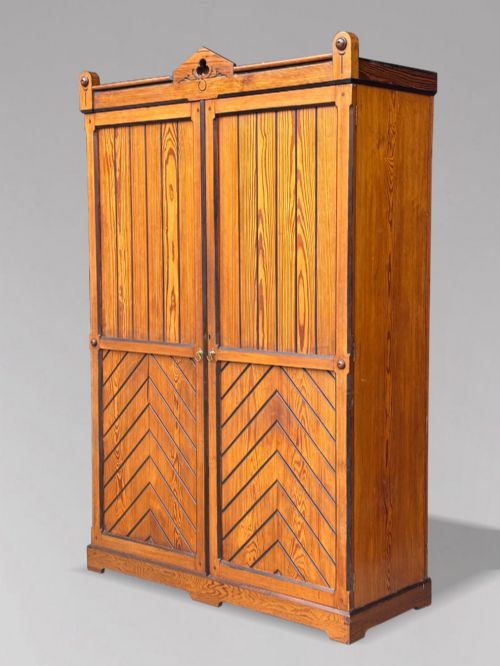
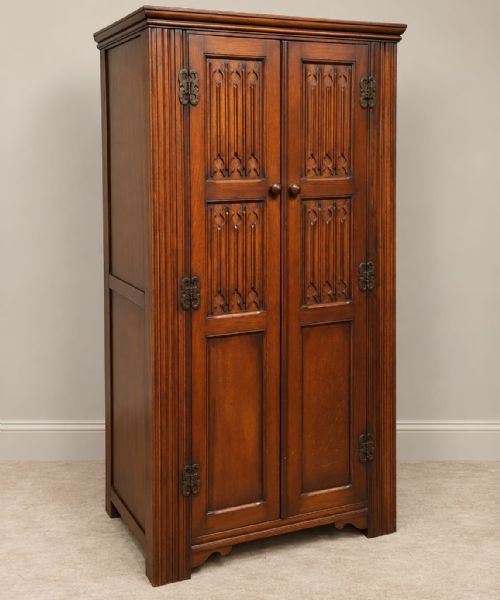
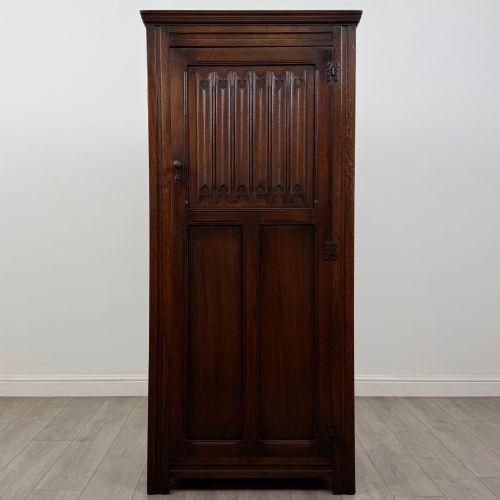
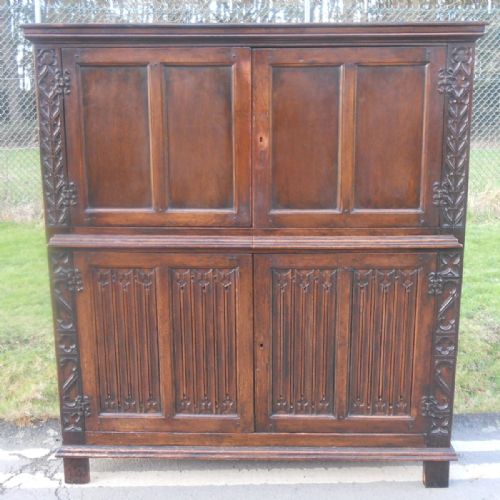
A gothic revival wardrobe is a substantial bedroom storage piece defined by medieval architectural motifs such as pointed arches, tracery, and linenfold panelling. The pieces on this page span the nineteenth century, the Edwardian era, and the nineteen-twenties, showing how cabinet makers adapted medieval stonework designs into domestic furniture.
The most common format encountered here is the oak double wardrobe, often built with panelled doors and iron or brass hardware. Examples range from country house proportions down to smaller double configurations intended for domestic chambers.
How they were made
Makers relied primarily on solid oak, supplemented by pine and painted wood for internal or secondary structures. Construction involved traditional frame and panel techniques to allow the timber to move naturally with seasonal humidity.
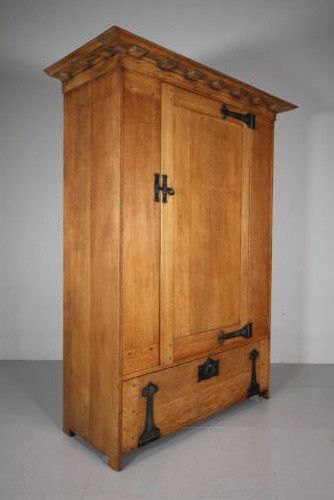
Metalwork played a structural and decorative role, featuring exposed iron hinges, strapwork, and brass drop handles. Carved elements like quatrefoils and blind tracery were worked directly into the solid wood.
Gothic Revival Wardrobe Retail Price Guide 2026
Typical asking prices for gothic revival wardrobe among the pieces listed under this phrase on Sellingantiques today, from the lower quarter to the upper quarter. They describe what is for sale here now, not the wider market.
Some gentleman's wardrobes hide their serious architectural dignity behind surprisingly cheerful linenfold door panels.
What varies in quality
Quality rests in the ambition of the architectural carving and the selection of the timber. Finer examples display crisp linenfold panels, deeply undercut mouldings, and well-figured oak grain that rewards close inspection.
At the simpler end, construction is utilitarian, relying on plain planking and minimal surface decoration. The sophistication of the ironwork hinges and the weight of the brass fittings also signal the grade of the original commission.
Thomas King
The Gothic Revival Wardrobe Glossary
- Linenfold
- A style of wood carving that imitates folded linen, frequently seen on door panels of this period. It provides a tactile texture that catches the light across the front of the piece.
- Tracery
- Openwork or tracery-style carving derived from Gothic stone church windows. On wardrobes, it appears pierced or applied to create geometric patterns.
- Breakfront
- A cabinet design where the central section projects forward from the flanking wings. This configuration breaks up the flat expanse of timber and adds architectural depth.
- Quatrefoil
- A decorative ornamental design consisting of four partially overlapping circles. It is a recurring geometric motif in Gothic architecture and furniture ornamentation.
Gothic Revival Wardrobe: Frequently Asked Questions
What is a gothic revival wardrobe?
A gothic revival wardrobe is a large timber storage cabinet decorated with architectural elements inspired by medieval churches and cathedrals.
These pieces use pointed arches, linenfold panels, and heavy hardware to create a dramatic focal point in a bedroom.
How do I date a gothic revival wardrobe?
Dating relies on examining the construction methods, timber choice, and specific stylistic traits present in the woodwork. Pieces range from mid-nineteenth-century masterworks down to simpler Edwardian and nineteen-twenties interpretations.
Hardware styles and secondary woods like pine inside the carcass also help narrow down the period of manufacture.
Are these wardrobes practical for modern use?
Most of these wardrobes offer substantial internal space for hanging garments and storing folded items. Double configurations provide generous capacity for modern clothing needs.
Because they were built as heavy architectural units, checking the ceiling height and clearance of the room before purchase is essential.
What wood are they made from?
Oak is the predominant timber used across the majority of these listings, chosen for its strength and historical association with gothic architecture. Other materials such as pine, painted wood, and iron or brass hardware appear in secondary roles or fittings.
The grain and finish of the oak define the visual character of each individual piece.