
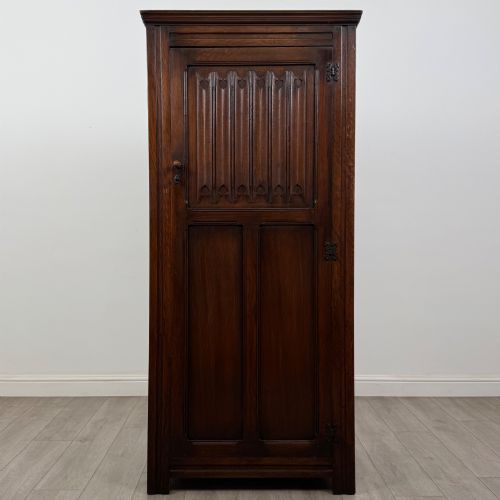
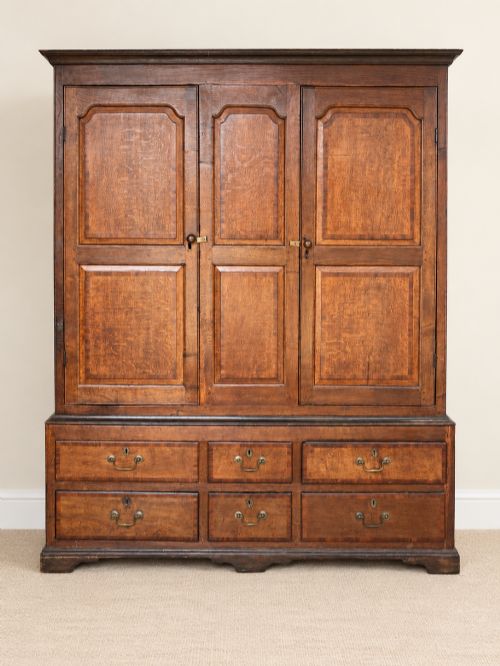
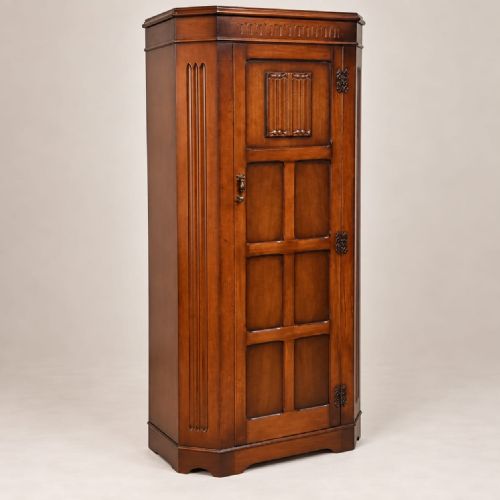
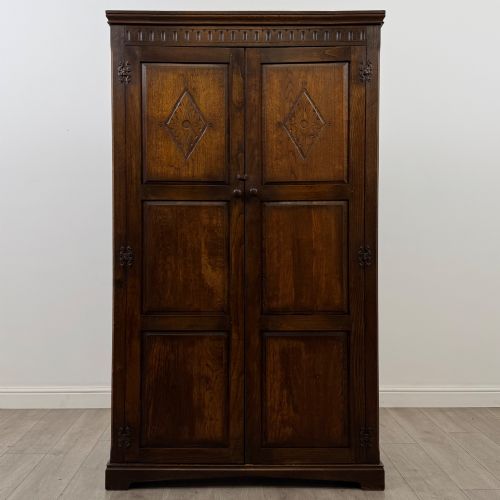
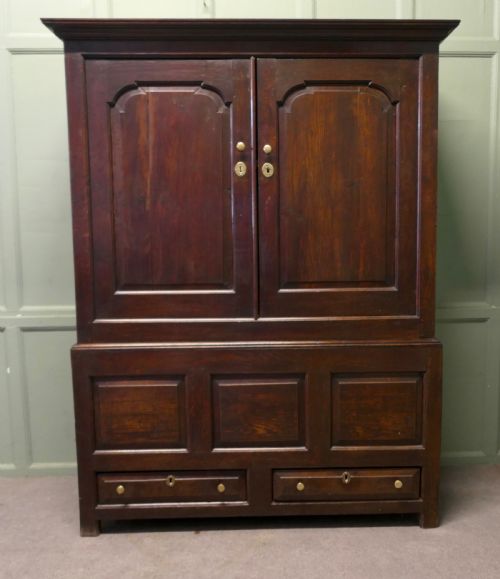
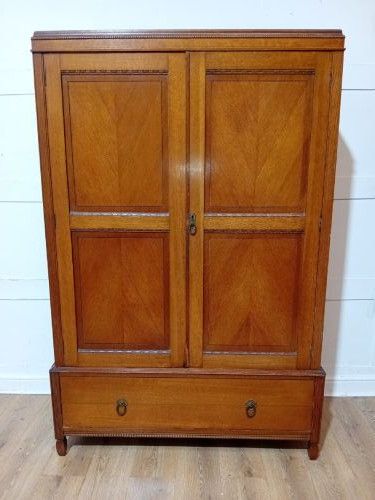

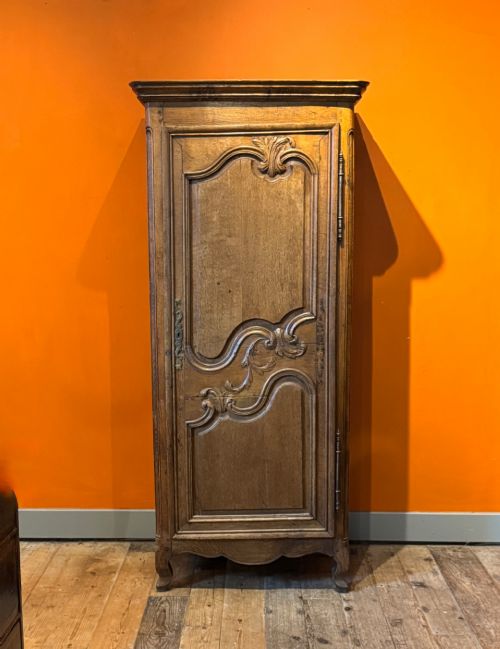
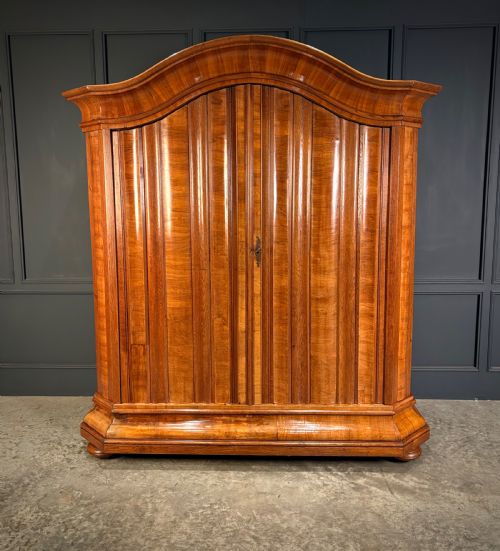


Brown Oak Wardrobe
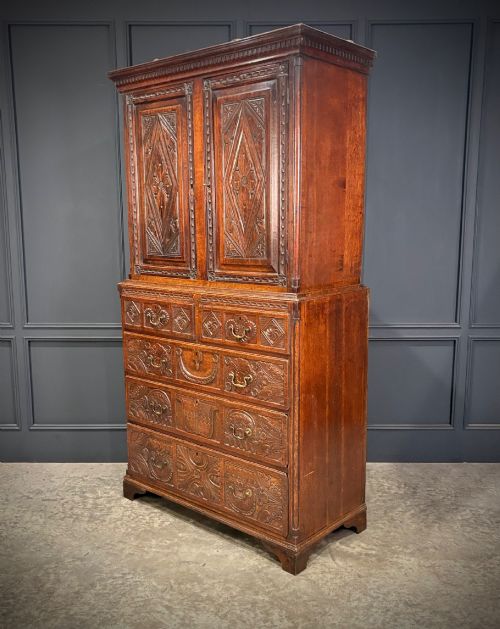
A brown oak wardrobe brings rich grain and deep colour to a room, offering robust storage built from sturdy timber.
What these pieces are
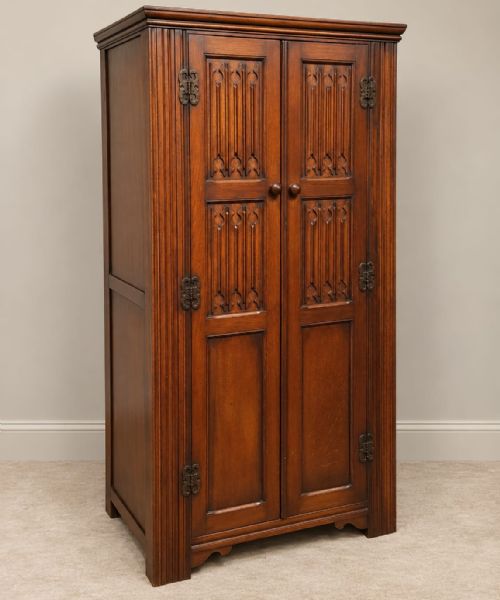
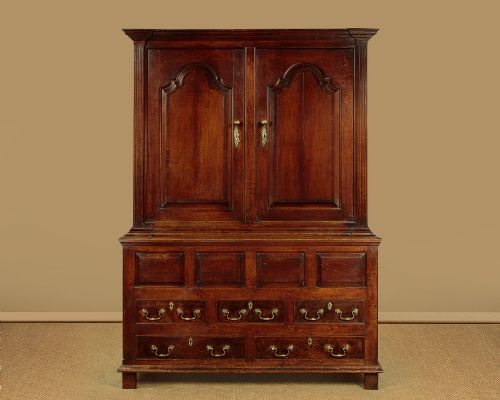
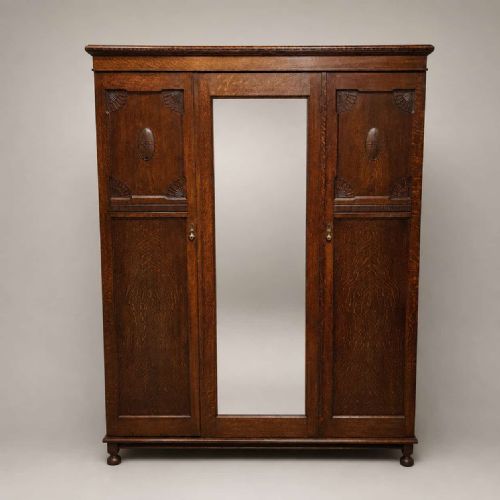
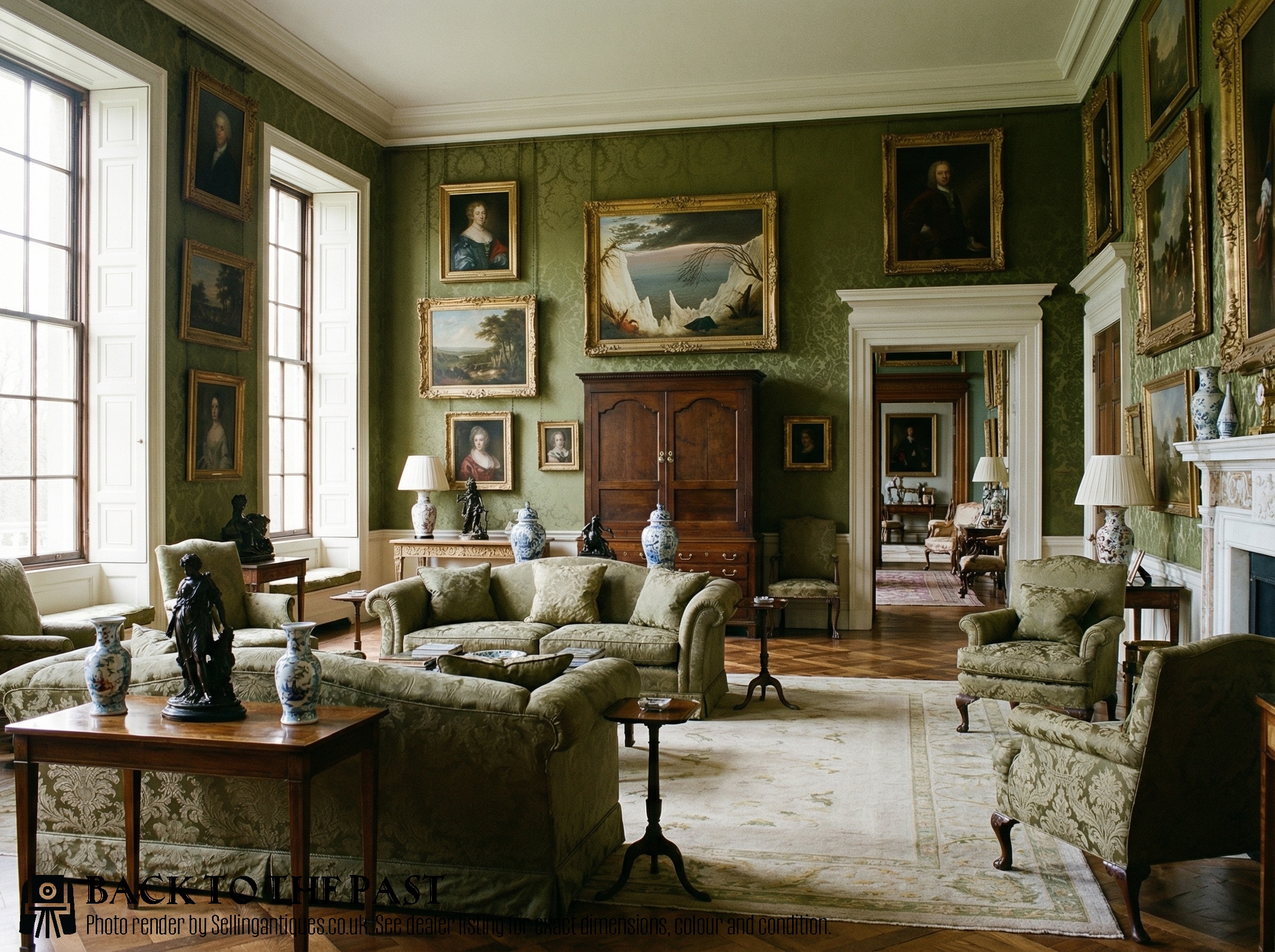
A brown oak wardrobe spans multiple eras, taking the form of tall armoires, practical press cupboards, and generous hallway cabinets. These substantial pieces provide deep internal storage while displaying the warm, varied tones of mature timber.
Origins stretch from Welsh country workshops to Dutch urban centres, uniting diverse regional traditions under sturdy oak construction. Each piece reflects the functional requirements of its period, from simple country storage to architectural display.
How they were made
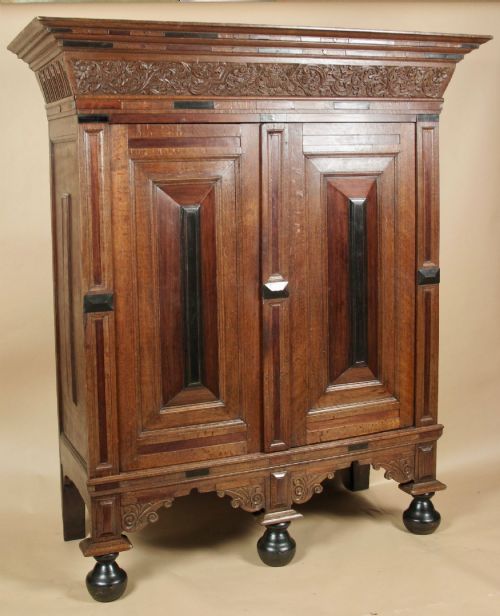
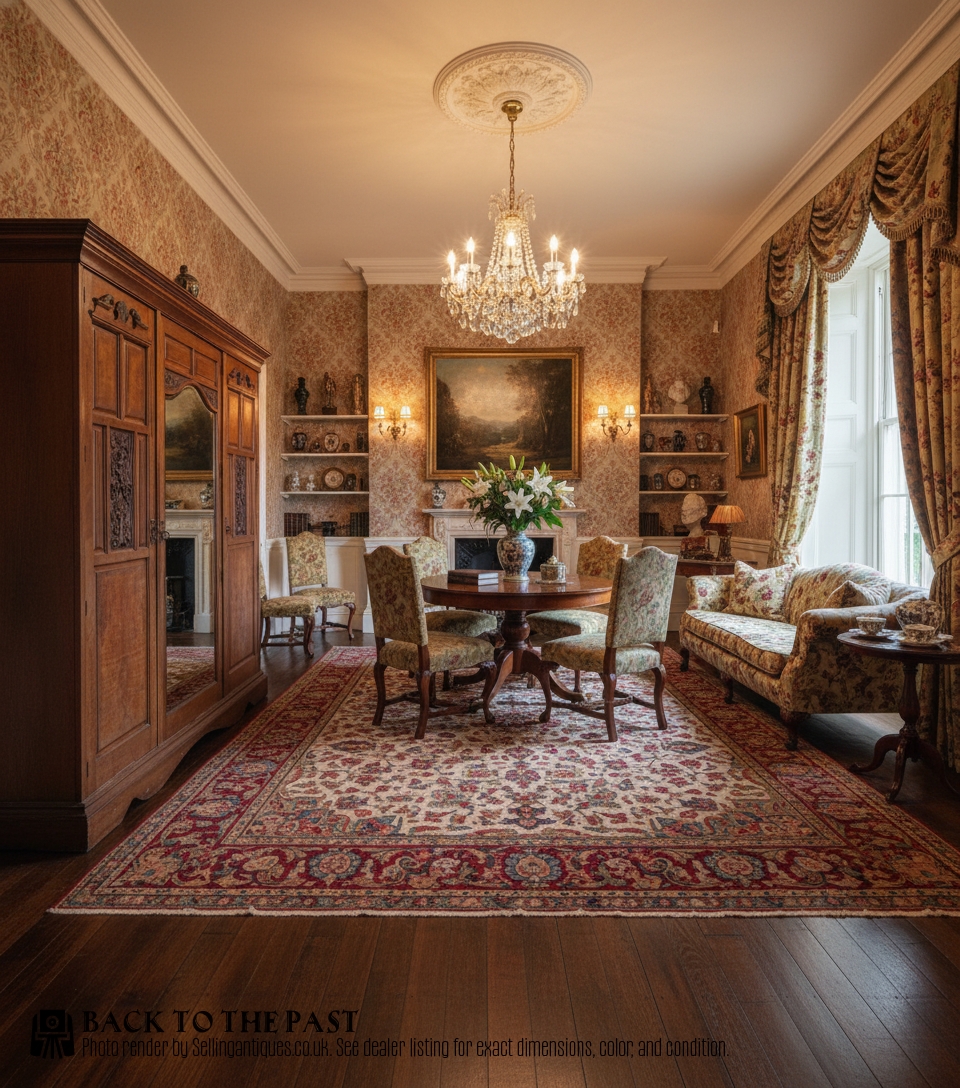
Cabinet makers relied on solid oak planks, frequently enhanced with contrasting pollard oak, rosewood, and ebony veneers on select panels. Structural stability was achieved through traditional joinery, heavy iron hinges, and substantial brass hardware.
Surfaces received careful smoothing and polishing to accentuate the natural figuring and deep brown tones of the wood. Carved detailing and applied mouldings were shaped by hand to create architectural depth on doors and cornices.
Retail Price Guide 2026
Typical UK retail prices for brown oak wardrobe, calculated from the Sellingantiques database of over a million retail prices indexed since 2003. This retail price guide relies exclusively on Sellingantiques data; no external sources or auction records are used, so the figures do not describe the wider market.
One clever nineteenth-century armoire arrives entirely flat pack, proving IKEA did not invent the knockdown wardrobe.
What varies in quality
Quality rests in the selection of the timber and the harmony of the proportions. Finer examples display striking grain patterns, such as pollard oak highlights, balanced against restrained architectural moulding.
Construction methods distinguish everyday utility from superior workshop output. The integration of original brass fittings and the crispness of hand-carved elements elevate an ordinary cupboard into a notable piece of cabinet work.
The Brown Oak Wardrobe Glossary
- Pollard oak
- Timber taken from trees that were pollarded, producing a dense, highly figured grain pattern used for decorative veneer panels. This material adds distinct visual texture to drawer fronts and door panels.
- Linen press
- A tall cupboard featuring upper sliding trays or shelves for folded textiles above a base section of drawers. These versatile pieces combine wardrobe hanging space with traditional shelving.
- Armoire
- A large freestanding wardrobe or cupboard originating in continental Europe, often characterised by deep proportions and heavy panelled doors. Early versions incorporate elaborate mouldings and contrasting timber inlays.
- Gelderse kussenkast
- A substantial Dutch armoire type featuring cushion-moulded panels and rich contrasting woods such as rosewood and ebony. These architectural cabinets represent high-status regional cabinet making from the seventeenth century.
Frequently Asked Questions
How do I care for brown oak?
Keep timber furniture away from direct heat sources and sudden humidity changes to prevent movement in the solid wood.
Apply traditional beeswax occasionally to nourish the grain and maintain a soft, protective sheen on the surface.
Are these wardrobes easy to dismantle?
Some period pieces, particularly flat pack armoires from the nineteenth century, were designed for simple dismantling and transport.
Most earlier wardrobes and heavy presses remain constructed as single solid units requiring professional delivery.
What is the difference between a press and a wardrobe?
A wardrobe provides primary hanging space for garments on a rail, whereas a press traditionally houses sliding trays for folded linen.
Many surviving pieces combine both functions with hanging compartments alongside internal shelving.
How do I identify a Georgian piece?
Georgian oak furniture exhibits understated architectural proportions, panelled construction, and simple brass drawer pulls.
These pieces often show regional craftsmanship from English or Welsh workshops dating through the eighteenth century.