
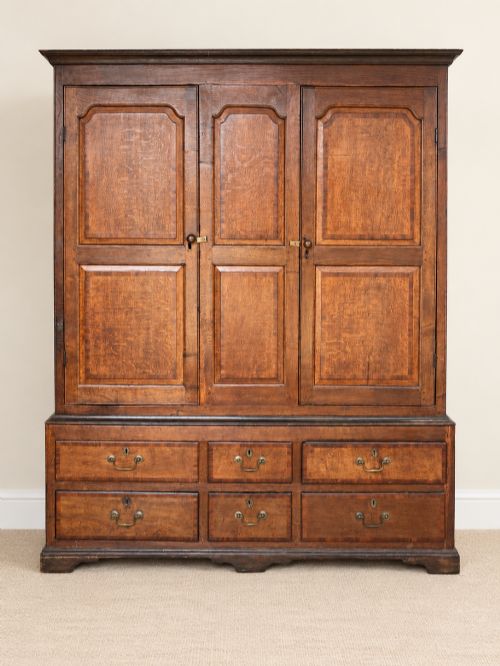
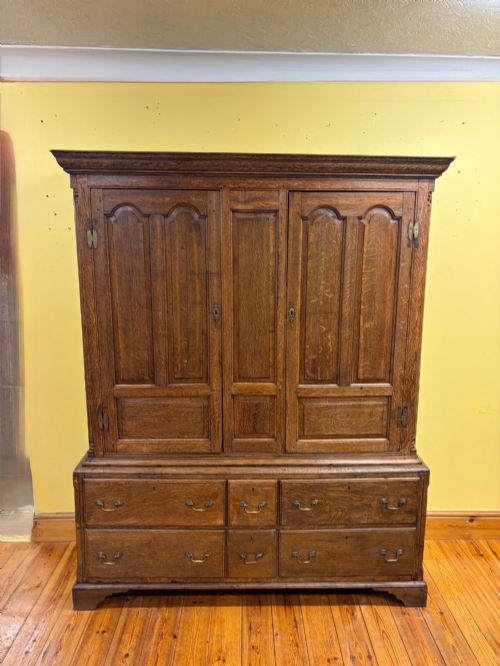
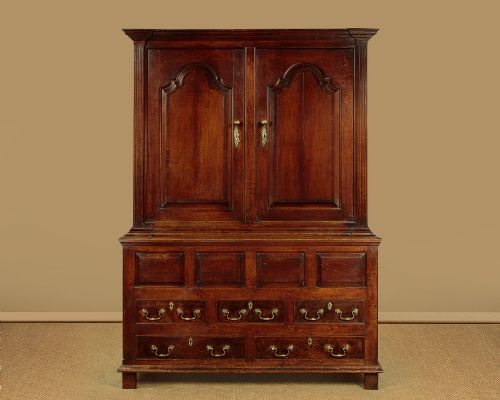
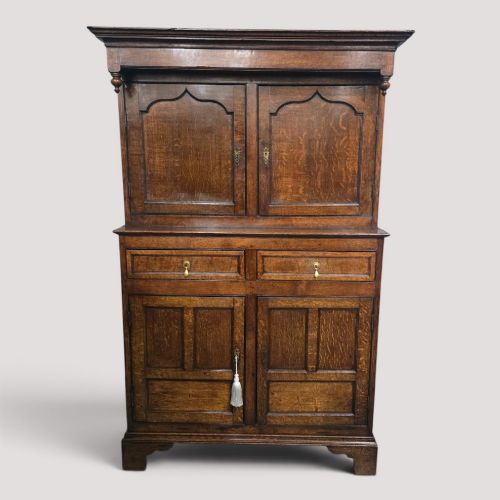
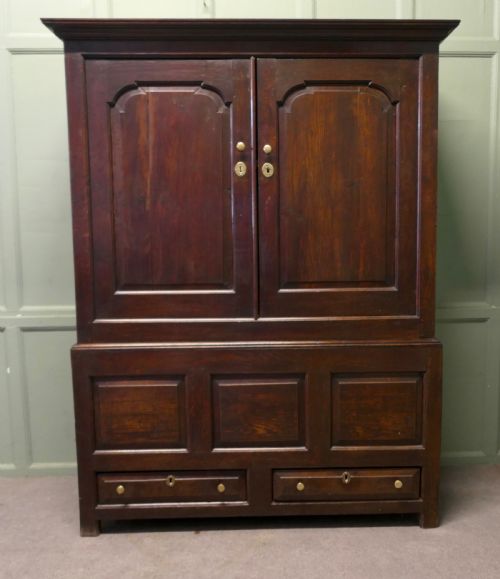
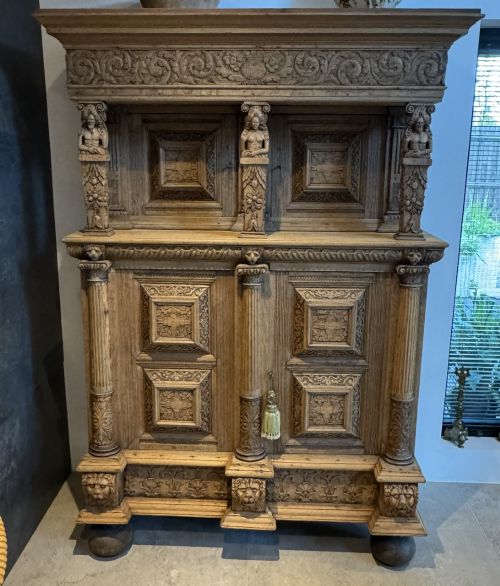
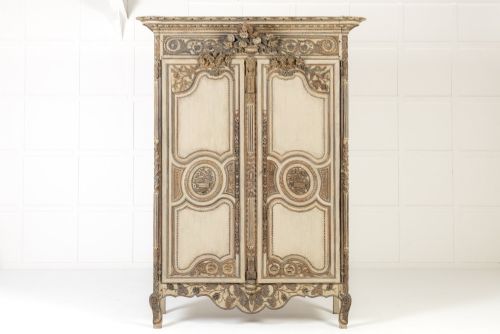


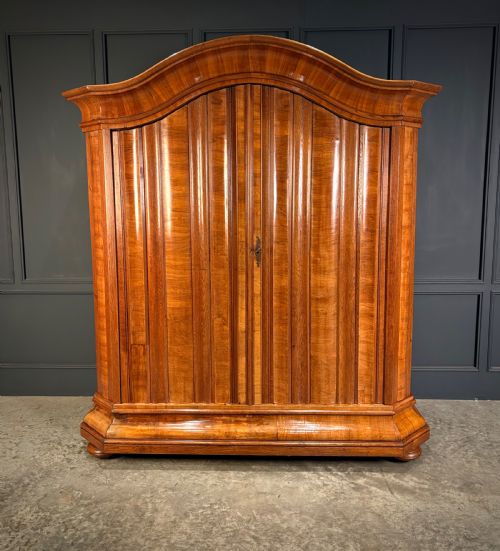
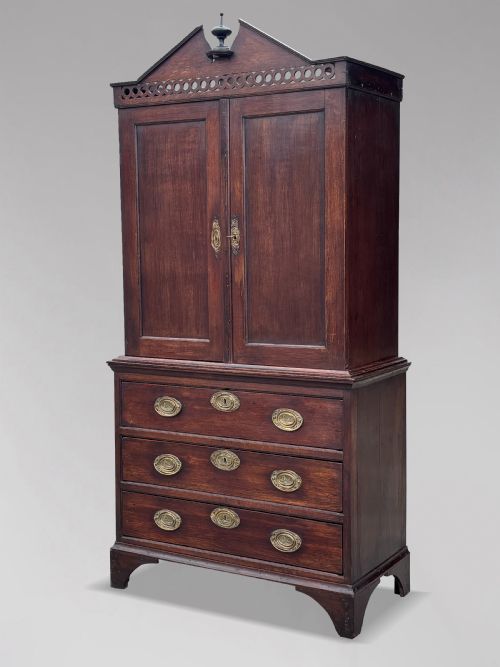

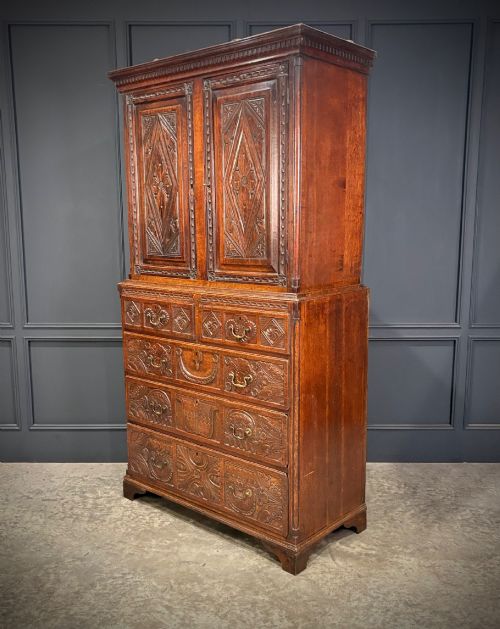


18th Century Oak Armoire
An 18th century oak armoire offers generous storage and sturdy timber construction, making it a practical and handsome addition to any room.
What an 18th century oak armoire is
An 18th century oak armoire is a substantial storage piece built during the Georgian period or the broader seventeen-hundreds. These large cupboards function as wardrobes, linen presses, and livery cupboards for domestic storage.
You are most likely to meet Dutch Baroque examples, French provincial designs, and Georgian tack or livery cupboards on this page. These pieces vary from simple panelled cupboards to carved wardrobes with hanging rails.
How they were made
Cabinet makers utilised solid oak and occasionally fruitwood, assembling heavy panels with traditional joinery. The timber provides a dense structure that survives centuries of daily use.
Metalwork played a structural and decorative role, featuring brass hinges and iron hardware to secure large doors. These materials combined to create durable storage furniture designed to last generations.
Retail Price Guide 2026
Typical UK retail prices for 18th century oak armoire, calculated from the Sellingantiques database of over a million retail prices indexed since 2003. This retail price guide relies exclusively on Sellingantiques data; no external sources or auction records are used, so the figures do not describe the wider market.
What varies in quality
Quality rests in the depth of carving and the selection of timber grain. Pieces with intricate relief work and well-figured oak stand apart from plain utility cupboards.
The integrity of the original brass and iron hardware influences the overall standard. Fine examples retain their period hinges and locks, while lesser pieces show heavy replacement parts.
The 18th Century Oak Armoire Glossary
- Armoire
- A large wardrobe or cupboard, traditionally used for storing clothes. These tall pieces often feature double doors and internal hanging space or shelving.
- Livery cupboard
- A traditional storage furniture piece used in domestic settings for food, drink, or clothing. They date primarily to the Georgian era and earlier.
- Linen press
- A tall cupboard specifically designed for storing textiles and linens, typically featuring sliding trays or shelves in the upper section.
- Fruitwood
- A dense timber sometimes utilised alongside oak in provincial cabinet making. It offers a smooth surface suitable for fine details and contrasting panels.
- Georgian
- The architectural and design period spanning the reigns of the four King Georges. It encompasses classic proportions and refined joinery techniques.
Frequently Asked Questions
How do I use an armoire today?
An 18th century oak armoire provides ample space for modern clothing, linen, or general storage. You can place one in a bedroom as a wardrobe or utilise it in a hallway for coats and household items.
The deep interior shelving and hanging rails accommodate contemporary storage needs while adding period character to your interior space.
How do I tell French and English pieces apart?
French armoires often feature softer fruitwood elements alongside oak and exhibit provincial carved details. English equivalents from the Georgian period typically display more linear panelling and simpler structural forms.
Examining the hinges, locks, and overall proportions helps reveal the regional workshop traditions behind each piece of furniture.
Are these cupboards suitable for small rooms?
These large oak cupboards require adequate wall space and clearance for their wide doors to open fully. They dominate a room visually and physically due to their heavy timber construction.
Measure your ceiling height and floor space carefully before positioning an armoire to ensure it fits comfortably within your room.
What maintenance does solid oak require?
Solid oak furniture benefits from occasional cleaning with a soft cloth and the application of traditional beeswax to nourish the timber. Avoid placing these pieces near direct heat sources to prevent the wood from drying out.
Stable indoor humidity helps preserve the original joinery and keeps the heavy panelled doors hanging true over time.