

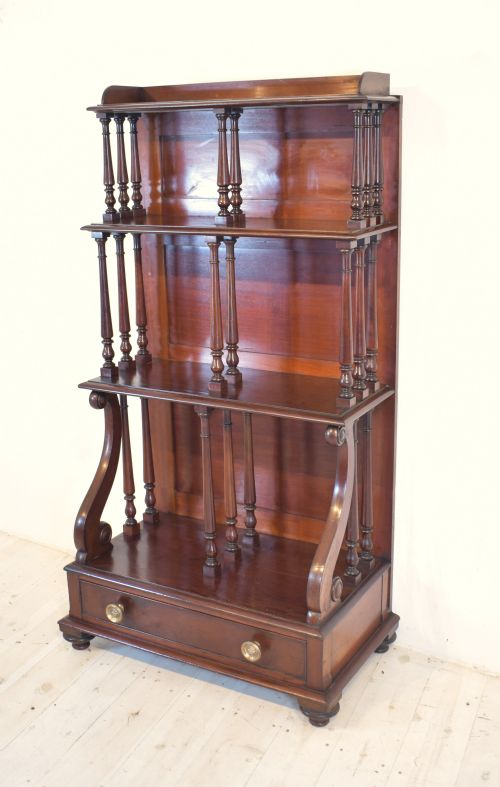


Graduated Shelf Unit
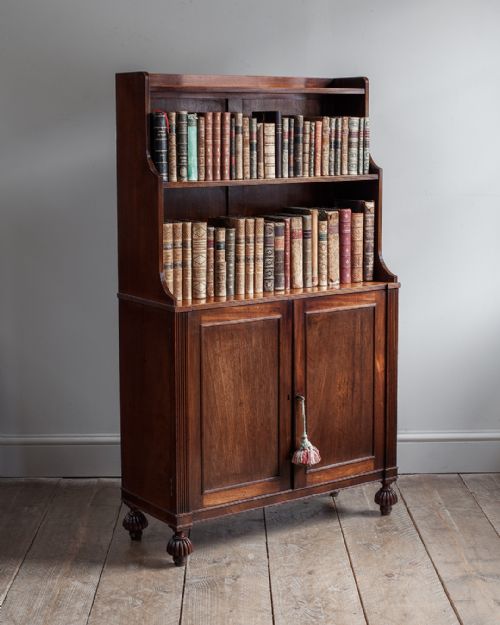
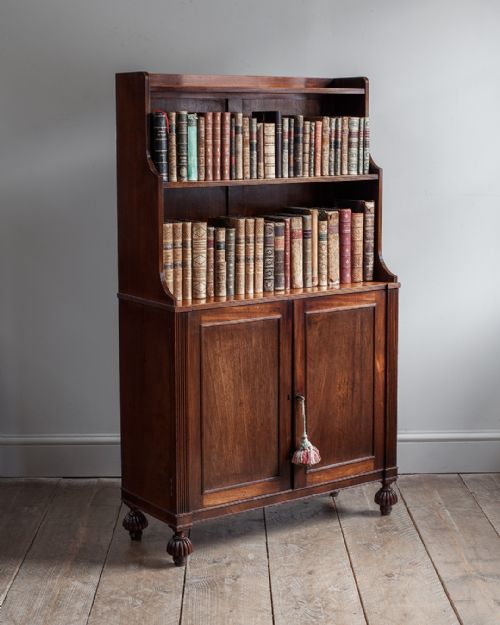
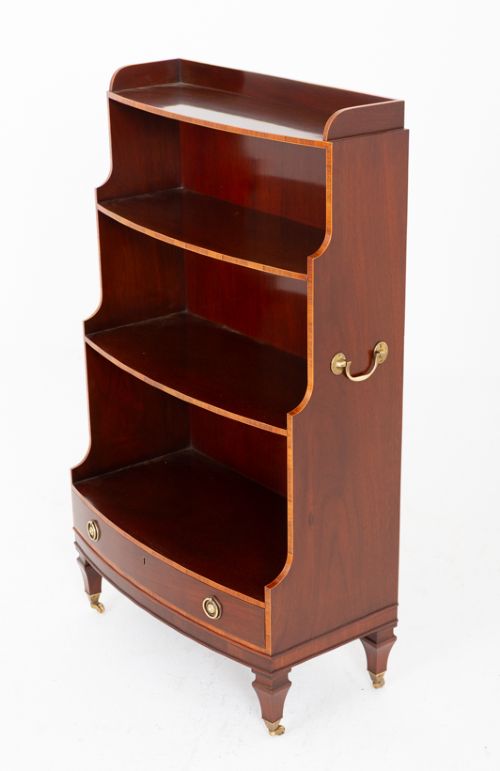
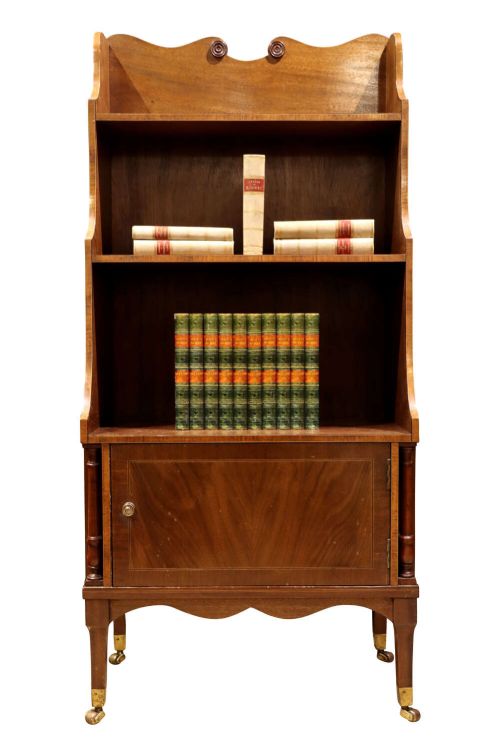
A graduated shelf unit brings tiered display and storage into a room, offering stepped tiers that catch the eye and house books or objects.
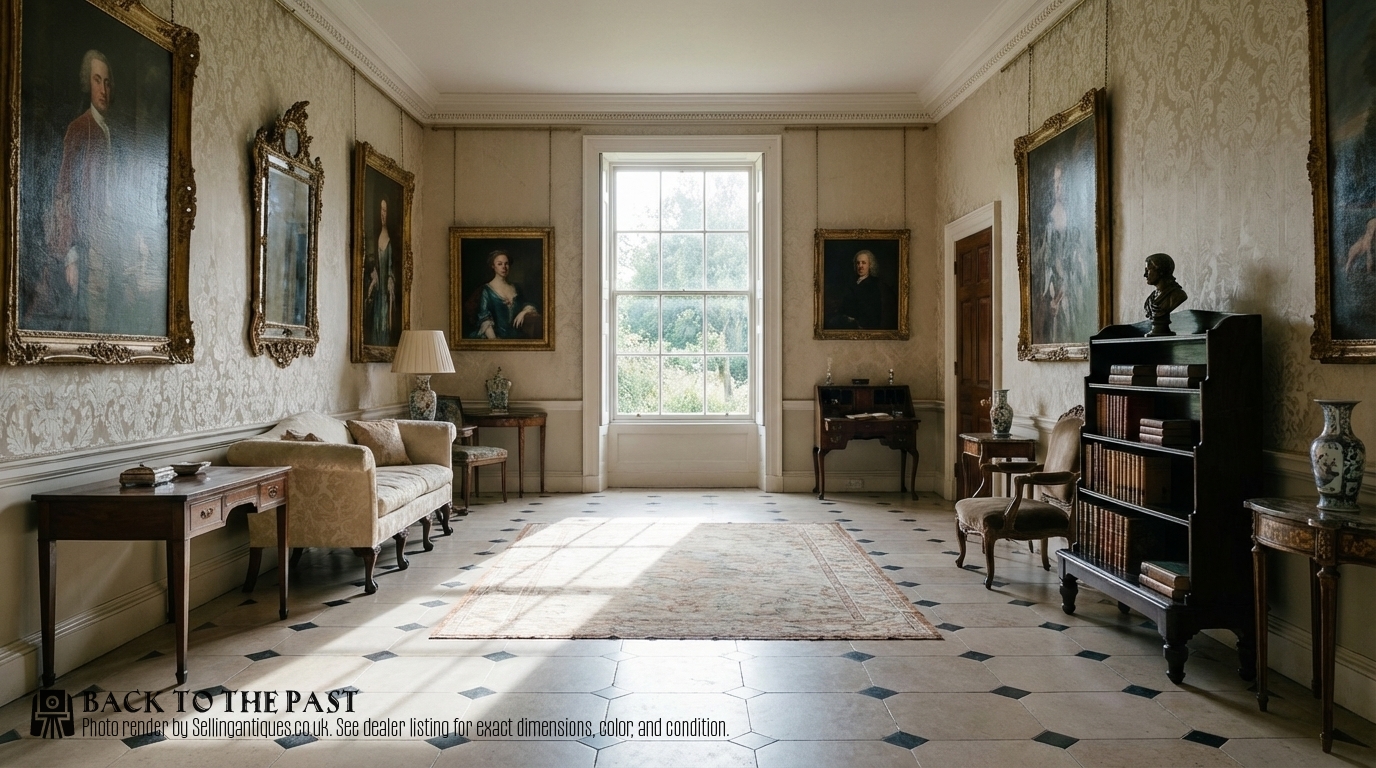
Graduated Shelf Unit
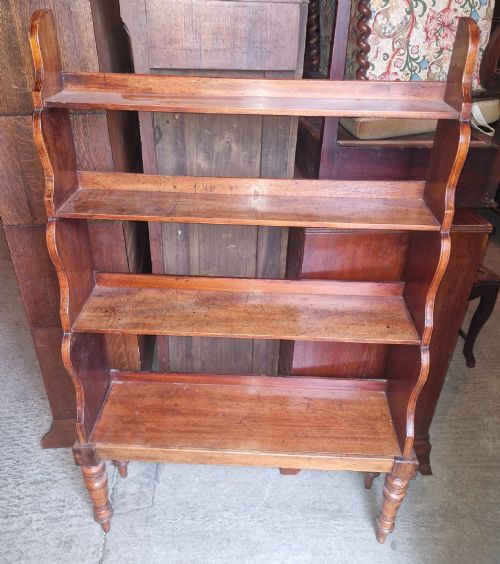
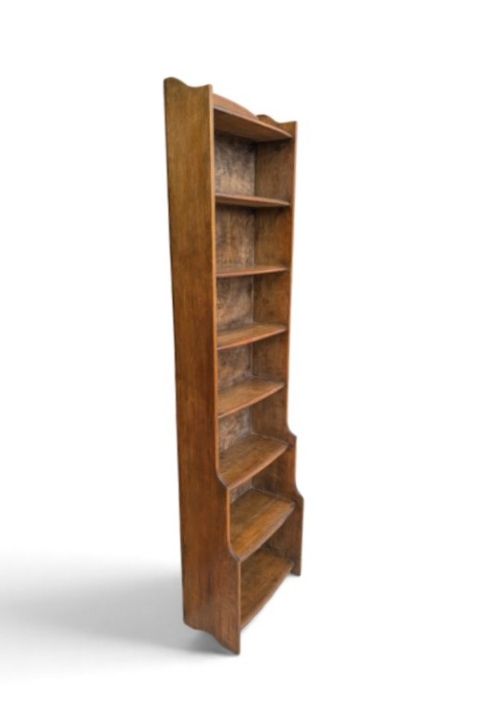
A graduated shelf unit, frequently encountered as a waterfall bookcase or whatnot, organises books and display items across descending tiers of open shelves. These pieces span periods from the Georgian and Regency eras through the Victorian, Edwardian, and early twentieth century.
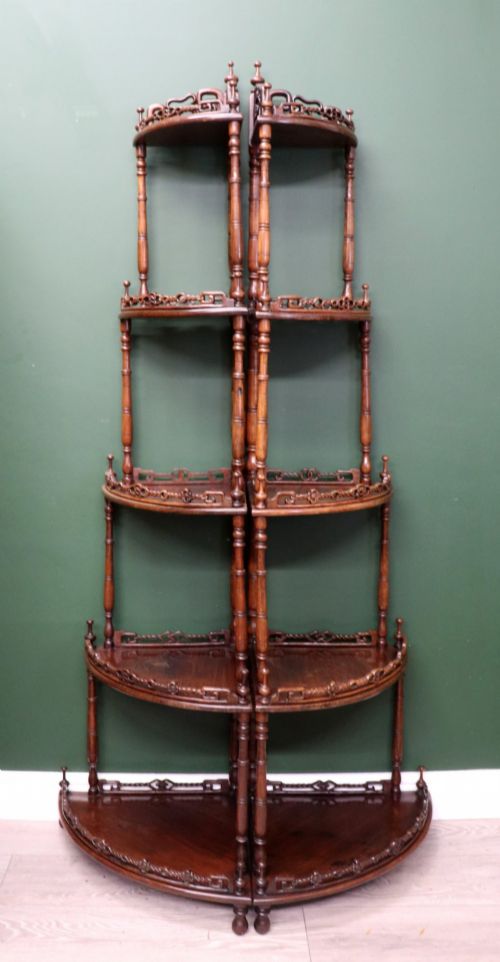
The format ranges from freestanding mahogany bookcases with graduated book shelves to multi-tiered whatnot stands and corner shelves. Most examples rely on timber construction, presenting stepped platforms designed to display collections without dominating floor space.
How they were made
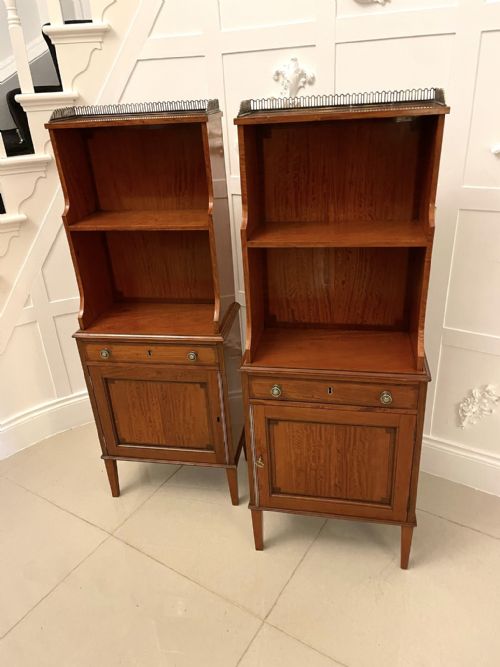
Cabinetmakers constructed these units primarily in mahogany, rosewood, oak, satinwood, and walnut, often employing solid timber alongside cross banding and boxwood stringing for surface contrast. Brass castors frequently supported larger freestanding pieces to aid movement across floors.
Joinery techniques united tiered shelves with vertical supports, while decorative variations included inlaid details, painted finishes, and turned elements such as hollow barley twists on multi-tier display stands.
Graduated Shelf Unit Retail Price Guide 2026
Typical asking prices for graduated shelf unit among the pieces listed under this phrase on Sellingantiques today, from the lower quarter to the upper quarter. They describe what is for sale here now, not the wider market.
Some Victorian pieces incorporate hollow barley twists, proving that even a humble display shelf likes a bit of theatre.
What varies in quality
The distinction between standard and superior pieces rests on the choice of timber, the precision of cabinetwork, and the restraint of decorative inlay. Master workshops applied careful grain selection and fine cross banding that elevate the visual balance of the stepped tiers.
Proportion and stability define the upper tier of execution, where graduated shelves maintain structural integrity under weight while displaying refined detailing like brass castors or integrated cupboard storage.
Gillows
The Graduated Shelf Unit Glossary
- Waterfall bookcase
- A set of open shelves stepped back in a tier formation, resembling cascading water. These units decrease in depth from bottom to top.
- Whatnot stand
- A multi-tiered piece of furniture designed for displaying ornaments or books. Examples typically feature three to six open shelves supported by slender uprights.
- Cross banding
- A decorative border of veneer laid across the grain of the primary timber. This technique frames the edges of shelves and tabletops.
- Boxwood stringing
- A narrow inlay of light-coloured wood used to create fine linear borders on cabinet furniture. It provides contrast against darker timbers such as mahogany or rosewood.
Graduated Shelf Unit: Frequently Asked Questions
Where should I place a graduated shelf unit?
These units suit living rooms, studies, or hallways where open stepped shelving provides accessible display space for books and decorative objects.
Freestanding versions work well against walls or in corners, depending on the specific configuration of the shelves.
How do I distinguish between Regency and Edwardian pieces?
Regency examples typically utilise solid mahogany with precise cross banding, boxwood stringing, and sometimes brass castors reflecting early nineteenth-century design.
Edwardian interpretations often draw on rosewood, oak, or satinwood, showing lighter construction methods characteristic of the early twentieth century.
Are these units stable enough for heavy books?
Freestanding timber bookcases and sturdy multi-tier stands are built to support the weight of books across their graduated shelves.
Larger configurations distribute weight across multiple upright supports and broader lower tiers designed for heavier volumes.