
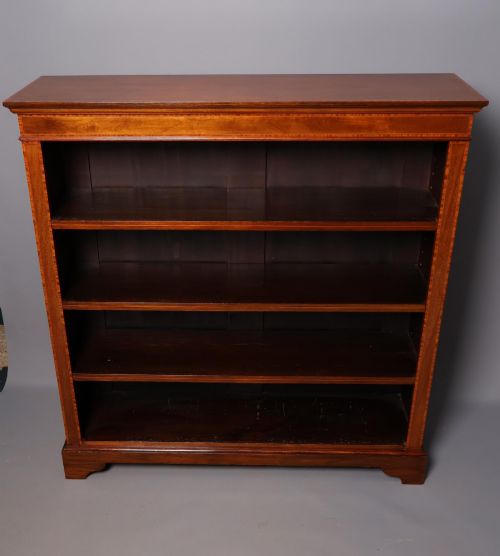
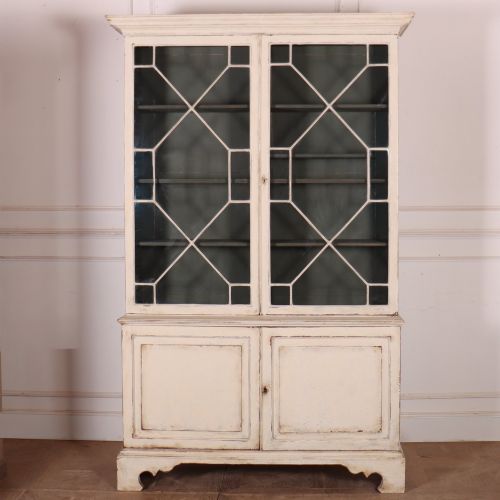
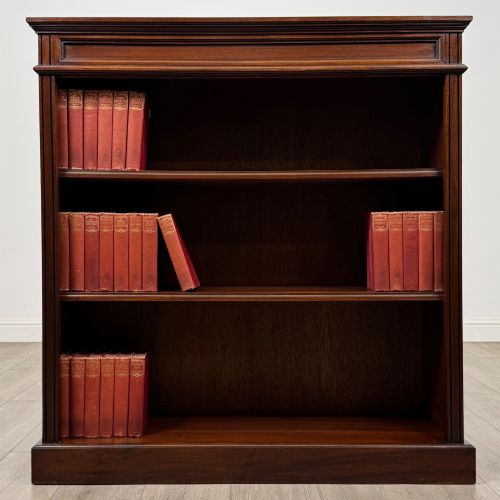
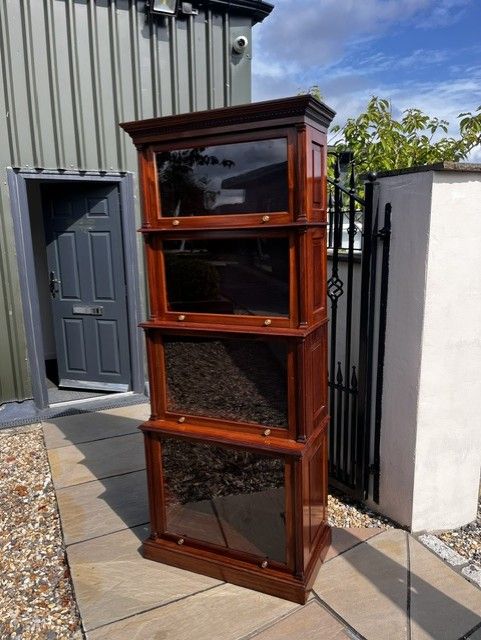
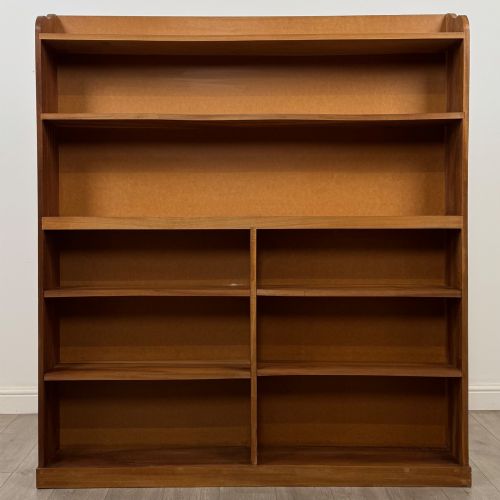
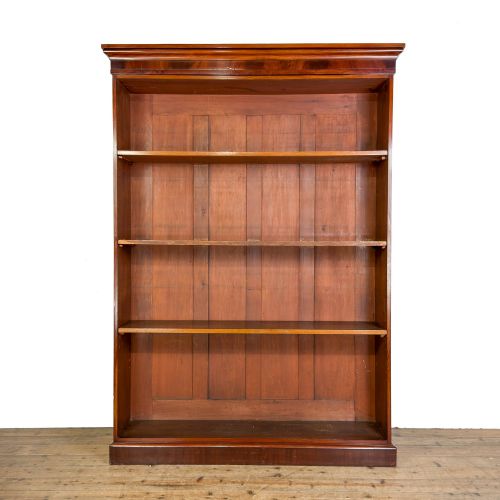
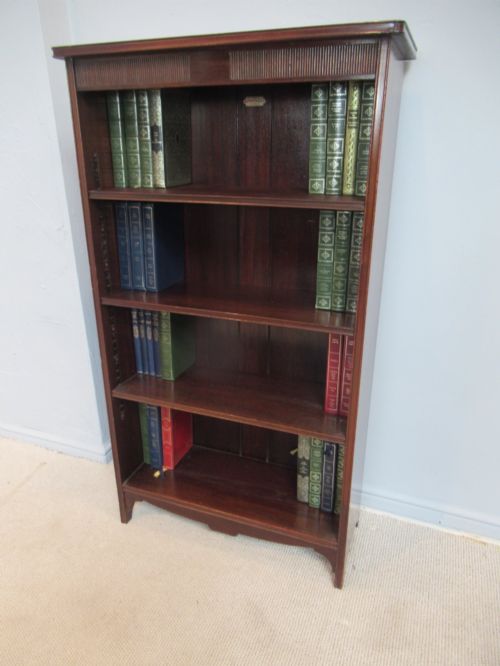


Traditional Timber Bookcase
These traditional timber bookcase pieces offer substantial storage for libraries and studies, combining period craft with practical shelving.
Traditional Timber Bookcase
A traditional timber bookcase provides dependable shelving for books and display items, shaped by centuries of cabinet-making traditions. These pieces appear across the 18th century, Victorian, Edwardian, and early 20th century periods in formats ranging from open shelves to glazed cabinets.
Buyers meet open bookcases in mahogany, oak, elm, and rosewood, alongside painted finishes and breakfront configurations. Alongside standard bookcases, related storage forms such as side cabinets, larder cupboards, and display shelves frequently appear on this page.
How they were made
Construction relies heavily on timbers such as mahogany, oak, elm, and rosewood, often paired with brass hardware and glass panels for glazed doors. Carpenters utilised solid woods and painted timber surfaces to build robust carcases capable of holding heavy rows of books.
Joinery techniques ranged from standard shelving supports to specialised stacking mechanisms in barristers bookcases, while decorative treatments included fine carving and painted finishes.
Listings feature mahogany, oak, elm, rosewood, and painted timber across the 18th century, Victorian, Edwardian, and early 20th century periods.
What varies in quality
Quality rests upon the selection of timber, the weight of the solid wood used in the carcase, and the crispness of any carved detailing. Pieces utilising dense mahogany, figured rosewood, or carefully chosen oak demonstrate a higher standard of construction.
The sophistication of the design, such as breakfront proportions or specialised glazed doors with brass fittings, separates standard utilitarian storage from finer decorative furniture.
Waring and Gillows
The Traditional Timber Bookcase Glossary
- Breakfront
- A cabinet design where the central section projects forward from the flanking outer sections. This configuration adds architectural depth to large bookcases.
- Barristers bookcase
- A sectional stacking bookcase featuring glazed doors that lift and slide upwards into the recess above each shelf. These modular units were designed for easy transport and reassembly.
- Glazed bookcase
- A bookcase featuring glass panels fitted into the doors to protect volumes from dust while maintaining visibility. They often date from the 18th and 19th centuries.
- Open bookcase
- A shelving unit without doors, providing direct access to the book collection. These range from small proportions to large library walls.
- Waterfall display shelf
- A tiered shelving unit where each successive shelf steps back from the one below. This form creates an open display for books and decorative objects.
Traditional Timber Bookcase: Frequently Asked Questions
How do I date a traditional timber bookcase?
Dating relies on observing the timber species, construction methods, and stylistic cues associated with periods like the Victorian era or Edwardian decades. Secondary woods inside drawers and the type of fixings also offer clues to age.
Changes in proportion and decorative motifs help separate 18th-century work from later 19th-century interpretations.
Are open bookcases sturdy enough for heavy books?
Most traditional timber bookcases are built from dense hardwoods like mahogany, oak, and elm, designed to support substantial library collections. Solid wood construction provides the necessary structural strength for heavy volumes.
Checking the thickness of the shelves and the support system ensures the timber will not sag under weight.
Where should I place a breakfront bookcase?
Breakfront bookcases require a substantial wall space due to their projecting central section and generous proportions. They suit studies, libraries, or large living rooms where their architectural presence can be appreciated.
Keeping them away from direct heat sources helps protect the antique timber and glued joints.
What is the difference between mahogany and oak bookcases?
Mahogany offers a dense, smooth grain that often takes a rich polish, frequently seen in finer Victorian and Edwardian pieces. Oak provides a prominent, coarse grain structure associated with earlier vernacular English furniture.
Both timbers provide durability, but their visual texture alters the character of the room.