



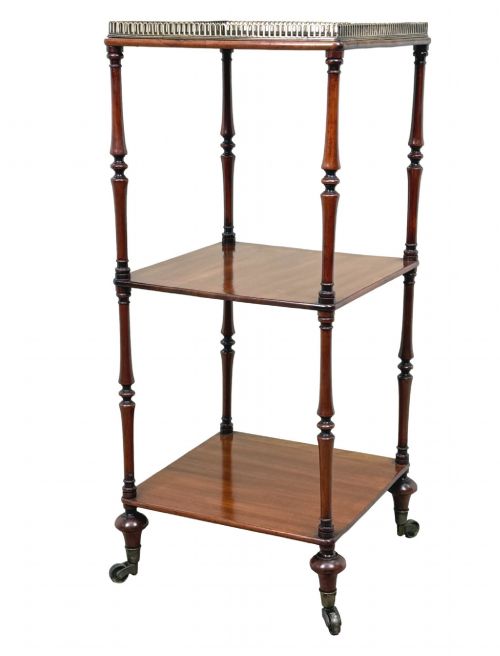


Turned Column Shelf
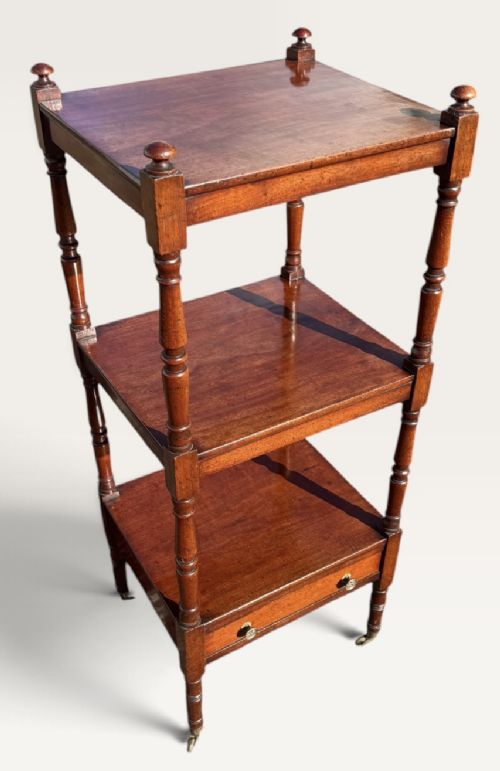
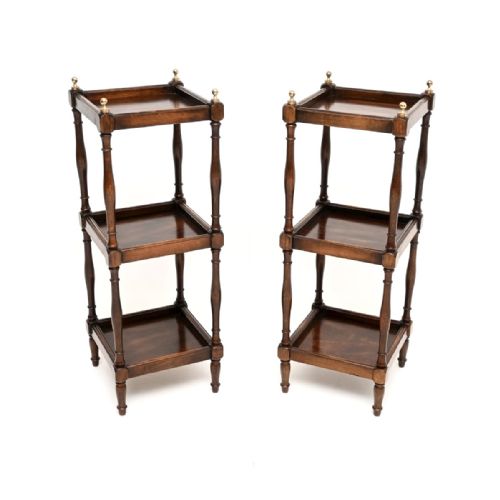
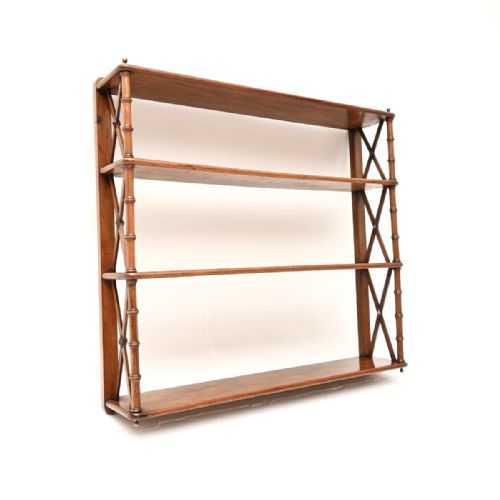
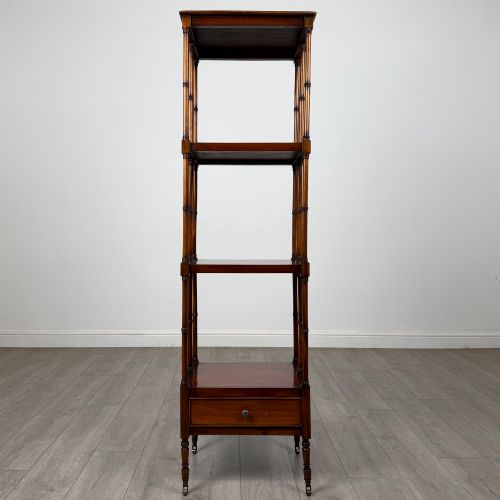
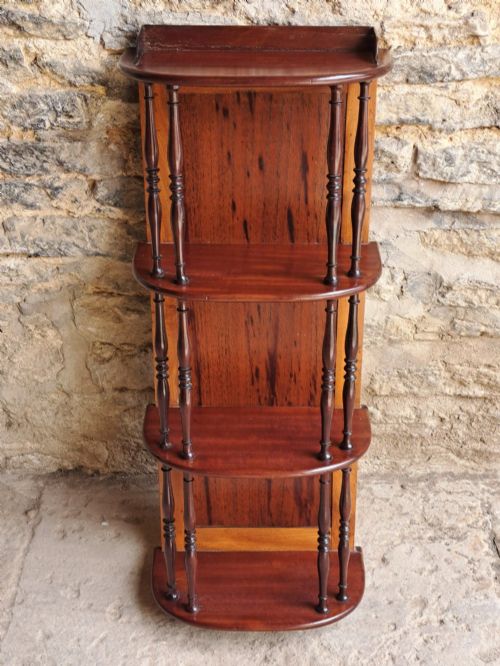
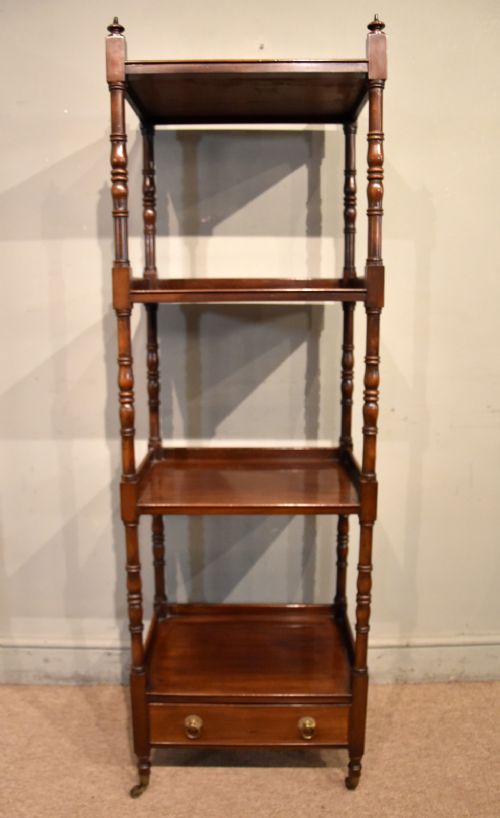
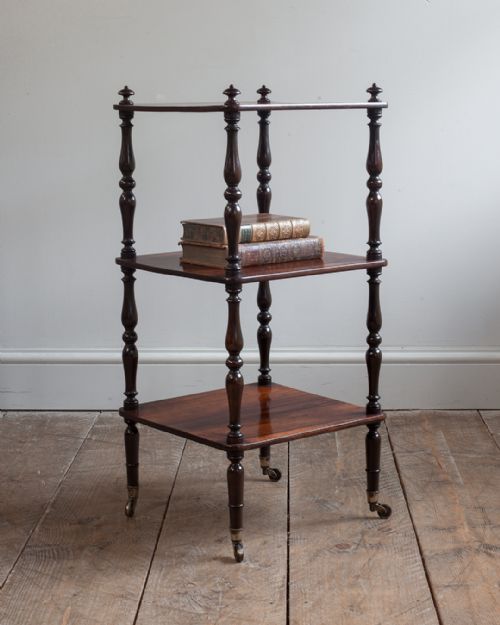
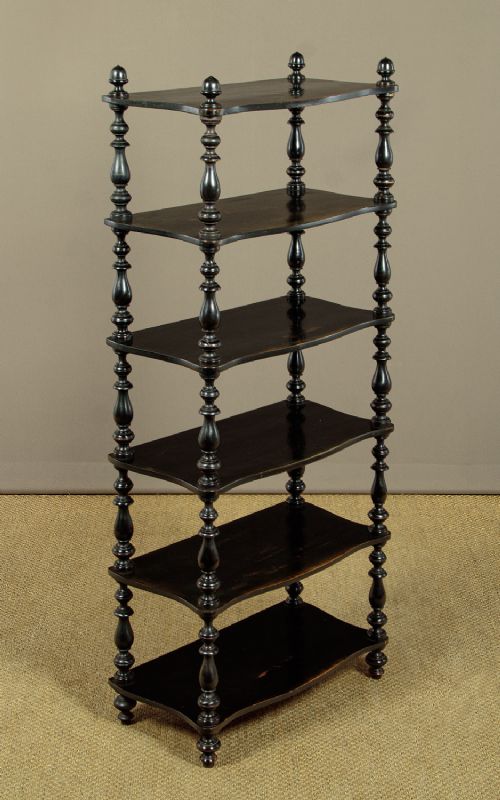
These turned column shelf designs are tiered display units and wall units built to hold books and objects, combining timber supports with open display space.
Turned Column Shelf
When you search for a turned column shelf, you encounter tiered pieces of furniture designed for display and storage, ranging from floor-standing whatnots and étagères to hanging wall bookcases. These items appear across the Georgian, Regency, William IV, and Victorian periods, extending into the Edwardian era.
The forms span multiple tiers, corner units, dumb waiters, and music cabinets, constructed primarily to hold books, porcelain, and decorative items. Mahogany and walnut dominate the offerings, alongside rosewood, satin birch, birdseye maple, ebonised wood, and oak.
Materials and construction
Cabinet makers utilised dense hardwoods such as mahogany, walnut, and rosewood, frequently selecting figured veneers like burr walnut or birdseye maple for visible surfaces. Structural uprights and columns were turned on a lathe to create cylindrical supports, sometimes accented with brass fittings or inlay.
Shelves were fitted into multi-tiered standing frames or secured to backboards for wall mounting, creating stable open structures without solid doors.
Turned Column Shelf Retail Price Guide 2026
Typical asking prices for turned column shelf among the pieces listed under this phrase on Sellingantiques today, from the lower quarter to the upper quarter. They describe what is for sale here now, not the wider market.
Distinctions in quality
The Turned Column Shelf Glossary
- Whatnot
- A multi-tiered piece of furniture designed for displaying ornaments, books, or china. These open stands became popular during the Georgian and Victorian periods.
- Étagère
- A French term for a piece of furniture with open shelves for displaying small objects. They share similarities with whatnots and appear in mahogany and walnut.
- Ebonised wood
- Timber treated to resemble ebony, a technique common on 19th-century display stands and bookcases. It provides a dark contrast to lighter room interiors.
- Dumb waiter
- A tiered shelving unit or stand used originally for serving food or holding tableware. Later examples function primarily as display furniture.
- Birdseye maple
- A figured timber showing small dots resembling bird's eyes, used selectively for decorative veneer on cabinet fronts and shelves.
Turned Column Shelf: Frequently Asked Questions
What is a turned column shelf used for?
These pieces serve primarily as open display units and storage for books, ceramics, and decorative objects in living spaces. The tiered structure allows items to be arranged visibly across multiple levels.
Floor-standing versions function as room dividers or corner display stands, while wall-mounted variants save floor space while supporting lighter collections.
How do I identify a Georgian or Victorian piece?
Georgian examples often feature restrained mahogany frames with simple turned supports and clean joinery typical of the late 18th and early 19th centuries. Victorian pieces frequently introduce heavier timbers, rosewood, burr walnut veneers, and elaborate turning or inlay.
Examining the secondary woods, backboards, and fixing methods helps confirm the manufacturing period.
Where should I place a freestanding whatnot?
Freestanding units suit corners, hallway spaces, or living rooms where objects require open display from multiple angles. Their open tiers mean they do not block light like solid bookcases do.
Ensure the floor is even so that multi-tiered standing structures remain stable.
Are these shelves suitable for heavy books?
Sturdier mahogany and oak multi-tiered units support substantial volumes, particularly shorter lower shelves designed for heavier books. Lighter étagères and wall-mounted shelves suit smaller volumes and decorative ornaments better.
Checking the thickness of the timber shelves and the strength of the turned columns indicates load capacity.