


Regency Etagere Stand
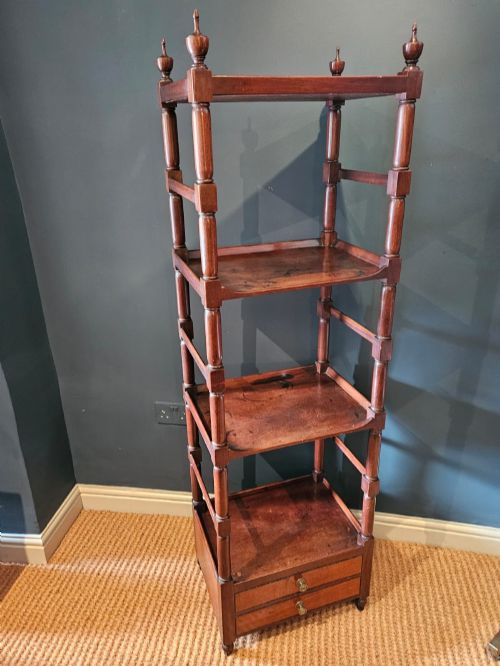
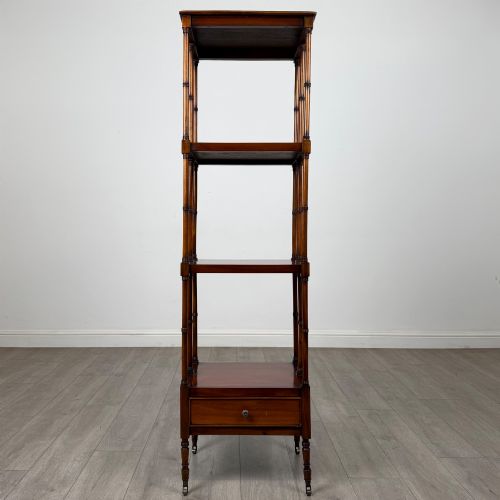
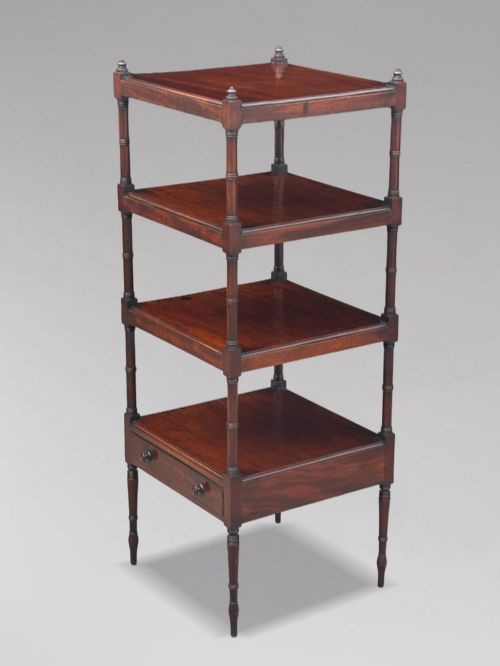
A regency etagere stand offers tiered shelving for display and storage, bringing architectural rhythm and practical surface space to a room.
Regency Etagere Stand
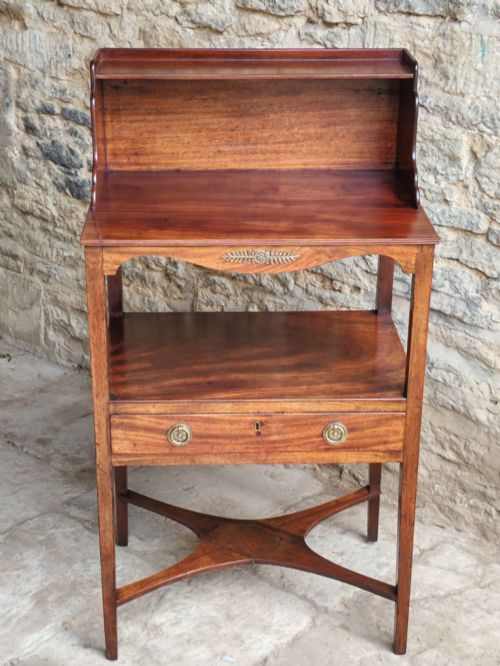
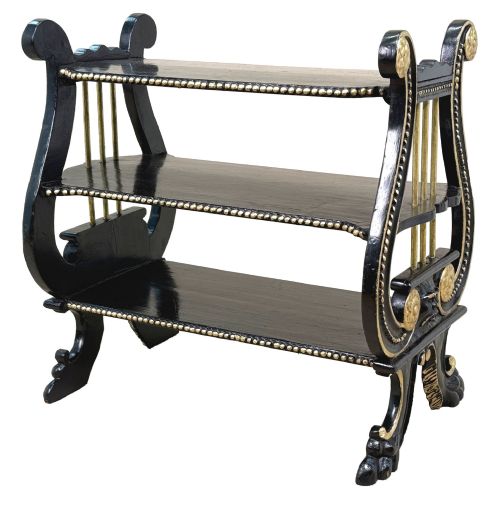
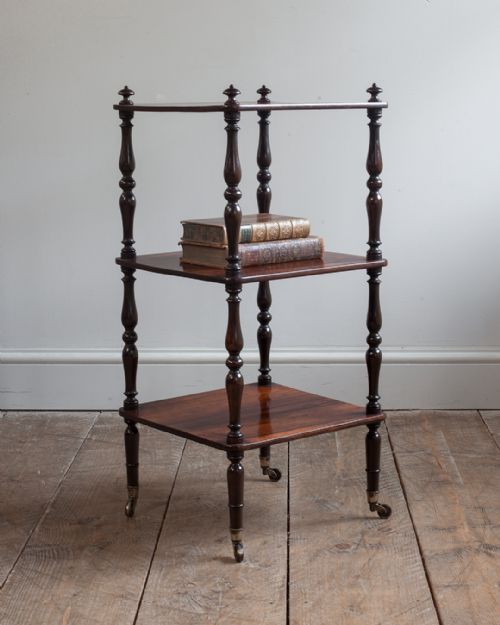
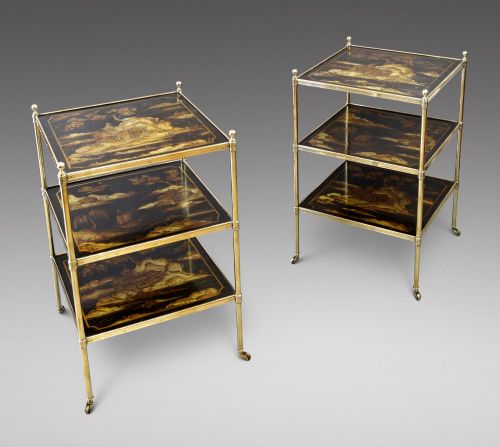
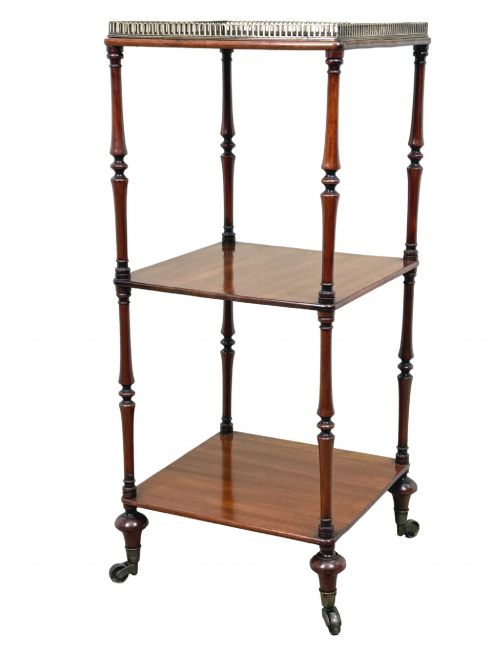
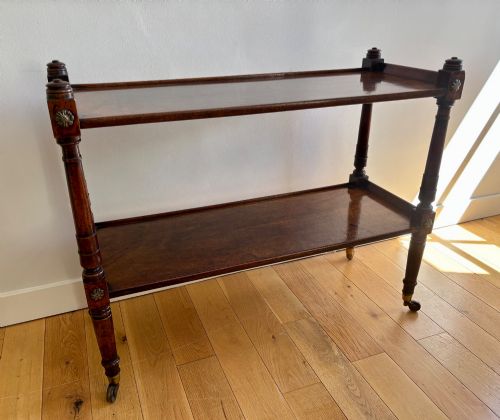
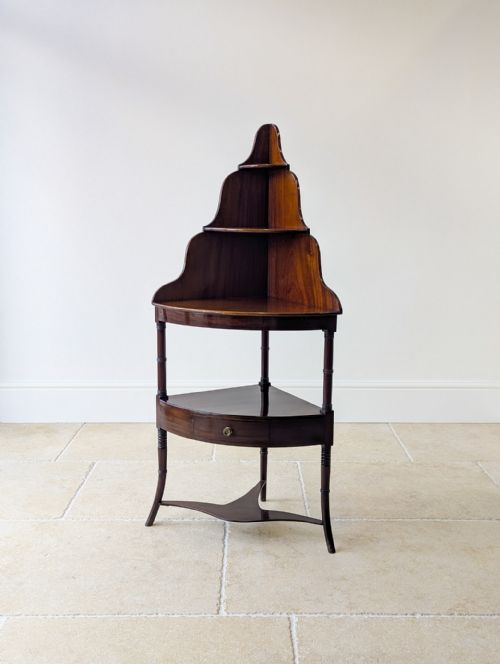
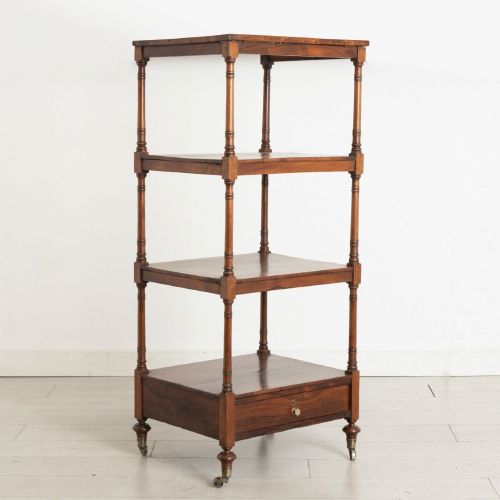
When you search for a regency etagere stand, you encounter tiered freestanding shelving units primarily designed for display and books. The pieces on this page span the Regency, Georgian, and Victorian periods, alongside later revivals.
Originating as versatile furniture for the drawing room or boudoir, these stands utilise vertical space efficiently. They appear as corner units, rectangular freestanding pieces, and occasional tables with multiple open tiers.
Materials and construction
Cabinet makers relied heavily on dense tropical hardwoods like mahogany and rosewood, often selected for rich grain figures. Walnut, oak, and ebonised wood also appear, sometimes enhanced with parcel gilding or brass mounts.
Construction methods involve slender turned or tapering upright supports holding horizontal graduated shelves. Drawer framing uses traditional dovetail joints, while fine details include brass casters and cane panels.
Periods represented span from George III and Regency through to Edwardian and 1930s revivals.
Distinctions in quality
Quality rests on the selection of timber veneers and the crispness of turned wood columns or brass details. Superior examples display thoughtful proportions where each tier tapers gracefully toward the top.
Finer pieces incorporate integrated drawers with solid secondary timbers and refined joinery rather than simple nailed assembly. The presence of secondary functions, such as built-in canterbury dividers or music stands, elevates the utility.
Gillows
The Regency Etagere Stand Glossary
- Etagere
- A piece of furniture consisting of a set of open shelves for displaying small objects. The term originates from French furniture vocabulary.
- What-not
- A multi-tiered stand used for storing or displaying ornaments, books, or miscellaneous items. It gained popularity during the Georgian and Regency periods.
- Canterbury
- A low stand with partitioned sections for holding sheet music, folios, or books. Often combined with lower drawers in multi-functional pieces.
- Dumb waiter
- A tiered freestanding serving stand used in dining rooms. In cabinet making, the form overlaps closely with circular etageres.
- Parcel gilded
- Partially covered in gold leaf applied over a prepared ground. This technique highlights carved details on ebonised or dark wood structures.
Regency Etagere Stand: Frequently Asked Questions
What is the difference between an etagere and a whatnot?
An etagere generally emphasises display with French stylistic origins, while a whatnot refers traditionally to English multi-tiered shelving units.
In practice, historical makers used the terms interchangeably for open-shelved furniture of this scale.
Where should I place a regency etagere stand?
These stands suit sitting rooms, hallways, or libraries where vertical display space is needed without blocking light.
Freestanding square or rectangular models work well against walls or as room dividers, while corner versions fit awkward angles.
How do I identify a genuine Regency period piece?
Look for timber species consistent with the early nineteenth century, such as Cuban mahogany or dark figured rosewood. Hand-turned uprights and traditional cabinet joinery also point to the period.
Later Victorian revivals and twentieth-century reproductions often employ different secondary woods and heavier construction.
Can these stands support heavy books?
Most tiers are built to hold lighter decorative objects, porcelain, or small collections of books rather than heavy folios.
While some sturdy examples served as portable bookshelves, slender upright supports limit the safe weight capacity on upper shelves.