




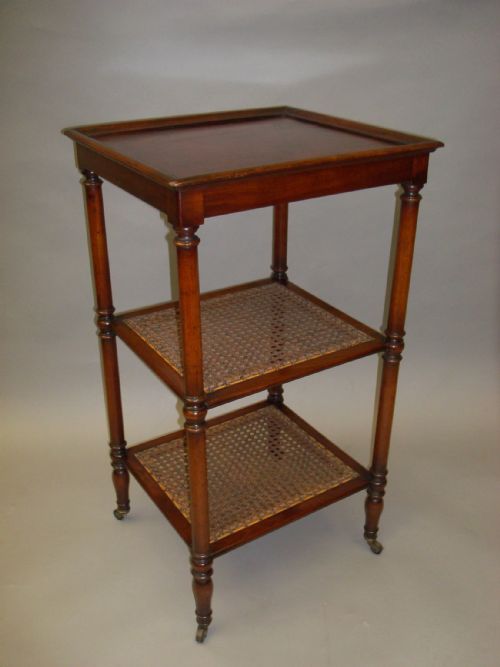
Georgian Mahogany Whatnot
A Georgian mahogany whatnot provides tiered open shelving for books and display, combining practical storage with elegant proportions.
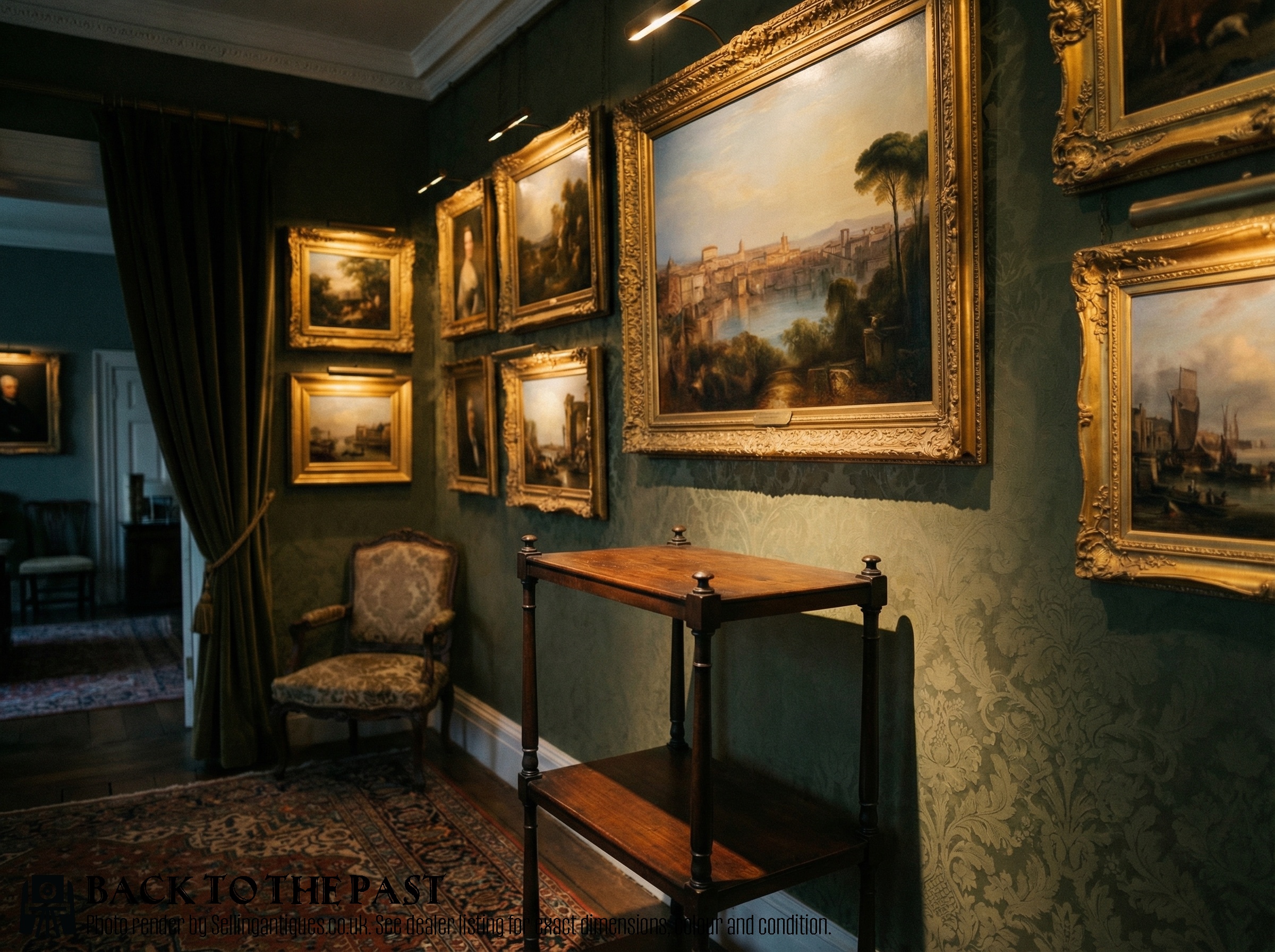
Georgian Mahogany Whatnot
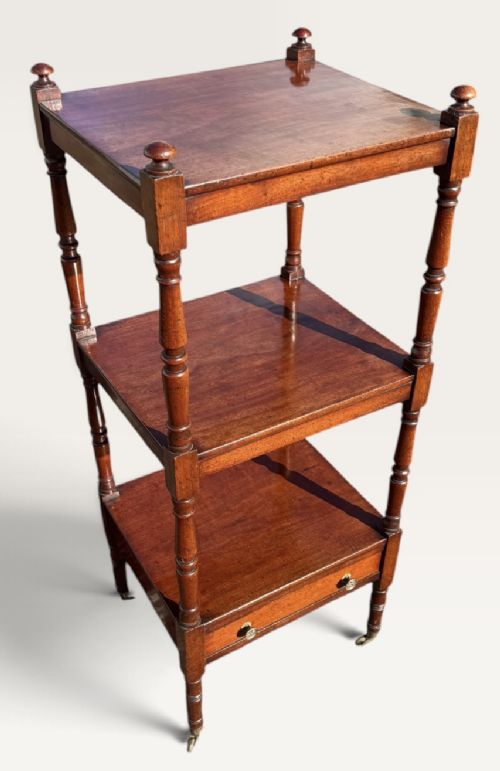
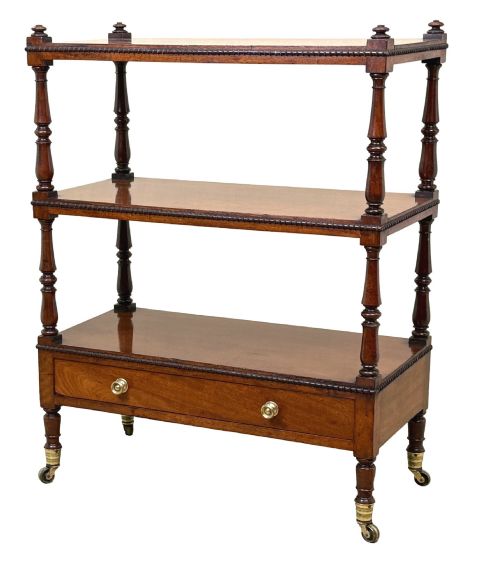
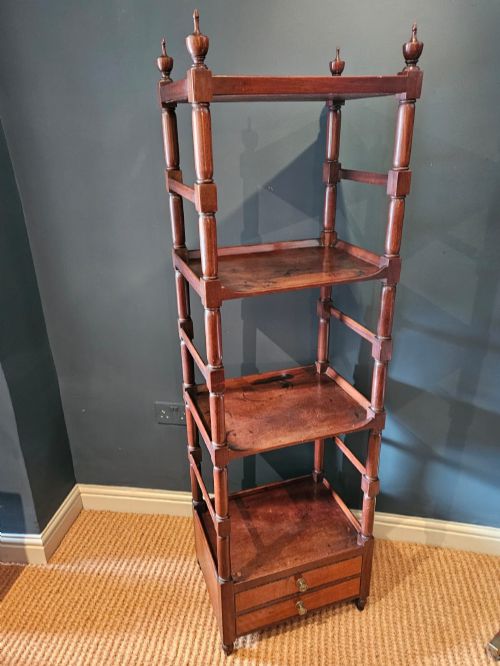
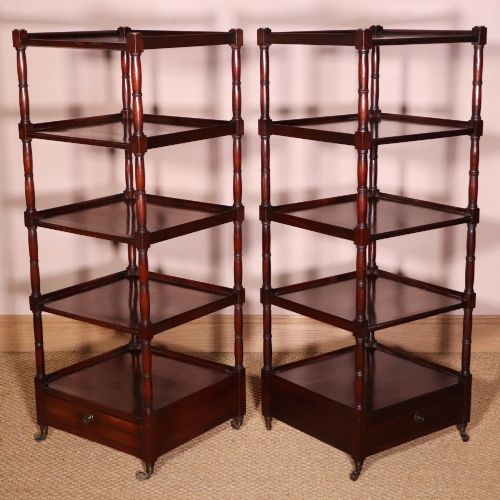
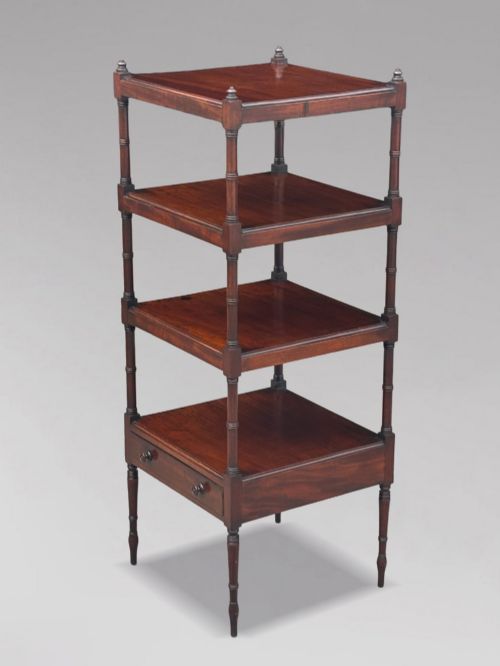
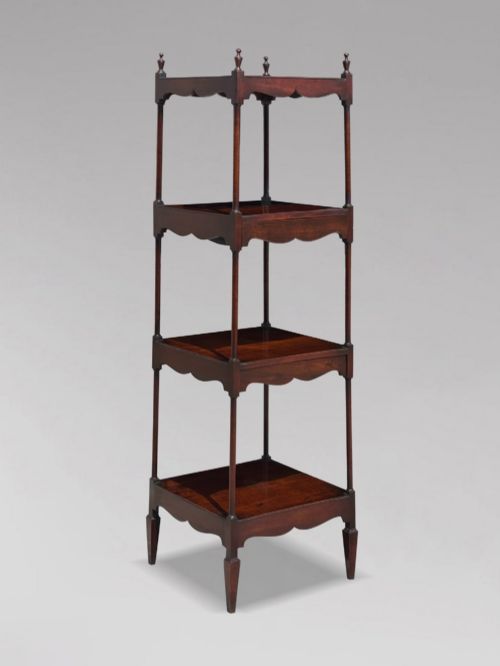
A georgian mahogany whatnot is an open piece of tiered furniture designed for display and storage in domestic rooms. These pieces appear in forms ranging from compact three-tier stands to taller structures incorporating drawers, cupboards, or music stands.
The pieces on this page span the Georgian, Regency, and Victorian periods, with George III and Regency examples appearing most frequently. Makers utilised mahogany alongside brass accents and boxwood inlay to construct these functional tier systems.
Materials and construction
Makers built these pieces primarily from solid and veneered mahogany, occasionally selecting timber with strong figuration. Supporting uprights and tiers were joined to create stable open frameworks designed to hold books, ceramics, or small ornaments.
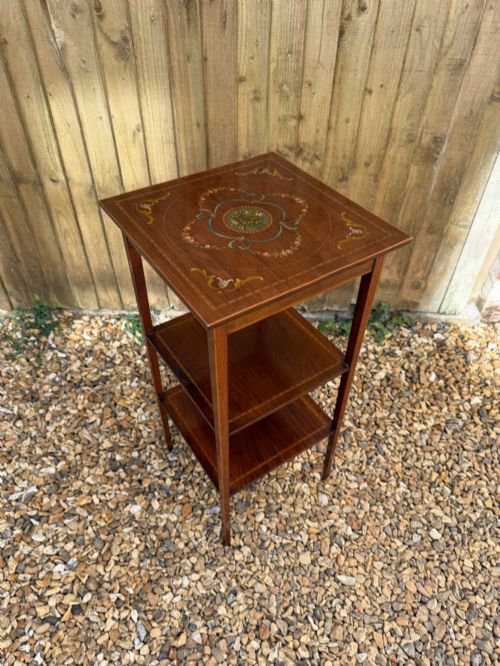
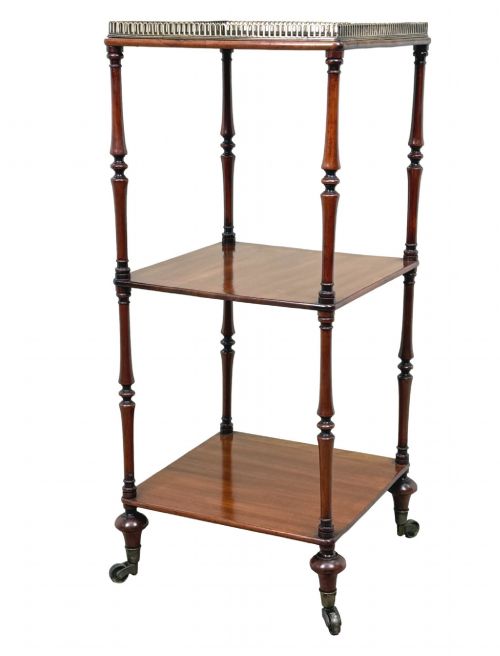
Detailing often included boxwood inlay, brass castors, and turned or tapering wooden supports. Certain examples integrate drawers or lower cupboards fitted with brass hardware into the tiered architectural format.
Georgian Mahogany Whatnot Retail Price Guide 2026
Typical asking prices for georgian mahogany whatnot among the pieces listed under this phrase on Sellingantiques today, from the lower quarter to the upper quarter. They describe what is for sale here now, not the wider market.
Several examples double as music stands, proving that past generations stored their sheet music on the very same shelves that held tea caddies.
Assessing quality and proportion
Quality rests in the selection of timber, the crispness of the turned supports, and the overall balance of the tiers. Pieces attributed to workshops such as Gillows demonstrate superior precision in joinery and drawer construction compared to standard commercial output.
Proportion and scale dictate desirability, with exceptionally compact or unusually configured pieces commanding greater attention. The presence of original brass castors and unblemished mahogany surfaces distinguishes the finest examples from heavily restored or later adaptations.
Gillows
The Georgian Mahogany Whatnot Glossary
- Whatnot
- An open shelving unit with multiple tiers, used for displaying or storing small objects. It originated in the late eighteenth century as a versatile piece for the parlour or bedroom.
- Étagère
- A French term for a set of open shelves or tiers used for display. These pieces share a similar form to the English whatnot.
- Dumb waiter
- A tiered stand traditionally placed beside a dining table to hold dishes or serving items without the need for servants. Some examples share the multi-tiered construction seen in standard display stands.
- Canterbury
- A low, open-framed stand fitted with partitions for holding sheet music or books. Certain variations combine this compartmentalised base with upper shelving tiers.
- Boxwood inlay
- A decorative technique involving contrasting pale wood strips set into the mahogany surface. This detail appears on select cabinetwork from the Georgian and Regency eras.
Georgian Mahogany Whatnot: Frequently Asked Questions
What is a georgian mahogany whatnot used for?
These pieces were originally designed to hold books, ceramics, and small decorative items across multiple open tiers. In modern interiors, they function well as display units in living rooms or bedside shelving in bedrooms.
Their compact footprint allows them to fit into corners or narrow wall spaces where standard bookcases would prove too bulky.
How do I tell a Georgian piece from a Regency one?
Georgian examples, particularly from the George III period, often exhibit restrained classical lines and fine proportions. Regency pieces tend to incorporate bolder turning, brass detailing, and tapering forms.
Examining the construction methods and secondary timbers underneath helps clarify the manufacturing period.
Did these pieces always have drawers?
Many examples consist solely of open shelves supported by turned uprights. However, makers occasionally incorporated a single drawer or small cupboard into the lower tier for concealed storage.
Both open and drawer-fitted variants appeared concurrently throughout the late eighteenth and early nineteenth centuries.
How do I care for mahogany tier stands?
Keep the timber away from direct heat sources and strong sunlight to prevent the mahogany surface from fading or drying out. Regular dusting with a soft, dry cloth maintains the finish without needing heavy polishes.
Check the joints and tier supports periodically to ensure the structure remains stable.