






Antique Tier Display Stand
An antique tier display stand organises books, ceramics or ornaments across ascending shelves, bringing vertical storage and period character to a room.
Antique Tier Display Stand
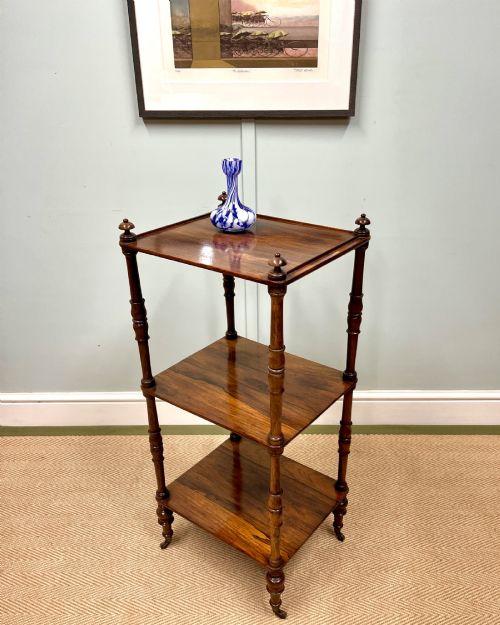
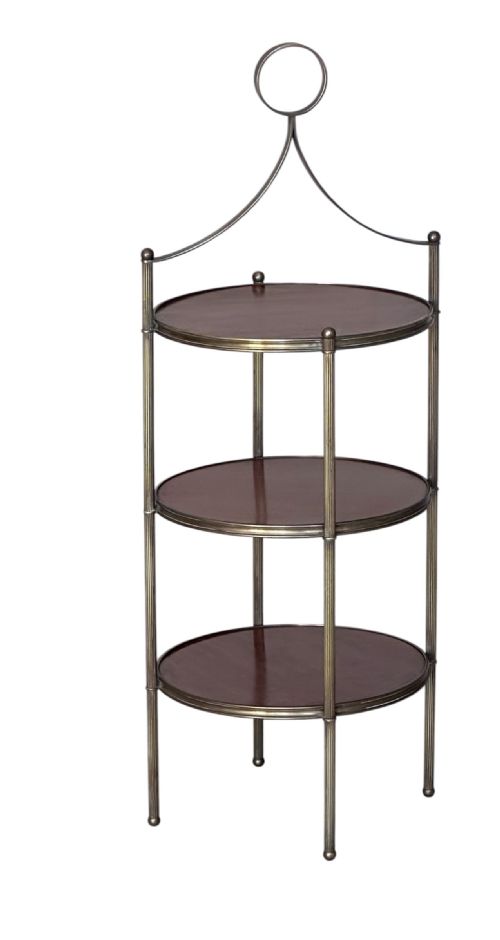
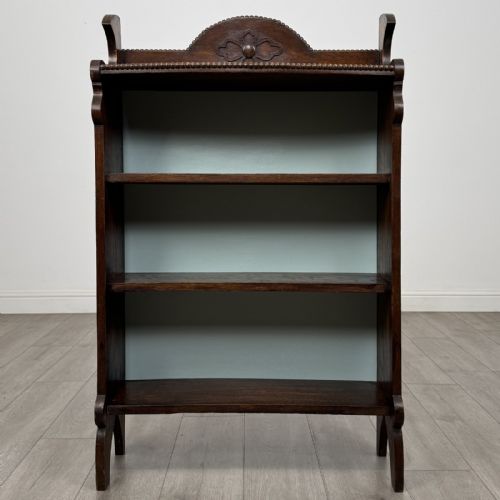
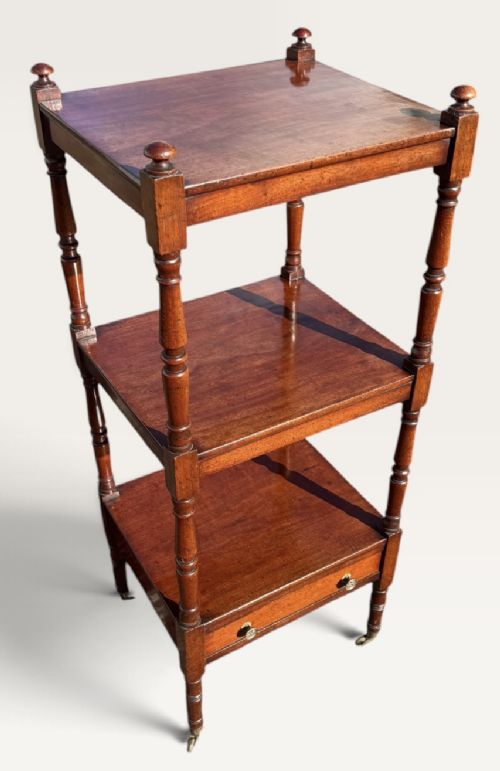
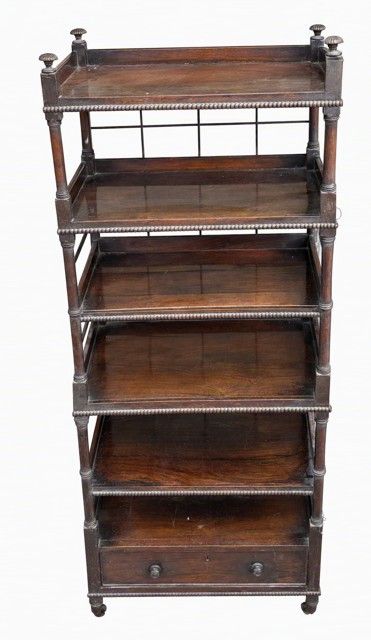
An antique tier display stand generally takes the form of a whatnot, etagere, or multi-tiered bookcase designed to present objects across several open levels. These pieces originate across the Georgian, Regency, and Victorian eras, carrying the architectural proportions and timber choices of those periods.
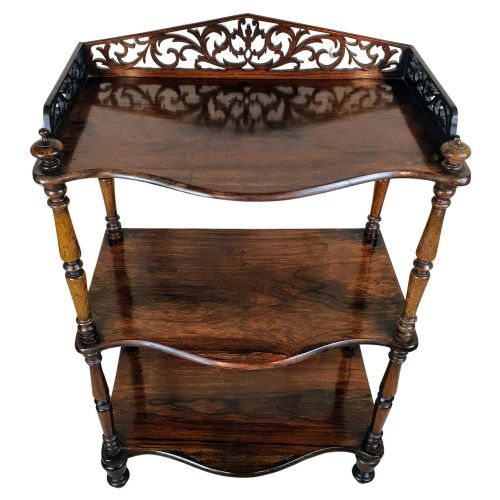
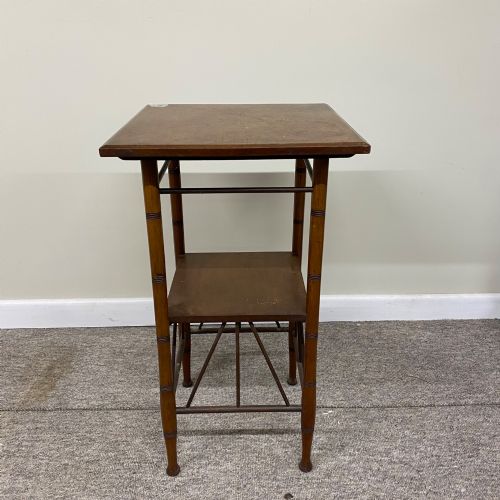
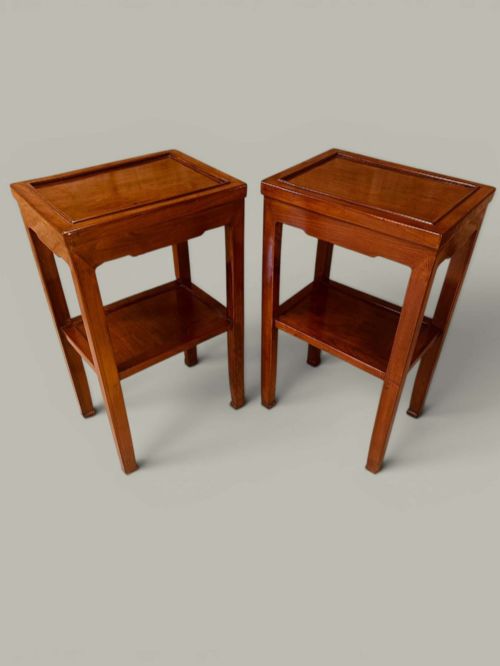
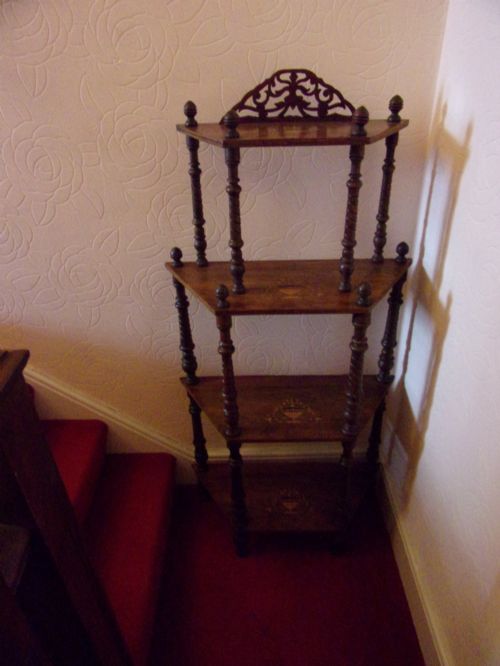
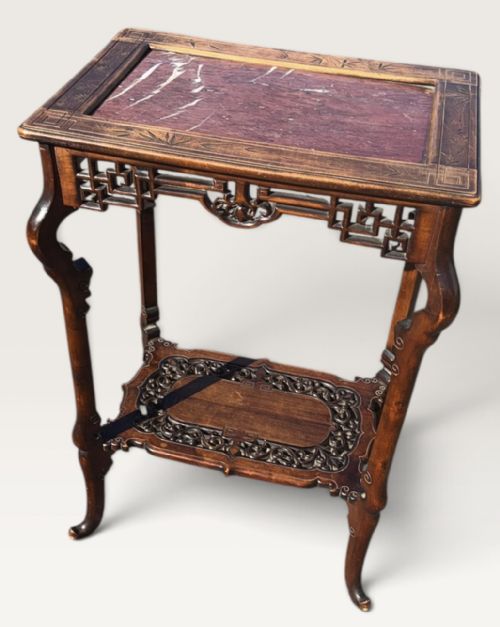
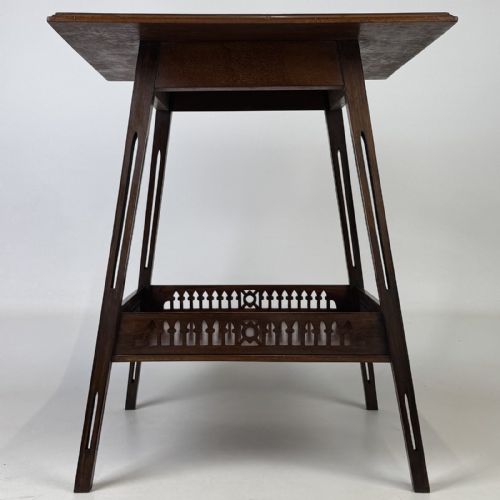
The version most frequently met on this page is the Victorian or Edwardian mahogany or walnut whatnot, often built with three or four graduating shelves supported by turned or barley-twist uprights. Alongside these, buyers encounter bamboo occasional stands, rosewood etageres, and oak cake stands from the turn of the twentieth century.
How they were made
Cabinet makers constructed these multi-tiered frames predominantly from timbers such as mahogany, walnut, and oak, frequently incorporating burr walnut veneers for striking grain figures on top surfaces. Structural support relied on turned uprights, barley-twist columns, or bamboo stems, joined securely to accommodate the weight of stacked books and decorative items.
Finishing techniques involved polishing hardwoods to a rich lustre, while specific examples display lacquered surfaces, painted decorations, or parcel gilding over ebonised wood. Brass mounts, castors, and glazed doors appear on selected pieces, reflecting the practical requirements of nineteenth and early twentieth-century households.
Antique Tier Display Stand Retail Price Guide 2026
Typical asking prices for tier display stand among the pieces listed under this phrase on Sellingantiques today, from the lower quarter to the upper quarter. They describe what is for sale here now, not the wider market.
Listings include oak, walnut, mahogany, and burr walnut across forms such as corner cabinets, side tables, and etageres.
What varies in quality
The distinction between ordinary and superior pieces rests on the choice of timber and the crispness of the joinery. Finer examples utilise heavily figured burr walnut or dense mahogany, pairing substantial shelf boards with tightly fitted uprights that maintain rigid stability across multiple tiers.
Detailing and proportion further elevate a stand above standard utility items. Superior versions integrate serpentine shaping, delicate inlay, or matched turning that shows deliberate aesthetic consideration rather than simple mass production.
The Antique Tier Display Stand Glossary
- Whatnot
- An open multi-shelved piece of furniture designed for displaying ornaments or holding books. It developed in the eighteenth century and remained popular through the Victorian era.
- Etagere
- A set of open display shelves, usually lighter in construction than a whatnot. French in origin, these pieces often feature tiered platforms supported by slender columns.
- Barley-twist
- A spiral turning resembling a twist of barley sugar used on upright supports. This decorative woodworking technique appears frequently on Victorian stands and tables.
- Astragal
- A moulded strip of wood or metal fixed to glass doors to hold individual panes in place. It forms a geometric grid pattern across cabinets and corner cupboards.
- Torchere
- A tall, slender stand designed to hold a light or a decorative urn. Edwardian examples often incorporate inlaid woodwork and slender vertical proportions.
Antique Tier Display Stand: Frequently Asked Questions
What is a tier display stand used for?
These stands provide open vertical shelving for exhibiting ceramics, books, and decorative objects without dominating a room's floor space. Historically, they occupied corners or wall spaces in parlours and drawing rooms to keep frequently read volumes or collections close at hand.
Today, they serve a similar purpose in modern homes, functioning as bedside tables, plant stands, or corner display units. Their graduated shelves allow items of varying heights to be arranged clearly.
How do I date a Victorian whatnot?
Dating relies on observing the timber, turning style, and overall proportions of the piece. Mid-nineteenth-century examples frequently employ rich mahogany or burr walnut with robust, hand-turned supports and occasional drawers fitted beneath the lower shelf.
Later Victorian and Edwardian pieces often introduce ebonised finishes, bamboo structures, or lighter rosewood frames with brass detailing. Comparing the construction methods of the joints and the grain of the wood helps place the stand within its decade of manufacture.
Where should I place a display stand?
Corner display stands fit neatly into unused angles of a room, making efficient use of space while drawing the eye upward. Free-standing rectangular or oval etageres work well against plain walls or beside seating where small items can be reached easily.
Because many pieces feature finished wood on all sides, they can also act as room dividers or bedside surfaces. Placing them away from direct heat sources protects the polished timber and delicate veneers from drying out.
What is the difference between an etagere and a whatnot?
An etagere is typically lighter and more decorative, originating from French fashion as a delicate platform for displaying porcelain and curiosities. A whatnot is generally sturdier, often associated with English cabinet making and heavier book storage.
In practice, makers and dealers used both terms interchangeably by the late nineteenth century. Both formats rely on multi-tiered shelving, though an etagere leans towards ornamental display while a whatnot accommodates practical utility.