


Rosewood Reading Stand
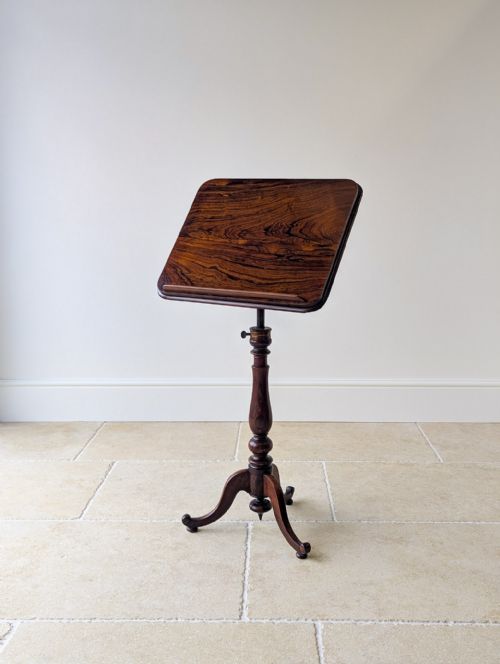
A rosewood reading stand brings architectural refinement and adjustable utility to a room, crafted from rich dark timbers during the Regency and Victorian eras.
Rosewood Reading Stand
When you search for a rosewood reading stand, you encounter versatile multi-functional furniture designed for the nineteenth-century library, drawing room, or parlour. These pieces combine book supports with occasional table surfaces, writing compartments, or sewing facilities.
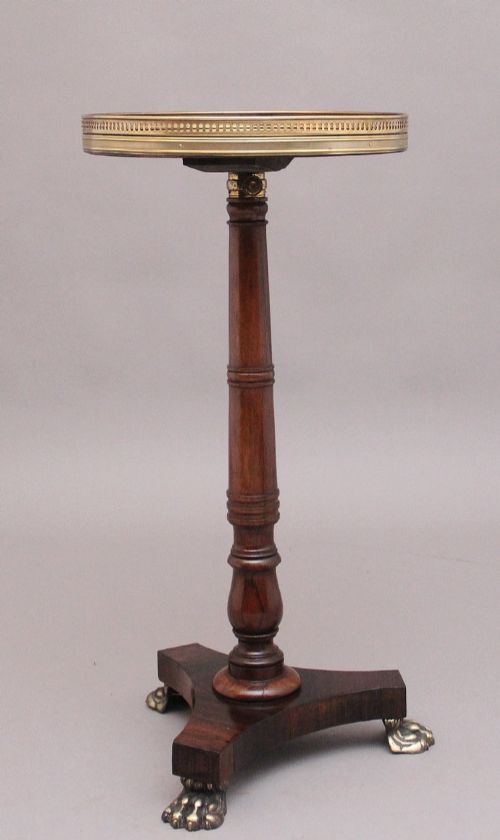
The versions most frequently met on this page belong to the Regency, William IV, and Victorian periods. They appear as tripod music stands, occasional tables with telescopic mechanisms, and whatnots incorporating adjustable ledges.
Makers integrated brass details, inlay, and fabrics such as velvet within these forms. The combination of dense rosewood timber and mechanical utility defines the group across surviving examples.
How they were made
The primary material across these examples is rosewood, selected for its dark grain and dense weight, occasionally supplemented by goncalo Alves or mahogany. Cabinetmakers utilised brass for telescopic stems, adjustable ratchets, and inlaid stringing.
Construction techniques combined traditional joinery with metal engineering to achieve adjustable heights and tilting surfaces. Interior compartments frequently housed writing equipment or sewing materials behind panelled doors and fitted drawers.
What varies in quality
Quality rests upon the integration of the mechanical adjustments with the cabinetwork. Pieces attributed to workshops such as Gillows demonstrate superior execution in the turning of columns and the stability of tripod bases.
The refinement of the rosewood grain and the crispness of any brass inlay distinguish standard production from exceptional pieces. The survival of original fittings and operational telescopic mechanisms dictates the standing of an individual example.
Gillows
The Rosewood Reading Stand Glossary
- Rosewood
- A dense, dark timber prized for its prominent grain and heavy weight. It served as the primary material for high-status nineteenth-century library and parlour furniture.
- Telescopic
- A mechanical arrangement allowing the upright stem to extend or contract in height. This mechanism enabled users to adjust the stand for sitting or standing positions.
- Goncalo Alves
- A highly figured exotic hardwood resembling rosewood, utilised in select nineteenth-century tables and stands for its dramatic patterning.
- Whatnot
- A multi-tiered open piece of furniture used for displaying or storing books and objects. Certain examples incorporate reading stands or music desks into their upper tiers.
Rosewood Reading Stand: Frequently Asked Questions
What is a rosewood reading stand used for?
These stands supported books, folios, or sheet music at adjustable angles for reading and performance. They functioned as multi-purpose pieces in nineteenth-century interiors.
Many examples combined this purpose with a writing surface or sewing table compartment. Their adjustable height allowed users to read while seated or standing.
Are these stands mechanically adjustable?
Numerous examples feature telescopic stems or ratchets that alter the height and angle of the desk surface. These metal and wood mechanisms allowed the user to customize the position.
Not all pieces retain fully operational mechanisms, and some have been adapted over time. Examining the brass fittings reveals how the original movement functioned.
How do I care for rosewood furniture?
Rosewood requires stable humidity levels and protection from direct sunlight to prevent the timber from drying or fading. Regular dusting with a soft cloth preserves the polished surface.
Harsh chemical cleaners should be avoided. Occasional application of appropriate wax maintains the natural lustre of the dense grain.