

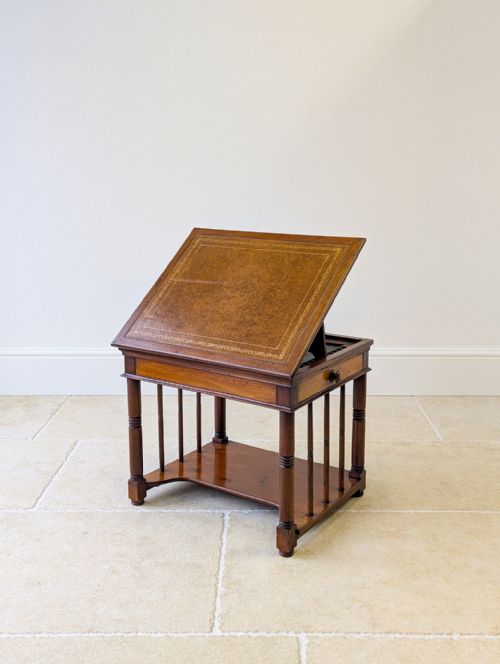


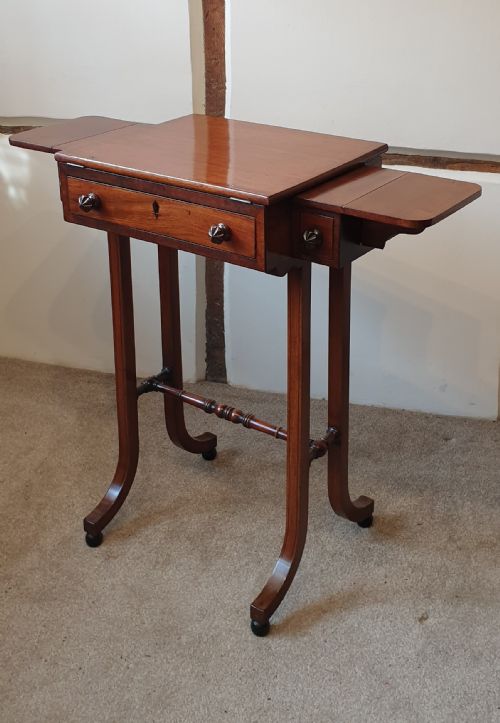
Adjustable Reading Slope
An adjustable reading slope offers a practical surface for books and papers, combining timber construction with mechanical ingenuity to serve the study and library.
Adjustable Reading Slope
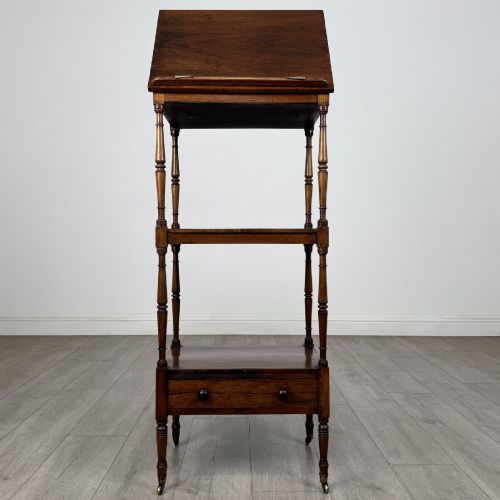
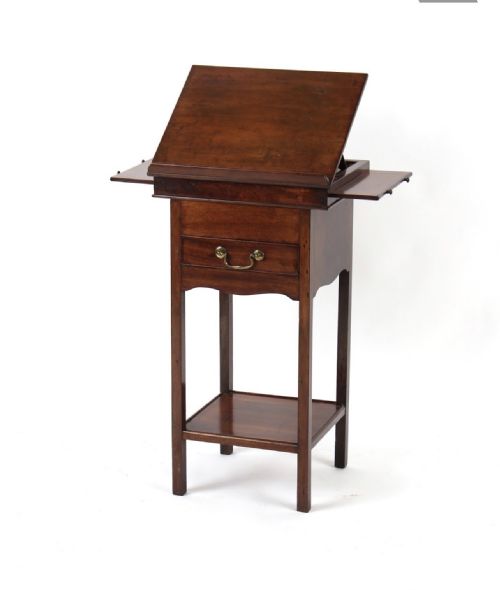
An adjustable reading slope is primarily encountered in forms such as writing tables, reading stands, library chairside reading tables, and occasional tables. These pieces appear across several periods, most notably the Georgian, Regency, William IV, Victorian, and Edwardian eras.
The buyer meets various timber formats when searching for an adjustable reading slope, including freestanding tables and table top reading stands designed for specific architectural or library uses. Their construction serves the functional requirement of angling text for comfortable study.
Origins in the evidence span the eighteenth and nineteenth centuries, connecting these objects to domestic and institutional libraries of the period. Each form adapts the basic principle of the slope to differing room settings.
Materials and construction methods
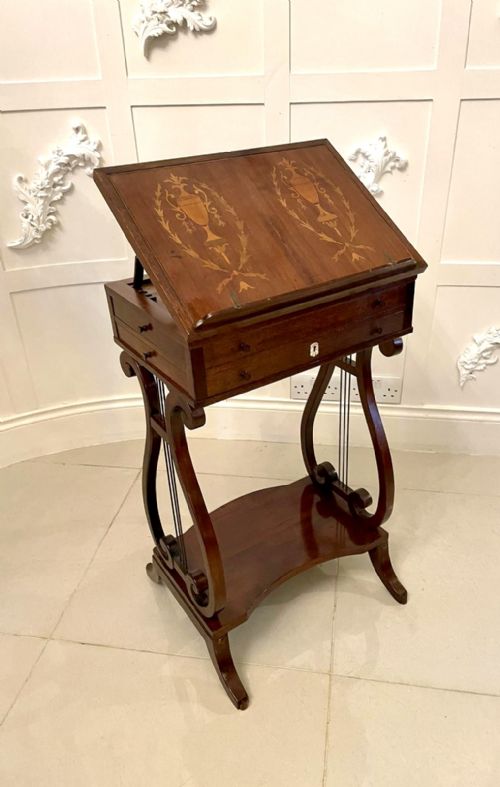
Cabinet makers utilised dense hardwoods such as mahogany and rosewood for the primary structure of the reading slope, often adding contrasting stringing in boxwood and satinwood. These timbers provide the weight and stability required for frequent mechanical adjustment.
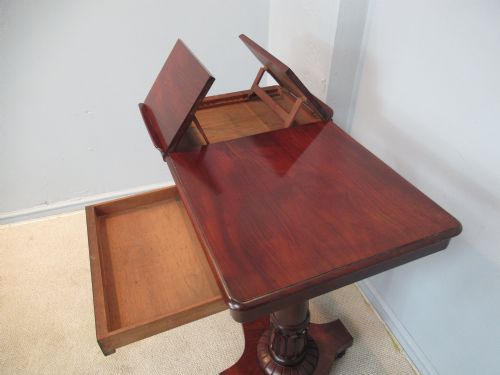
Metal mechanisms in brass operate the ratchets and struts that support the adjustable surface. Leather and velvet inserts frequently face the writing and reading surfaces to provide a suitable texture for books and papers.
Adjustable Reading Slope Retail Price Guide 2026
Typical asking prices for adjustable reading slope among the pieces listed under this phrase on Sellingantiques today, from the lower quarter to the upper quarter. They describe what is for sale here now, not the wider market.
Some nineteenth century reading tables double as work spaces, concealing compartments for sewing alongside the adjustable book rest.
Distinctions in quality
The refinement of the brass adjustment mechanism distinguishes finer examples of an adjustable reading slope from standard utilitarian pieces. Smooth operation of the ratchets and solid engagement of the support struts indicate superior workmanship.
The choice of cabinet timber and the precision of decorative inlays such as boxwood and satinwood separate standard production from exceptional pieces. Attention to detail in the secondary woods and jointing further defines the upper tier of these tables.
GILLOWS of LANCASTER
The Adjustable Reading Slope Glossary
- Ratchet
- A toothed mechanical bar that holds the reading slope at various angles. It allows the user to raise or lower the bookrest securely.
- Campaign
- A style of portable furniture designed for travel, typically featuring recessed brass handles and sturdy construction. These pieces were built to withstand movement while retaining domestic refinement.
- Stringing
- A thin inlay of contrasting wood, such as boxwood or satinwood, set into the primary timber surface. It creates fine decorative borders on tables and desks.
- Whatnot
- An open set of freestanding shelves used for displaying or storing books and objects. Some examples incorporate writing and reading surfaces into their design.
Adjustable Reading Slope: Frequently Asked Questions
What is an adjustable reading slope used for?
An adjustable reading slope supports books, folios, or writing materials at an inclined angle to reduce strain during study.
They were placed on tables, used as freestanding library furniture, or incorporated into larger writing and work desks.
How do you adjust the reading angle?
Internal or external brass ratchets and hinged wooden struts engage to hold the platform at the desired elevation.
Lifting the panel allows the support arm to fall into successive notches until the preferred reading position is reached.
Which woods are most common?
Mahogany and rosewood dominate the surviving examples, providing durable surfaces and rich dark grains for library environments.
Cabinet makers also incorporated boxwood and satinwood for fine stringing and decorative inlay work.
How do I date a reading table?
Stylistic cues such as Regency curves, Georgian proportions, or Victorian massing indicate the period of manufacture.
The complexity of the brass hardware and the choice of secondary timbers also help establish the approximate decade.