




Turned Spindle Whatnot
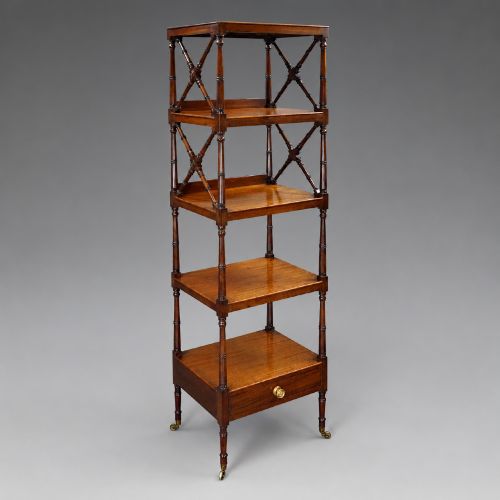
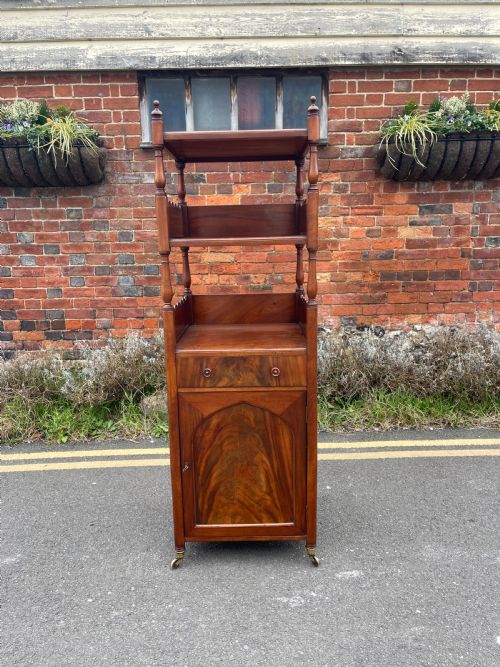
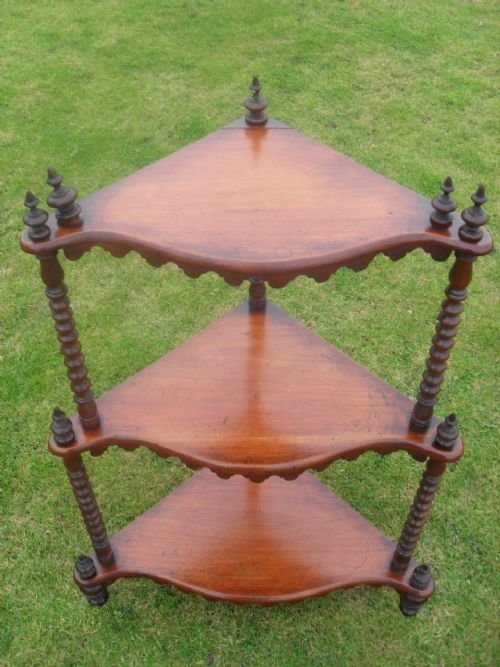
A turned spindle whatnot is a tiered wooden shelving unit designed for display and storage, bringing practical elegance to any room.
Turned Spindle Whatnot
A turned spindle whatnot stands as a versatile multi-tiered shelving unit, built to hold books, ceramics, and ornaments within domestic spaces. Buyers searching for a turned spindle whatnot encounter forms ranging from simple three-tier stands to grander examples fitted with cupboards or cellarettes.
The examples recorded here span the Georgian and Victorian eras, including specific periods such as the early nineteenth century, 1850, 1860, 1890, and the William IV reign. Most pieces on this page appear in mahogany or rosewood, reflecting the cabinet-making standards of the nineteenth century.
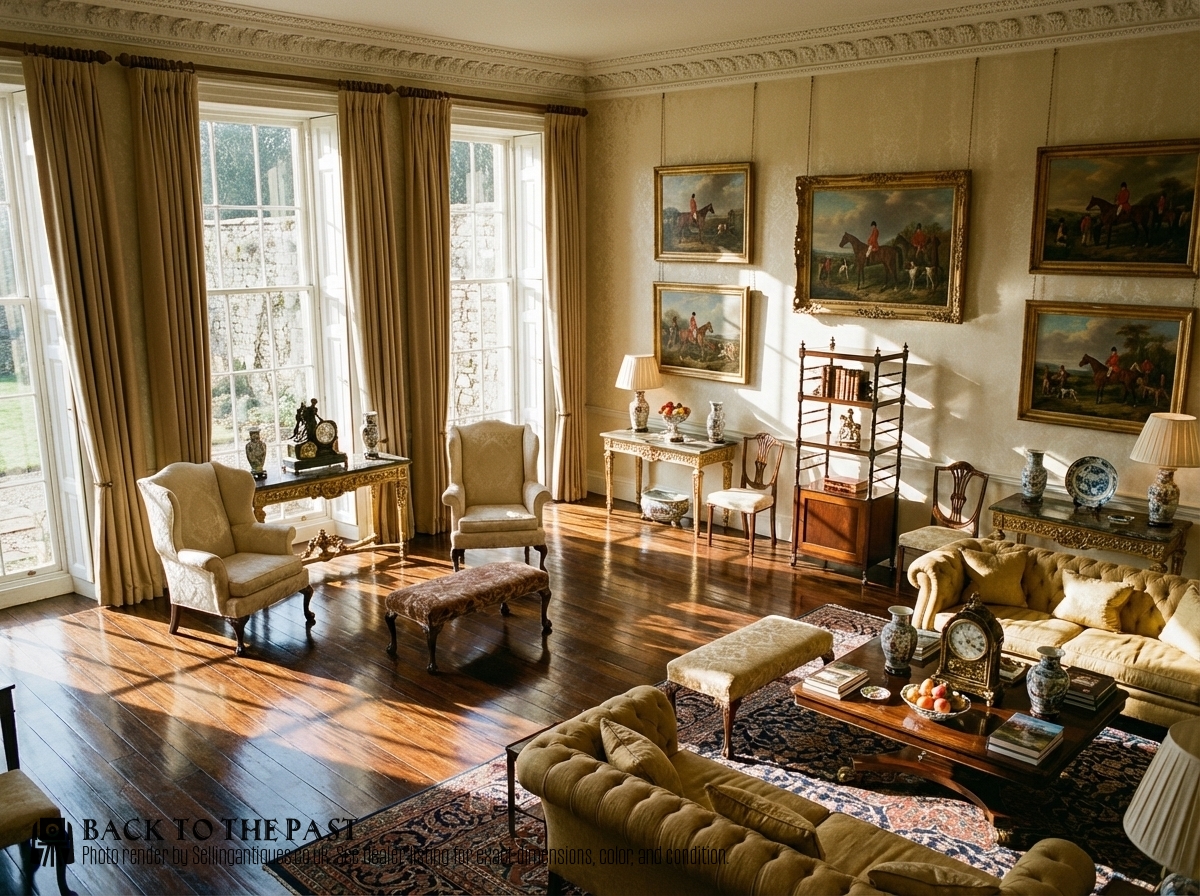
Makers of these tier systems utilised turned supports between shelves, creating an open structure that feels light yet stable. Such units function equally as etageres and display shelving, serving traditional interior needs for accessible surface space.
What varies in quality
Quality in these tiered units rests upon the crispness of the turning on the spindle supports and the selection of figured timber veneers for the shelves. Finer examples display balanced proportions across multiple tiers, whilst simpler versions rely on plain uprights and straightforward board construction.
The listings on this page span the Georgian, Regency, William IV, and Victorian periods, showcasing mahogany and rosewood construction.
The Turned Spindle Whatnot Glossary
- Etagere
- A French term for a display stand with several tiers of shelves. These pieces often serve the same decorative function as a traditional whatnot.
- Cellarette
- A fitted compartment or drawer located at the base of certain cabinets for storing bottles. This addition elevates the utility of the lower section.
- Serpentine front
- A shelf edge or cabinet front curving outward in the centre and inward at the sides. This contour introduces dynamic movement to the timber silhouette.
Turned Spindle Whatnot: Frequently Asked Questions
What is a turned spindle whatnot used for?
These tiered units were originally designed to hold books, small ceramics, and decorative objects in domestic drawing rooms and parlours.
Today, they function effectively in modern interiors as open display shelving or bedside stands that preserve an airy room layout.
How do I identify a Victorian whatnot?
Victorian examples typically feature heavier proportions and darker timber varieties like mahogany, often incorporating four tiers or a serpentine front.
They frequently display distinct turned spindle supports that separate each platform while maintaining an open visual profile.
Are these pieces made of solid mahogany?
Makers constructed the main structural elements and turned spindles from solid timbers, while larger flat surfaces often utilised stable mahogany veneers.
This combination prevented warping across the broader shelves whilst ensuring durability in the upright supports.
What is the difference between a whatnot and an etagere?
Both terms describe multi-tiered shelving units, though etagere often denotes a lighter, more ornate French-influenced display form.
In practical terms on this page, both designations refer to tiered stands built with open shelving and spindle supports.