





Corner Display Shelves
Corner display shelves maximise awkward angles, offering tiered surfaces to exhibit treasured objects without crowding a room.
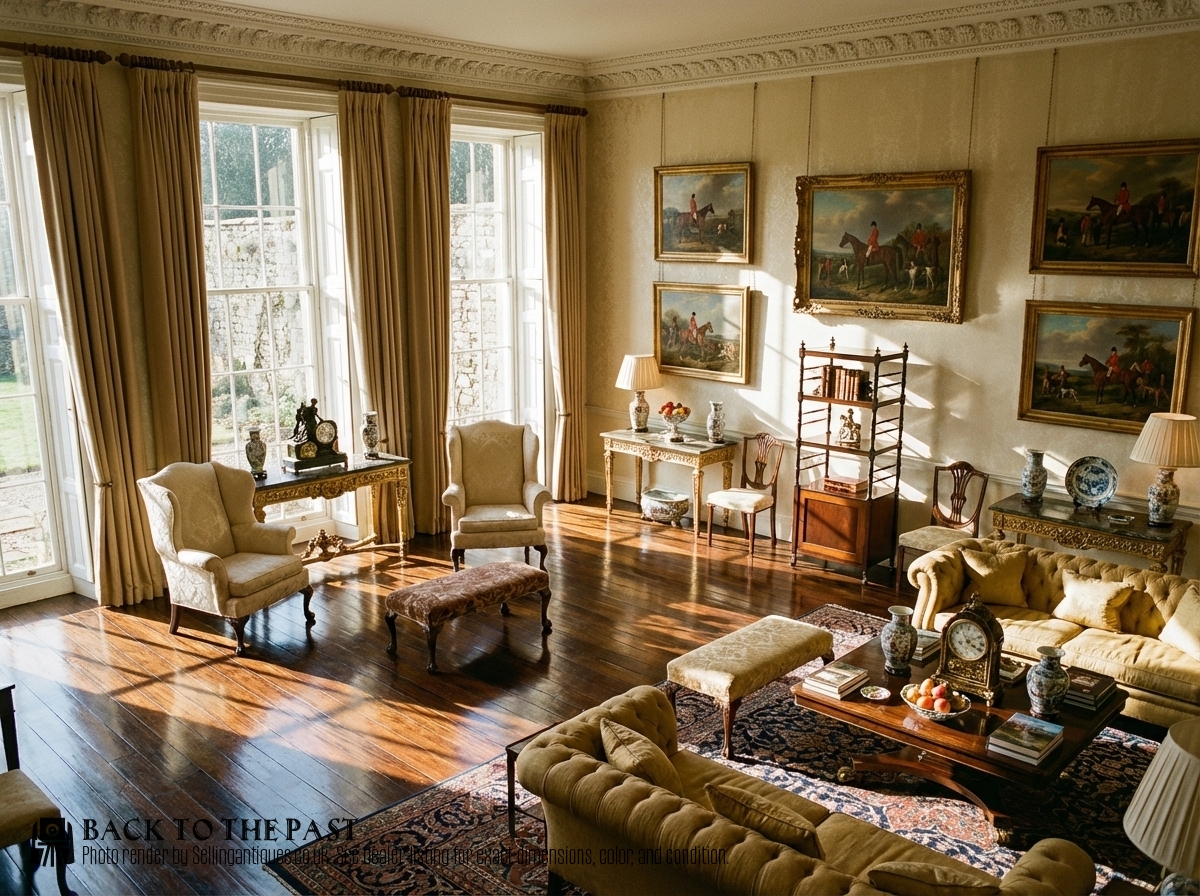
Corner Display Shelves
When searching for corner display shelves, buyers encounter a variety of multi-tiered furniture designed to fit cleanly into room junctions. These pieces range from open whatnots and etageres to enclosed corner cabinets and hanging cupboards.
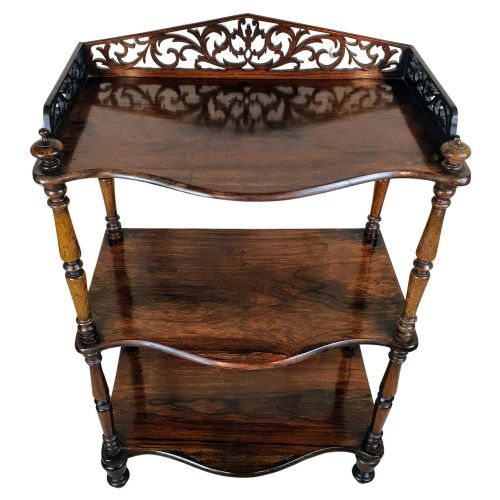
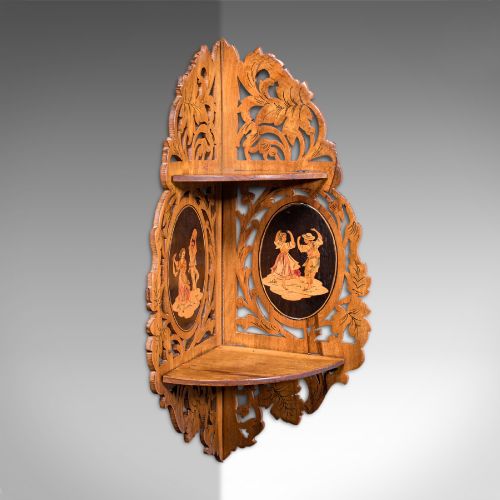
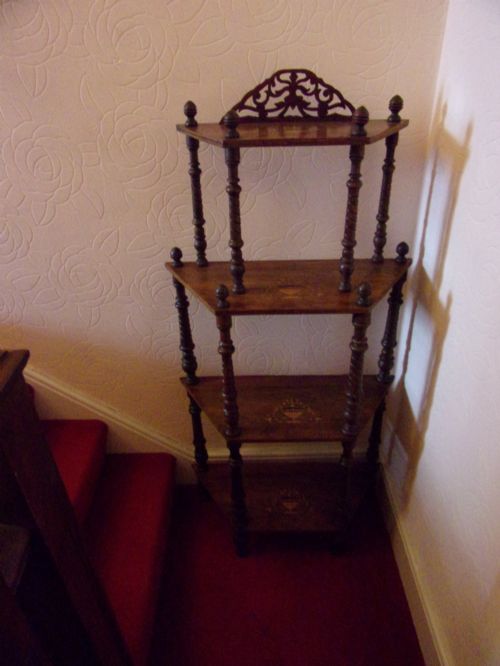
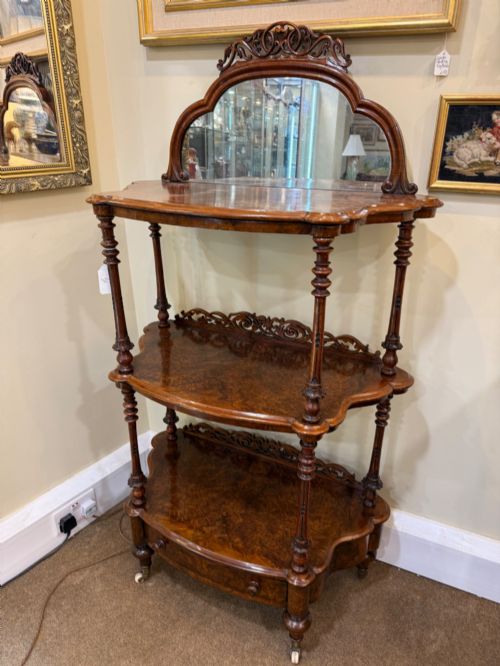
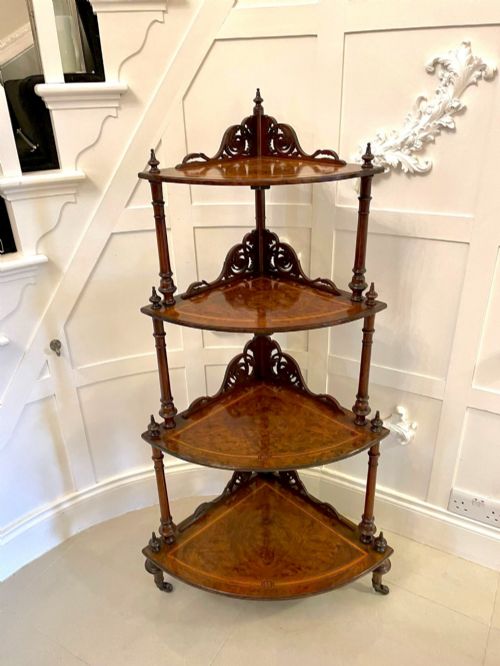
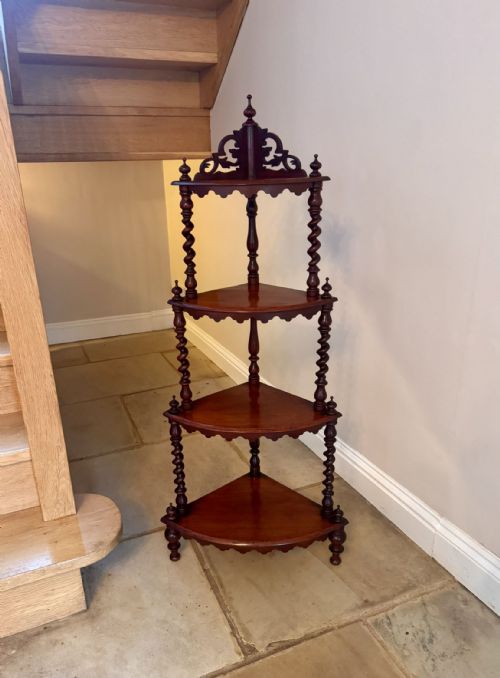
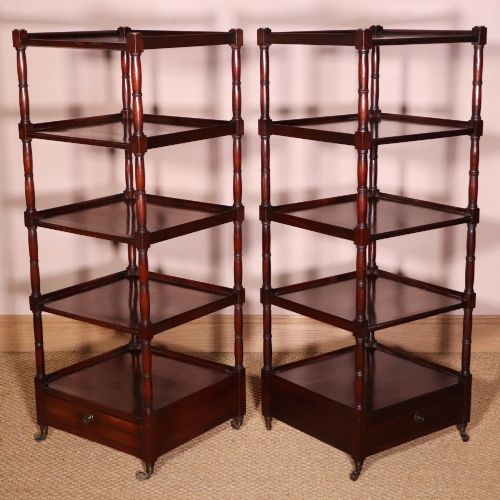
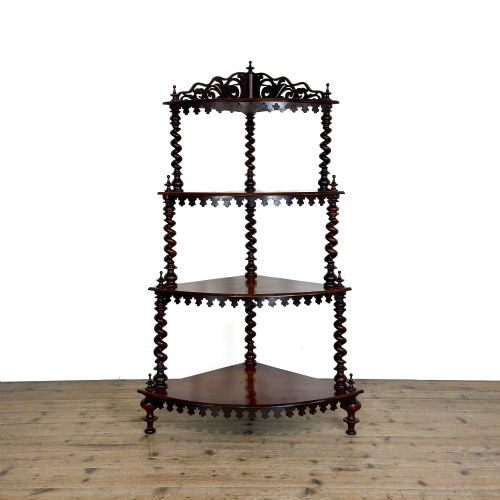
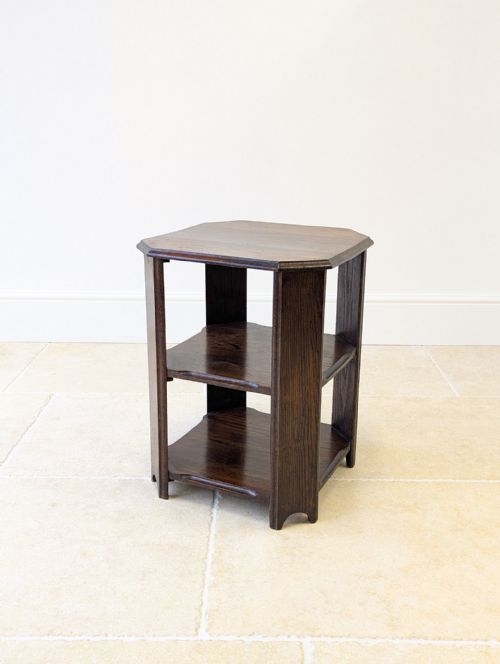
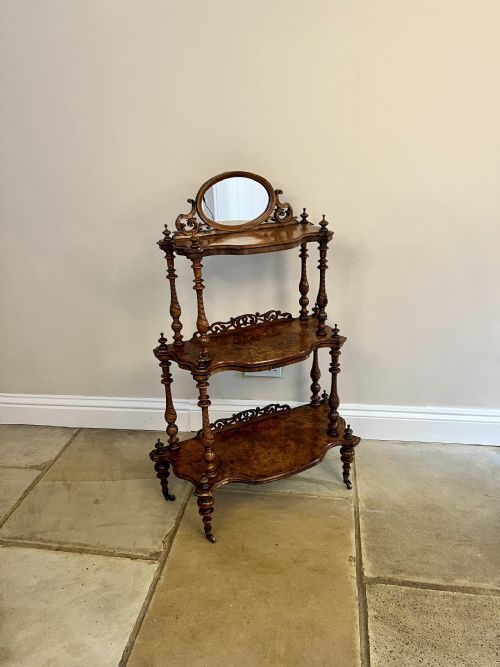
The selections visible here span several distinct eras, with Victorian pieces in mahogany and walnut appearing most frequently alongside Georgian and Regency examples. Forms vary from simple three-tier stands to elaborate multi-tiered structures featuring barley twist supports or glass doors.
Makers and workshops of the nineteenth and twentieth centuries produced these items in diverse timbers, adapting standard forms for domestic display. Buyers select these tiered units to utilise vertical space in corners while showcasing ceramics, books or decorative items.
Materials and construction
Cabinet makers utilised dense hardwoods such as mahogany, walnut, burr walnut and rosewood, frequently selecting figured veneers to catch the light on curved surfaces. Ebonised wood, bamboo, olive wood and painted pine also appear across the surviving inventory.
Structural integrity relied on stable joints, turned supports like barley twists, and fitted brackets to secure multiple tiers into a rigid ninety-degree angle. Decorative elements often included brass mounts, parquetry inlay, gilt metal and delicate carved detailing.
Corner Display Shelves Retail Price Guide 2026
Typical asking prices for corner display shelves among the pieces listed under this phrase on Sellingantiques today, from the lower quarter to the upper quarter. They describe what is for sale here now, not the wider market.
Assessing quality
The distinction between standard domestic items and exhibition pieces lies in the selection of timbers and the crispness of the joinery. Finely figured burr walnut veneers, intricate parquetry inlay and well-defined carvings separate superior examples from plain utilitarian furniture.
Proportion and stability dictate the merit of a tiered stand, as taller structures require precise alignment to support weight across multiple levels without listing. Original brass hardware, uncompromised glass panels and intact turned supports preserve the integrity expected by discerning collectors.
Gillows·Edwards & Roberts·Goodhall, Lamb and Heighway·John Stow Ltd
The Corner Display Shelves Glossary
- Whatnot
- An open multi-tiered piece of furniture designed for displaying ornaments or books. These stands became popular during the eighteenth and nineteenth centuries.
- Etagere
- A set of tiered open shelves used for display. They often feature delicate supports and decorative woodwork.
- Barley twist
- A turned wooden column resembling a twisted rope. This technique frequently appears on nineteenth-century supports.
- Parquetry
- Geometric mosaic woodwork used for decorative surface patterns. Craftsmen applied these veneers to tabletops and cabinet doors.
- Burr walnut
- Timber taken from a walnut tree growth, prized for its swirling grain patterns. Cabinet makers utilised these veneers on high-quality Victorian furniture.
Corner Display Shelves: Frequently Asked Questions
Where should I place corner display shelves?
These units fit directly into unused room angles, turning dead space into a practical focal point for collections.
Position them away from direct sunlight and moisture to protect polished mahogany and delicate burr walnut veneers.
How do I clean wooden display shelves?
Dust the tiers regularly with a soft, dry cloth to prevent particulate buildup on polished surfaces.
Avoid chemical polishes and damp cloths, applying a quality beeswax sparingly only when the wood appears dry.
Can these shelves hold heavy books?
Open whatnots and etageres were primarily designed for lighter ornaments, ceramics and decorative objects.
Heavier volumes should be reserved for sturdy lower tiers or dedicated bookcases rather than delicate display stands.
How do I distinguish Victorian from Georgian pieces?
Georgian furniture from the eighteenth century typically displays cleaner classical lines and heavier solid timbers like mahogany.
Victorian pieces often incorporate more ornate carving, turned barley twists, and decorative veneers such as burr walnut.