



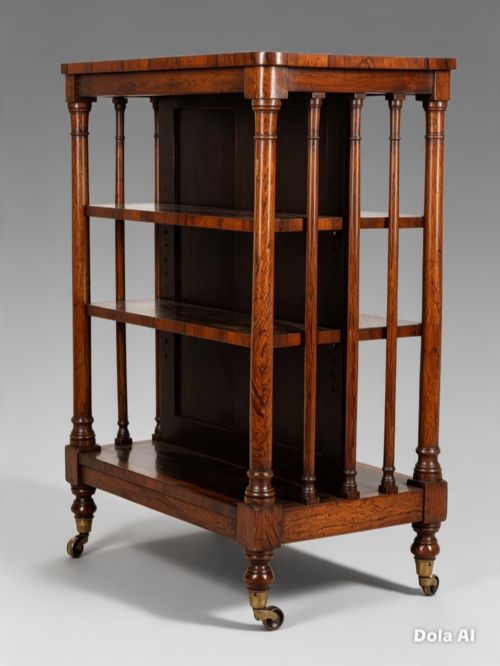


Rosewood Bookshelf Stand
A rosewood bookshelf stand brings rich timber grain and layered display space to a room, offering both character and function.
Rosewood Bookshelf Stand
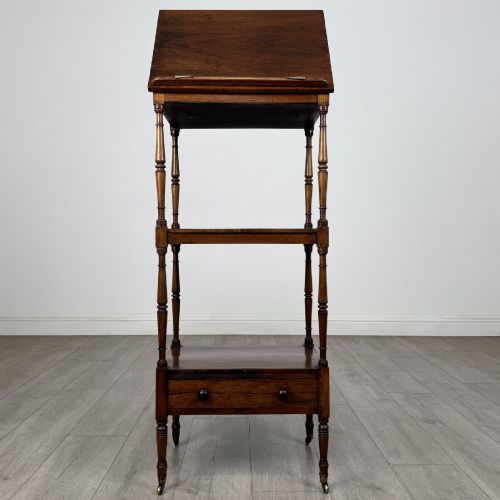
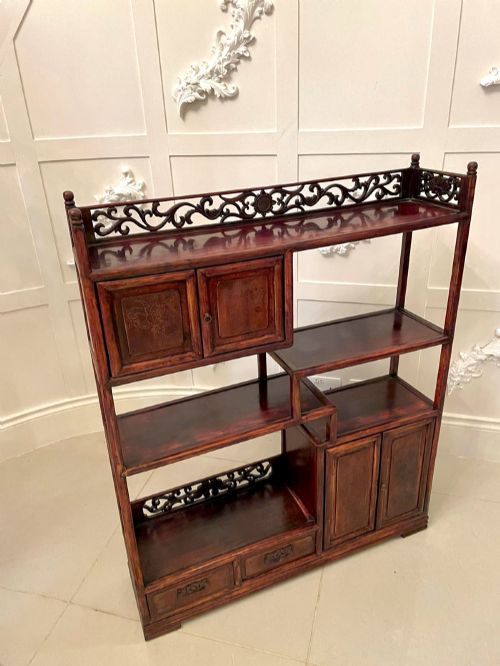
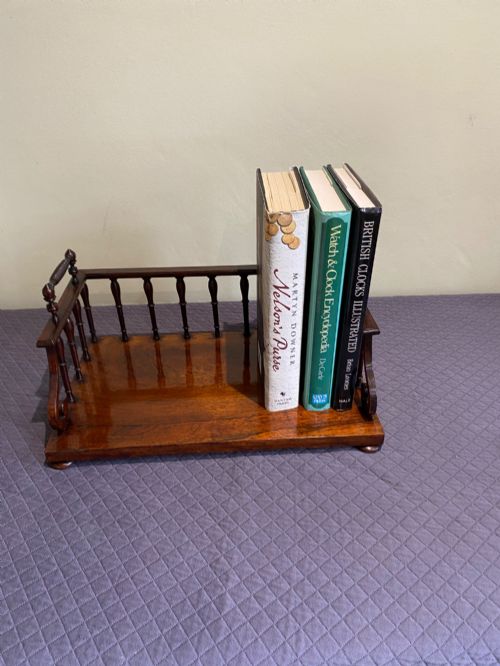
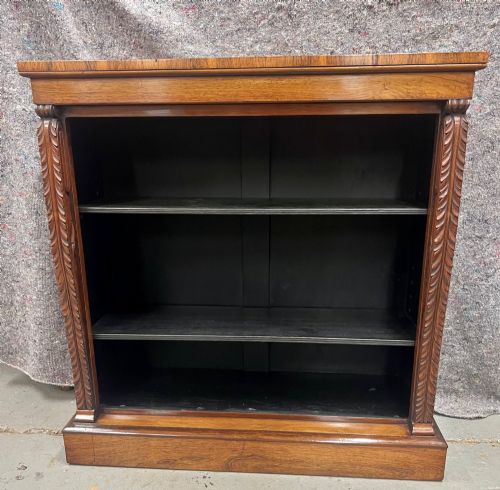
A rosewood bookshelf stand spans open bookcases, multi-tiered etageres, and adjustable reading pieces originating from the Regency, Victorian, and Edwardian eras. These items serve to hold volumes and display small objects while anchoring a room with dark, rich timber.
The most common formats found here are open bookcases and tiered whatnots, alongside waterfall bookcases and compact corner cabinets. Many examples incorporate clever additions such as adjustable reading slopes or double-sided access for central room placement.
Materials and construction methods
Cabinet makers relied heavily on dense rosewood, often paired with secondary hardwoods like mahogany or simulated finishes achieved through graining and painting. Brass details appear frequently as structural mounts, gallery rails, or adjustable hinges for reading slopes.
Tiered etageres and open bookcases utilise sturdy vertical uprights and pegged or screwed shelf joints to support heavy volumes. Finer items incorporate delicate inlays, leather inserts on reading surfaces, or mirrored panels within display cabinets.
Rosewood Bookshelf Stand Retail Price Guide 2026
Typical asking prices for rosewood bookshelf stand among the pieces listed under this phrase on Sellingantiques today, from the lower quarter to the upper quarter. They describe what is for sale here now, not the wider market.
Listings feature items spanning the Regency period, the Victorian era, and Edwardian times, alongside pieces dated to 1820, 1830, 1850, 1890, and 1920.
Distinctions in construction and finish
Quality rests upon the selection of timber figures, where rich natural graining or skilled simulated graining distinguishes superior examples. The depth of the colour and the original condition of the polished surface dictate the visual impact of the piece.
Structural integrity in joints, the crispness of turned supports, and the precise operation of adjustable reading slopes separate standard production from finer cabinet work. Original brass fittings and intact galleries add further distinction to etageres and bookcases.
Samson and Son London
The Rosewood Bookshelf Stand Glossary
- Etagere
- A set of open shelves for displaying small objects or books. These tiered structures became popular during the nineteenth century for drawing rooms.
- Waterfall bookcase
- A freestanding set of graduated open shelves where each tier steps back from the one below. The profile resembles a cascading waterfall.
- Whatnot
- A piece of freestanding furniture with multiple open shelves supported by upright pillars. It was traditionally used to display ornaments and books.
- Simulated rosewood
- A painted or grained finish applied to a cheaper hardwood to mimic the appearance of genuine rosewood. Cabinet makers used this technique during the Regency and William IV periods.
- Reading slope
- An adjustable inclined desk surface fitted to a bookcase or standalone stand. It allowed books to be propped at a comfortable angle for reading.
Rosewood Bookshelf Stand: Frequently Asked Questions
How do I care for rosewood furniture?
Keep timber surfaces away from direct sunlight and steady heat sources to prevent the wood from drying out. Dust regularly with a soft, dry cloth and avoid harsh chemical polishes.
Apply a microcrystalline wax occasionally if the finish appears dry, rubbing it gently with the grain. Ensure spills are wiped immediately to protect the polished surface.
Were these stands used in bedrooms or libraries?
Smaller etageres and whatnots typically stood in drawing rooms or boudoirs for holding books and decorative objects. Larger open bookcases were designed for libraries, studies, or grand parlours.
Double-sided variants were often placed in the centre of a room rather than against a wall, allowing access from multiple angles.
How do I identify a Regency piece?
Regency items typically display classical restraint, featuring clean architectural lines, rosewood veneers, and understated brass mounts. Turned columns and fine reeding are common decorative elements from this period.
Earlier pieces often incorporate heavier proportions and distinct timber figuring compared to later Victorian or Edwardian interpretations.