
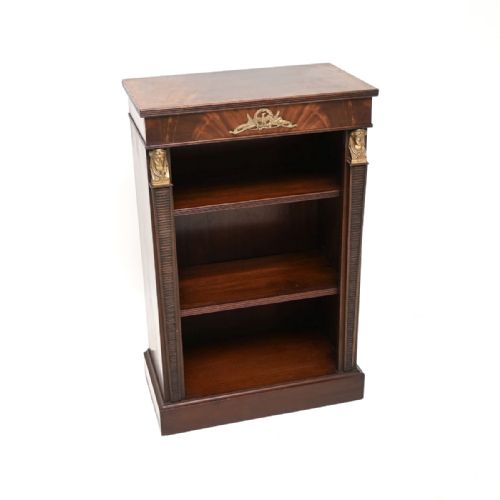
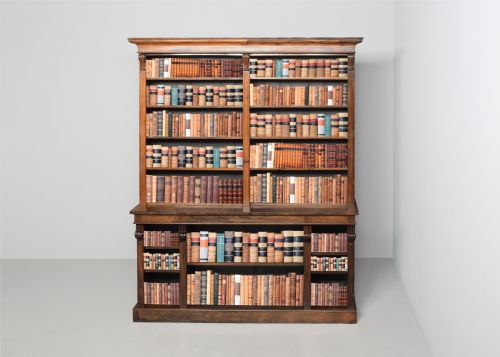
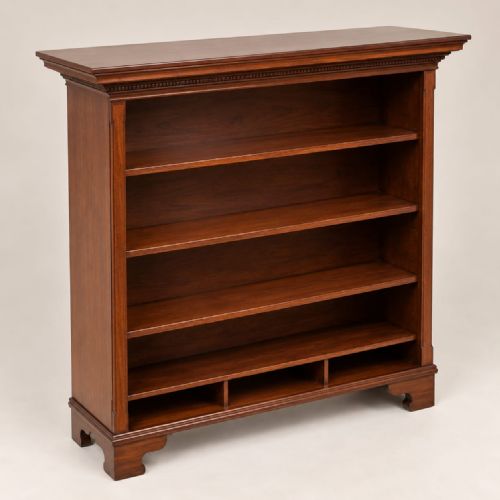

Dark Wood Open Shelving
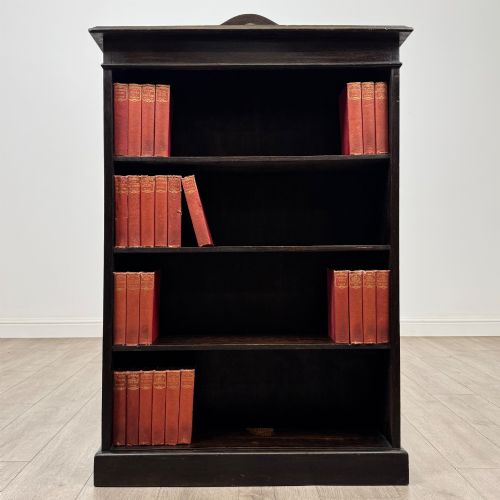
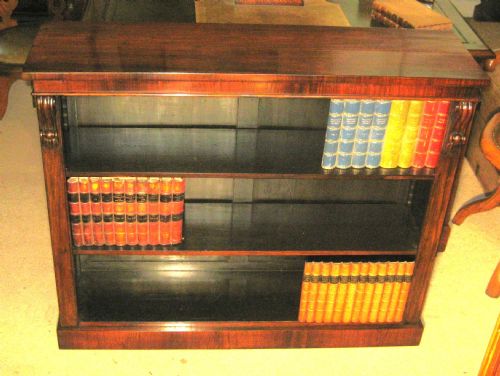
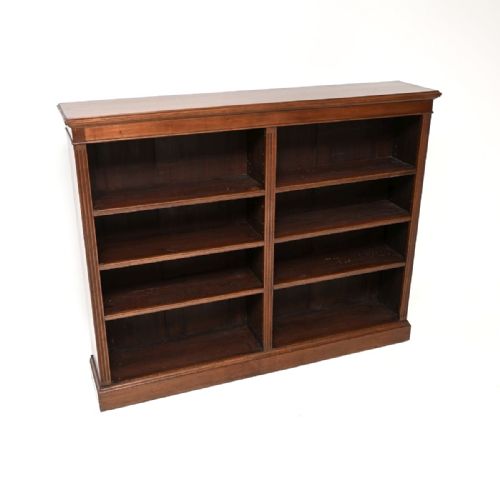
Dark wood open shelving brings practical book storage and display space into a room, combining rich timber grains with clean architectural lines.
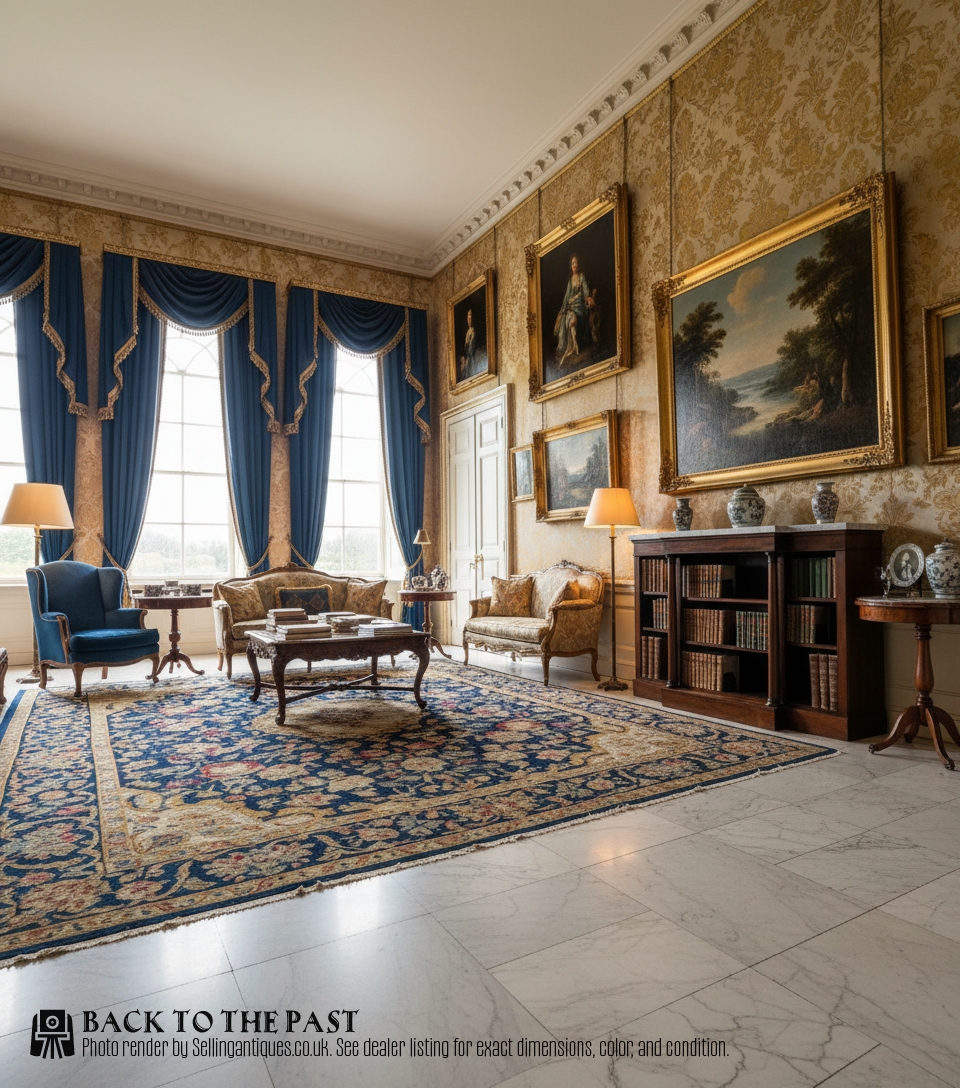
Dark Wood Open Shelving
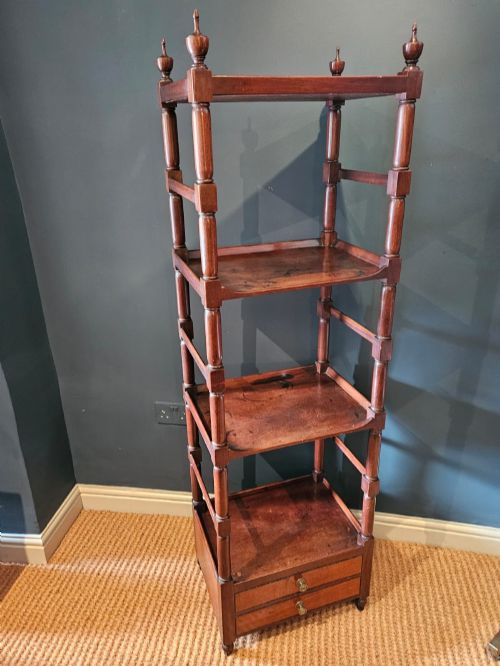
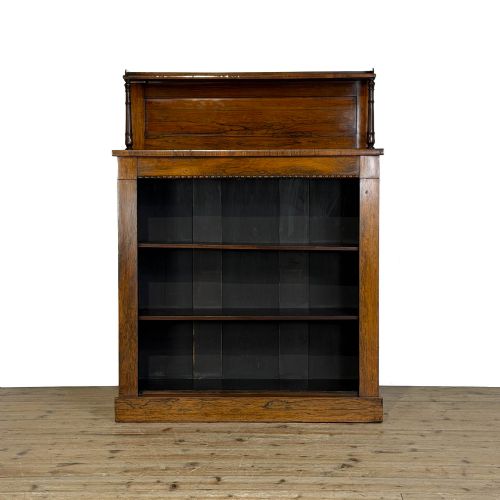
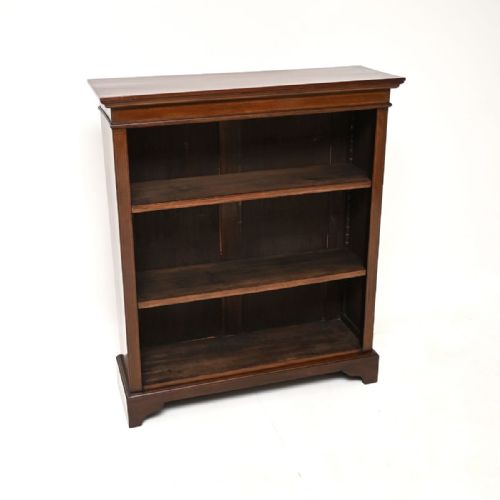
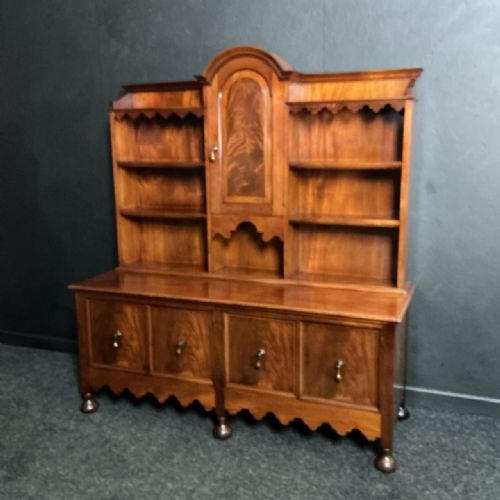
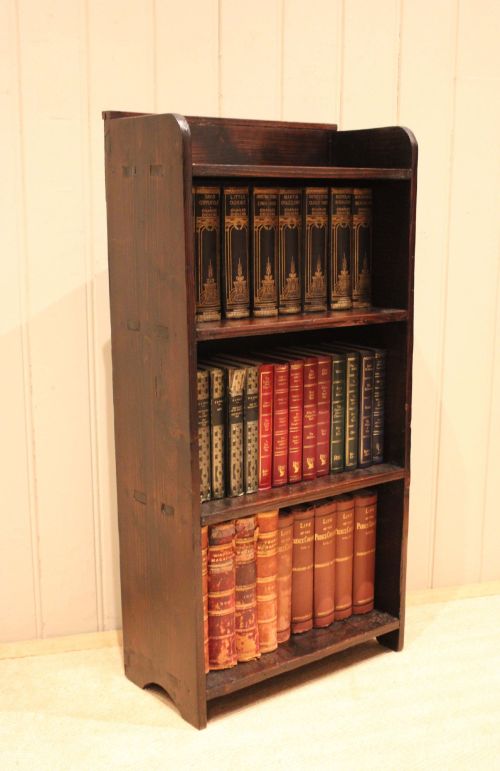
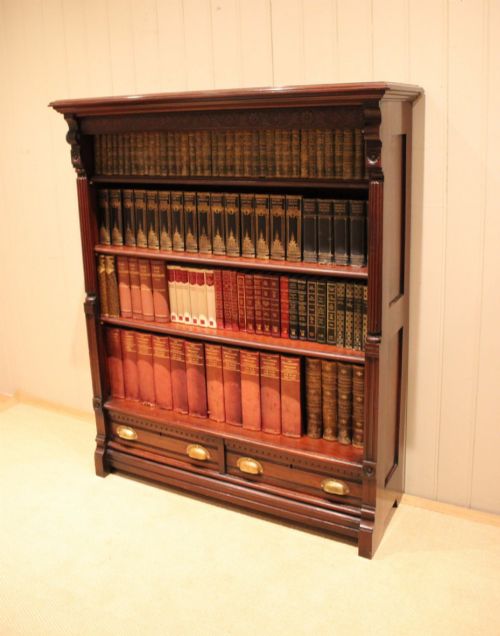
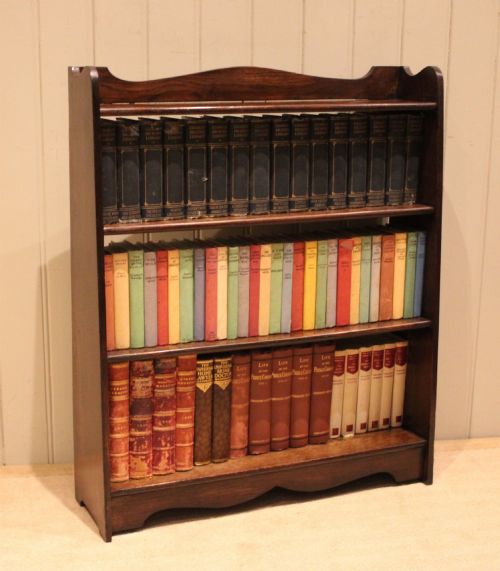
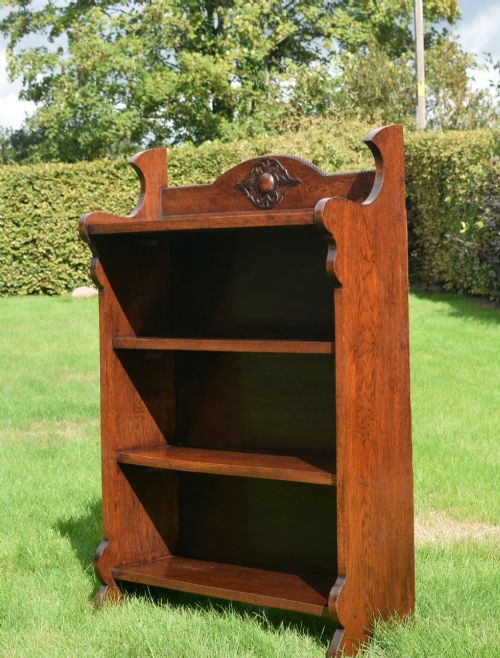
Dark wood open shelving spans bookcase variants, wall shelves, dressers, and what-nots designed to hold books and display objects. These pieces emerge across the nineteenth and early twentieth centuries, drawing on Victorian, Edwardian, Regency, and Arts and Crafts design traditions. A buyer browsing this selection encounters numerous upright bookcases and lower dwarf units constructed without doors.
Makers working within the nineteenth century and the early twentieth century utilise rich timbers to build sturdy storage furniture for libraries and parlours. Pieces range from small rustic items and corner units to large library bookcases fitted with adjustable shelves. The overall inventory reflects traditional British and continental cabinetmaking traditions using dense, dark hardwoods.
Materials and Construction Methods
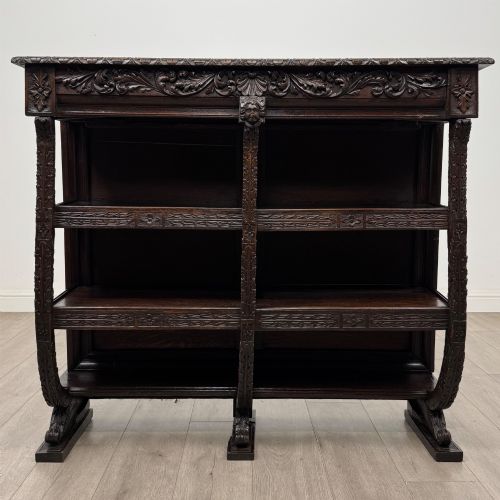
Cabinetmakers build these shelves using dense timbers such as mahogany, oak, rosewood, walnut, and padauk, often highlighting natural grain patterns. Many examples incorporate brass fittings, carved details, inlaid satinwood, and beaded edges to frame the open storage bays. Some pieces feature ebonised finishes or carved motifs like the green man, adding sculptural depth to the timber frame.
Joinery methods focus on stability, supporting heavy rows of books across tiered shelves and waterfall designs. Open backs appear alongside solid panelled backs, while adjustable shelf mechanisms allow owners to alter interior heights. Workshops shape the timber through turning, carving, and precise assembly to ensure long-term durability.
Dark Wood Open Shelving Retail Price Guide 2026
Typical asking prices for dark wood open shelving among the pieces listed under this phrase on Sellingantiques today, from the lower quarter to the upper quarter. They describe what is for sale here now, not the wider market.
Keep watch for the occasional ebonised green man peering out from the carved woodwork.
Distinctions in Build and Material Quality
Quality rests upon the selection of timber figures, such as figured mahogany or rich grain rosewood, and the crispness of any carved ornament. Superior pieces display thoughtful proportions, balanced inlays, and robust internal mechanisms for adjustable shelving rather than rigid, fixed tiers.
Finer examples maintain structural integrity across large library proportions without sagging under the weight of books. The refinement of the edge moulding, the quality of the brass hardware, and the depth of the polish distinguish standard utilitarian furniture from exceptional cabinet work.
The Dark Wood Open Shelving Glossary
- What-Not
- A multi-tiered open shelving unit designed for displaying small ornaments or books. These pieces typically feature several open shelves supported by slender uprights.
- Waterfall Bookcase
- A graduated open shelving unit where each tier steps back progressively from the bottom to the top. This profile creates a cascading effect popular in Regency design.
- Inlay
- A decorative technique where contrasting woods or materials like satinwood are set flush into the primary timber surface. This creates geometric or botanical patterns across the panels.
- Adjustable Shelves
- Shelving boards that can be moved to different heights using internal ratchets, pins, or side grooves. This adaptability accommodates books of varying sizes.
- Ebonised
- Timber treated with a dark stain or finish to imitate ebony. This process gives the wood a deep, uniform black appearance often seen on Victorian carved furniture.
Dark Wood Open Shelving: Frequently Asked Questions
What rooms suit dark wood open shelving?
These bookcases and wall units fit naturally into studies, living rooms, and libraries where books and decorative objects require accessible display space. The dark timber tones anchor a room's colour scheme while offering practical vertical storage.
Smaller dwarf units and corner shelves work well in compact spaces, whereas large library bookcases demand wider wall expanses to balance their visual weight.
How do I identify a Victorian open bookcase?
Victorian examples frequently feature dense mahogany, walnut, or rosewood construction, often accompanied by carved mouldings or adjustable shelf mechanisms. Stylistic cues draw from Gothic revivals, neoclassical influences, or heavy architectural cornices.
Examination of the backboards and shelf supports reveals period-appropriate timber preparation and hand-cut joinery methods characteristic of nineteenth-century workshops.
Are shelves usually fixed or adjustable?
Many of the listed bookcases include adjustable shelves, allowing owners to customise the vertical spacing for different book formats. This flexibility was particularly valued in nineteenth-century libraries.
Some smaller or rustic pieces retain fixed shelves secured directly into the side panels, reflecting simpler utilitarian construction.
How do I care for antique dark wood?
Protect the timber by keeping pieces away from direct sunlight and sudden temperature changes, which can cause wood to dry out or split. Regular dusting with a soft, dry cloth preserves the polished finish.
Applying a traditional beeswax polish occasionally helps nourish the wood grain and maintains the natural lustre without building up heavy chemical residues.