






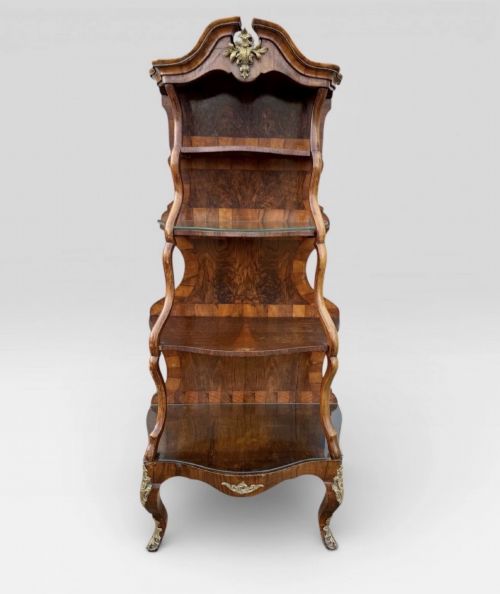
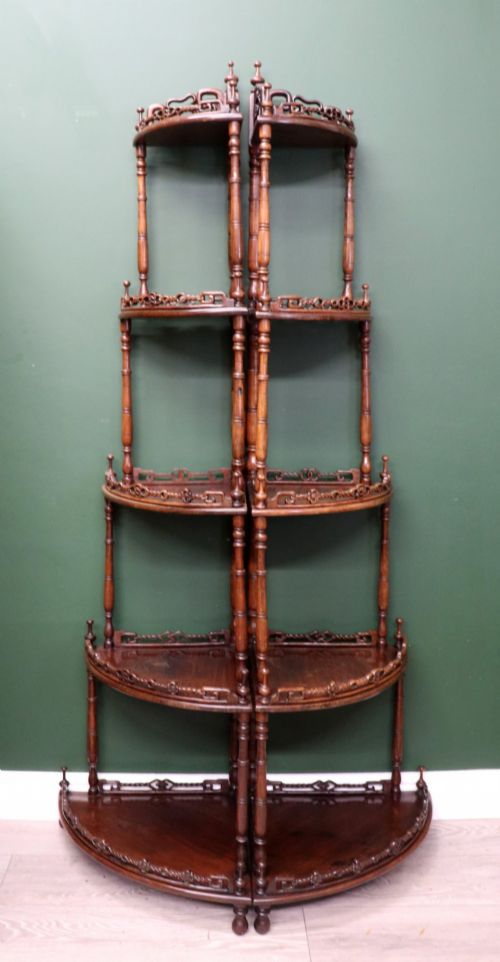
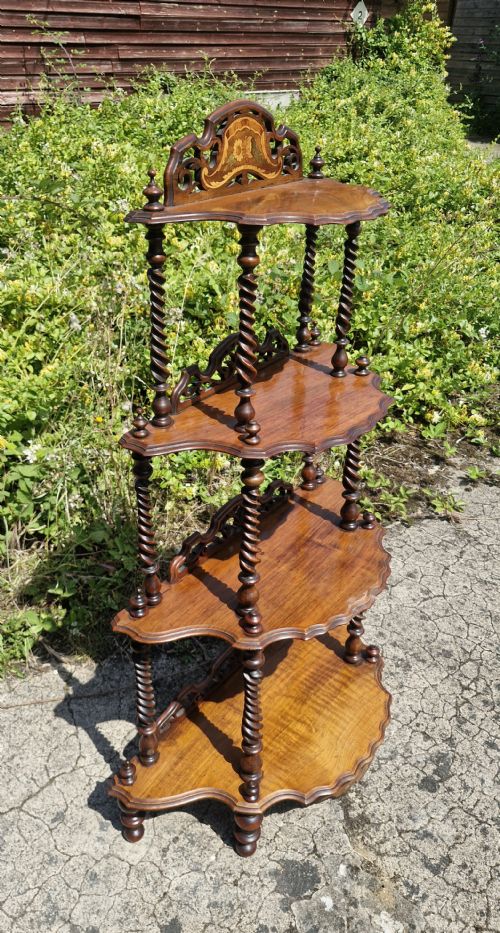
Victorian Walnut Etagere
When you search for a victorian walnut etagere, you find multi-tiered open display furniture designed to show off ornaments and precious objects in nineteenth-century drawing rooms.
Victorian Walnut Etagere
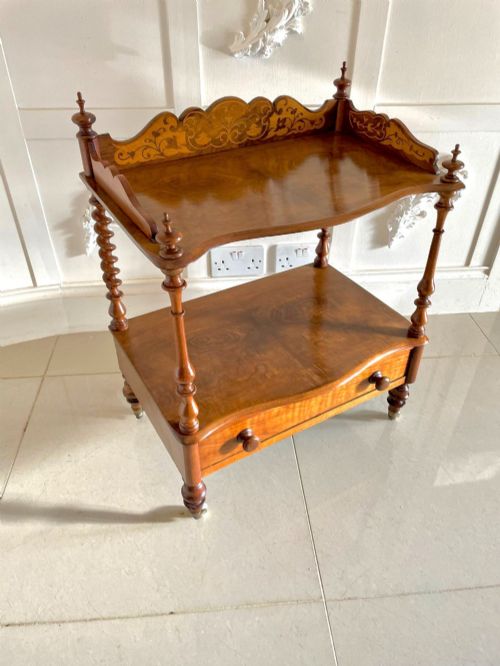
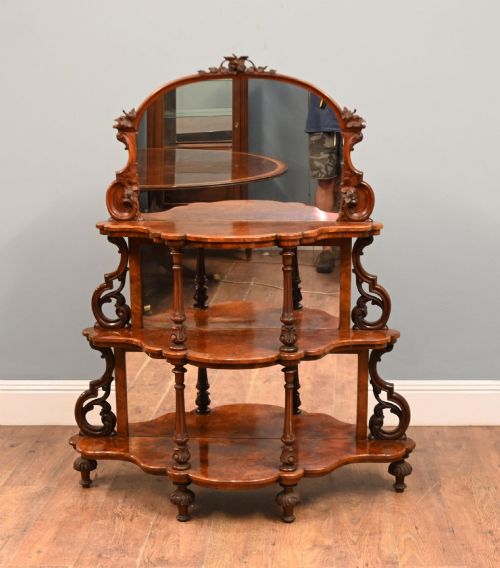
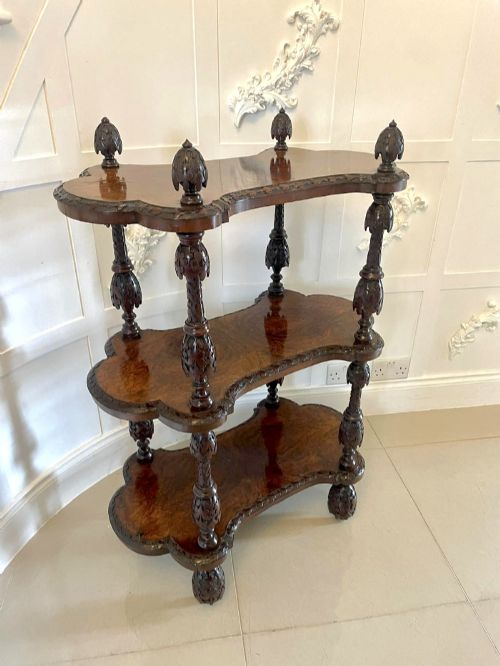
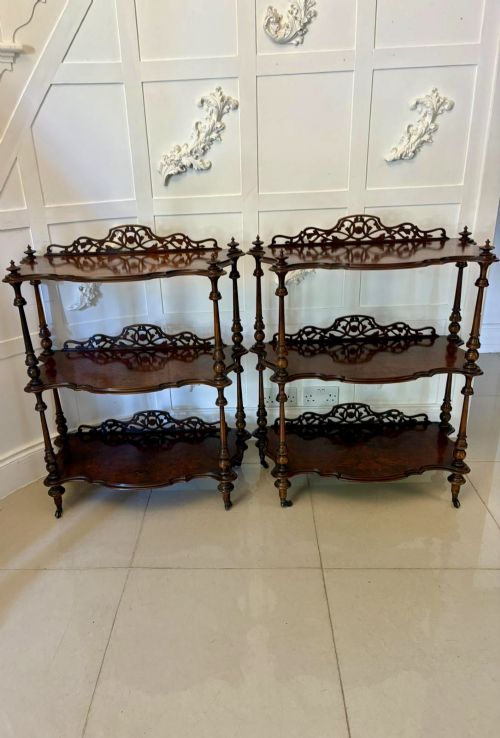
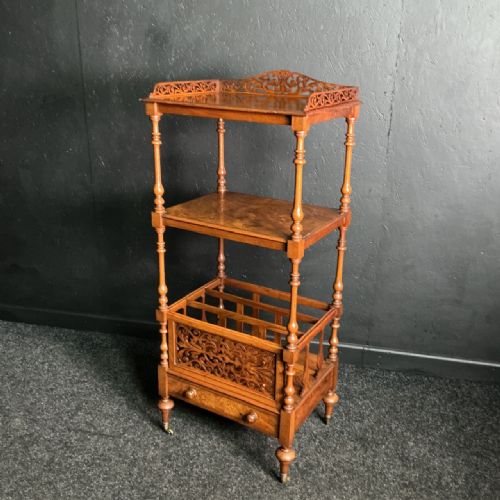
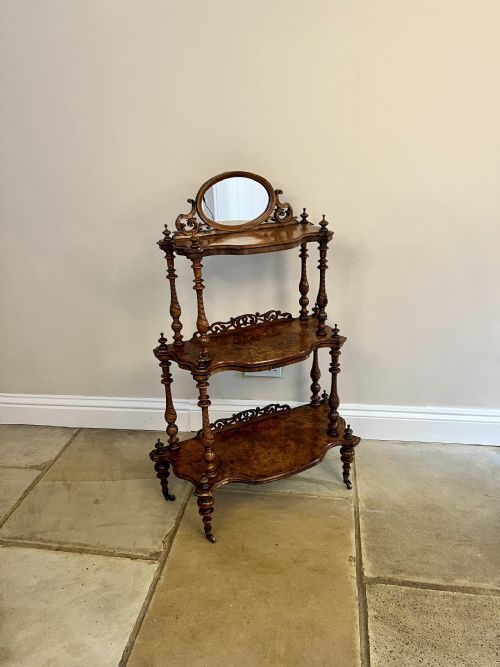
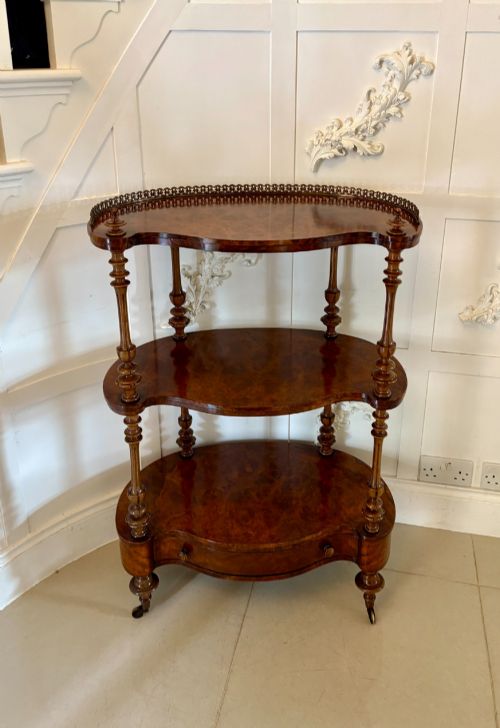
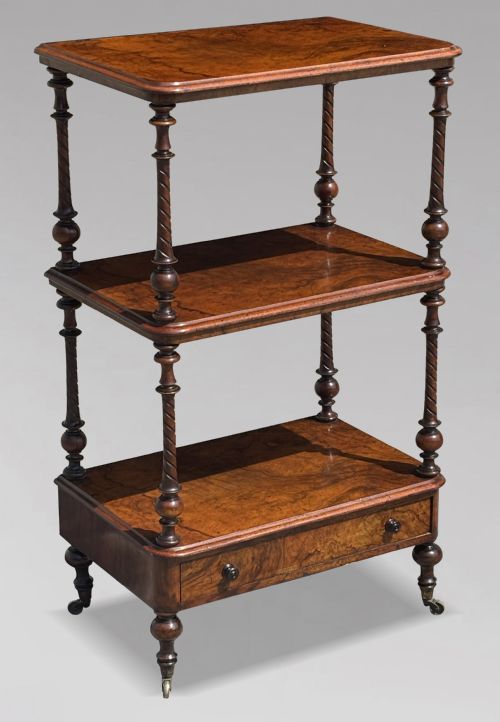
A victorian walnut etagere typically takes the form of a freestanding multi-tiered display stand, a corner shelf unit, or a three-tier whatnot with delicate turned supports. These pieces emerge predominantly from the Victorian era, spanning the mid to late nineteenth century.
Makers also produced wall-mounted versions and combination pieces incorporating small cabinets, music storage, or lower drawers. The evidence shows these multi-purpose display units appearing in various shapes including serpentine, demi-lune, kidney, and standard rectangular forms.
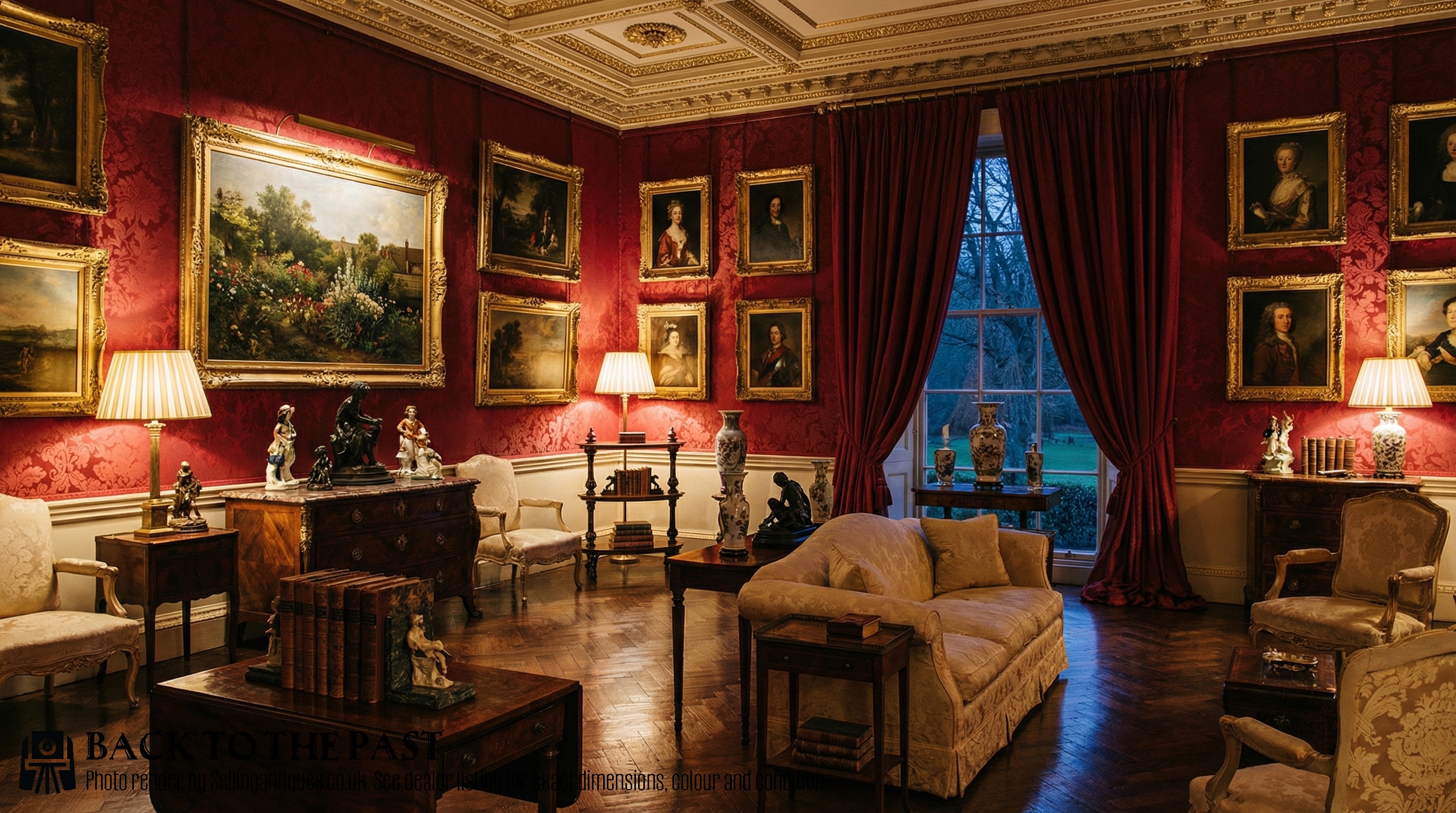
How they were made
Cabinet makers built these pieces using solid walnut and applied figured burr walnut veneers to the visible tier surfaces to create rich, swirling grain patterns. Workshops integrated marquetry inlay, brass mounts, ormolu, and glass to elevate the decorative scheme of the woodwork.
Structural uprights often utilise barley twist columns or turned upright spindles to support the graduating tiers. Selected examples incorporate fine marquetry panels using contrasting light woods such as satinwood and ebony set into the dark walnut ground.
Victorian Walnut Etagere Retail Price Guide 2026
Typical asking prices for victorian walnut etagere among the pieces listed under this phrase on Sellingantiques today, from the lower quarter to the upper quarter. They describe what is for sale here now, not the wider market.
Listings show walnut etageres appearing predominantly from the Victorian period, with corner stands and three-tier formats dominating the surviving forms.
What varies in quality
Quality rests in the selection of the burr walnut veneer and the crispness of the applied marquetry work rather than sheer size. Finer pieces display dense, highly figured grain patterns across every tier and shelf rather than plain timber.
The sophistication of the structural joinery and the finesse of the turned uprights or brass mounts define the upper tier of the range. Exhibition pieces and items attributed to notable workshops show superior carving on supports and precise, flush inlay.
Gabriel Viardot·Gillows
The Victorian Walnut Etagere Glossary
- Etagere
- A piece of furniture consisting of a set of open shelves for displaying ornaments. Originating in France, these multi-tiered stands became popular in British drawing rooms during the Victorian period.
- Whatnot
- An alternative term for an etagere, used widely in nineteenth-century English households. These shelving units were designed for holding books, china, and decorative objects.
- Burr Walnut
- A specialised wood cut from the abnormal growth of a walnut tree where the grain swirls in intricate patterns. Cabinet makers prized this highly decorative veneer for principal display surfaces.
- Marquetry
- Decorative inlay work where thin slices of various woods are fitted into a veneer ground to form pictorial or geometric designs. This technique frequently frames the top shelves of better etageres.
- Ormolu
- Gilded bronze mounts applied to furniture corners, feet, and column capitals. Makers utilised these metallic ornaments to accent the walnut woodwork in the French manner.
Victorian Walnut Etagere: Frequently Asked Questions
What is an etagere used for?
These pieces served as open display furniture in Victorian drawing rooms and reception spaces. Owners placed small ornaments, porcelain, and books upon the graduating shelves.
They allowed households to exhibit their collected treasures and curiosities across multiple accessible tiers. Some variants also incorporated small drawers or cabinets for enclosed storage.
How do I tell a whatnot from an etagere?
The terms are largely interchangeable in nineteenth-century furniture records, though etagere often implies a lighter French influence. Both describe multi-tiered open shelving units designed for display.
Looking at the listings reveals that makers and retailers used both names for identical three-tier and corner shelf forms. Regional preferences dictated whether a workshop labeled the piece a whatnot or an etagere.
Where should I place an etagere at home?
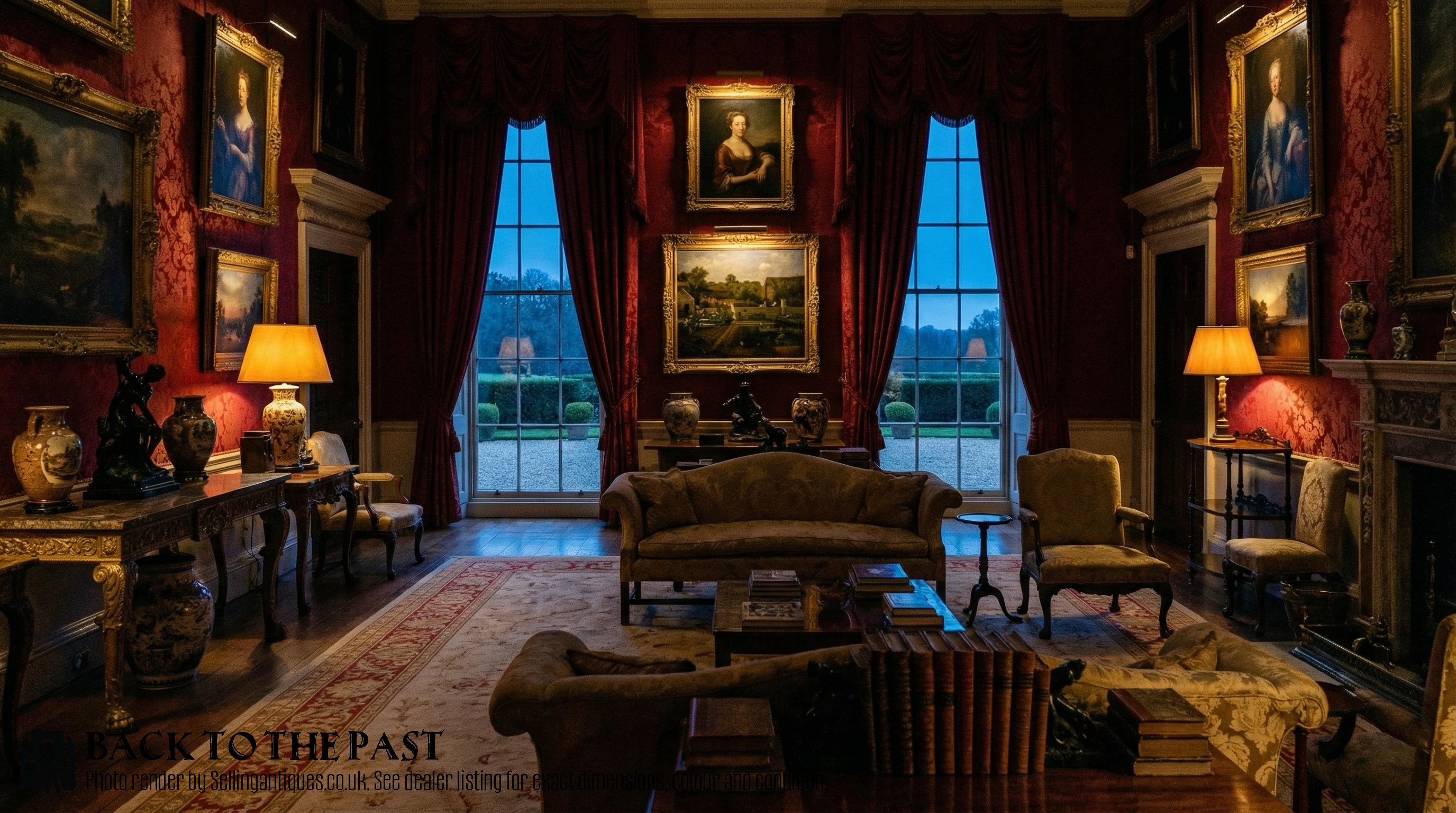
Freestanding etageres suit drawing rooms or living spaces where they can be viewed from multiple angles. Corner variants fit neatly into unused room angles to maximise display space without blocking walkways.
Wall-mounted versions work well above side tables or low cabinets where floor space is limited. Care should be taken to avoid placing burr walnut near direct heat sources or strong sunlight.