



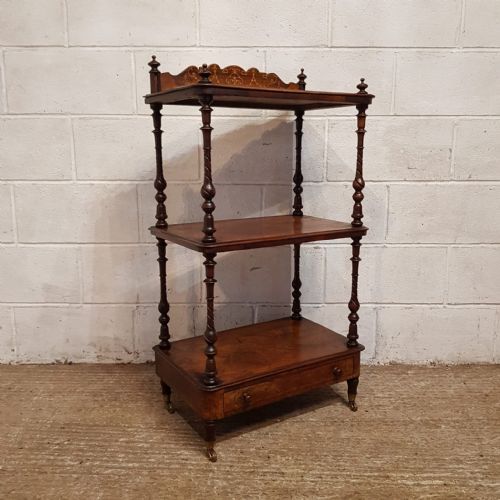


Walnut Corner Shelf
A walnut corner shelf brings practical display space into unused angles, combining rich timber figure with tiered utility for small rooms.
Walnut Corner Shelf
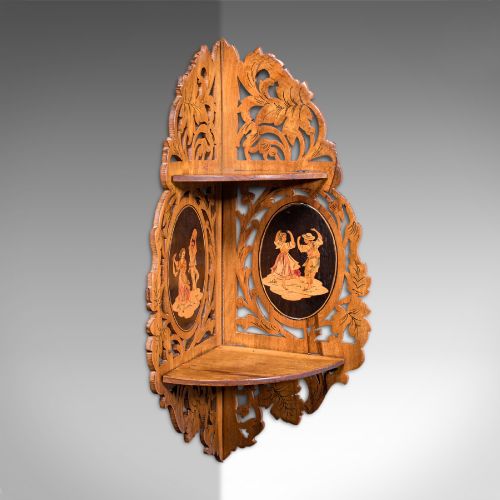
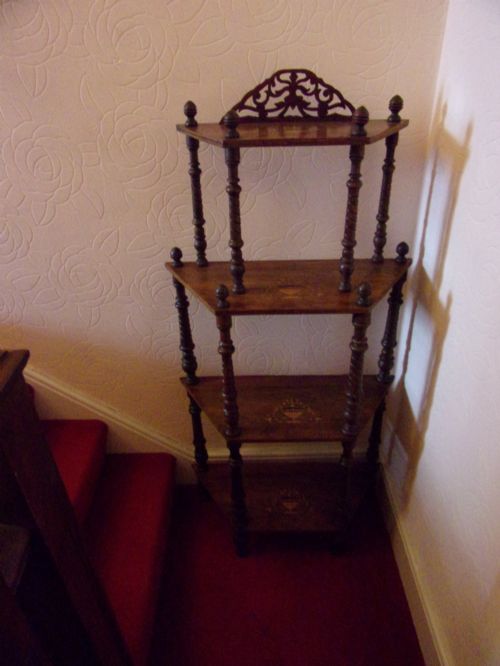
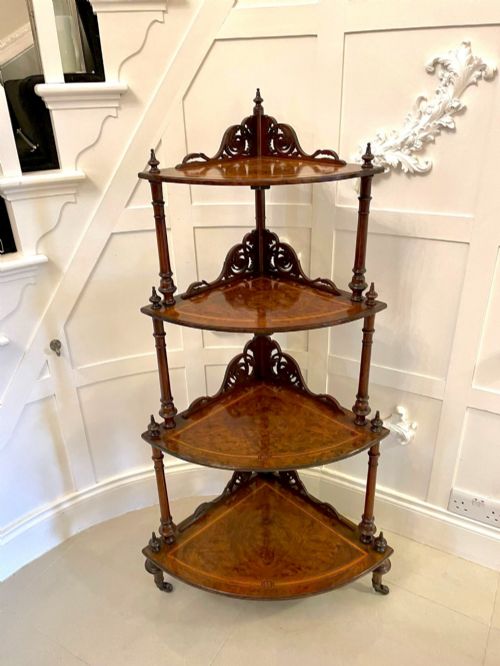
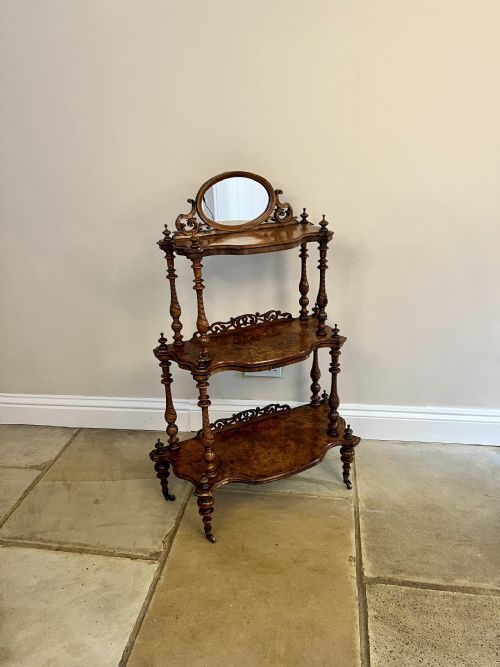
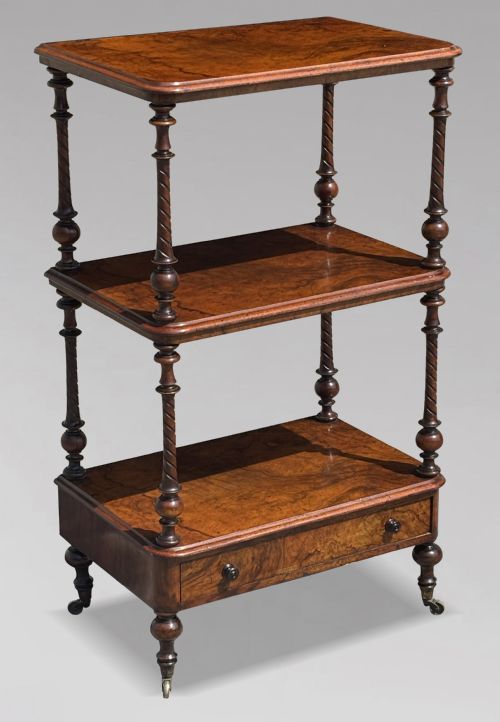
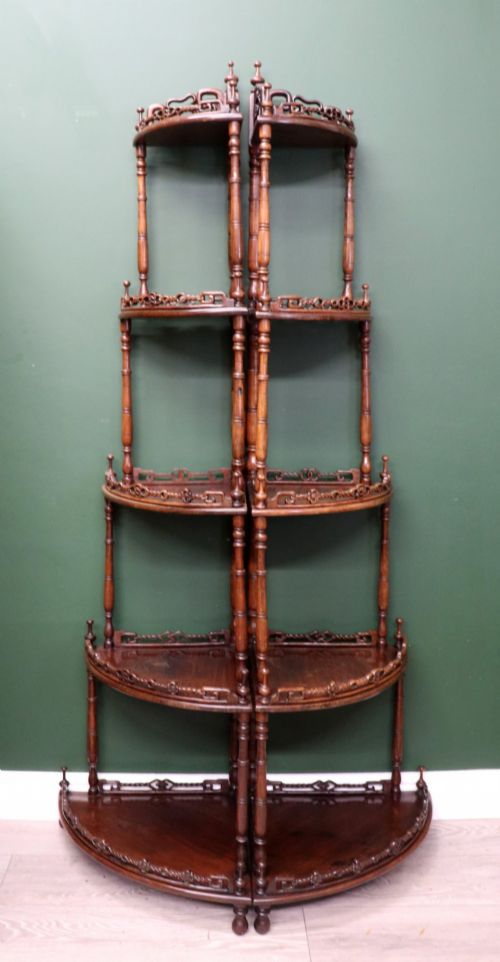
A walnut corner shelf is an architectural piece designed to fit neatly into room junctions, turning dead space into functional display. The pieces met on this page span the Victorian and Edwardian eras, predominantly taking the form of corner whatnots and multi-tiered shelving units.
Makers utilised rich timber grains to draw the eye upwards through graduated tiers supported by turned columns or carved uprights. While some examples stand freely on the floor, others mount directly to the wall as hanging shelves or corner cabinets.
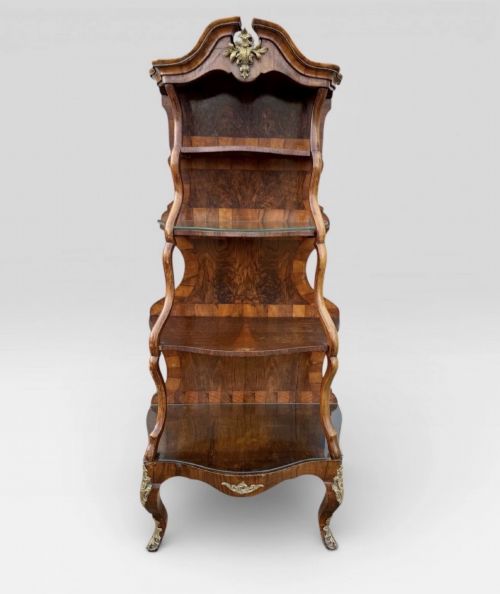
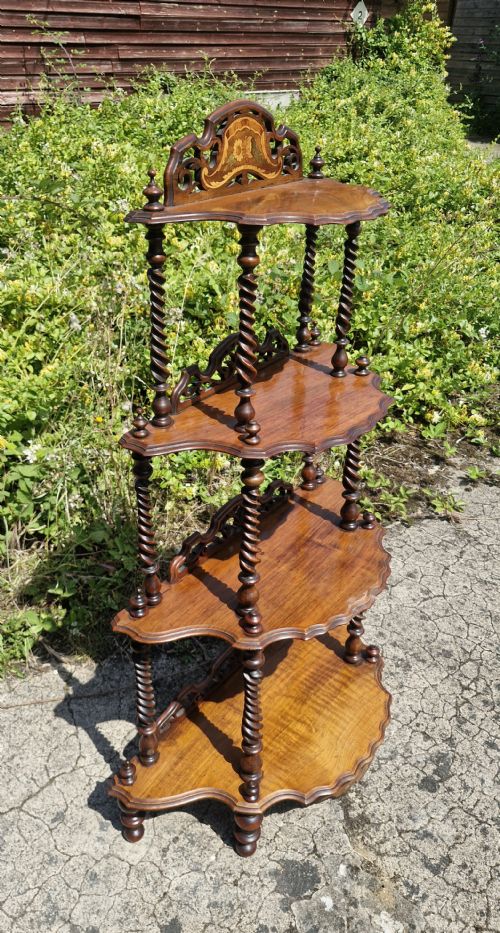
The dominant aesthetic draws heavily from Victorian and Aesthetic Movement design, frequently incorporating decorative inlays alongside curved serpentine fronts. These functional stands served historically to display porcelain, small books and decorative objects in domestic drawing rooms.
Materials and construction
Cabinet makers relied primarily on solid walnut and highly figured burr walnut veneers applied to secondary woods such as mahogany. Timber selection determined the visual impact of the shelves, with burr veneers offering dense, swirling grain patterns across the main display surfaces.
Inlaid decoration forms a defining characteristic of many pieces, utilising boxwood and other light woods to create delicate marquetry patterns. Structural stability depends upon precise joinery, with turned barley twist supports, brass fittings and carved brackets securing the individual tiers together.
Walnut Corner Shelf Retail Price Guide 2026
Typical asking prices for walnut corner shelf among the pieces listed under this phrase on Sellingantiques today, from the lower quarter to the upper quarter. They describe what is for sale here now, not the wider market.
Listings feature walnut, mahogany, and boxwood inlay alongside brass and glass elements across Victorian and Edwardian periods.
Distinctions in quality
Quality rests heavily on the choice of veneer and the crispness of the timber carving rather than sheer scale alone. Exhibition pieces display meticulously matched burr walnut figures and intricate boxwood stringing that elevates them far beyond standard utility furniture.
Constructional rigour separates superior tiers from lesser examples, seen in the tight fit of corner joints and the stability of turned uprights. Pieces featuring sculptural elements like hollow barley twist columns or applied gilt metal mounts indicate higher workshop ambition.
Liberty & Co.
The Walnut Corner Shelf Glossary
- Burr walnut
- A prized timber cut from the gnarled growths of walnut trees, yielding complex, swirling grain patterns. It forms the decorative surface layer on finer Victorian display furniture.
- Whatnot
- A set of open shelves designed for displaying ornaments and small objects. These multi-tiered stands became central to Victorian interior decoration.
- Marquetry
- The art of applying decorative veneer pieces to a structure to form geometric or floral designs. Boxwood is frequently used for this contrasting inlay work.
- Serpentine
- A curved shape resembling a snake's movement, featuring a convex centre flanked by concave sides. This profile softens the rigid angles typical of corner furniture.
- Demi-lune
- A half-moon shape used for table and console tops designed to sit flat against a wall. This profile appears on several display console pieces in the collection.
Walnut Corner Shelf: Frequently Asked Questions
What is a walnut corner shelf used for?
These tiered stands provide vertical display space specifically engineered to occupy unused room corners without obstructing pathways.
Historically, households utilised them to exhibit ceramics, glassware and decorative ornaments within principal reception rooms.
How do I date a Victorian walnut whatnot?
Dating relies on observing structural characteristics, timber choices and decorative motifs such as boxwood inlay or barley twist columns.
Mid-19th-century examples often favour dense burr walnut veneers, while later Edwardian pieces introduce lighter, more restrained framing.
Are these shelves sturdy enough for heavy books?
Most tier structures are built to support decorative porcelain, small clocks and framed photographs rather than heavy library volumes.
The graduated design places the deepest shelf at the bottom for stability, yet wall-mounted variants require secure fixings.