




Antique Dessert Trolley
An antique dessert trolley serves as a grand tiered stage for formal dining, bringing rich timbers and original castors to the modern dining room.
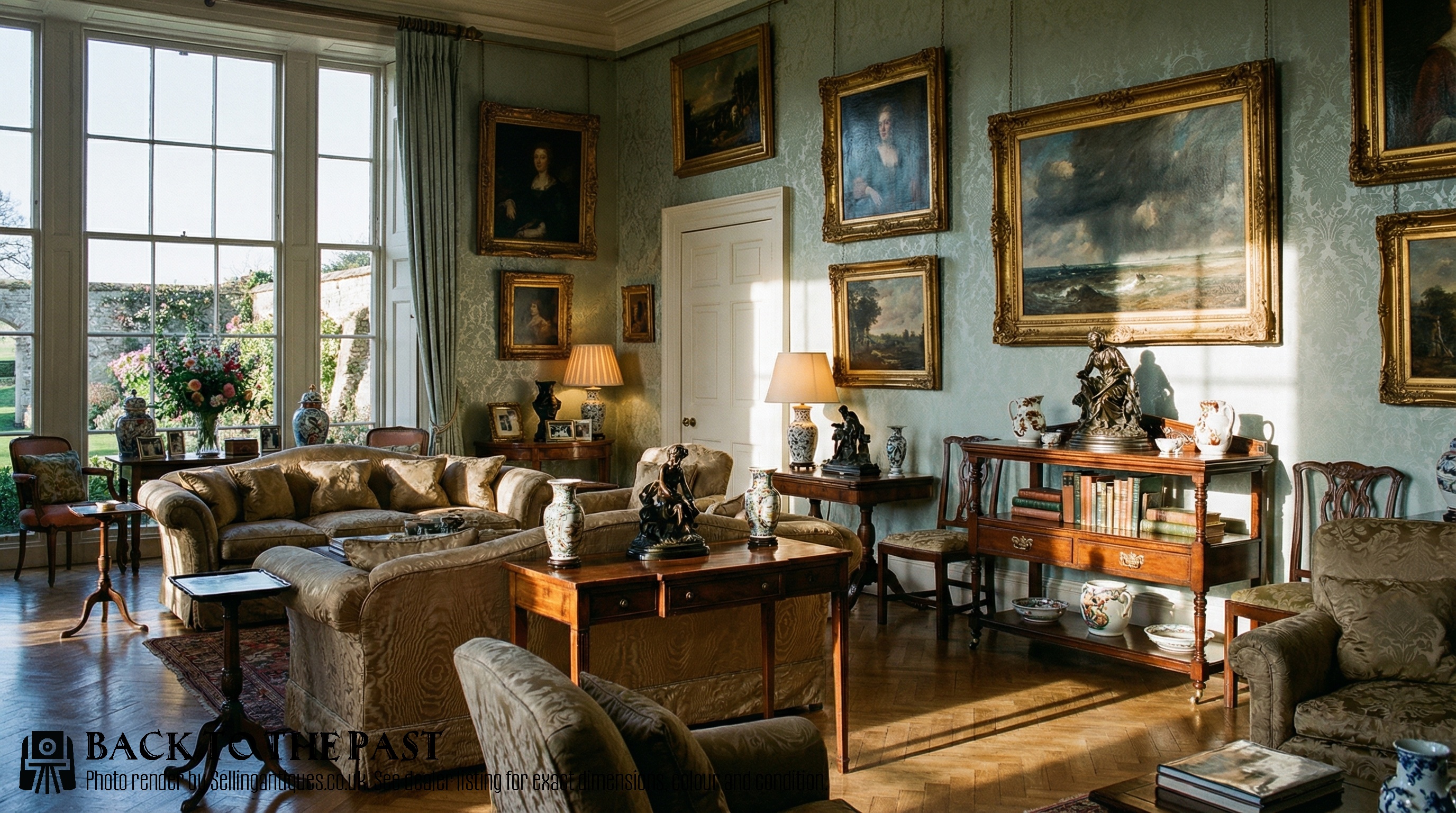
Antique Dessert Trolley
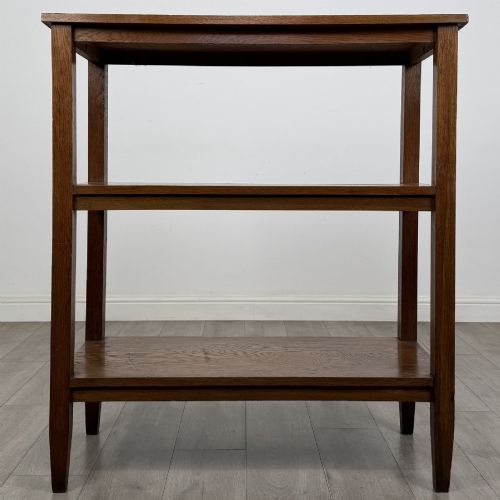
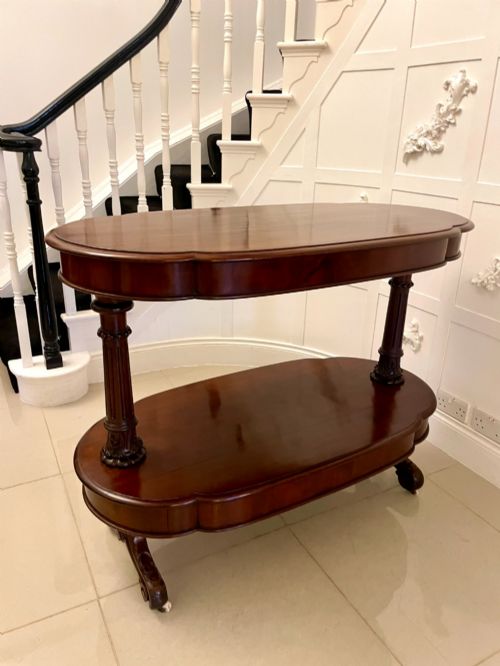
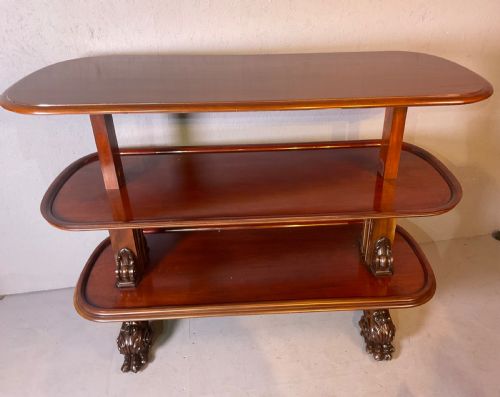
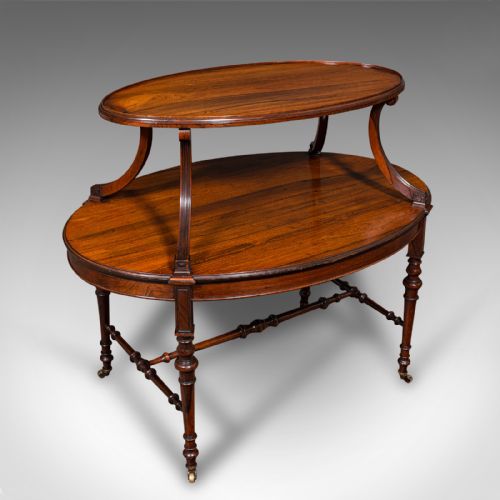
When you search for an antique dessert trolley, you are looking at substantial multi-tiered pieces designed to present food and drink in a dining space. The versions most commonly met on this page are Victorian mahogany and walnut three-tier dumb waiters, often fitted with original castors for easy movement across the floor.
Makers and cabinet makers of the nineteenth century built these servers in various forms, including metamorphic designs and dual-tier serving tables. They draw on Regency styles and later Victorian aesthetics, utilising rich woods like amboyna veneer, rosewood, and carved oak.
These serving tables and tiered stands act as both functional furniture and striking focal points. Their presence reflects the structured dining habits of the Victorian and Edwardian eras, where service required mobility and ample display space.
How they were made
Cabinet makers constructed these pieces primarily from dense hardwoods like mahogany and walnut, frequently applying amboyna veneer or ebonised wood for contrast. Timber selection dictated both the weight and the visual depth of each tier.
Workshops integrated functional hardware directly into the design, mounting heavy timber structures on durable brass castors. Surfaces often received carved details or parcel gilt highlights, balancing structural integrity with decorative polish.
Antique Dessert Trolley Retail Price Guide 2026
Typical asking prices for dessert trolley among the pieces listed under this phrase on Sellingantiques today, from the lower quarter to the upper quarter. They describe what is for sale here now, not the wider market.
Listings feature items built from mahogany, walnut, amboyna veneer, and oak across the Victorian and Regency periods.
What varies in quality
The distinction between a standard serving piece and a superior example lies in the choice of timber and the complexity of the tiers. Pieces featuring finely grained amboyna veneer or metamorphic mechanisms stand apart from simpler domestic stands.
The retention of original elements, such as brass castors and uncompromised carved woodwork, defines the standard of survival. Finer workshops invested greater labour in the joinery of multi-tiered columns, ensuring the piece remained stable under heavy service.
Maple & Co
The Antique Dessert Trolley Glossary
- Dumb Waiter
- A multi-tiered serving stand used during meals to hold dishes without the need for constant attendants. These pieces usually feature two or three graduating shelves supported by turned columns.
- Amboyna Veneer
- A decorative wood finish prized for its intricate, swirling grain patterns. It adds a warm, mottled texture to the surface of Victorian serving furniture.
- Metamorphic
- A term describing furniture designed to transform or adjust its configuration for different uses. In serving pieces, this often involves folding or altering tier arrangements.
- Castor
- A small wheel mounted on a swivel assembly at the base of a leg. Original brass examples allow heavy mahogany servers to move smoothly across dining room floors.
Antique Dessert Trolley: Frequently Asked Questions
What is an antique dessert trolley?
An antique dessert trolley is a multi-tiered wooden serving stand from the nineteenth century, built to hold food, wine, or tableware during formal meals.
These pieces typically feature two or three graduating shelves supported by turned wooden columns and mounted on castors.
How were these trolleys used?
Dining rooms utilised these stands as auxiliary surfaces where hosts could place courses or bottles within arm's reach. They reduced the need for servants to be present throughout the entire meal.
By rolling the stand close to the table, guests or hosts could easily access additional plates and dishes.
How do I date a dessert trolley?
Dating relies on examining the timber species, construction methods, and stylistic cues present in the woodwork. Pieces from the Regency period often show lighter neoclassical lines, while Victorian examples lean toward heavier carved mahogany and walnut.
The presence of original brass castors and specific veneer types like amboyna also helps narrow down the decade of production.
Can I use one in a modern home?
These serving stands function well as drinks trolleys, side tables, or display surfaces in contemporary dining rooms and living spaces. Their multi-tiered design provides practical storage while adding historic character to a room.
The inclusion of original castors makes it simple to reposition the piece as needed.