


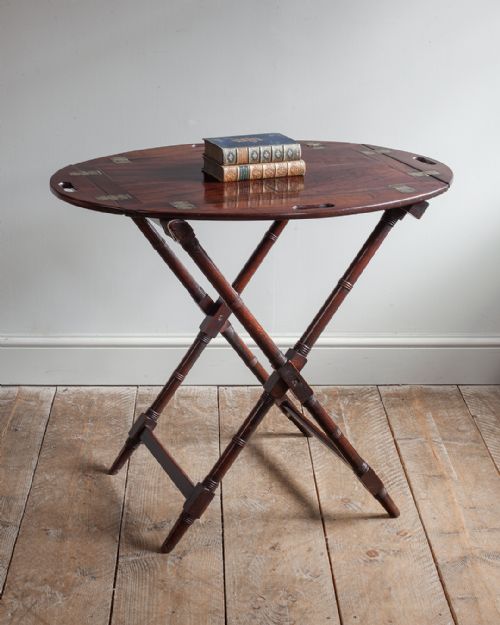
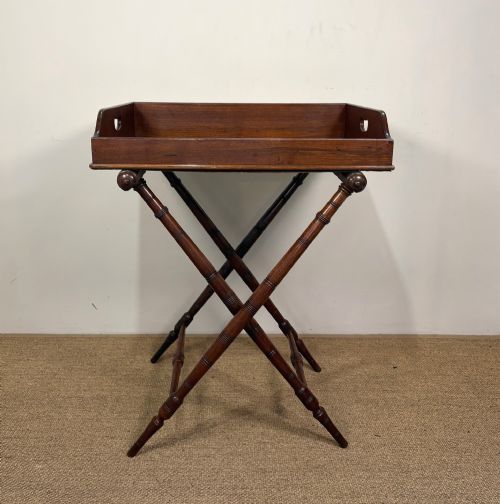
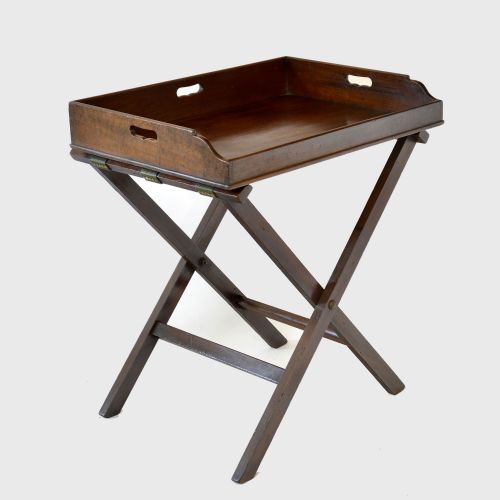
Mahogany Serving Stand
A mahogany serving stand brings architectural presence and tiered practicality to a room, offering the collector versatile dining furniture from past centuries.
Mahogany Serving Stand
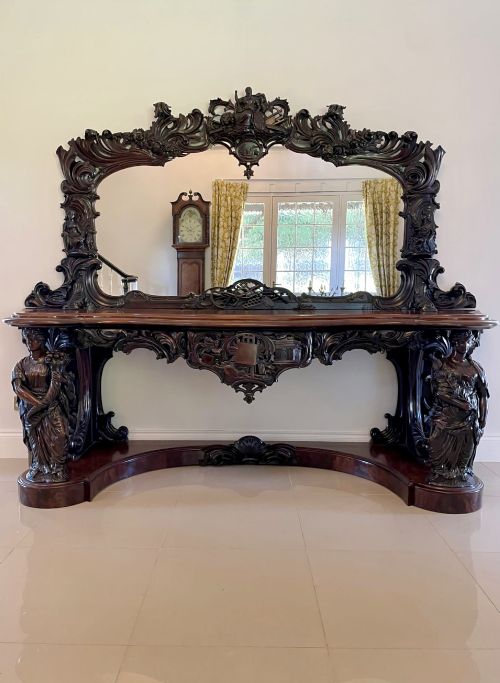
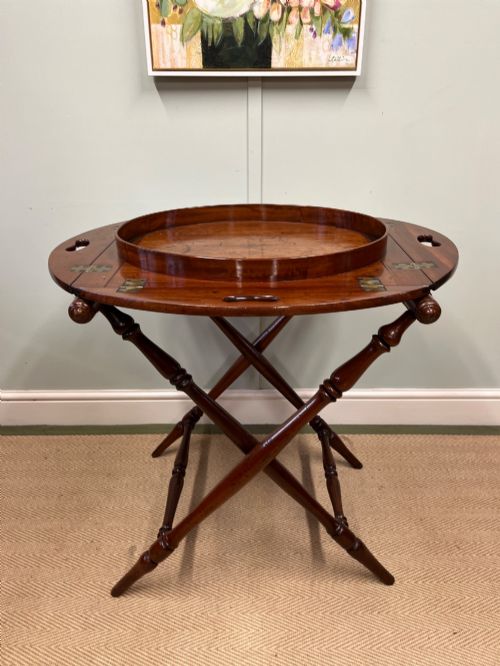
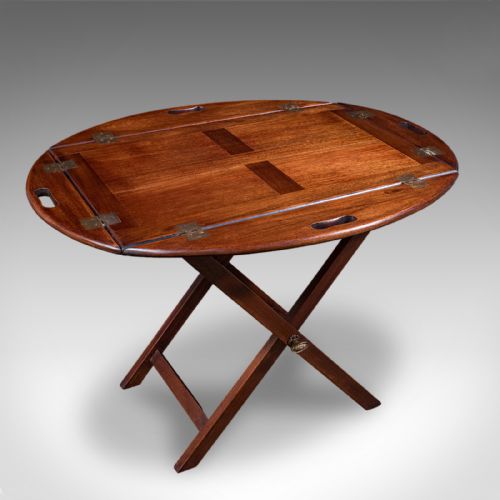
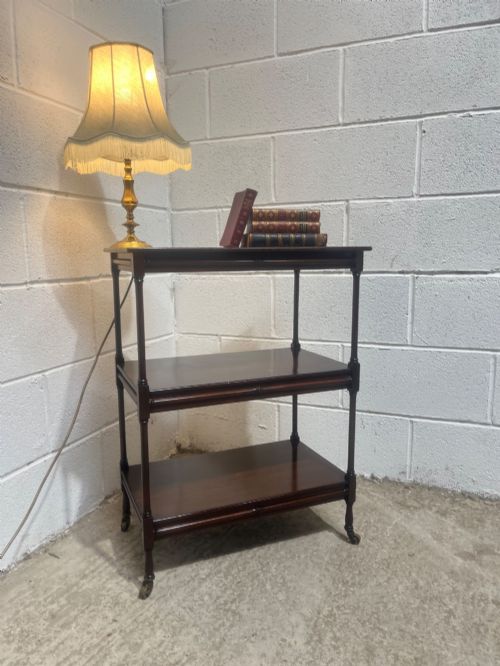
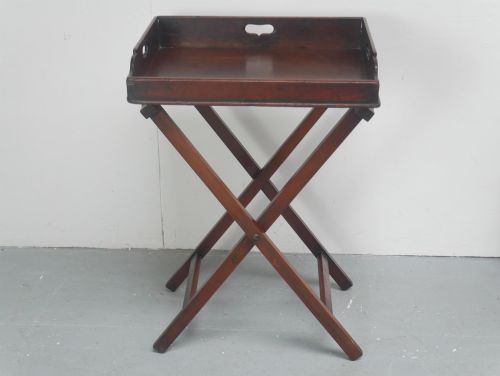
A mahogany serving stand comprises multi-tiered furniture designed for dining and entertaining, appearing in forms such as dumb waiters, butler's trays, and console tables. These pieces trace their origins through the Georgian, Regency, and Victorian periods, reflecting shifting domestic habits in English homes.
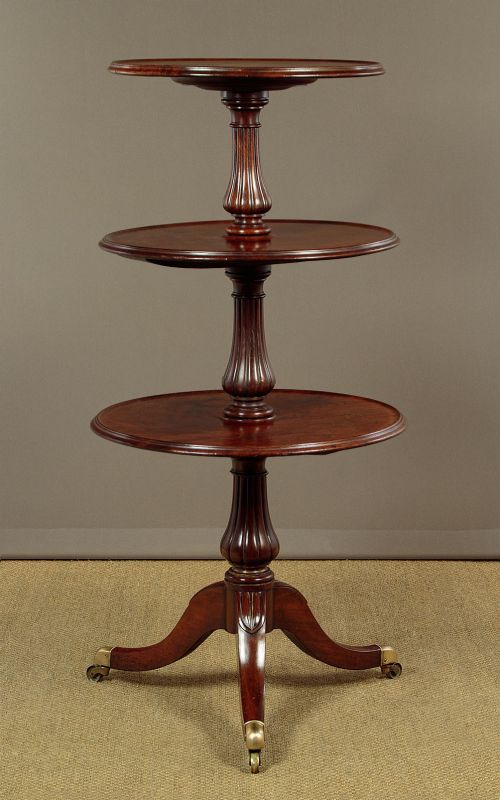
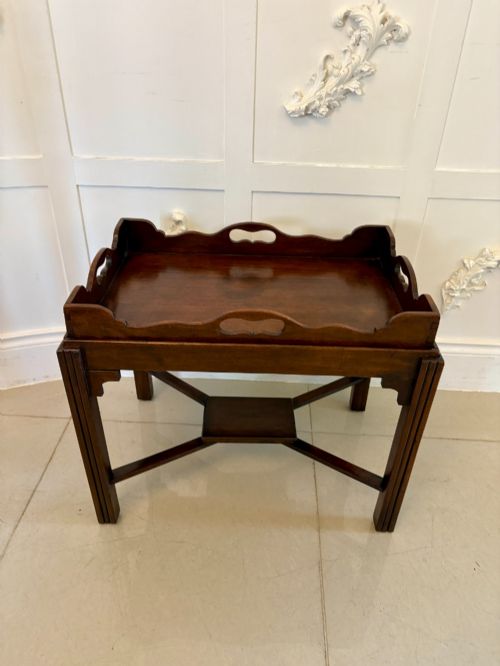
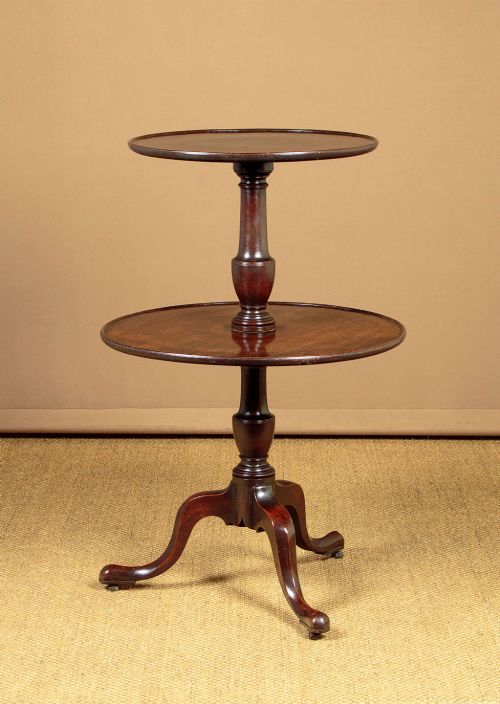
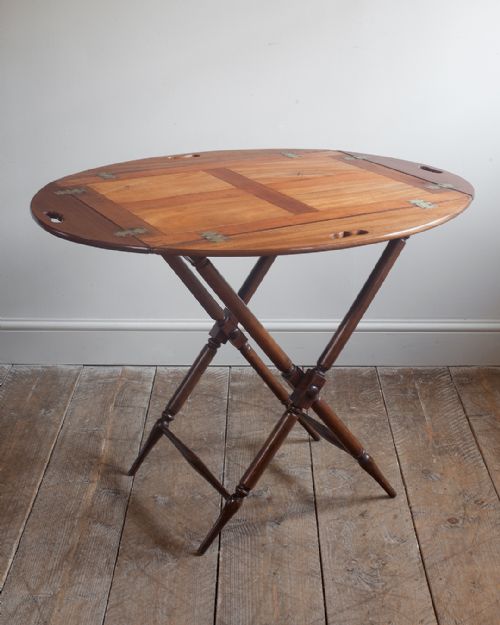
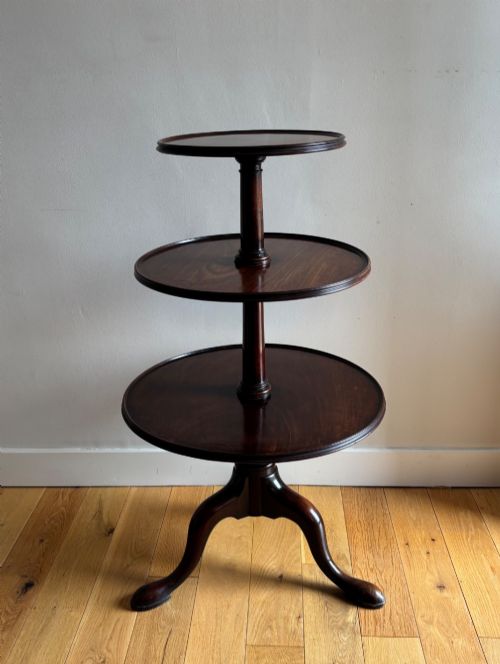
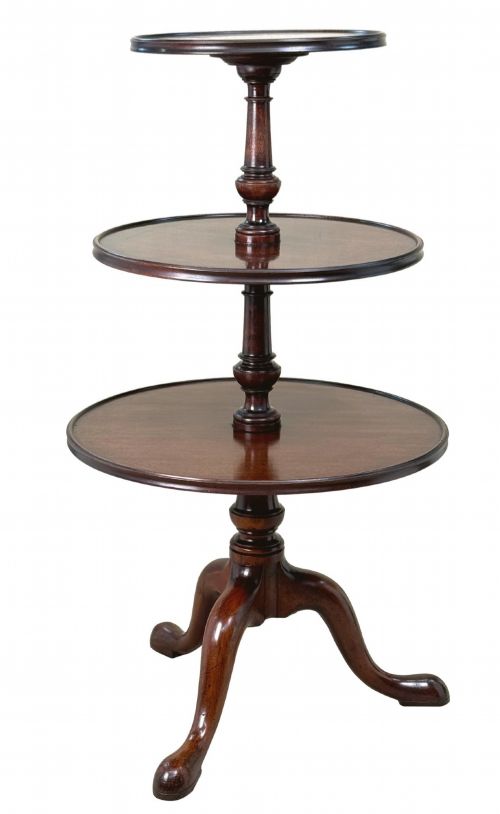
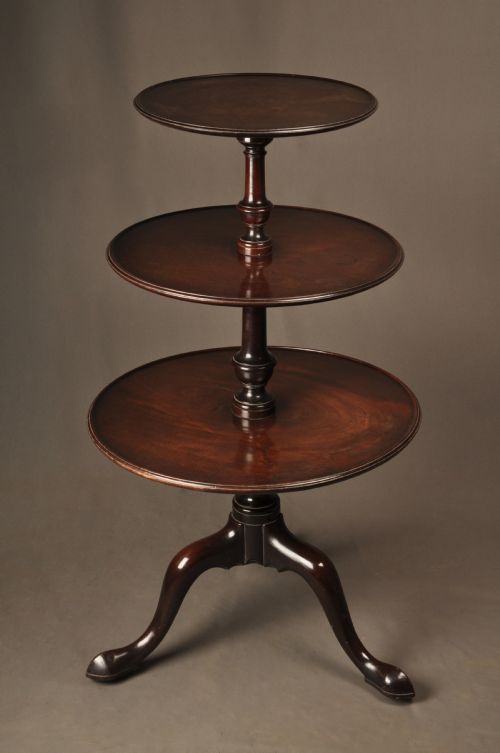
The most common iteration on this page is the tiered dumb waiter, often featuring multiple graduated circular trays revolving on a central column. Buyers also frequently encounter folding tray tables and serving stands with brass fittings, bridging the gap between functional dining aids and decorative occasional tables.
Materials and construction
Cabinet makers utilised dense mahogany, frequently selecting figured timber for prominent surfaces like serving platters and table tops. This hardwood provided the necessary strength for folding mechanisms, tiered supports, and substantial freestanding frames.
Metal components, specifically brass, appear on hinges, castors, and revolving mounts to facilitate movement and adjustment. Joinery techniques varied from traditional framing to hinged folding sides, allowing these stands to adapt to different spaces within the home.
Mahogany Serving Stand Retail Price Guide 2026
Typical asking prices for mahogany serving stand among the pieces listed under this phrase on Sellingantiques today, from the lower quarter to the upper quarter. They describe what is for sale here now, not the wider market.
Listings feature mahogany and brass materials across Georgian, Regency, and Victorian periods.
Distinctions in quality
Superior examples separate themselves through the selection of highly figured mahogany and the precision of mechanical elements like revolving tiers and folding trays. The fluidity of movement in a dumb waiter mechanism indicates the original cabinet maker's skill.
Proportion and scale dictate the visual weight of the piece, with grander three-tier configurations and serpentine shapes demanding greater architectural symmetry. Lesser quality stands rely on simpler turned columns and plain timber without the rich grain variation found in top-tier items.
The Mahogany Serving Stand Glossary
- Dumb waiter
- A tiered freestanding stand with revolving shelves used for holding food or drinks without servant attendance. This form became popular in Georgian dining rooms.
- Regency Revival
- A stylistic movement looking back to the early nineteenth century for design inspiration. Pieces from this era replicate earlier classical proportions.
- Serpentine
- A gently undulating curved line found on the edges of tabletops and serving surfaces. This contour adds visual movement to mahogany furniture.
Mahogany Serving Stand: Frequently Asked Questions
What is a dumb waiter?
A dumb waiter is a tiered serving stand featuring multiple revolving trays stacked vertically on a central column. It allowed diners to access food and wine independently during meals.
These pieces typically sat beside the dining table in Georgian and Regency interiors. Their rotating tiers made passing dishes easy without requiring servants in the room.
How were serving stands used?
Serving stands functioned as auxiliary furniture for holding dishes, glassware, and decanters during large meals. They kept the main dining table clear of clutter.
Later Victorian and Edwardian examples often incorporated detachable trays or glass inserts for serving drinks. Folding versions allowed homeowners to store the stand away when not entertaining.
How do I date a mahogany stand?
Dating relies on observing the stylistic markers of periods such as Georgian, Regency, and Victorian. Turned columns, bracket feet, and brass fittings provide key chronological clues.
Earlier pieces from the Georgian era often showcase heavier mahogany framing and simpler revolving mechanisms. Later revivals and nineteenth-century variants introduce lighter proportions and inlaid details.
How do I live with a serving stand?
A serving stand fits easily into modern living spaces as an occasional table, plant stand, or drinks display. Tiered models make effective use of vertical space in a corner.
Care for the mahogany wood simply by dusting with a dry cloth and avoiding direct sunlight. The sturdy construction of these tables makes them suitable for daily decorative use.