



Two Tier Serving Table
A two tier serving table is a practical multi-level furniture piece designed for dining and entertaining, combining surface area with ease of movement.
What a two tier serving table is
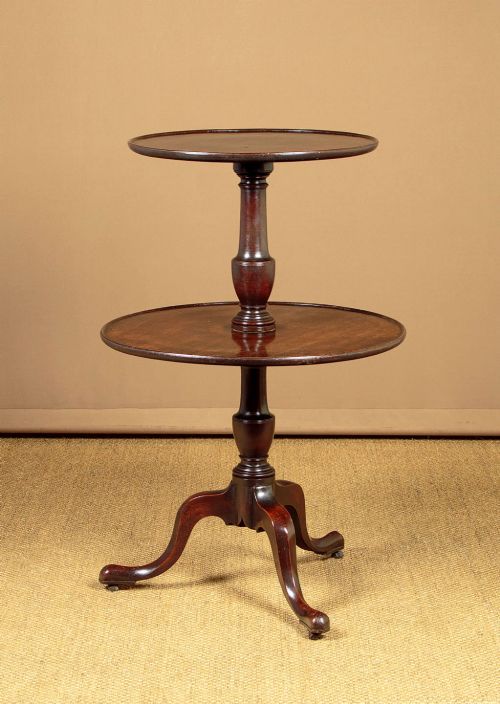
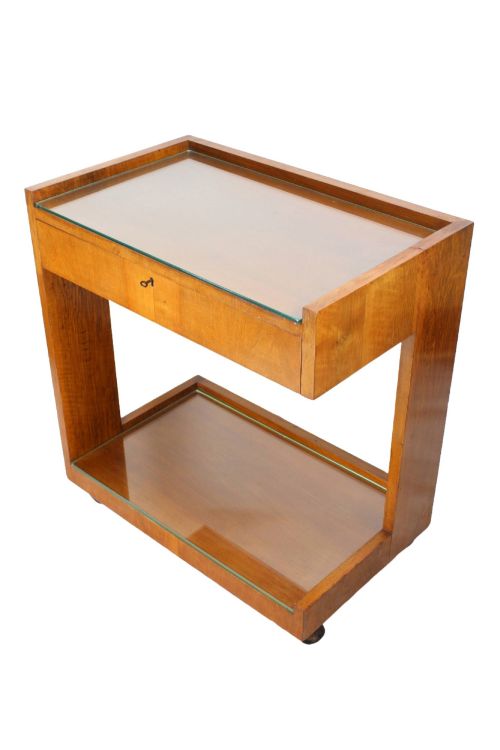
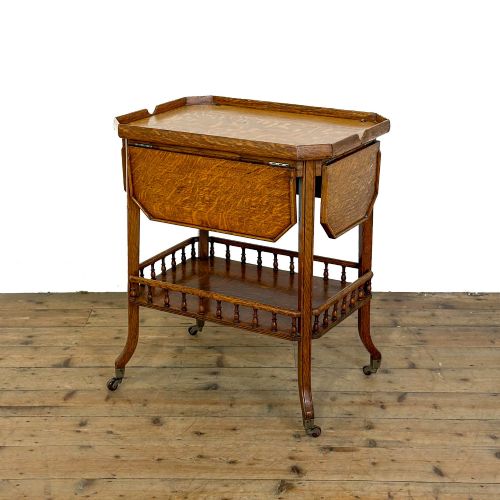
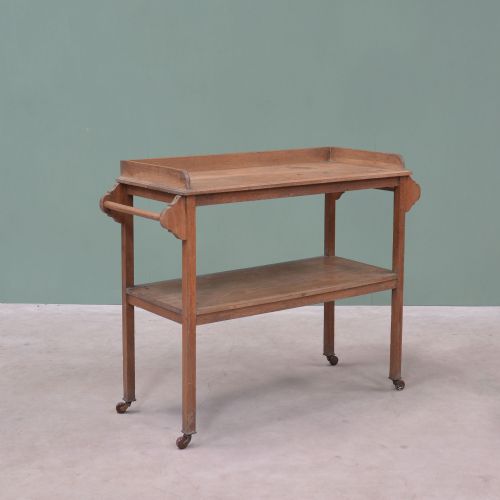
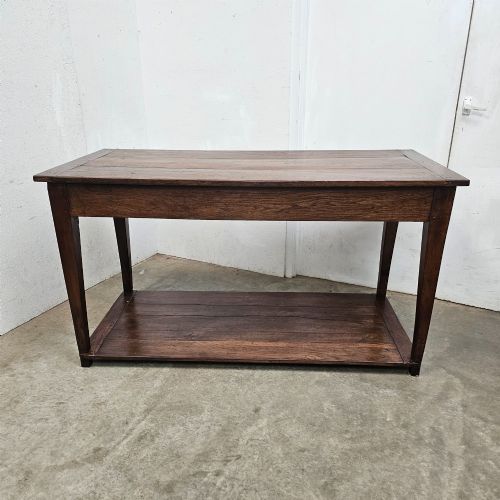
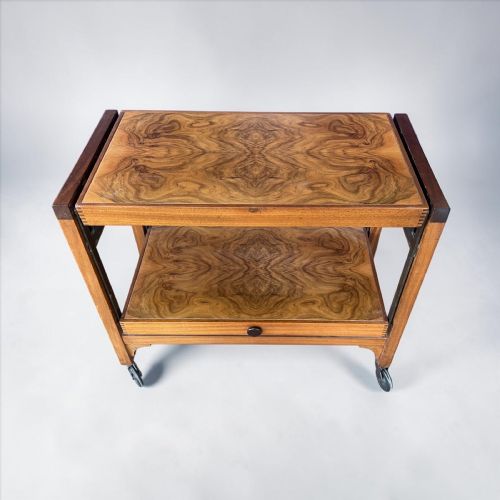
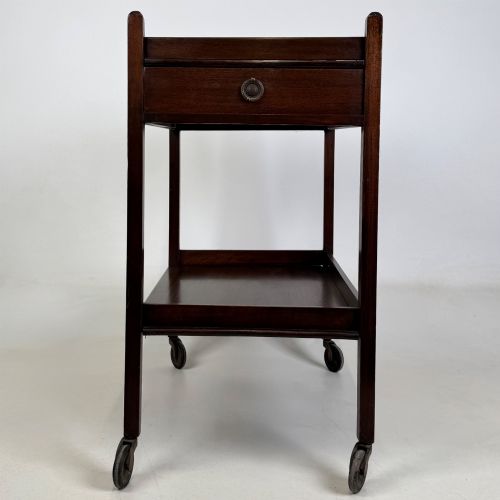
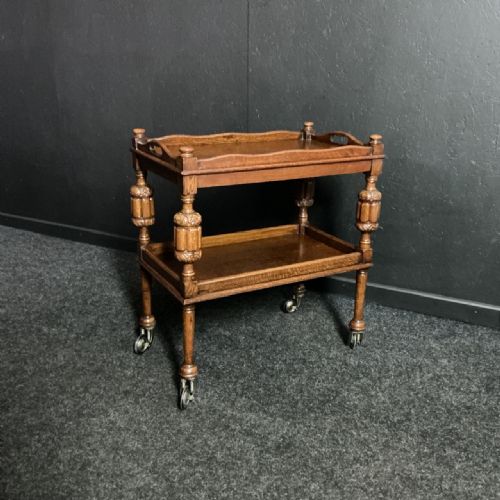
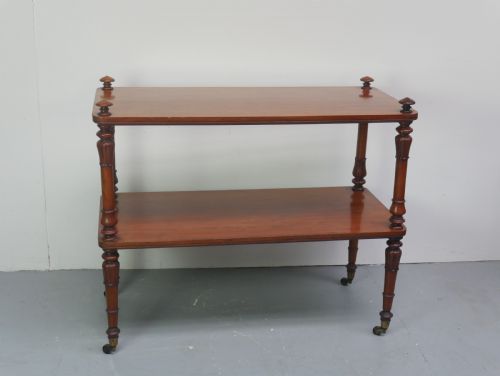
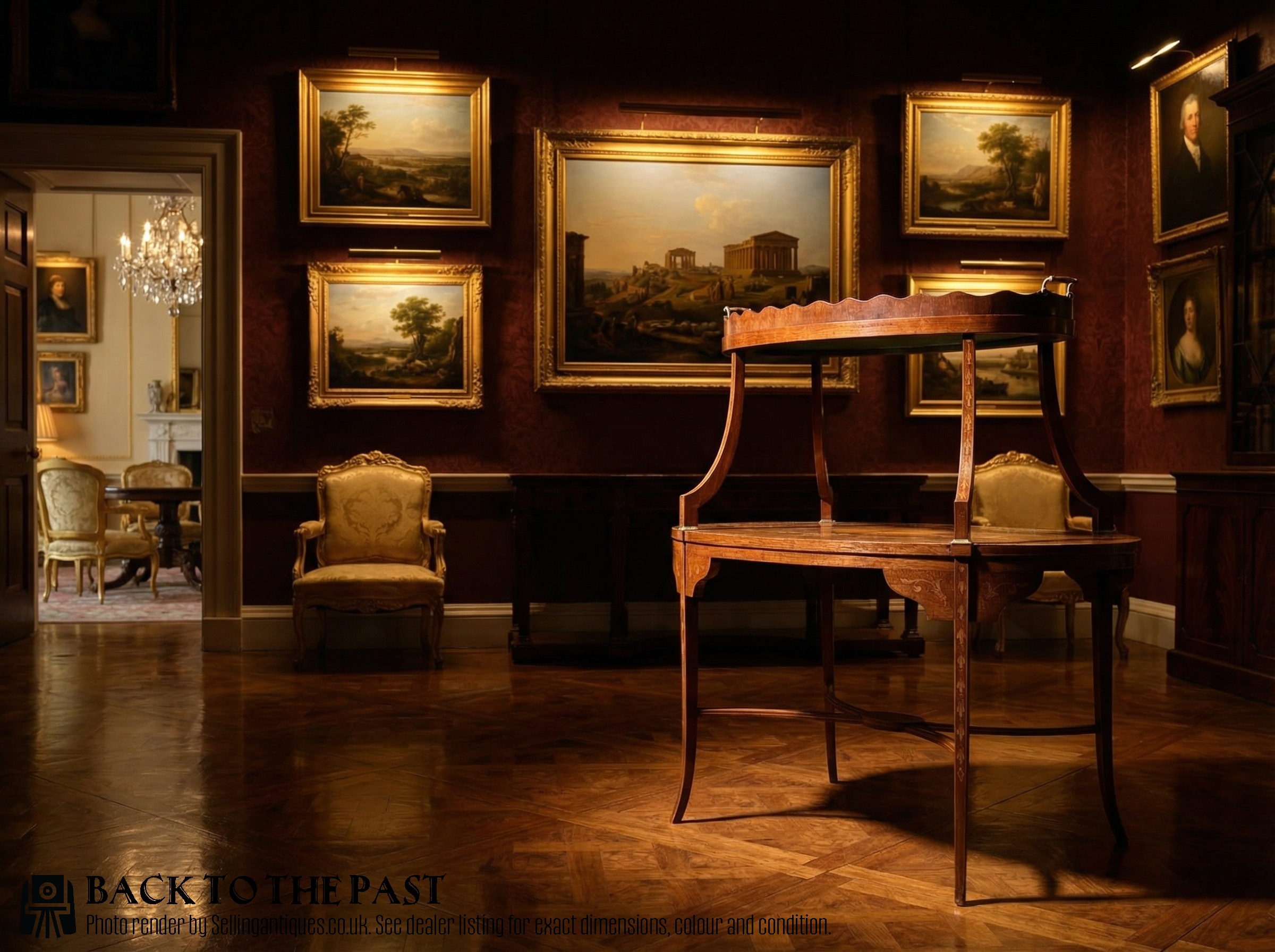
A two tier serving table provides two stacked surfaces for holding dishes, drinks, or serving items during meals. These items appear across several distinct historical periods, including Georgian, Victorian, Edwardian, and the 1920s.
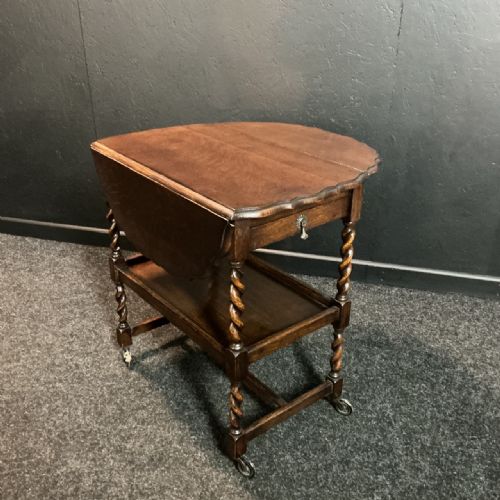
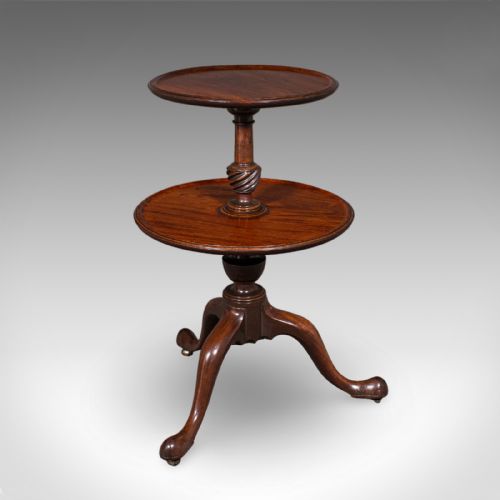
The selections on this page encompass various forms such as dumb waiters, tea trolleys, bar carts, serving stands, and occasional tables. Buyers frequently encounter traditional mahogany dumbwaiters alongside oak trolleys and walnut serving tables.
Origins span formal English country houses to more modest domestic settings, utilising styles like Sheraton Revival, Jacobean Revival, and the Aesthetic Movement. Each period brings distinct proportions and decorative treatments to the fundamental two-tier design.
How they were made
Construction relies heavily on traditional hardwoods such as mahogany, oak, and walnut, frequently enhanced with contrasting satinwood stringing or ebonised wood details. Metal and brass components appear in hardware, hinges, and occasional castor wheels.
Joinery and structural elements adapt to the specific form, whether fixed tiers on a central column or mobile frameworks fitted with wheels and lift-off trays. Surfaces range from plain timber boards to finely figured mahogany and inlaid decorative panels.
Retail Price Guide 2026
Typical UK retail prices for two tier serving table, calculated from the Sellingantiques database of over a million retail prices indexed since 2003. This retail price guide relies exclusively on Sellingantiques data; no external sources or auction records are used, so the figures do not describe the wider market.
Some folding dumb waiters hide hinged sides so cleverly they double as discreet wall-side panels when not in use.
What varies in quality
Quality rests in the selection of timber veneers and solid woods, where finely figured mahogany or walnut elevates a piece above standard utility items. The integration of functional elements, such as folding sides or lift-off trays, demonstrates the maker's technical capability.
Refinement of style dictates distinction, moving from utilitarian country house pieces to sophisticated Sheraton Revival or Aesthetic Movement designs. Proportion and the crispness of turning on columns or legs further separate ordinary examples from exceptional ones.
The Two Tier Serving Table Glossary
- Dumbwaiter
- A multi-tiered serving stand designed to hold food and utensils without the need for a servant present. These pieces typically feature circular graduated tiers on a central pillar or folding framework.
- Satinwood
- A pale, lustrous timber native to India and Ceylon, frequently utilised for banding, stringing, and inlay work on fine mahogany furniture. Its contrasting golden tone highlights edges and tabletops.
- Ebonised wood
- Timber treated with a chemical stain or dark finish to imitate expensive ebony. This technique gained popularity during the nineteenth century for accentuating architectural details.
- Castor
- A small wheel fitted to the legs of furniture to allow easy movement across floor surfaces. They appear frequently on trolleys and serving stands designed for mobility.
- Tier
- An individual horizontal shelf or surface positioned above another within a multi-level furniture piece. Graduated tiers decrease in diameter from bottom to top.
Frequently Asked Questions
What is a two tier serving table?
A two tier serving table is a multi-level furniture piece created to hold food, drinks, or tableware during meals. These objects provide extra surface area while taking up minimal floor space.
They appear in various formats, from stationary dumbwaiters to mobile tea trolleys fitted with wheels and lift-off trays.
How were dumbwaiters used?
Dumbwaiters were placed beside dining tables to hold dishes, wine bottles, and serving utensils during a meal. This allowed diners to help themselves without requiring servants in the room.
Many examples feature folding sides or rotating tiers to make accessing items easier during service.
What woods are common?
Mahogany is the most frequent timber seen in Georgian and Victorian examples, often paired with satinwood inlay. Oak appears in Edwardian tea trolleys and pieces from the 1920s.
Walnut and ebonised wood also feature, particularly in pieces influenced by the Aesthetic Movement.