
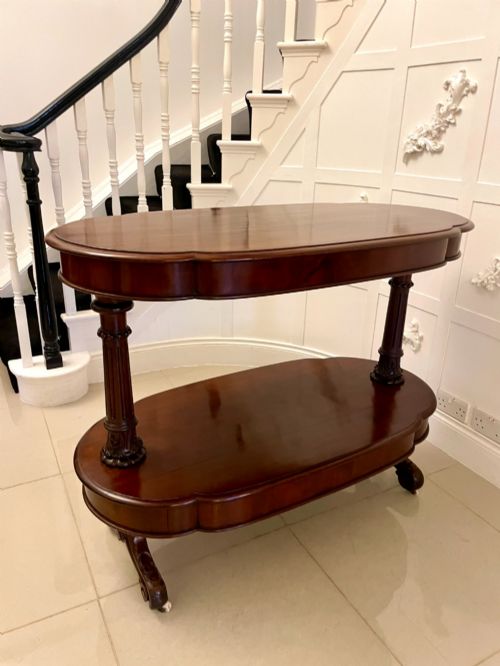
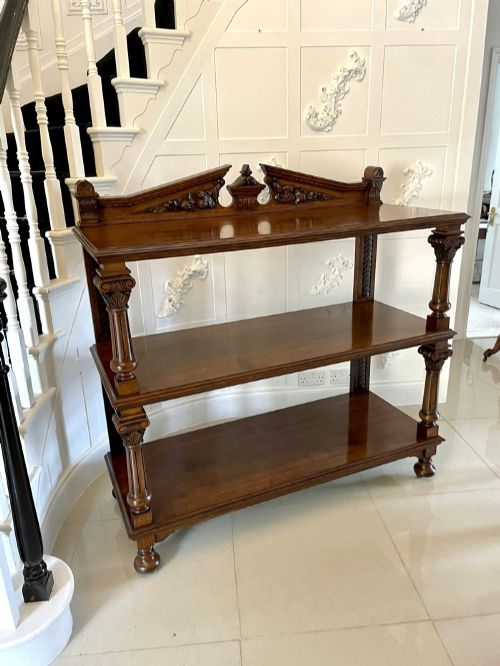
Tiered Buffet Table
A tiered buffet table brings multiple stacked tiers of timber into a dining room or parlour to hold serving dishes and silver.
Tiered Buffet Table
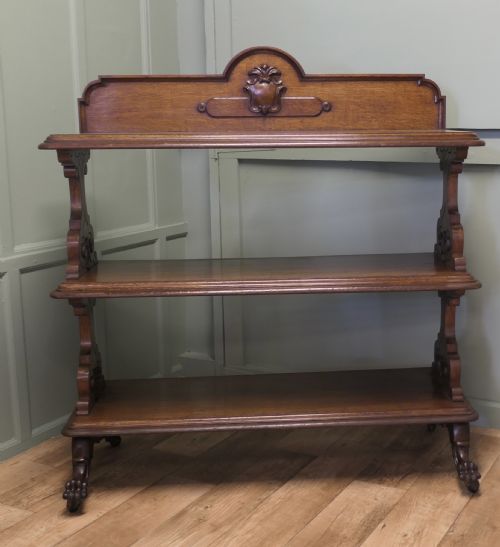
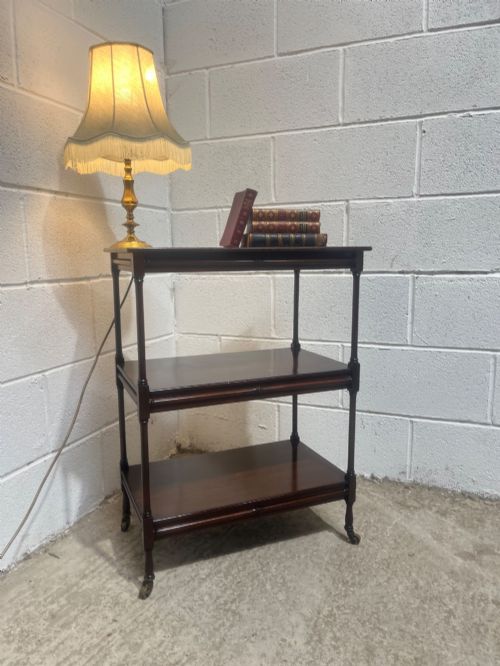
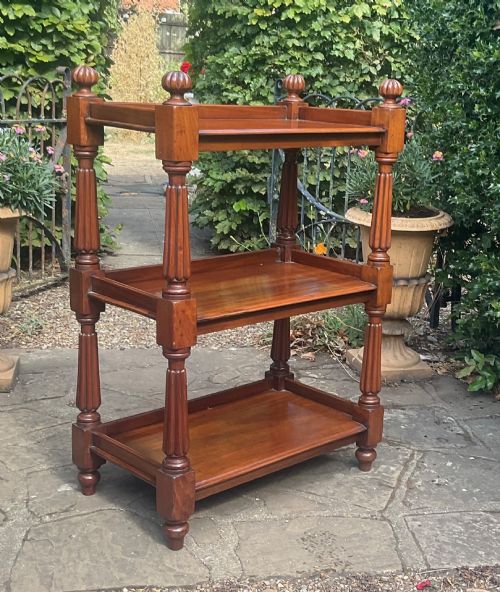
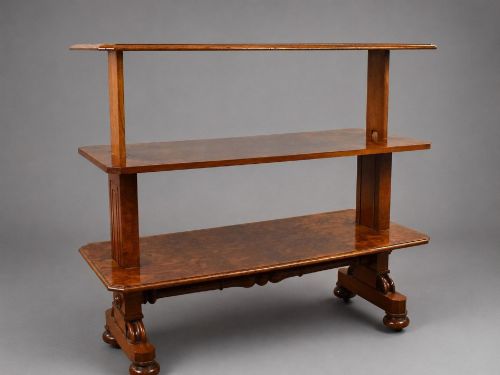
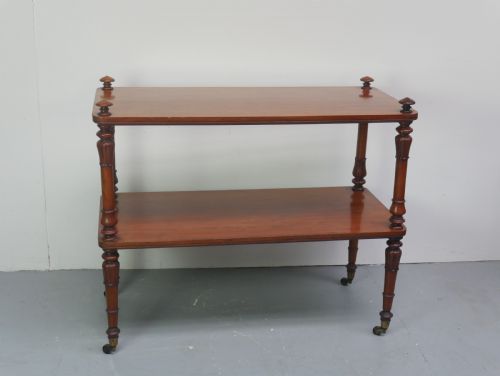
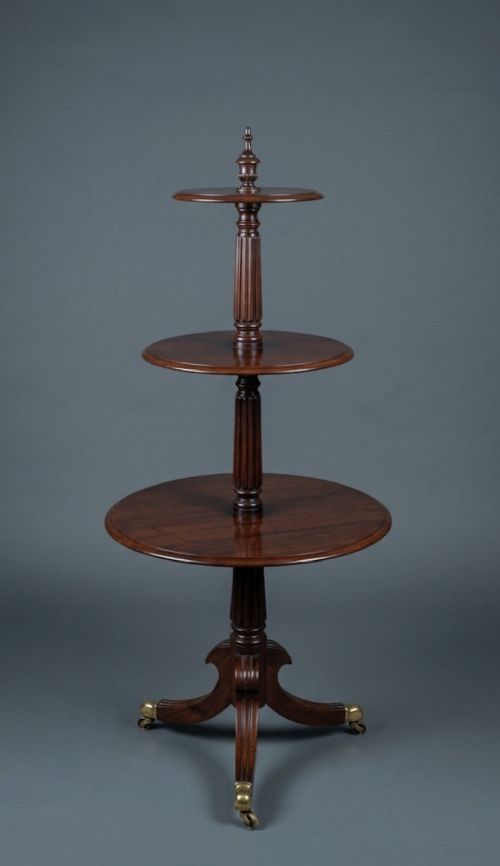
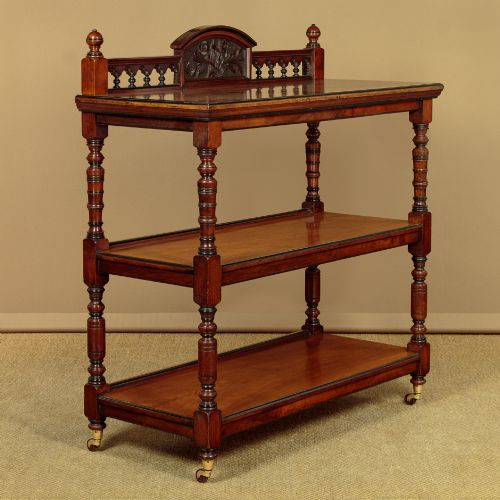
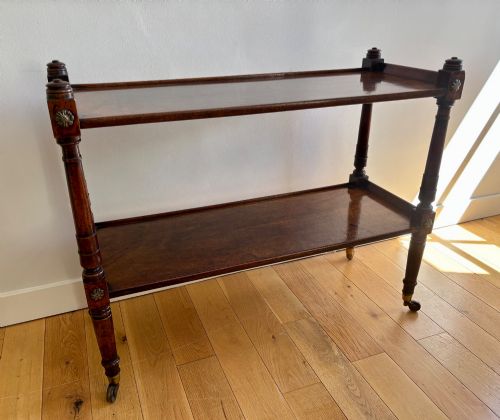
A tiered buffet table, often catalogued as a dumb waiter, etagere, or three-tier buffet, provides stacked circular or rectangular surfaces for dining rooms and entertaining spaces. These pieces emerge predominantly in mahogany, oak, and walnut across Georgian, Regency, and Victorian periods.
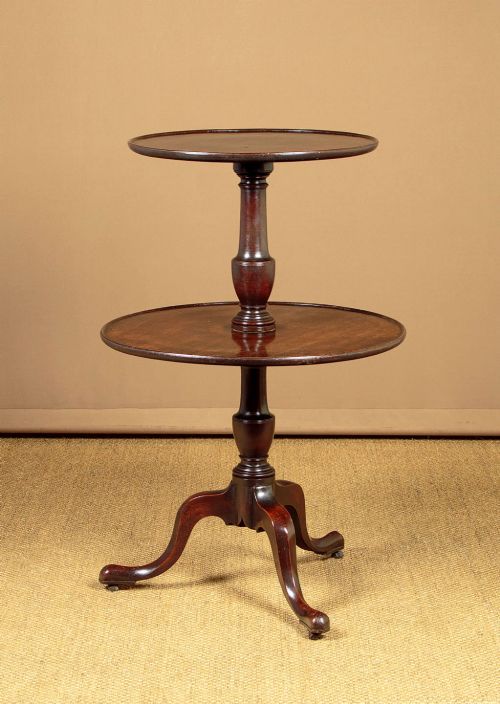
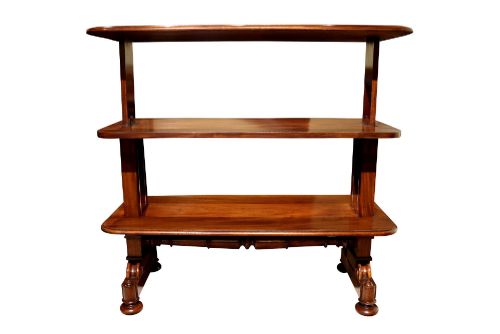
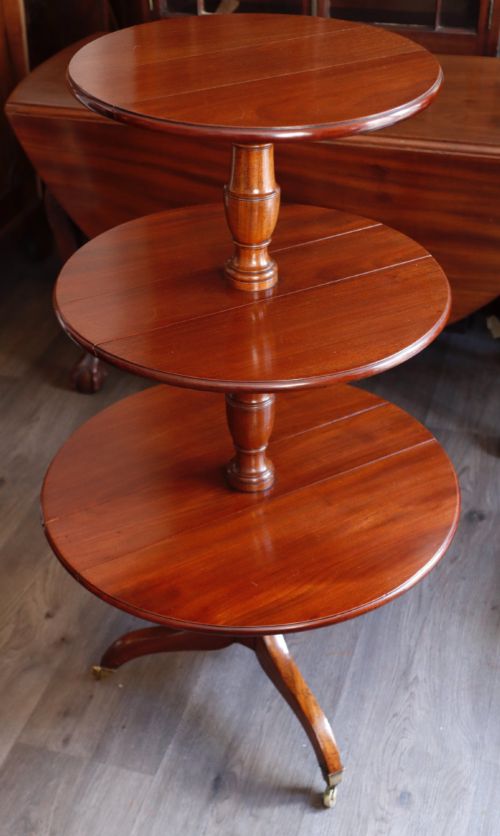
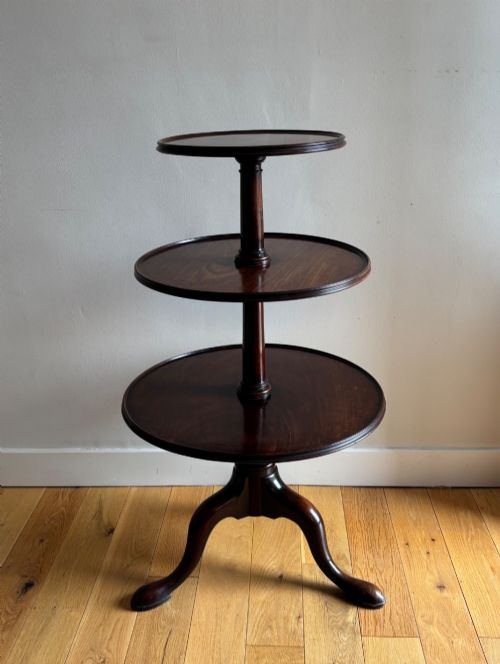
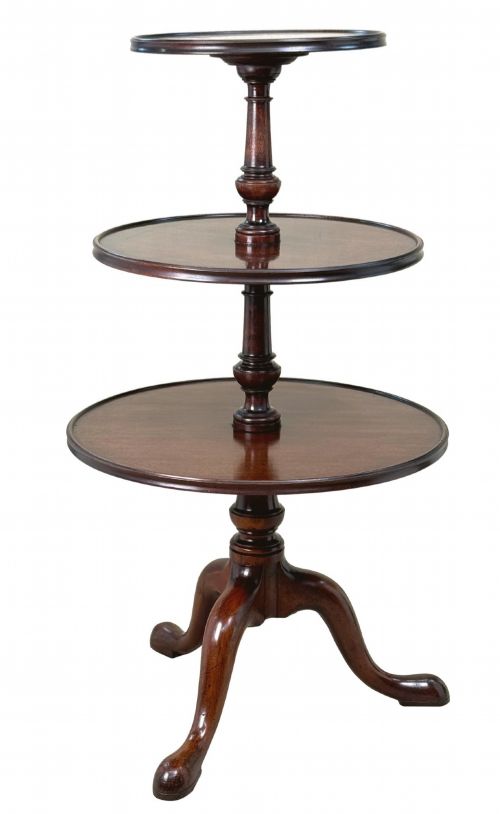
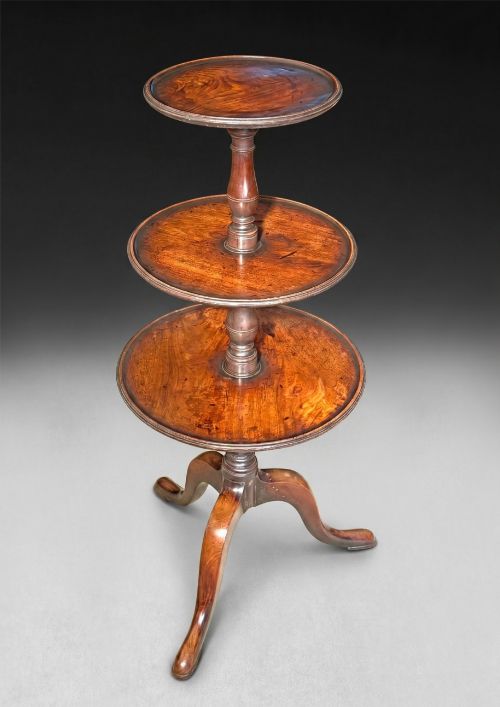
The version most commonly encountered on this page is the circular three-tier mahogany dumb waiter resting on a tripod base, frequently dated from the late 18th century through the mid-19th century. Alongside these, buyers find rectangular walnut and oak buffets featuring multiple shelves, drop leaves, or mechanical adjustments.
Materials and Construction
Cabinetmakers utilised solid timbers and veneers of mahogany, pollard oak, burr walnut, and ebonised wood, often supported by brass castors and pivoting central columns. Turning and carving shape the upright supports, while graduated graduated tiers provide stability with the largest disc positioned at the base.
Many examples incorporate mechanical elements such as rise and fall mechanisms, telescopic shafts, or folding actions that allow tiers to shift or collapse when not in active use during a meal.
The listings here span the 18th, 19th, and early 20th centuries, covering Georgian, Regency, and Victorian periods in mahogany, oak, walnut, and teak.
Design and Execution
The distinction between standard examples and the finest pieces rests upon the selection of timber figures, such as fiddleback mahogany or burr walnut, and the crispness of turned columns and carved tripod legs. Superior pieces integrate functional movement smoothly, allowing revolving or rising tiers to operate without wobble.
Proportion and restraint in ornament separate exceptional Georgian and Regency items from heavier Victorian interpretations, where dense carving or simpler secondary woods like oak appear more frequently.
The Tiered Buffet Table Glossary
- Dumb Waiter
- A tiered serving table designed to hold dishes near a dining table without the presence of servants. These pieces typically feature graduated circular trays on a central pillar.
- Etagere
- A set of open shelves arranged in tiers for displaying or serving items. This form shares similarities with the multi-level buffet.
- Tripod Base
- A three-legged support structure commonly found beneath circular dumb waiters and occasional tables. It provides stable floor contact on three points.
- Metamorphic
- A descriptive term for furniture that transforms from one form to another through folding, sliding, or rising mechanisms. Such pieces include adjustable or collapsible serving tiers.
- Pollard Oak
- Timber taken from trees that have been pollarded, producing a dense, knotty grain pattern with distinctive circular markings. It appears on substantial Victorian cabinets and buffets.
Tiered Buffet Table: Frequently Asked Questions
What is a tiered buffet table?
A tiered buffet table is a multi-level serving stand designed to hold dishes, glassware, and tableware during meals.
Historically placed beside the dining table, these pieces allowed diners to serve themselves without domestic staff present in the room.
How do I date a mahogany dumb waiter?
Dating relies on observing the joinery, timber selection, and leg design across different stylistic periods.
Georgian and Regency examples tend to feature slender turned pillars and tripod bases in figured mahogany, while Victorian versions often incorporate heavier framing and mechanical adjustments.
Where were dumb waiters used?
These tables stood primarily in formal dining rooms as supplementary serving space for heavy dishes and bottles.
Over time, similar tiered forms moved into drawing rooms and parlours to function as display surfaces for decorative objects.
What is a rise and fall buffet?
A rise and fall buffet uses a central mechanism to adjust the height of the shelves or tiers.
This mechanical adaptation allowed users to modify the table for serving or storage convenience during the nineteenth century.