






Mahogany Corner Shelf
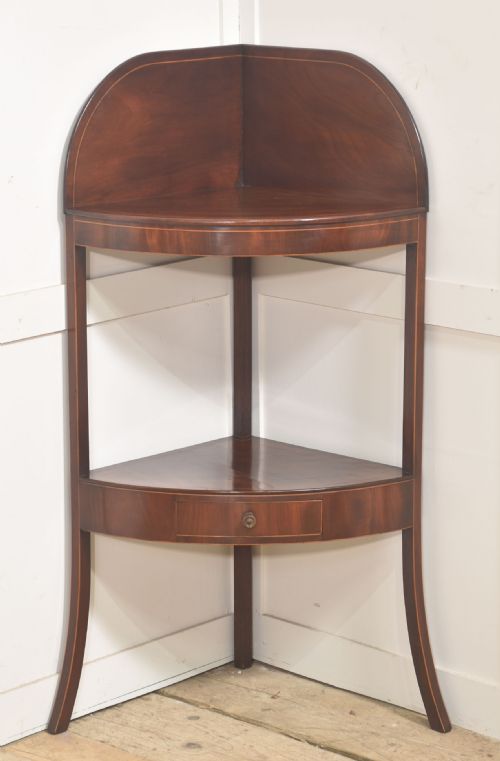
A mahogany corner shelf is a timber display unit built to fit a room angle, and collectors prize them for turning dead corners into useful display space.
Mahogany Corner Shelf
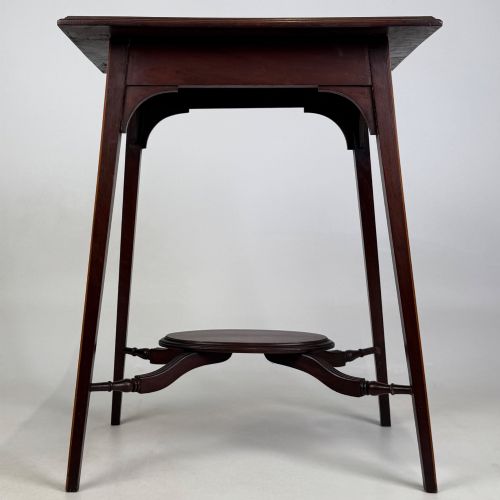
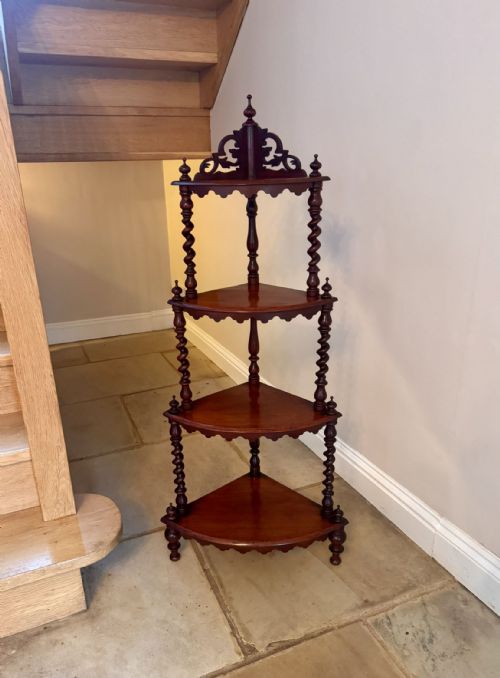
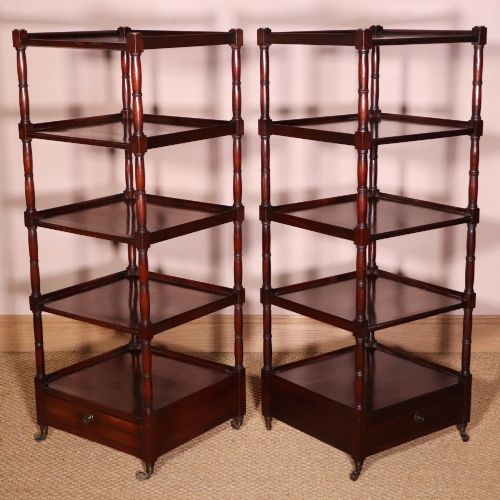
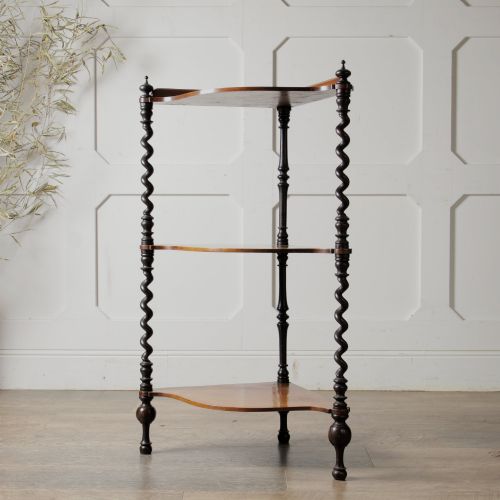
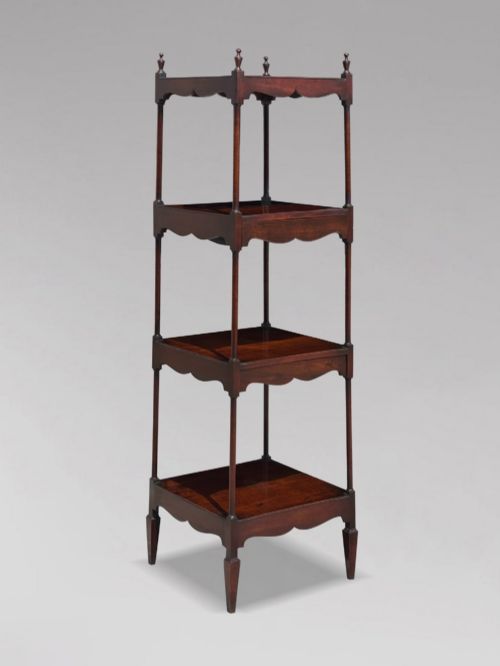
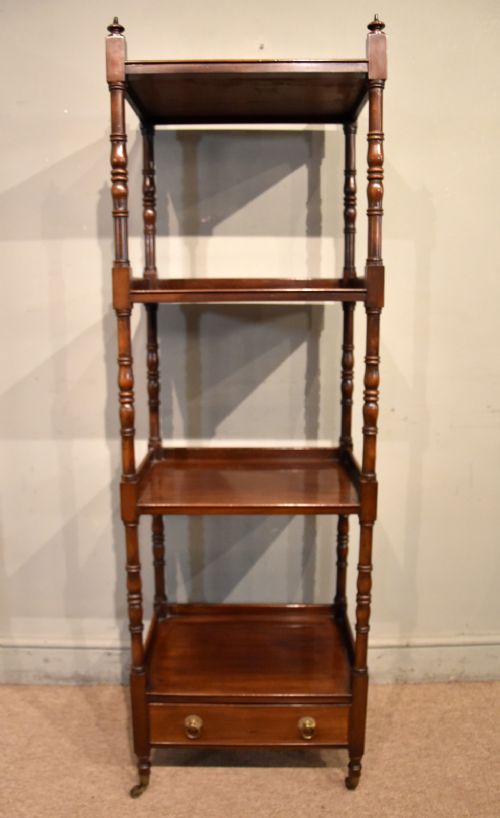
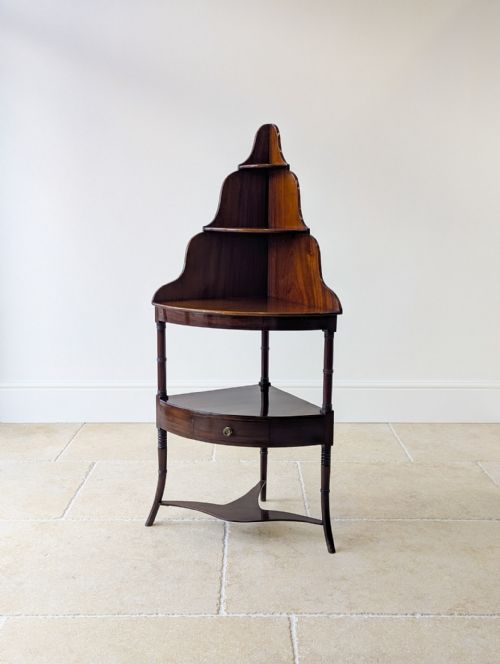
When you search for a mahogany corner shelf, you encounter pieces designed to fit tight room angles, predominantly taking the form of whatnots, etageres, and wall shelves. These items appear across the Regency, Victorian, and Edwardian eras, spanning the nineteenth century up to nineteen-ten.
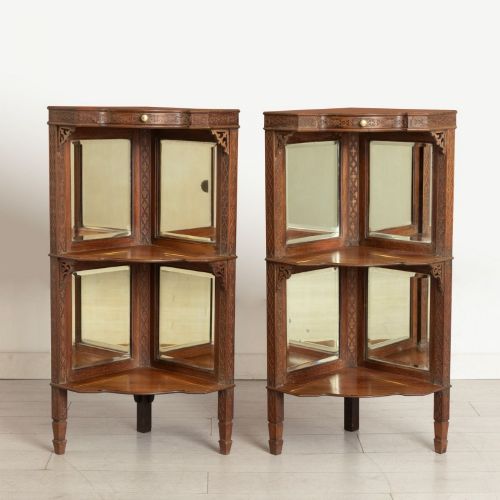
The assortment includes floor-standing corner whatnots alongside wall-hanging units. Examples feature tapering forms, fretwork, and functional adaptations such as washstands made from mahogany timber.
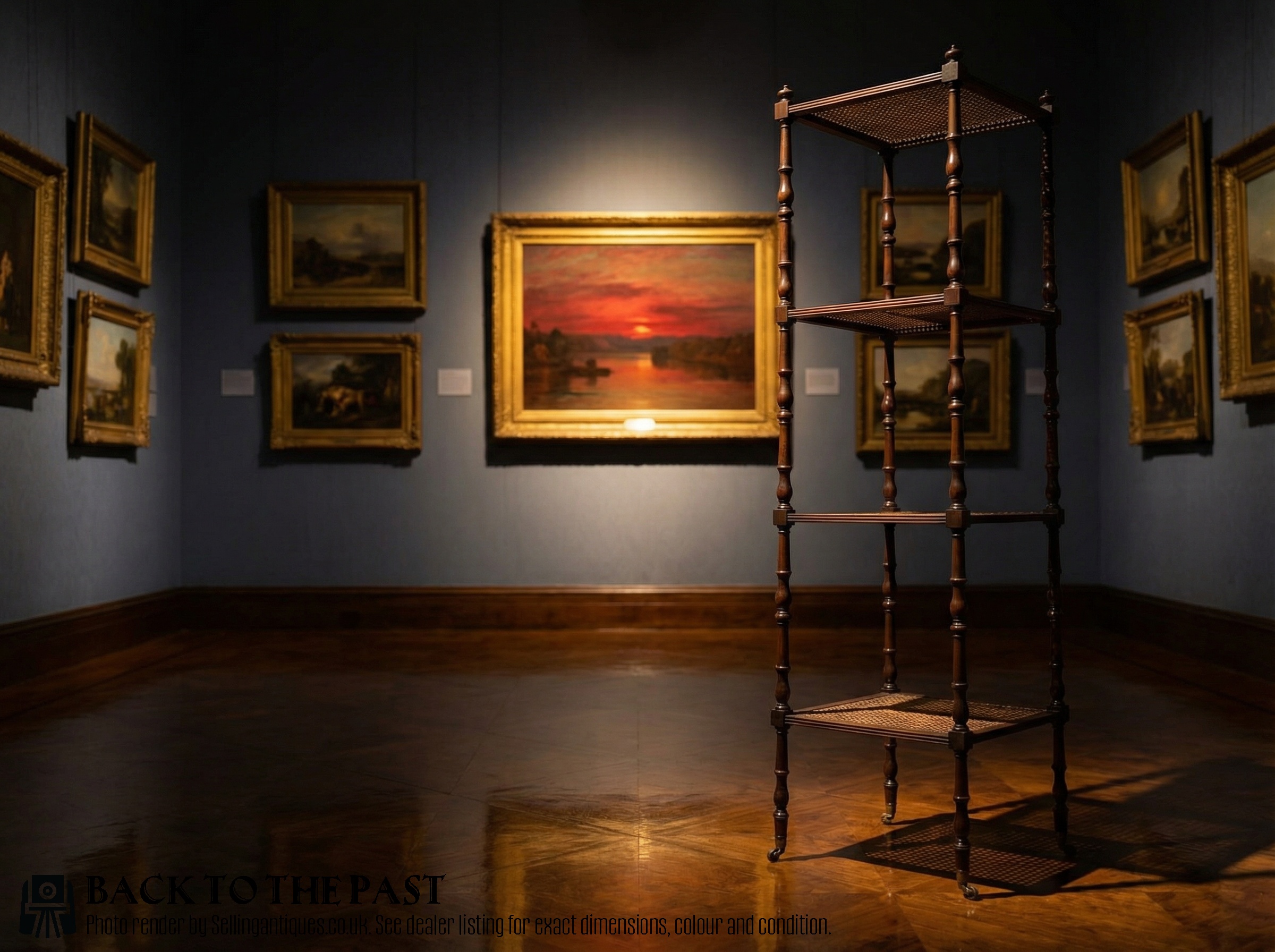
How They Were Made
The structural framework relies on solid mahogany, augmented in some instances with contrasting details in boxwood and structural or decorative elements in brass. Certain pieces incorporate cane work within their design.
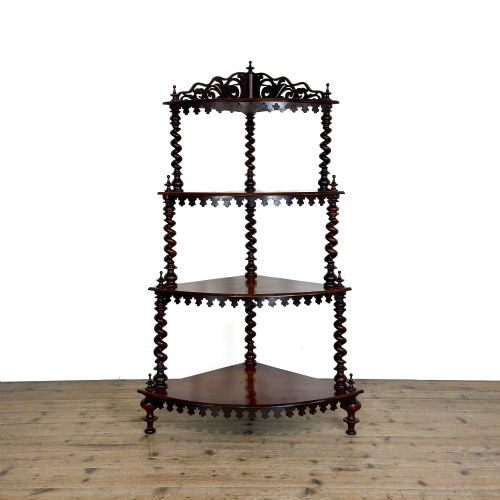
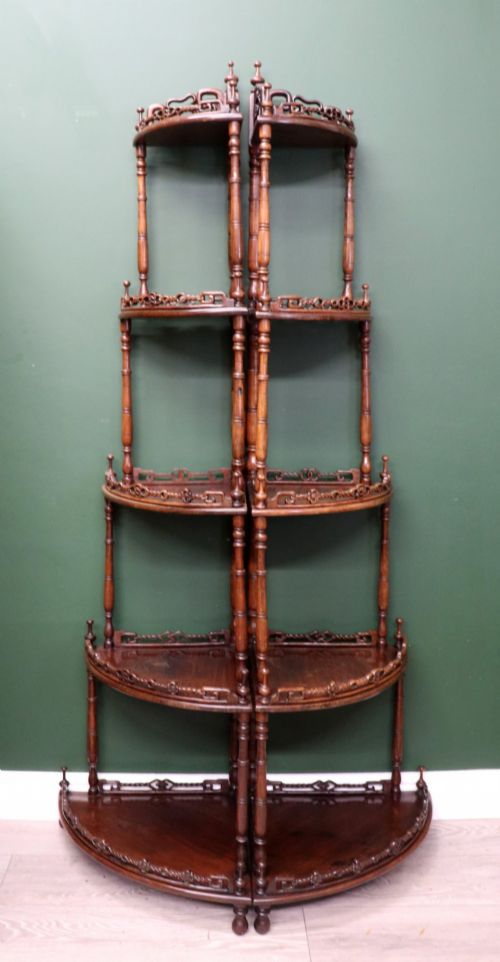
Joinery techniques establish the tier supports and corner mounts, while surface enrichment ranges from turned barley twist uprights to delicate fretwork panels and inlaid stringing.
Mahogany Corner Shelf Retail Price Guide 2026
Typical asking prices for mahogany corner shelf among the pieces listed under this phrase on Sellingantiques today, from the lower quarter to the upper quarter. They describe what is for sale here now, not the wider market.
The documented inventory spans Victorian, Regency, and nineteenth-century periods, utilising mahogany alongside brass, boxwood, and cane.
What Varies in Quality
Quality differences emerge in the selection of the timber and the precision of decorative embellishments. Superior examples display carefully chosen grain patterns and refined additions such as boxwood inlay or finely turned barley twist columns.
Construction scale and form also separate standard items from finer works. Larger proportions or distinctive architectural silhouettes, such as tapering etageres, demand greater joinery skill than simple wall-mounted brackets.
The Mahogany Corner Shelf Glossary
- Mahogany
- A durable reddish-brown tropical hardwood prized for its stability and rich grain. It serves as the primary material across nearly all listed examples.
- Whatnot
- A multi-tiered open piece of furniture designed for displaying ornaments and small objects. These units frequently occupy corners to maximise floor space.
- Etagere
- A French-derived term for a display stand with multiple shelves. Regency and Victorian makers applied this form to corner shelving units.
- Barley Twist
- A carved furniture leg or upright resembling a twisted rope. This turned decorative detail appears on Victorian tiered stands.
- Fretwork
- Openwork ornamentation carved or pierced through thin timber. It provides delicate pierced patterns on wall-hanging corner shelves.
Mahogany Corner Shelf: Frequently Asked Questions
What is a corner whatnot?
A corner whatnot is a multi-tiered wooden shelving unit built specifically to stand in the angle of a room. These pieces provide vertical display space for small decorative items without obstructing household traffic.
Victorian and Regency makers favored this triangular footprint to utilise overlooked architectural spaces. They range from modest wall-mounted brackets to tall floor-standing corner units.
How do I date a mahogany shelf?
Dating relies on examining the construction materials, secondary woods, and decorative styles present on the piece. Regency examples display classical restraint, whereas Victorian versions often feature turned barley twist supports or elaborate fretwork.
Archival and listed items span the nineteenth century up to nineteen-ten. Observing the specific joinery and hardware details helps place a piece within its historical period.
Where should I place it?
These units suit any room corner that requires both surface display area and a touch of period character. They fit well in sitting rooms, hallways, or studies where floor space is at a premium.
Wall-mounted versions require secure fixing into solid masonry or studs to support the weight of the timber and displayed objects. Floor-standing whatnots anchor easily into ninety-degree wall angles.
What woods are used besides mahogany?
Makers frequently incorporated contrasting timbers for decorative inlay and detail work. Boxwood appears as fine stringing or geometric patterns against the darker mahogany background.
Other materials recorded in construction include brass for hardware elements and cane for textured panels. Mahogany remains the dominant structural medium across all listed pieces.