


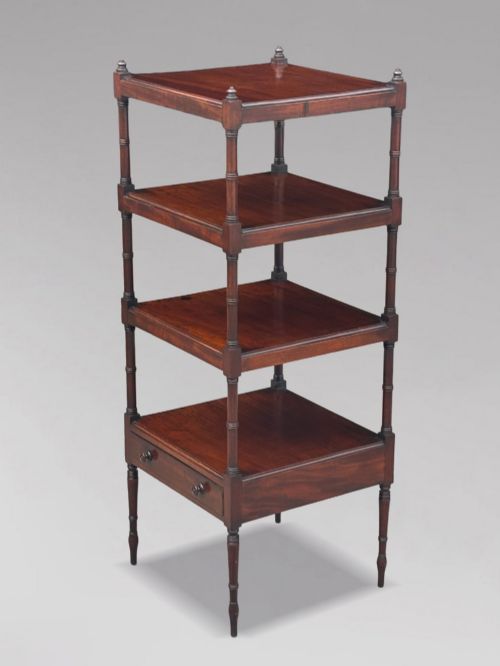
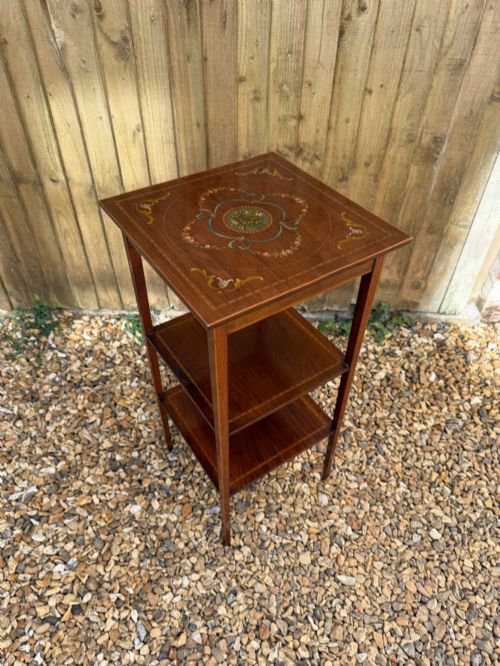
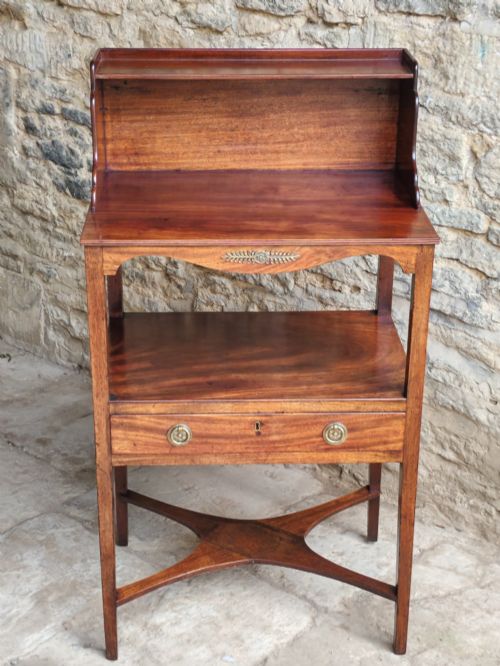
Mahogany Tiered Etagere
A mahogany tiered etagere provides open display space across multiple levels, combining practical utility with polished timber surfaces for living rooms and studies.
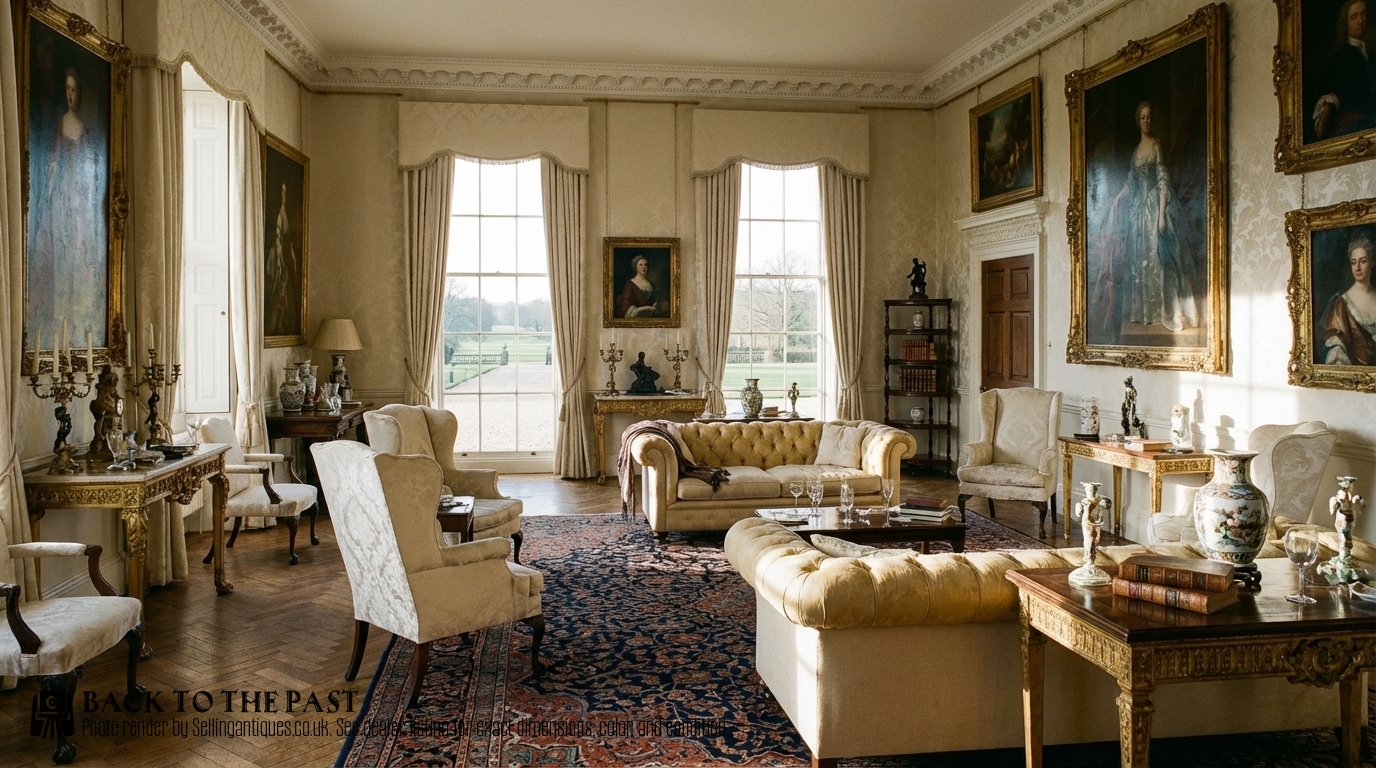
Mahogany Tiered Etagere
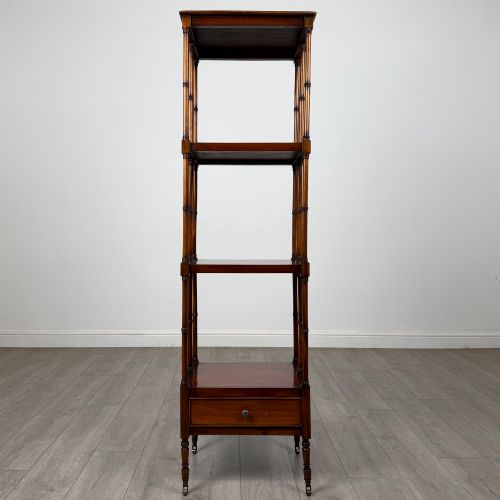
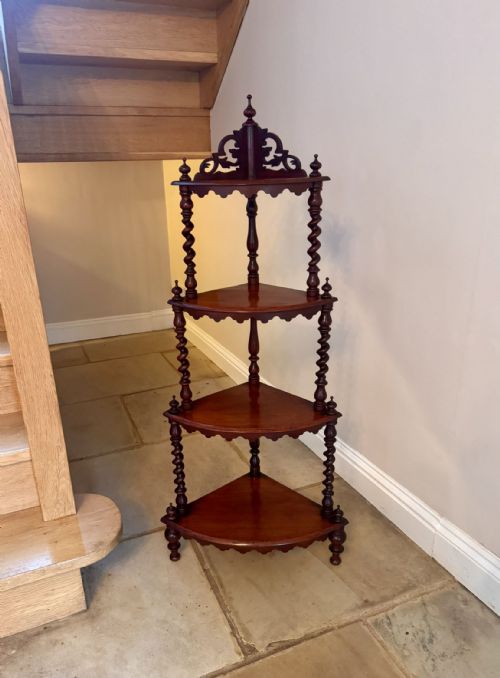
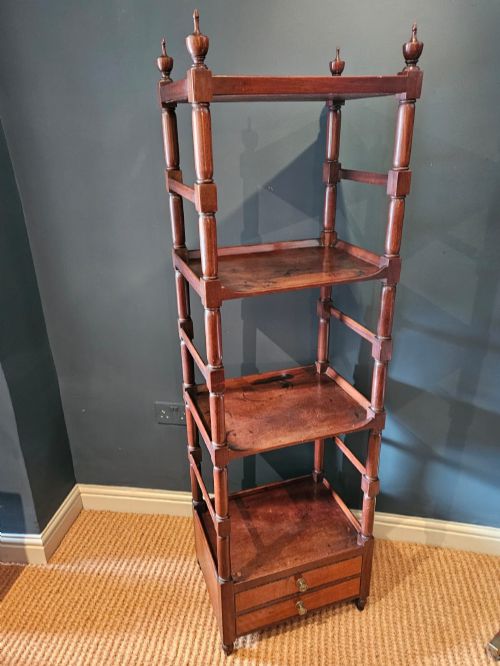
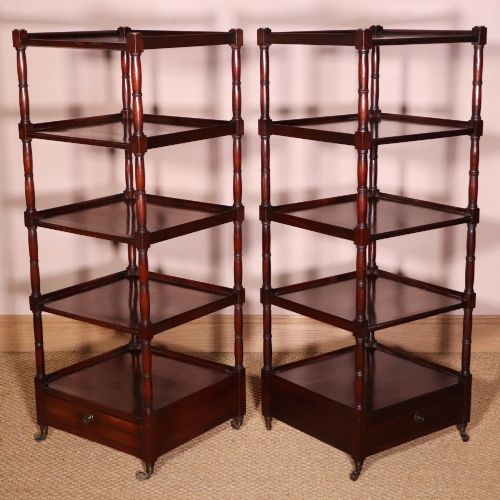
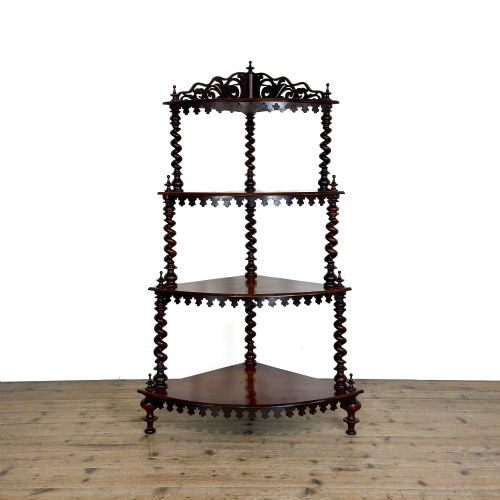
A mahogany tiered etagere is a multi-level display stand designed for books, ornaments and domestic items, appearing frequently in Victorian, Regency and Georgian configurations. These pieces span formats from corner whatnots and wall-hanging shelves to tall open bookcases and music stands with graduated tiers.
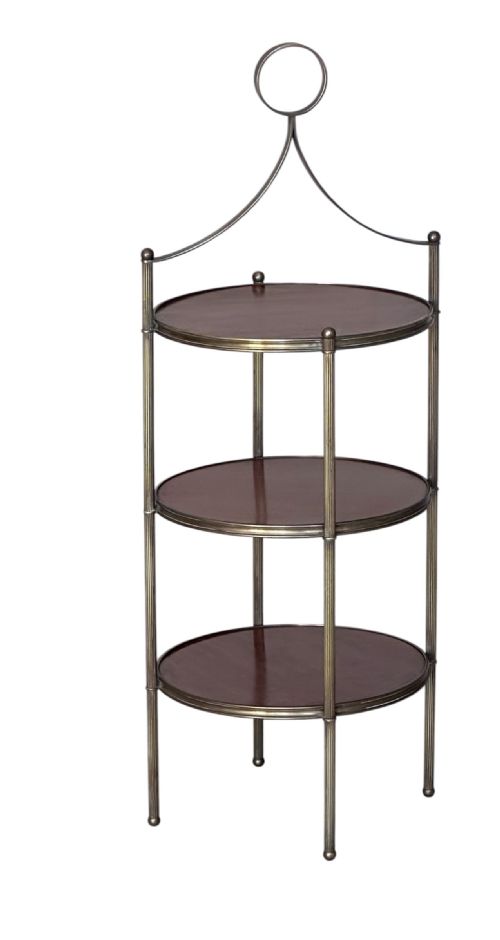
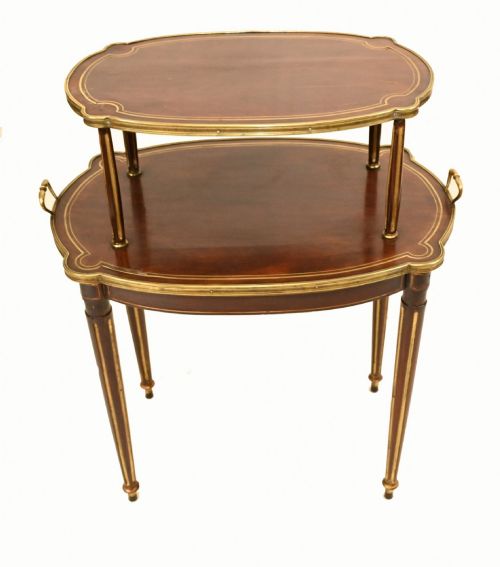
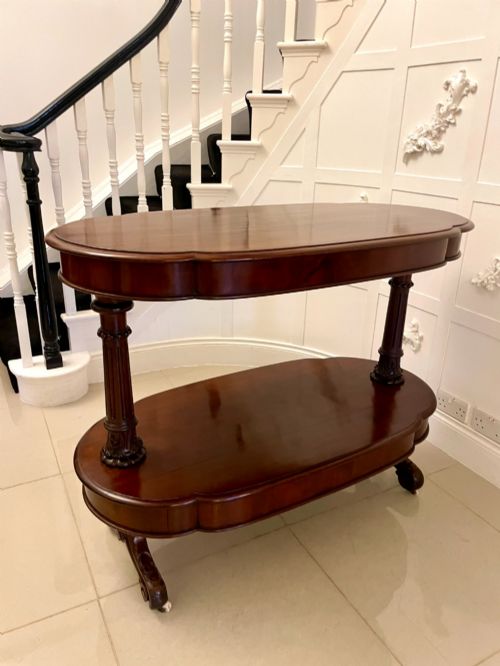
The selection on this page centres on tiered wooden furniture originating from the eighteenth, nineteenth and early twentieth centuries. Buyers encounter versatile forms including slim buffets, tripod etageres, tray tables and portable bookshelves constructed to hold decorative objects.
Makers and makers' workshops produced these tiered pieces in various heights and tier counts, ranging from compact two-tier tables to four-tier freestanding stands. The predominant timber is mahogany, supplemented by occasional variations in walnut and rosewood.
How they were made
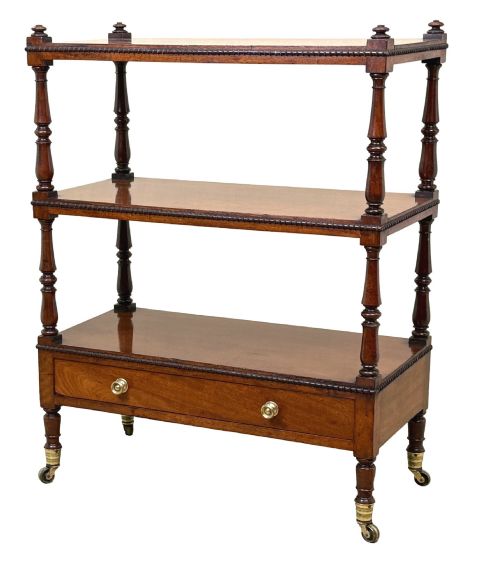
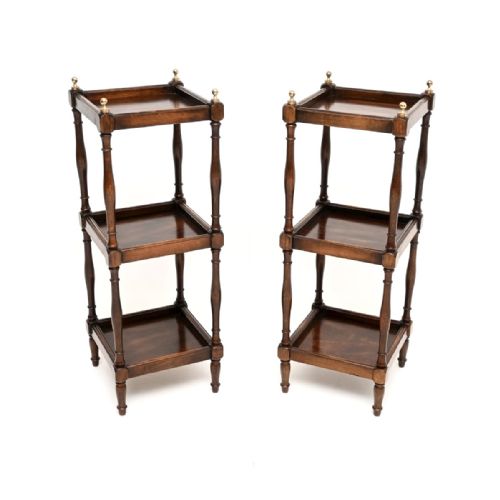
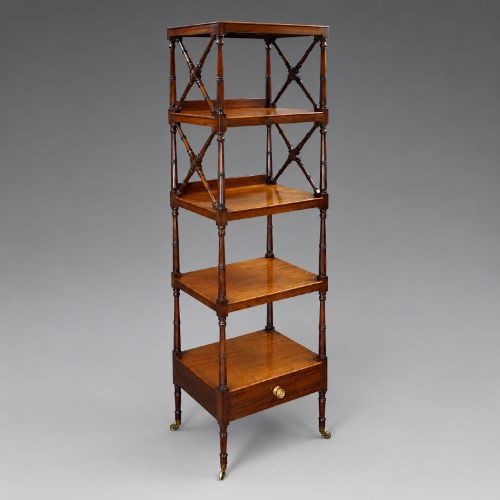
Cabinetmakers constructed these pieces primarily from solid and veneered mahogany, frequently incorporating brass casters, handles or gallery rails to secure the tiers. Selected examples feature decorative satinwood inlay, painted surfaces or intricate marquetry patterns across the wooden planes.
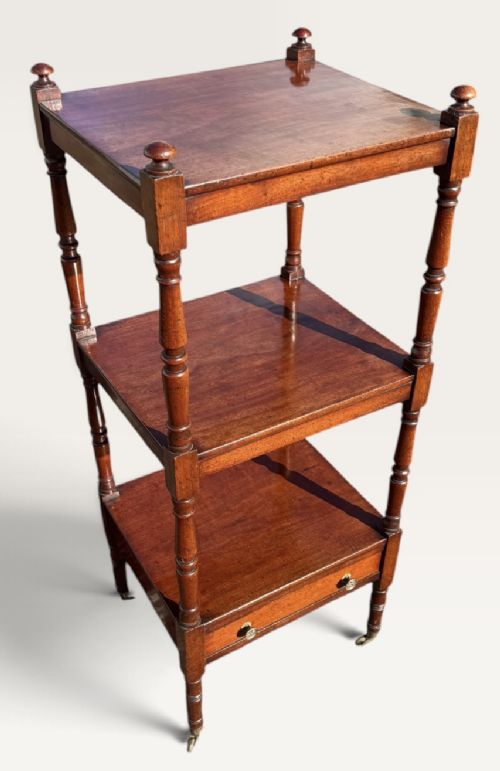
Structural support relied on turned, barley twist or bobbin-turned vertical uprights that separate each horizontal shelf. Finer iterations utilised cast or chased ormolu and bronze mounts, particularly on French-influenced etageres and centre tables from the later nineteenth century.
Mahogany Tiered Etagere Retail Price Guide 2026
Typical asking prices for mahogany tiered etagere among the pieces listed under this phrase on Sellingantiques today, from the lower quarter to the upper quarter. They describe what is for sale here now, not the wider market.
Materials extend beyond standard mahogany to incorporate walnut, brass, ormolu, gilt bronze, paint and satinwood inlay.
What varies in quality
Quality in a tiered etagere rests upon the selection of timber figure, such as plum pudding mahogany, and the crispness of turned supports like barley twists or bobbin spindles. Superior construction shows balanced proportions between the tiers and precise joinery where the vertical uprights meet the shelves.
The integration of secondary materials defines the upper tier of craftsmanship, distinguishing standard utility shelving from pieces enhanced with quality ormolu mounts, brass gallery rails or delicate satinwood inlay. Original surface patination and structural integrity across multiple levels indicate how well a piece survives from its period of origin.
Gillows·W Turner Lord & Co
The Mahogany Tiered Etagere Glossary
- Etagere
- A piece of furniture consisting of a set of open shelves for displaying small objects. These tiered stands developed in France before becoming popular across British drawing rooms.
- Whatnot
- A nineteenth-century multi-tiered shelving unit used for books, ornaments or bric-a-brac. They appear in freestanding, corner and wall-hanging formats.
- Ormolu
- Gilded bronze mounts applied to furniture for decorative effect. This technique was favoured by cabinetmakers working in French styles during the nineteenth century.
- Marquetry
- Inlaid patterns of wood veneer forming decorative pictures or geometric designs. Artisans applied these veneers to tabletops and tier surfaces on late nineteenth-century pieces.
Mahogany Tiered Etagere: Frequently Asked Questions
What is the difference between an etagere and a whatnot?
An etagere generally describes an open tiered piece designed for display, often with French styling or ornamental mounts, while a whatnot is the traditional British term for multi-shelved stands used for books and ornaments.
Both forms overlap significantly in purpose and appearance across nineteenth-century interiors, serving similar functional roles in living spaces.
How do I place a tiered etagere in a modern room?
Freestanding tiered etageres work well against walls or as room dividers to hold books and decorative objects without blocking light. Corner formats utilise neglected angles effectively, while wall-hanging shelves save floor space in compact rooms.
Ensure the height and tier count match the scale of surrounding furniture to maintain visual balance.
Are these pieces sturdy enough for heavy books?
Most tiered etageres and whatnots were built to support decorative ceramics, small collections and lighter volumes rather than heavy reference libraries. The vertical supports and shelf joints vary in load capacity depending on whether the piece is a slim wall shelf or a robust floor-standing bookcase.
Distributing weight evenly across the shelves preserves the structural stability of older timber joinery.
How do I identify a Regency period piece?
Regency tiered pieces, produced in the early nineteenth century, typically feature clean architectural lines, classical proportions and dark mahogany timbers sometimes accented with brass inlay or simple turned columns. Makers focused on structural restraint and refined grain patterns rather than heavy ornamentation.
Comparing the turned uprights and assembly methods to dated examples helps confirm the period of manufacture.